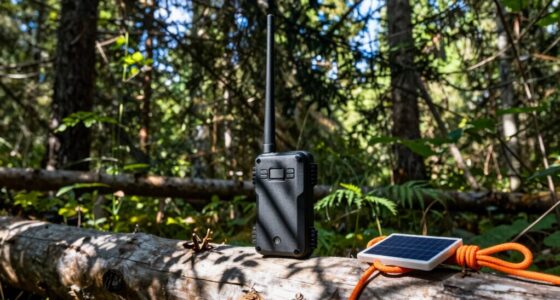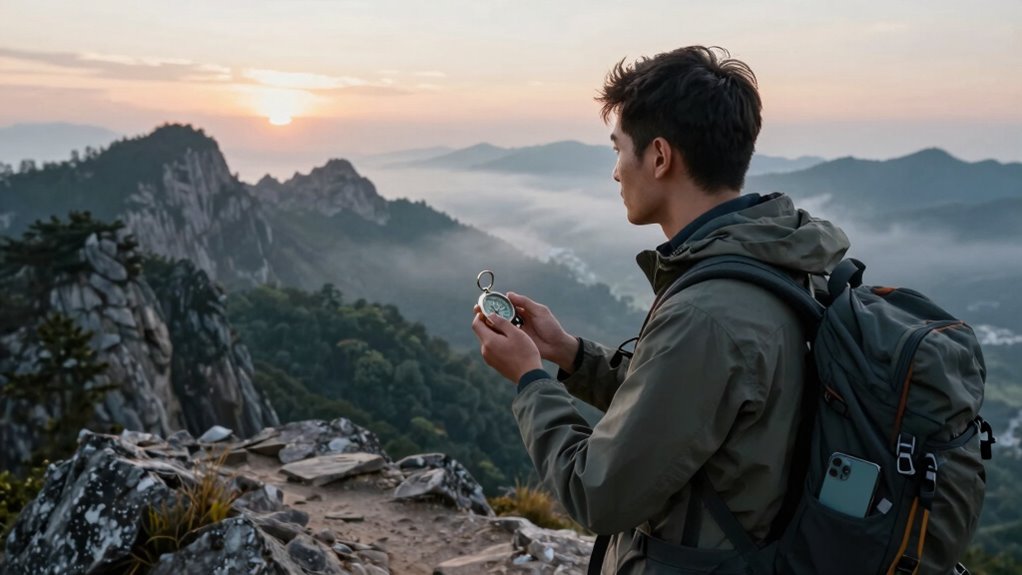

Relying solely on navigation apps can leave you vulnerable if your device malfunctions, loses signal, or provides outdated info. Developing traditional skills like map reading and spatial awareness gives you a backup when technology fails. These skills boost your confidence, help you recognize landmarks, and make spontaneous detours easier. By balancing digital tools with innate navigation abilities, you stay prepared and independent. Keep exploring, and you’ll discover even more ways to navigate confidently in any situation.

Get emergency and outdoor gear delivered free — and shop member deals
- Fast, free delivery on millions of items
- Access to Prime Big Deal Days deals on October 6–7
- Prime Video, Amazon Music and more included
Key Takeaways
- Relying solely on apps risks losing essential navigation skills needed during emergencies or remote adventures.
- Traditional map literacy enhances confidence and independence when digital tools fail or signal is lost.
- Developing wayfinding skills creates a mental map, serving as a reliable backup to technology.
- Combining traditional techniques with apps fosters deeper environmental understanding and spontaneous exploration.
- Navigation confidence ensures safety, adaptability, and enjoyment regardless of technological or signal issues.
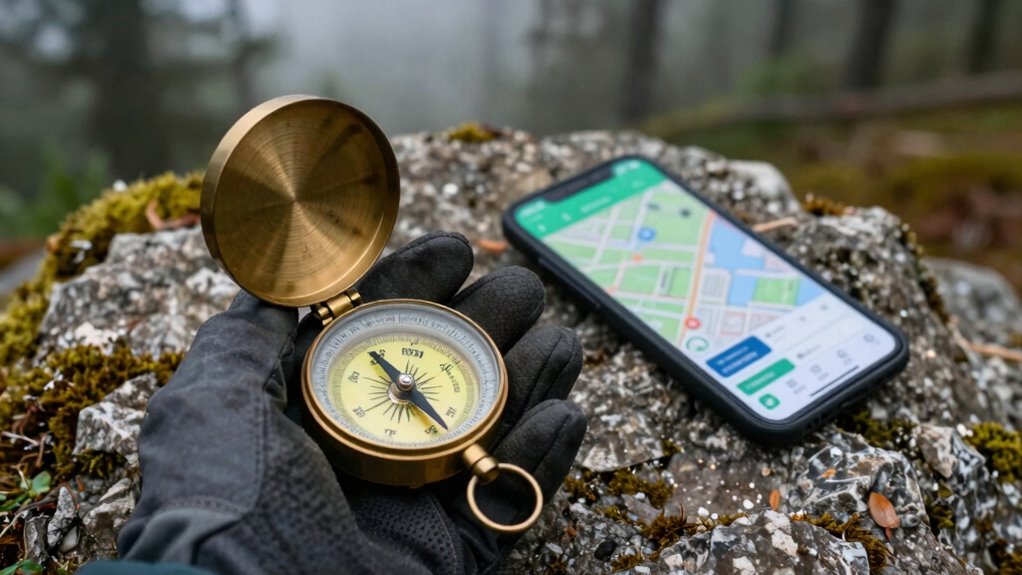
In today’s digital world, relying on navigation apps has become second nature, transforming how you find your way around unfamiliar places. While these tools make travel effortless, they also highlight the importance of maintaining strong wayfinding skills and map literacy. When you depend solely on technology, you risk losing your ability to read maps, recognize landmarks, or orient yourself without digital assistance. Building your wayfinding skills means you can confidently navigate even when your device fails or loses signal, which can happen in remote areas or during emergencies.
Depend solely on apps, and you may lose essential navigation skills for emergencies or remote adventures.
Map literacy, or the ability to interpret and understand maps, plays a crucial role in developing navigation confidence. It’s more than just knowing how to follow a route; it’s about understanding spatial relationships, recognizing symbols, and mentally visualizing your environment. When you improve your map literacy, you become less reliant on turn-by-turn directions and gain a deeper sense of your surroundings. This skill enables you to plan routes more effectively, adapt on the fly, and even discover shortcuts that apps might overlook.
Even with the best apps at your fingertips, there are moments when technology might not be enough. Signal loss, device malfunction, or outdated data can leave you stranded if you haven’t cultivated your innate navigation abilities. By practicing wayfinding skills, you develop a mental map of your environment, which can serve as a backup when digital tools falter. This mental map acts like an internal compass, guiding you through unfamiliar terrain without the need for constant app updates or GPS signals. Developing these skills also involves understanding spatial awareness, which enhances your ability to orient yourself in any environment.
Furthermore, honing these skills enhances your overall confidence when exploring new places. You start to trust your judgment rather than depending entirely on technology. This independence makes you more adaptable, allowing you to enjoy spontaneous detours or explore unfamiliar neighborhoods with ease. It also fosters a greater connection to your surroundings, turning navigation from a chore into an engaging part of your travel experience.
Ultimately, staying grounded in traditional navigation techniques complements your use of apps. Developing wayfinding skills and map literacy doesn’t mean you abandon technology; it means you integrate it with your innate sense of direction. This balance ensures you’re prepared for any situation, boosting your confidence and making every journey more enjoyable and less stressful. In the end, knowing how to navigate without constant digital prompts is a valuable skill that keeps you connected to your environment, no matter what. Recognizing the importance of map literacy can significantly improve your overall navigation confidence and independence.
As an affiliate, we earn on qualifying purchases.
Frequently Asked Questions
How Does Navigation Confidence Affect Emergency Situations?
Navigation confidence is vital in emergency situations because it helps you stay calm and make quick decisions, especially during urban exploration where unfamiliar areas can pose risks. Relying solely on apps can increase your technological dependence, which might fail during a power outage or signal loss. When you trust your innate navigation skills, you’re better equipped to find safety fast, even when technology lets you down.
Can Over-Reliance on Apps Reduce Spatial Awareness?
Yes, over-reliance on apps can reduce your spatial awareness. When you depend solely on digital maps, you might neglect landmark recognition and map reading skills, which are essential for navigation without technology. This reliance can make it harder to orient yourself in unfamiliar environments. To stay confident and aware, practice recognizing landmarks and reading physical maps, ensuring you’re prepared if your devices fail or you’re in an emergency.
What Skills Are Essential for Maintaining Navigation Confidence?
To maintain navigation confidence, you need strong map reading and orientation skills. You should practice interpreting maps accurately and aligning them with your surroundings. Staying aware of landmarks and using natural cues helps improve your spatial awareness. Regularly practicing these skills builds your confidence, making you less dependent on apps and better prepared for unexpected navigation challenges. Remember, mastering these skills keeps you safe and self-reliant on your journeys.
How Does Navigation Confidence Influence Travel Safety?
Navigation confidence boosts your safety by helping you recognize landmarks, interpret maps, and stay aware of your surroundings. When you trust your skills, you’re less likely to get lost, make wrong turns, or rely solely on devices. Landmark recognition and map reading become tools for situational awareness, ensuring you make smarter decisions, stay calm in unfamiliar areas, and navigate confidently—ultimately enhancing your travel safety and reducing risks.
Is Navigation Confidence Necessary for Outdoor Adventures?
Yes, navigation confidence is essential for outdoor adventures. When you’re confident, you effectively use map reading and terrain interpretation skills, helping you stay oriented and avoid hazards. Relying solely on apps can be risky if your device fails, but strong navigation skills guarantee you can find your way even without technology. Building your confidence in reading maps and understanding terrain boosts safety, independence, and enjoyment during your outdoor explorations.
As an affiliate, we earn on qualifying purchases.
Conclusion
Orientation confidence still matters because it empowers you to explore without hesitation, to trust your instincts, and to adapt effortlessly. It’s about feeling capable when maps and apps fall short, about stepping out boldly when technology isn’t enough. Confidence in guiding isn’t just about knowing the way; it’s about embracing the journey, trusting yourself, and moving forward with clarity, resilience, and independence—regardless of what tools you have at hand.
As an affiliate, we earn on qualifying purchases.
As an affiliate, we earn on qualifying purchases.
Fall Picks
fall essentials
As an affiliate, we earn on qualifying purchases.