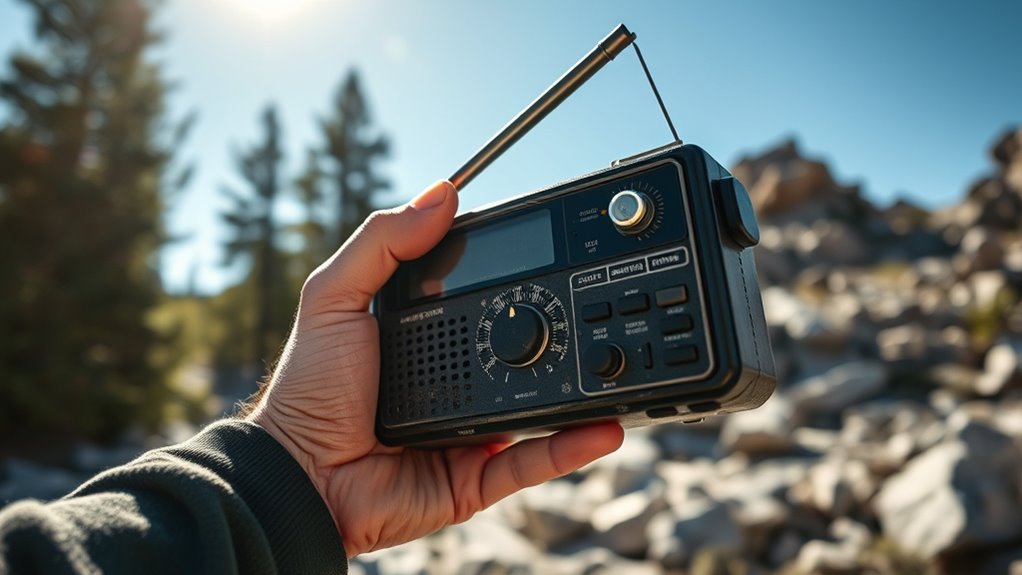

In remote camping, you should know emergency channels like NOAA Weather Radio for alerts, national or regional emergency frequencies, and local park or rescue channels. Most radio devices have dedicated buttons or channels for emergencies, so familiarize yourself before heading out. Using these channels correctly can be lifesaving if you need help. Knowing how to access and operate them ensures you’re prepared when it counts—continue on to discover more essential communication tips for your safety.
Key Takeaways
- Know regional emergency channels for local rescue services and law enforcement before camping.
- Program or memorize dedicated emergency frequencies on your radio or satellite device.
- Use designated emergency channels only for distress signals to prevent interference.
- Test and confirm access to emergency frequencies prior to your outdoor trip.
- Understand the proper procedures for transmitting distress calls on emergency channels.
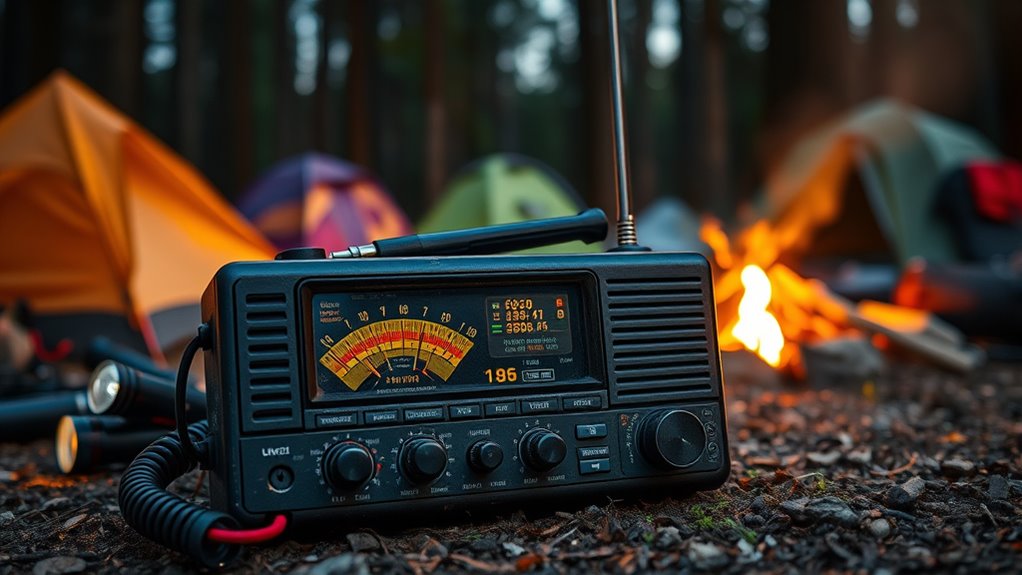
Ever wonder how campers stay connected and entertained in remote areas? It’s not just about having a good map or a reliable compass; staying safe requires knowing which radio channels to tune into, especially during emergencies. One of the most essential aspects is understanding satellite communication options. When you’re deep in the wilderness, cell service often disappears, leaving you reliant on satellite communication devices. These devices use satellites orbiting the Earth to transmit your voice or data, making it possible to contact emergency services or loved ones even in the most isolated locations. Whether you’re using a satellite phone or a specialized GPS device with satellite capabilities, being familiar with how to operate and access these channels can be a lifesaver. Satellite communication doesn’t just help you stay connected; it plays a key role in emergency signaling. If you find yourself in a situation where traditional signals are unavailable, activating your satellite device to send an SOS or distress signal can be the difference between rescue and prolonged danger. Most satellite communication devices have dedicated emergency channels or buttons designed specifically for this purpose. You should learn how to quickly access these channels and confirm they’re working properly before heading out. Carrying a device with reliable satellite communication is a smart way to guarantee you can reach help if necessary, no matter how remote your campsite. Additionally, satellite communication technology continues to evolve, providing more reliable and comprehensive coverage even in the most challenging environments. Besides satellite options, it’s important to be aware of local emergency frequencies that are often monitored by rescue agencies. These channels usually include law enforcement, park rangers, and search-and-rescue teams. Knowing the correct channels to listen to or transmit on during an emergency can expedite rescue efforts. Many regions have designated frequencies for emergency signaling, and some radios allow you to program these into your device for quick access. Remember, not all channels are open for general use, so it’s essential to understand which ones are reserved for emergencies and how to use them responsibly. Familiarize yourself with the specific emergency channels relevant to your camping area before you go. Being prepared with the right knowledge about satellite communication and emergency signaling channels ensures you’re not caught off guard. It’s about staying safe, prepared, and confident that, even in the most remote spots, you can alert others if needed. Investing time in understanding these channels is a small step that can profoundly impact your safety and peace of mind during your outdoor adventures.
Frequently Asked Questions
How Do I Program Emergency Channels Into My Handheld Radio?
To program emergency channels into your handheld radio, start by accessing the programming menu, usually via a menu button or keypad. Use the programming steps outlined in your device’s manual to enter the frequency lists for emergency channels. Input each frequency carefully, saving your settings after each entry. Once done, test the channels to verify they’re correctly programmed and ready for use in emergencies.
Are There Specific Channels for Different Types of Emergencies?
Yes, there are specific channels for different emergencies, based on emergency channel distinctions and frequency allocation protocols. For example, you’ll find designated channels for medical emergencies, fire alerts, and search and rescue operations. These channels are set aside to guarantee clear communication during crises. Make sure you familiarize yourself with these specific channels and their purposes before heading out, so you can respond quickly and effectively in any emergency situation.
Can Civilians Legally Use Emergency Frequencies During a Crisis?
Did you know that only about 20% of civilians are aware of legal restrictions on emergency radio use? During a crisis, you can technically use emergency frequencies, but it’s illegal without proper radio licensing. Misusing these channels can interfere with rescue efforts and lead to fines. Always verify your radio is licensed or stick to designated channels for civilians to stay within legal boundaries and support emergency services effectively.
What Is the Range of Typical Emergency Radio Channels?
You’ll find that typical emergency radio channels have an antenna range of around 20 to 50 miles, depending on terrain and antenna quality. Signal strength can vary, especially in dense forests or mountains, which may reduce effective communication. To maximize reach, use a high-gain antenna and confirm your device is properly tuned. Keep in mind, obstacles and weather conditions also influence how far your emergency transmissions can go.
How Often Do Emergency Frequencies Change or Get Updated?
Emergency frequencies usually stay stable for long periods, but updates can happen as agencies adjust protocols or improve communication. You should check for frequency updates regularly, especially before heading out, to make certain your channels remain reliable. Keep in mind that channel stability is essential, so staying informed through official sources or local authorities helps you avoid outdated or changed frequencies during emergencies.
Conclusion
Think of these radio channels as your guiding stars in the night sky, leading you safely through the wilderness. Just as sailors rely on their stars to navigate rough waters, you can trust these frequencies to steer you clear of trouble and connect you with help when you need it most. Keep your radios tuned and your wits sharp—because in the vast forest, a trusted channel is your compass, guiding you home safely.