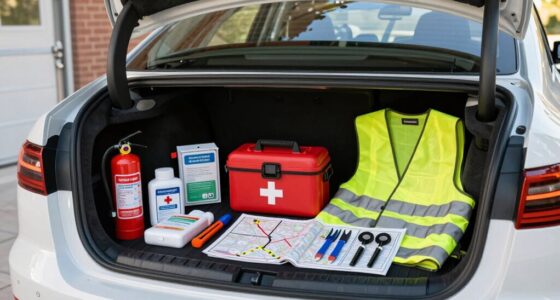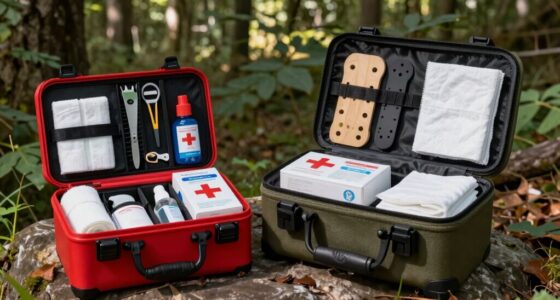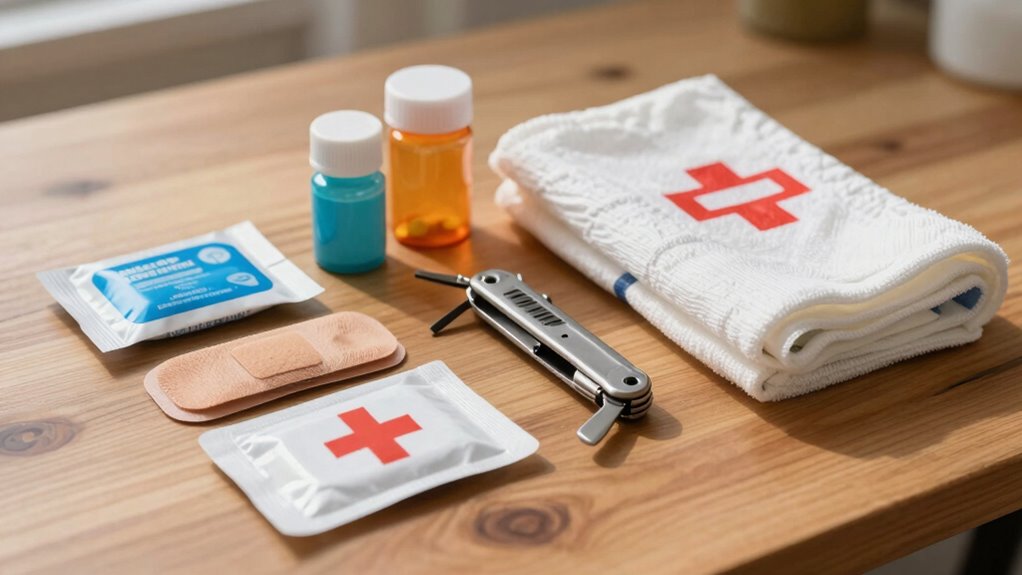

Modern first aid planning begins long before you pack supplies because strategic preparation and training are essential for quick, confident responses in emergencies. By understanding the importance of a well-thought-out plan, you can organize supplies effectively, know where everything is, and practice skills regularly. Preparing proactively helps prevent panic and guarantees everyone is ready to act. Keep going to discover how creating solid plans and training can make all the difference when seconds count.

Get emergency and outdoor gear delivered free — and shop member deals
- Fast, free delivery on millions of items
- Access to Prime Big Deal Days deals on October 6–7
- Prime Video, Amazon Music and more included
Key Takeaways
- A comprehensive plan ensures quick, effective responses during emergencies, reducing reliance solely on supplies.
- Pre-planning helps identify necessary items tailored to specific risks and environments.
- Establishing storage and access procedures minimizes chaos and delays in critical moments.
- Training and routines developed beforehand boost confidence and response efficiency when it matters most.
- Proactive planning fosters environmental awareness to prevent hazards and enhance overall safety.
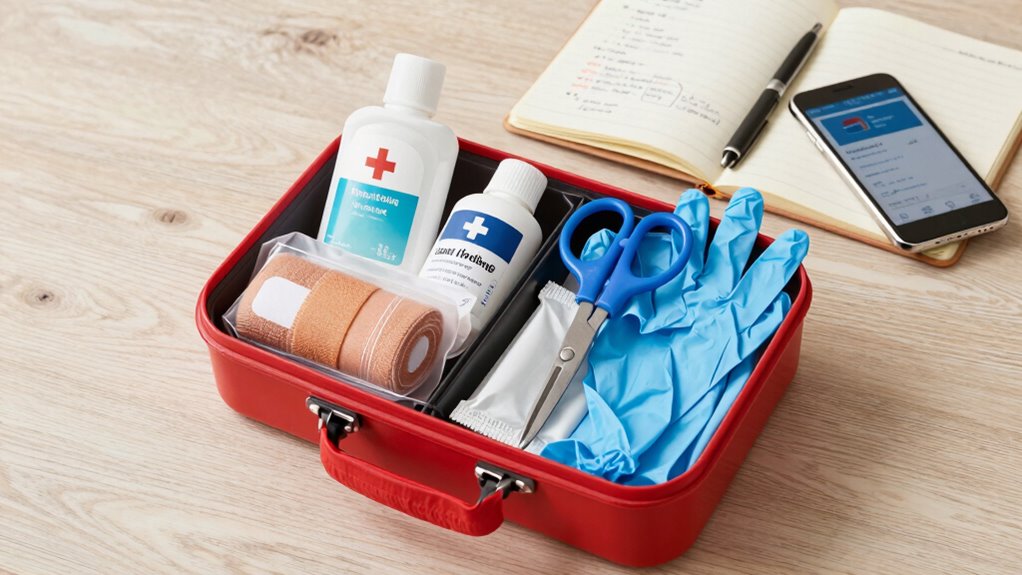
Have you ever considered how a well-thought-out first aid plan can make all the difference in an emergency? It’s not just about tossing a few bandages into a bag and hoping for the best. Modern first aid planning starts long before you pack your kit. It begins with understanding the significance of a solid strategy that includes an emergency supply and training protocols. These elements guarantee you’re prepared to act confidently when seconds count.
An emergency supply isn’t just about having supplies on hand; it’s about selecting the right ones and knowing how to use them. You need more than just antiseptic wipes and bandages—you should include items tailored to common emergencies you might face, like splints, gloves, or even an emergency blanket. But having supplies isn’t enough. Your plan should clearly outline where those supplies are stored, how to access them quickly, and how to maintain them regularly. This foresight prevents chaos in a crisis, where every second matters. Incorporating safety protocols into your planning can further enhance your readiness by ensuring everyone knows how to respond appropriately.
Training protocols are equally crucial. Knowing how to use your first aid kit is essential, but it’s equally important to practice those skills regularly. You might have all the supplies you need, but if you’re unsure how to perform CPR or treat a burn, your response could be delayed or ineffective. That’s why modern first aid planning emphasizes ongoing training. Participating in certified courses or simulation drills helps you stay sharp and confident. These protocols also cover how to assess the situation quickly, call for help, and prioritize actions—skills that can make the difference between life and death. Incorporating training programs ensures that your team remains prepared and confident in emergency situations.
Starting your planning early means you’re not rushing when an emergency strikes. It’s about creating a detailed plan that includes where your emergency supply is kept, who is trained to assist, and how to coordinate response efforts. This preparation reduces panic and ensures everyone knows their role. It also encourages a mindset of readiness, making emergency response a part of your routine rather than a last-minute scramble. Moreover, understanding biodiversity can help you recognize natural hazards in your environment and prepare accordingly.
In essence, modern first aid planning is proactive. It’s about establishing a foundation of knowledge, organizing supplies efficiently, and practicing skills regularly. When you invest time in these areas before an emergency occurs, you’re not just reacting—you’re confidently managing the situation and potentially saving lives. So, remember: the best first aid kit isn’t just what’s inside it; it’s the detailed plan you’ve built around it.
comprehensive first aid kit with splints
As an affiliate, we earn on qualifying purchases.
As an affiliate, we earn on qualifying purchases.
Frequently Asked Questions
How Often Should I Review My First Aid Kit?
You should review your first aid kit at least once every three to six months. Regular kit maintenance guarantees your first aid supplies are current and complete, ready for any emergency. Check for expired medications, missing items, or damaged supplies. By staying proactive, you keep your first aid kit reliable and effective, so you’re prepared when you need it most. Regular reviews help you avoid surprises in critical moments.
What Are Essential First Aid Skills Everyone Should Learn?
You need to master essential first aid skills, like basic life support and wound management, because they can make the difference between life and death. Learn how to perform CPR, control bleeding, and treat burns confidently. These skills are powerful tools that empower you to act quickly and effectively in emergencies, turning you into a lifesaver. The more you practice, the more you’ll feel like a superhero ready to help anytime.
How Can I Customize My First Aid Kit for Specific Activities?
You can customize your first aid kit by including personalized supplies tailored to your specific activities, like adding blister treatments for hikes or extra sunscreen for outdoor sports. Create activity-specific kits that focus on common injuries you might encounter, such as sprains or cuts. This way, you’re prepared for the unique risks of each activity, ensuring quick, effective responses and peace of mind during your adventures.
What Legal Considerations Are Involved in Providing First Aid?
You should understand legal liabilities and consent protocols when providing first aid. Legally, you might be liable if you cause harm or act negligently, so knowing your local laws helps protect you. Always obtain consent from the injured person before offering aid, unless they’re unconscious or unable to give it. Staying informed about these legal considerations guarantees you provide effective, ethical assistance while minimizing potential legal issues.
How Do I Handle Language Barriers in Emergencies?
When facing language barriers in emergencies, you should use simple, clear language and avoid jargon. Be aware of translation challenges and cultural differences that may affect understanding. Keep a multilingual first aid card or translation app handy to communicate effectively. Use gestures and visual aids to supplement your words, and stay patient and respectful. These steps help guarantee you deliver essential aid despite language differences.
first aid training certification courses
As an affiliate, we earn on qualifying purchases.
As an affiliate, we earn on qualifying purchases.
Conclusion
So, don’t wait until an emergency strikes to plan your first aid approach. Preparing beforehand might seem like extra effort, but it’s the difference between panic and confidence when seconds matter. Remember, good planning isn’t about fearing accidents; it’s about empowering yourself to act swiftly and effectively. By thinking ahead, you’re not just reacting—you’re actively protecting yourself and others. That’s the true essence of modern first aid: readiness that saves lives when it counts most.
emergency preparedness first aid supplies
As an affiliate, we earn on qualifying purchases.
As an affiliate, we earn on qualifying purchases.
waterproof first aid kit for outdoor use
As an affiliate, we earn on qualifying purchases.
As an affiliate, we earn on qualifying purchases.
Fall Picks
fall essentials
As an affiliate, we earn on qualifying purchases.