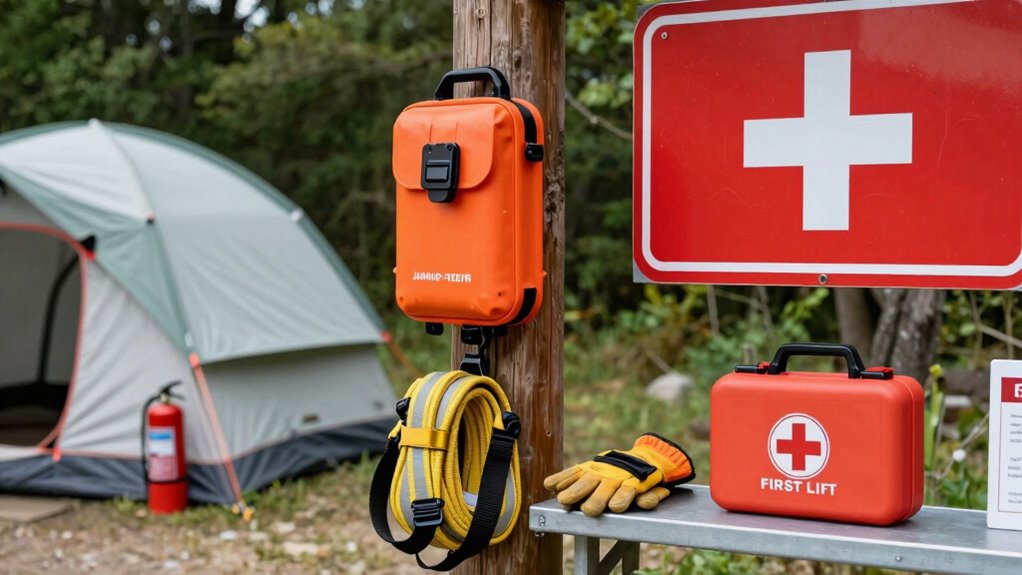

In a safety-focused camp, practical redundancy means having multiple backup systems in place, like satellite phones and two-way radios on different frequencies, so you’re never stranded without communication. Regularly inspecting and maintaining safety equipment guarantees it works when needed, while keeping spare gear ready saves time during emergencies. Assigning roles to multiple team members and cross-training adds extra layers of protection. Keep these strategies in mind, and you’ll strengthen your camp’s safety even further.

Get emergency and outdoor gear delivered free — and shop member deals
- Fast, free delivery on millions of items
- Access to Prime Big Deal Days deals on October 6–7
- Prime Video, Amazon Music and more included
Key Takeaways
- Implement multiple safety systems and layers to ensure continuous protection despite individual system failures.
- Use diverse backup communication methods, such as satellite phones, two-way radios, and visual signals.
- Conduct regular maintenance and inspections of all safety equipment, keeping spare parts readily available.
- Assign multiple team members to critical safety roles, ensuring responsibilities are covered if someone is unavailable.
- Cross-train staff on safety protocols to create procedural redundancy and prevent reliance on a single individual.

Have you ever considered what happens if your primary safety measures fail in a camp setting? It’s a crucial question because, in outdoor environments, relying solely on one safety system can lead to dangerous situations. That’s where practical redundancy becomes essential. When you plan for safety, you need multiple layers of protection, especially around emergency communication and equipment maintenance, to guarantee everyone stays safe even if something goes wrong.
Emergency communication is a key area where redundancy saves lives. You shouldn’t depend on just a single radio or cell signal. Instead, have backup communication methods in place. For example, if your primary radio fails or loses signal, satellite phones or two-way radios with different frequencies can step in. Visual signals like whistles or flares also serve as reliable backups, especially in remote locations where electronic communication might be compromised. Regularly testing and maintaining these devices ensures they work when needed. You want to avoid a situation where a critical device malfunctions because it wasn’t checked or maintained properly. Scheduling routine equipment maintenance, including battery checks and cleaning, helps prevent failures during emergencies. Also, keep spare batteries and chargers available to guarantee devices remain operational at all times.
Equipment maintenance is another essential aspect of safety redundancy. Your safety gear—such as first aid kits, fire extinguishers, and shelter structures—must be routinely inspected and maintained. Faulty or expired equipment can be ineffective or even dangerous. For example, a fire extinguisher that hasn’t been checked might not operate correctly in an emergency. Establish a regular maintenance schedule, and train your team to recognize signs of wear or damage. Keep spare equipment on hand, so you can quickly replace or repair items without delay. This approach minimizes the risk that a single piece of malfunctioning gear compromises safety. Incorporating preventive maintenance into your safety plan can further reduce the likelihood of equipment failure during critical moments.
In addition to these technical measures, it’s crucial to implement procedural redundancies. For example, don’t rely on just one person to handle safety tasks. Assign multiple team members to key roles, such as emergency communication or equipment checks. This way, if someone is unavailable or incapacitated, others can step in seamlessly. Cross-training staff on safety protocols ensures everyone understands their responsibilities, creating a safety net that catches potential gaps.
As an affiliate, we earn on qualifying purchases.
Frequently Asked Questions
How Do You Train Staff on Redundancy Procedures Effectively?
You train staff on redundancy procedures effectively by conducting regular staff drills focused on emergency protocols. Guarantee everyone understands their roles during various scenarios and practice these situations multiple times. Use real-life simulations to reinforce learning, encourage questions, and provide feedback. Keep training sessions consistent and updated, so staff remains confident and prepared, fostering a safety-first culture where redundancy procedures become second nature during emergencies.
What Are Common Challenges in Implementing Redundancy Plans?
You may face challenges like balancing emergency preparedness and risk management, making it tough to implement redundancy plans smoothly. Resistance from staff who feel overburdened or skeptical about new procedures can also arise. Ensuring everyone understands the importance of redundancy is key, but aligning resources and training effectively takes effort. Clear communication, ongoing training, and fostering a safety-first culture help overcome these obstacles and strengthen your camp’s safety system.
How Often Should Redundancy Systems Be Tested or Reviewed?
You should test your redundancy systems regularly, ideally through scheduled maintenance and emergency drills. These drills help identify potential issues before real emergencies occur. Conduct reviews at least quarterly, adjusting based on equipment performance and safety protocols. Regular testing ensures all backup systems function correctly, reducing risks. Keep detailed records of tests and maintenance to track system reliability, fostering a safety-first environment in your camp.
What Budget Considerations Are Involved in Redundancy Planning?
Think of redundancy as the safety net beneath a tightrope—cost considerations are essential. You need to conduct a thorough cost analysis to balance safety and budget, ensuring resource allocation is efficient. Prioritize important systems for redundancy, avoiding overinvestment in less significant areas. While initial costs may seem high, investing wisely in redundancy minimizes risks and long-term expenses, ultimately safeguarding lives and camp operations.
How Is Redundancy Adapted for Different Types of Camp Activities?
You adapt redundancy by ensuring equipment diversity tailored to each activity, like extra life vests for water sports or backup generators for outdoor events. You also implement activity-specific protocols, such as safety drills for high-risk tasks and designated emergency responses. This approach guarantees that, regardless of the activity, your camp maintains safety standards, minimizes risks, and keeps operations running smoothly even if primary equipment or procedures encounter issues.
two-way radios with multiple frequencies
As an affiliate, we earn on qualifying purchases.
As an affiliate, we earn on qualifying purchases.
Conclusion
By embracing practical redundancy, you create a safety net that catches every fall, just like a well-woven parachute. I once saw a camp where two leaders carried radios—each confident the other could call for help if needed. When one radio failed, the other was ready, proving that redundancy isn’t just extra — it’s essential. Think of it as planting multiple seeds; even if one fails, others guarantee your safety blooms.
camp safety equipment maintenance kit
As an affiliate, we earn on qualifying purchases.
As an affiliate, we earn on qualifying purchases.
emergency signaling devices for outdoor
As an affiliate, we earn on qualifying purchases.
As an affiliate, we earn on qualifying purchases.
Fall Picks
fall essentials
As an affiliate, we earn on qualifying purchases.