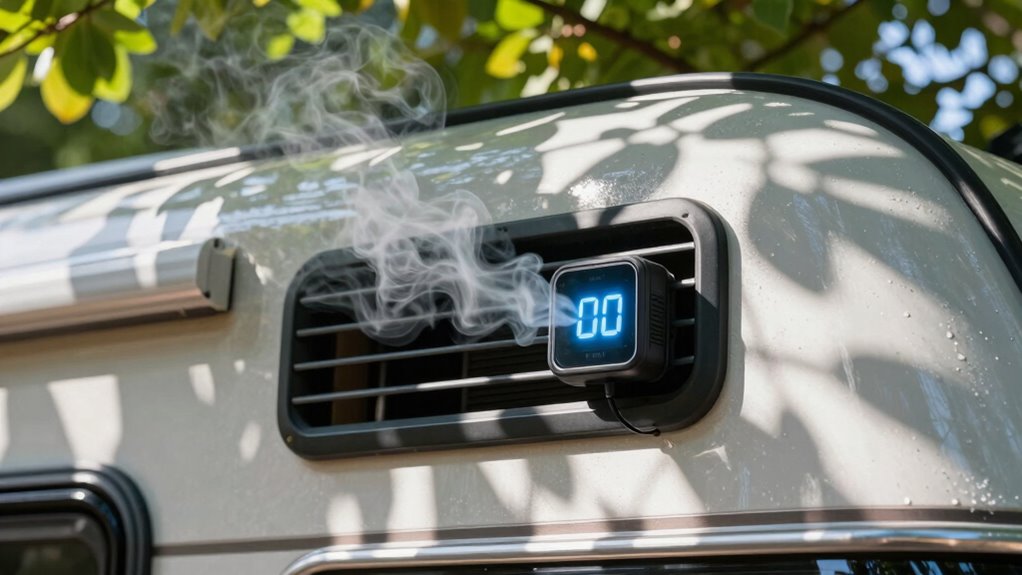

As a smart camper, you understand the importance of managing smoke, heat, and air quality to stay safe outdoors. You keep campfires supervised and fully extinguished, set up good ventilation, and stay alert for signs of poor air quality like difficulty breathing or eye irritation. You also use heat sources responsibly and follow local fire rules. If you want to learn more about protecting yourself from these risks and ensuring comfort, keep exploring these tips.
Key Takeaways
- Proper ventilation of tents and cooking areas reduces smoke buildup and minimizes indoor air pollution.
- Monitoring air quality with devices or alerts helps campers respond quickly to smoke or poor air conditions.
- Managing heat sources responsibly, including fire pits and heaters, prevents accidental fires and smoke inhalation.
- Keeping flammable materials away from heat sources and ensuring fires are fully extinguished enhances safety.
- Staying informed about weather and air quality conditions allows campers to adjust activities and protect health.
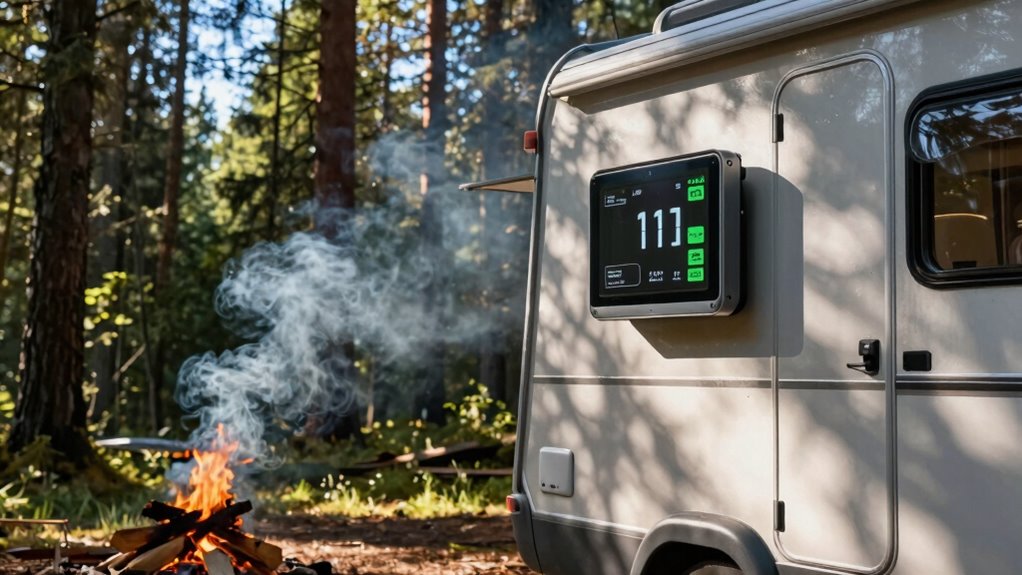
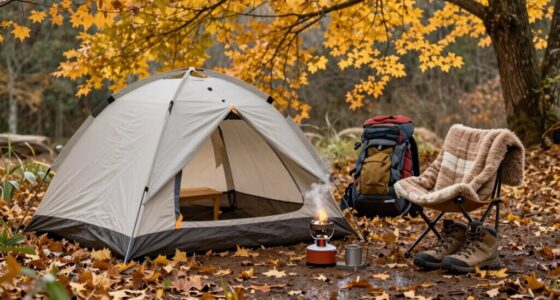
When you’re out camping, guaranteeing your safety often depends on monitoring your environment, especially when it comes to smoke, heat, and air quality. Being a smart camper means understanding how these elements interact and taking proactive steps to stay safe. Fire safety is a top priority because campfires, grills, and even portable stoves pose risks if not managed properly. Always keep a close eye on your fire, never leaving it unattended, and make sure it’s fully extinguished before sleeping or leaving the site. Carrying a fire extinguisher or having a bucket of water nearby can make all the difference if things go wrong.
Always supervise campfires and keep extinguishing tools nearby for safety.
Ventilation tips are essential to prevent dangerous buildup of smoke and fumes. If you’re sleeping inside a tent, ensure it’s well-ventilated to allow fresh air to circulate and reduce smoke inhalation risks. When cooking or using any heat sources inside or near your shelter, keep windows or vents open to promote air flow. This not only cuts down on smoke but also helps regulate heat, preventing overheating or carbon monoxide accumulation. If your campsite has a designated cooking area, set up away from tents and sleeping spots to minimize exposure to smoke and heat. Good ventilation isn’t just about comfort; it’s a critical safety measure. Additionally, understanding the air quality monitoring technology can help you make more informed decisions about your safety in smoky conditions.
Monitoring air quality is another key aspect of being a smart camper. Smoke from wildfires, campfires, or cooking can quickly compromise the air you breathe. Use portable air quality meters if available, or simply stay alert to any signs of smoky air, such as difficulty breathing or eye irritation. If you notice the air becoming thick with smoke, move to a cleaner, well-ventilated area immediately. Keep your tent zipped and sealed to prevent smoke from seeping inside, especially if you’re in an area prone to wildfires or heavy pollution. Drinking plenty of water helps your body flush out irritants and stay hydrated, especially when smoke levels are high. Furthermore, staying informed about air quality conditions through weather alerts or mobile apps can enhance your ability to respond appropriately. Being aware of local fire restrictions can also prevent accidental ignitions that might worsen air quality.
Understanding how heat impacts your campsite environment is essential. Use fire pits and heaters responsibly, always following manufacturer safety instructions. Keep flammable materials away from heat sources, and never leave them unattended. Be aware of weather conditions—hot, dry days increase fire risk, while cooler nights may tempt you to use additional heat sources, which require caution. Knowing how to manage heat and smoke, along with practicing solid fire safety and ventilation tips, makes you a smarter camper who’s better prepared for any scenario. Staying alert, proactive, and informed keeps your outdoor experience safe and enjoyable.
portable air quality monitor for camping
As an affiliate, we earn on qualifying purchases.
As an affiliate, we earn on qualifying purchases.
Frequently Asked Questions
How Often Should I Replace My Smoke Detector Batteries?
You should replace your smoke detector batteries at least once a year to guarantee proper battery maintenance. Check the detector placement to make sure it’s installed in the right spots, like near sleeping areas and kitchens, for maximum safety. If your detector starts chirping or the alarm becomes less responsive, it’s a sign to change the batteries immediately. Regularly testing your detector helps keep your camper safe and functioning properly.
Can Certain Plants Improve Air Quality Inside a Camper?
Certain indoor greenery can notably improve your camper’s air quality, turning it into a breath of fresh air. Plants like snake plants, pothos, and spider plants are natural air purifiers, filtering out toxins and increasing oxygen levels. Think of them as tiny, green air purifiers working tirelessly. Incorporating these plants into your camper creates a healthier, more vibrant environment, making every breath you take feel like a revitalizing mountain breeze.
What Are the Signs of Carbon Monoxide Poisoning?
If you notice symptoms like headache, dizziness, weakness, nausea, or confusion, you might be experiencing carbon monoxide poisoning. Recognizing these signs early is vital for your safety. You should immediately respond by moving to fresh air and seeking emergency response. Being aware of symptoms awareness helps you act fast, preventing serious health issues. Always make certain your camper has a working CO detector to alert you before symptoms appear.
How Do Altitude Changes Affect Smoke and Heat Detection?
Altitude effects can change how smoke behaves and how heat detectors respond, much like how a thin blanket feels lighter at higher elevations. As you ascend, thinner air causes smoke to disperse differently, often rising more quickly and spreading unevenly. This can lead to false alarms or delayed detection. Knowing how altitude impacts smoke behavior helps you guarantee your detectors work properly and keep you safe in changing environments.
Are There Eco-Friendly Options for Air Purification in Campers?
Yes, you can opt for eco-friendly air purification options in your camper. Consider filters made from natural or biodegradable materials that reduce environmental impact. Solar-powered purifiers are also a great choice, as they use renewable energy to keep your air clean without relying on electricity from the grid. These options help maintain good air quality while supporting sustainable camping practices, making your adventures both safe and eco-conscious.
As an affiliate, we earn on qualifying purchases.
Conclusion
By now, you understand how essential smoke, heat, and air quality are for safe camping. Did you know that the CDC reports that nearly 34% of camping-related injuries involve smoke inhalation? Staying aware of your surroundings and using proper equipment can keep you safe and healthy. Remember, a little knowledge goes a long way—so always prioritize good ventilation and smoke detectors. Happy camping, and breathe easy out there!
As an affiliate, we earn on qualifying purchases.
smoke and carbon monoxide detector for camping
As an affiliate, we earn on qualifying purchases.
As an affiliate, we earn on qualifying purchases.