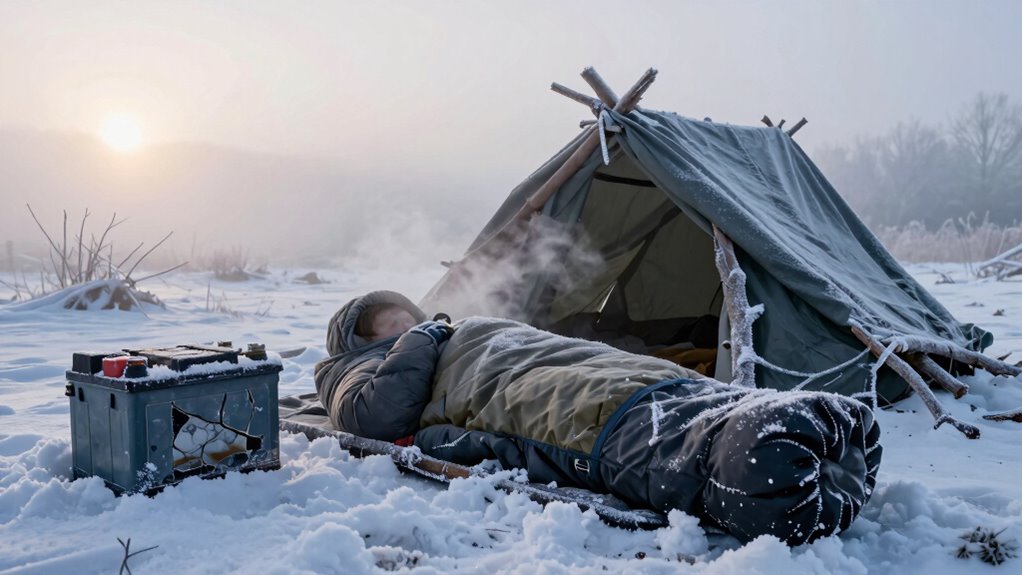

Cold weather forces you to adjust your decisions on batteries, shelter, and sleep. You’ll find batteries drain faster and work less efficiently, so keeping them warm or carrying extras is essential. Your shelter needs good insulation to prevent heat loss, so sealing drafts and adding blankets helps. For sleep, layer clothing, use insulating sleeping bags, and cover your head to stay warm. Learning why these changes matter can help you stay safe and comfortable in harsh conditions.

Get emergency and outdoor gear delivered free with Prime
- Fast, free delivery on millions of items
- Prime Video, Amazon Music and more included
- Member-only deals all year
Key Takeaways
- Cold weather decreases battery efficiency, requiring warmer storage or extra power sources to maintain device functionality.
- Insulation in shelters is crucial to prevent heat loss and reduce energy expenditure in cold conditions.
- Selecting appropriate insulating materials helps preserve warmth and extends shelter’s ability to retain heat.
- Using layered clothing, insulated sleeping bags, and thermal gear is essential for staying warm during sleep.
- Maintaining thermal regulation through proper insulation and environment control improves comfort and conserves energy.
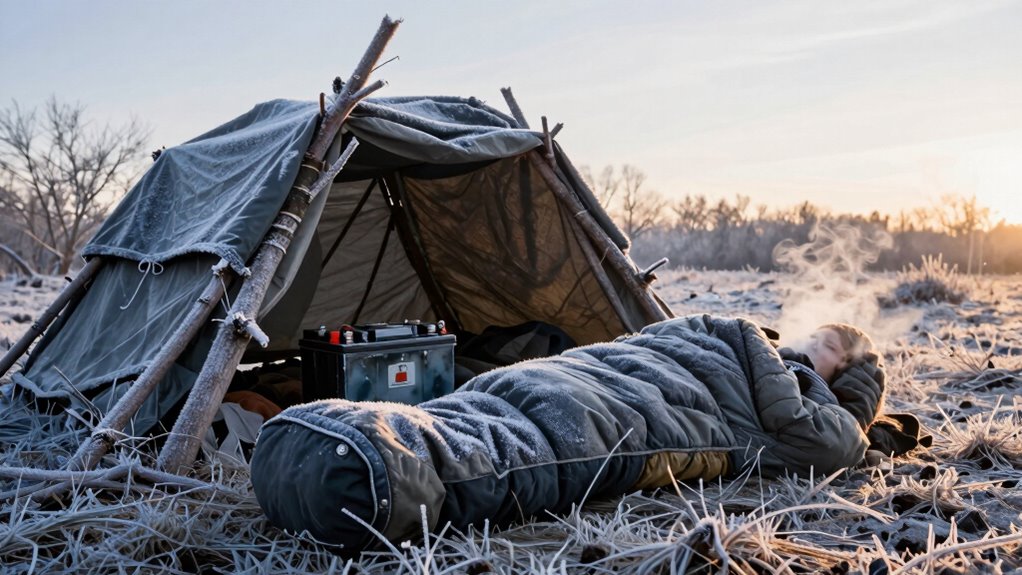
When temperatures drop, your decisions about batteries, shelter, and sleep shift considerably, often in ways you might not expect. Cold weather directly impacts battery efficiency, making it harder for batteries to deliver power reliably. As temperatures fall, chemical reactions inside batteries slow down, reducing their capacity and lifespan. This means your devices might drain faster or refuse to start altogether, especially if you rely on AAA, AA, or larger batteries. To counter this, you might need to carry extra power sources or keep batteries warm—storing them close to your body or in insulated containers. Recognizing how cold affects battery efficiency helps you plan better and avoid surprises when you least want them. Understanding battery chemistry is essential for optimizing your power management in cold conditions, as it explains why batteries behave differently in low temperatures.
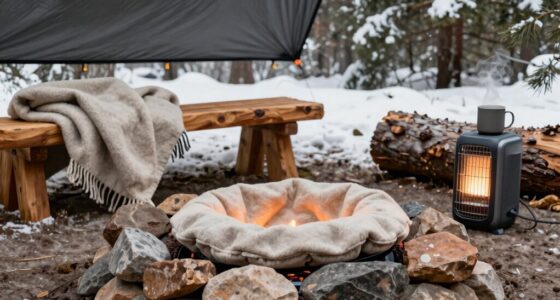
Shelter insulation becomes more critical as temperatures plummet. In cold weather, a poorly insulated shelter allows heat to escape quickly, forcing your body to work harder to stay warm. You need to prioritize insulation materials that trap heat—think thick blankets, thermal curtains, or insulated walls. Even small gaps or drafts can sap your warmth, so sealing cracks and using weather stripping becomes essential. When choosing a shelter, consider its ability to retain heat over time, not just its initial warmth. Proper insulation reduces the need for additional heating sources, conserving energy and resources. Without adequate shelter insulation, you risk rapid heat loss, which can lead to hypothermia or frostbite if you’re not careful. Additionally, understanding how insulation materials work helps you select the best options for maintaining warmth in extreme cold. Being aware of thermal properties can further aid in choosing effective insulation solutions.
Your sleep decisions also change as cold weather intensifies. When it’s cold outside, your body requires more energy to stay warm, and poor sleep can further impair your ability to generate heat. You might find yourself huddling under multiple blankets or sleeping in layered clothing, even indoors. Sleeping bags rated for low temperatures become invaluable, providing an extra barrier against the cold. It’s important to keep your head covered, since heat escapes quickly from exposed areas, and to avoid drafts that can disrupt your sleep. Cold environments can cause your body to shiver, which consumes energy and disrupts restful sleep. To maintain your energy and keep warm, you may need to adjust your bedtime routine, ensuring your sleeping environment stays as warm and insulated as possible. Properly managing your sleep in cold conditions helps preserve your strength and mental clarity, essential for navigating harsh weather. Additionally, using sleeping pads or mats can provide extra insulation from cold ground surfaces, further reducing heat loss. Being aware of thermal regulation can help you develop better strategies for staying warm and comfortable throughout the night.
Popular right now

Hisense 40-Inch Class QD4SR Series Hi-QLED FHD Smart Roku TV (2026 Model)

Ninja Crispi 5-in-1 Glass Air Fryer System, Emerald, FN103BF

Ninja CREAMi 7-in-1 Ice Cream Maker, NC301
As an affiliate, we earn on qualifying purchases.
Frequently Asked Questions
How Does Cold Weather Affect Battery Lifespan Over Time?
Cold weather shortens your battery lifespan because low temperatures slow down the chemical reactions within the battery chemistry. This reduces capacity and can cause permanent damage over time. To combat this, you need effective thermal management, keeping batteries warm and preventing extreme cold from affecting performance. Without proper thermal management, your battery’s efficiency drops, and its overall lifespan decreases as cold weather continues to take a toll.
What Materials Are Best for Insulating Shelters in Cold Climates?
You should choose insulation materials like rigid foam boards, spray foam, or sheep’s wool, which trap heat effectively. Studies show proper insulation can cut heat loss by up to 50%. Focus on shelter design that minimizes gaps and drafts, layering materials for better warmth. Combining these insulation materials with smart shelter design guarantees you stay warmer and more comfortable in cold climates, conserving energy and improving your overall safety.
How Can Sleep Quality Be Maintained in Freezing Temperatures?
To maintain sleep quality in freezing temperatures, focus on your sleep position to minimize heat loss and promote thermal regulation. Sleep on your back or side with layers of insulated bedding, such as sleeping pads and thermal blankets, to trap heat. Keep your head covered with a hat or thermal cap, and avoid drafts. Staying warm and comfortable helps your body regulate temperature naturally, ensuring better rest despite the cold.
Are There Specific Clothing Strategies to Stay Warm While Sleeping Outdoors?
Think of your clothing as a cozy nest that keeps you warm. To stay warm while sleeping outdoors, layer up with moisture-wicking base layers like thermal underwear first. Add insulating layers, such as fleece or down, then top with a waterproof shell. Make certain your clothing fits snugly but comfortably, trapping heat without restricting movement. This layered approach creates a barrier against the cold, helping you sleep soundly even in freezing temperatures.
What Emergency Measures Should Be Taken if Batteries Fail in Cold Conditions?
If batteries fail in cold conditions, you need emergency measures right away. Seek alternative power sources like portable solar chargers or hand-crank generators. Consider battery reconditioning techniques to potentially revive cold-damaged batteries. Keep spare batteries warm in your clothing or inside your shelter. Staying prepared with emergency power sources guarantees you can keep essential devices running, while reconditioning helps extend your battery life in challenging cold environments.
Conclusion
As the cold settles in like an uninvited guest, it quietly reshapes your choices—draining your battery, urging you to find better shelter, and prompting smarter sleep decisions. Just as a river carves its path through rock, your actions adapt to the icy terrain. Embracing these changes keeps you resilient against winter’s chill, turning challenges into opportunities for smarter survival. Stay flexible, stay warm, and let the cold teach you how to navigate its icy grip.