

Practicing your emergency contact procedures through communication drills helps you develop clear, concise, and confident messaging. Focus on prioritizing critical information, avoiding jargon, and confirming messages to prevent misunderstandings. Use simulated scenarios to enhance your discipline and composure under stress. Repetition builds familiarity, ensuring your team communicates efficiently during real emergencies. Keep drills realistic and varied to boost adaptability. Continue exploring these exercises to master the art of rapid, accurate communication in critical situations.

Get emergency and outdoor gear delivered free — and shop member deals
- Fast, free delivery on millions of items
- Access to Prime Big Deal Days deals on October 6–7
- Prime Video, Amazon Music and more included
Key Takeaways
- Conduct regular scenario-based drills to simulate emergency contact situations and reinforce proper communication protocols.
- Use standardized radio phrases and message prioritization to ensure clarity and efficiency during practice.
- Incorporate floating elements and unexpected variables to enhance adaptability and response confidence.
- Emphasize confirming receipt and understanding of messages to minimize misunderstandings.
- Review and debrief after each drill to identify areas for improvement and reinforce best practices.
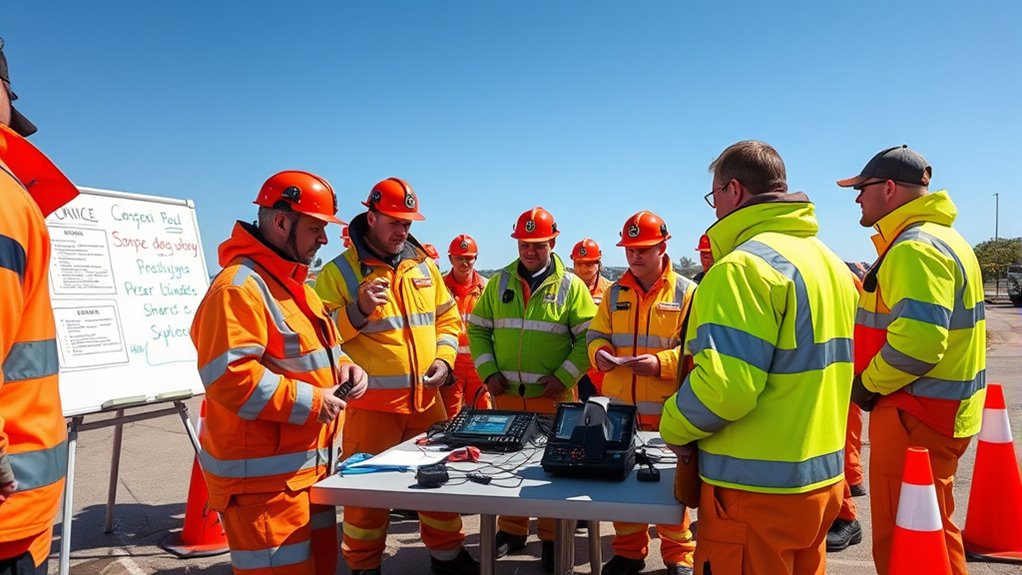
Have you ever wondered how effective communication can be sharpened through practice? When it comes to emergency contact procedures, honing your communication skills is essential. One of the most significant aspects is understanding and applying radio protocols. These protocols provide a structured way to transmit messages clearly and efficiently, especially in high-stakes situations where every second counts. By routinely practicing radio protocols during drills, you develop a familiarity that allows you to communicate confidently and without hesitation. You learn to use concise language, avoid jargon, and confirm messages, ensuring everyone stays on the same page. This familiarity translates into quicker, more accurate exchanges when real emergencies strike. Additionally, message prioritization becomes second nature through consistent drills. Knowing how to assign priority levels to messages helps you focus on critical information first, preventing less urgent details from clogging the communication channel. During your practice sessions, you’ll learn to identify which messages require immediate attention and which can wait, streamlining the overall process. This skill is key during emergencies, where chaos can easily lead to miscommunication or overlooked details. By practicing message prioritization, you become adept at triaging information, ensuring that essential updates reach responders promptly and efficiently. As you repeatedly simulate emergency scenarios, you internalize the importance of clear, direct communication, reducing misunderstandings that could have serious consequences. Incorporating radio protocols and message prioritization into your drills also helps build discipline and confidence. You start to recognize common pitfalls, such as ambiguous language or unnecessary details, and learn to avoid them. Over time, your ability to communicate with precision improves, making your responses more effective. The more you practice, the more natural these techniques become, helping you stay calm and composed under pressure. This consistency allows your team to function seamlessly, even in the most stressful situations. Remember, effective communication isn’t just about speaking; it’s about listening, confirming, and adapting quickly. Regularly engaging in communication drills that emphasize radio protocols and message prioritization ensures that these skills become second nature. When every second counts, your preparedness can make all the difference. So, take the time to practice deliberately and purposefully, reinforcing these essential elements of emergency communication. The effort you put into refining your skills now will pay off when it matters most, ultimately saving lives and preventing chaos during critical moments. Incorporating free floating elements into your training can also help simulate various scenarios and improve adaptability.
As an affiliate, we earn on qualifying purchases.
Frequently Asked Questions
How Often Should Emergency Contact Procedures Be Reviewed?
You should review your emergency contact procedures at least annually to verify a proper frequency review. Regularly checking and updating procedures helps identify any changes in contact information or protocols. It is crucial to incorporate procedure updates promptly, especially after significant organizational changes or drills. Staying proactive with these reviews guarantees your emergency contacts remain accurate and effective, minimizing confusion and delays during actual emergencies.
What Are Common Mistakes During Communication Drills?
During communication drills, you often make mistakes like neglecting clear messaging, rushing responses, or assuming understanding. These miscommunication pitfalls increase misinformation risks and hinder effective coordination. You might overlook verifying contact details or fail to use standardized language. To improve, practice concise, precise communication, confirm messages, and create opportunities for feedback. Avoid these common errors, and you’ll enhance your emergency response readiness and reduce the chances of critical misunderstandings.
How to Handle Language Barriers in Emergencies?
To handle language barriers in emergencies, focus on multilingual communication strategies and cultural sensitivity. Use visual aids, gestures, and simple language to guarantee clarity. Keep emergency contact information accessible in multiple languages. Be patient and respectful of cultural differences, which helps build trust. If possible, involve bilingual responders or translation tools. This approach guarantees everyone understands the situation quickly, facilitating effective emergency response and safety for all involved.
What Equipment Is Essential for Effective Communication?
You need to have essential equipment that keeps you connected when it counts. A reliable radio communication device is key for instant contact, especially in emergencies. Signaling devices like whistles, flares, or mirrors help draw attention when radios aren’t enough. Don’t put all your eggs in one basket; having multiple tools guarantees you’re prepared for any situation, making sure your message gets through loud and clear.
How to Involve Children in Emergency Communication Practice?
You involve children in emergency communication practice by encouraging child participation through engaging exercises. Make it fun by creating role-playing scenarios, like calling a family member or using walkie-talkies. Keep instructions simple and clear, and praise their efforts. Let them practice in a relaxed setting to build confidence. This approach helps children understand emergency procedures and stay calm during real situations.
professional radio communication headset
As an affiliate, we earn on qualifying purchases.
As an affiliate, we earn on qualifying purchases.
Conclusion
Practicing communication drills regularly boosts your readiness during emergencies. Did you know that organizations that conduct frequent drills are 50% more likely to respond effectively? By practicing your emergency contact procedures, you guarantee everyone knows what to do, reducing confusion and delays. Keep these drills consistent, and you’ll be better prepared when it matters most. Remember, effective communication can make all the difference in staying safe and coordinated during a crisis.
emergency message prioritization tools
As an affiliate, we earn on qualifying purchases.
As an affiliate, we earn on qualifying purchases.
practice emergency contact drills
As an affiliate, we earn on qualifying purchases.
As an affiliate, we earn on qualifying purchases.
Fall Picks
fall essentials
As an affiliate, we earn on qualifying purchases.