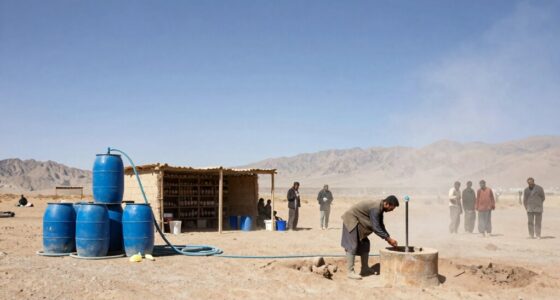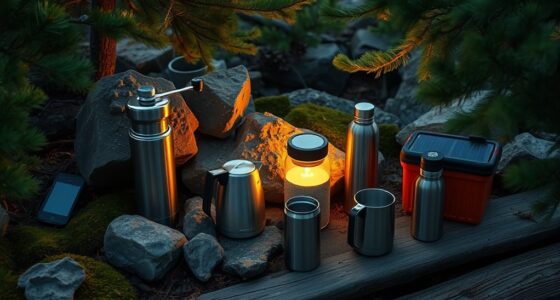
A solid water strategy is essential for your safety, health, and the environment during outdoor trips. It’s more than just finding water; it’s about ensuring it’s clean, managing your supply, and conserving resources for the long run. Proper planning prevents dehydration, protects you from waterborne illnesses, and supports sustainability efforts. If you want to stay safe and responsible in nature, understanding the importance of a well-thought-out water approach is key to your success.

Get emergency and outdoor gear delivered free with Prime
- Fast, free delivery on millions of items
- Prime Video, Amazon Music and more included
- Member-only deals all year
Key Takeaways
- Effective water management ensures access to safe, clean water, preventing health risks during outdoor adventures.
- Proper planning conserves water resources, reducing shortages and reliance on uncertain or contaminated sources.
- Water purification techniques protect campers from waterborne illnesses in unpredictable environments.
- Sustainable water strategies support environmental conservation and adapt to climate change impacts.
- Integrating water management into outdoor routines enhances safety, resilience, and long-term sustainability.

Have you ever considered how crucial water management is to our daily lives and future sustainability? It’s easy to overlook, especially when you’re focused on planning your next camping trip or outdoor adventure. But understanding the importance of a solid water strategy can make a big difference—not just for your comfort, but for your safety and the health of the environment. When you’re out in the wild, reliable access to clean water isn’t a luxury; it’s a necessity. That’s where water purification comes into play. Knowing how to purify water effectively ensures you don’t fall ill from contaminated sources. Whether you’re using filtration systems, boiling, or chemical treatments, your ability to purify water on the spot can be the difference between a successful trip and a health crisis. Proper water purification methods protect you from waterborne illnesses and provide peace of mind, especially when potable sources are scarce or uncertain.
Alongside purification, hydration planning is equally critical. It’s not just about carrying enough water but understanding your hydration needs based on activity, weather, and duration. A well-thought-out hydration plan allows you to conserve water and avoid dehydration, which can impair your judgment and physical performance. When you plan ahead, you’re less likely to scramble for water or rely on questionable sources, reducing your risk of illness. It also helps you manage your water usage efficiently, ensuring you don’t run out at critical moments. This strategic approach to water management extends beyond just your personal safety; it’s about safeguarding your entire experience and minimizing your environmental footprint. Incorporating reliable water sources and advanced filtration techniques can further enhance your safety and sustainability in the outdoors. Recognizing the importance of water conservation can also help you adapt to changing climate conditions and safeguard resources for future generations. Understanding the regional flavors of water sources can help you identify the most sustainable and safe options in different environments. Additionally, learning about water quality indicators can assist you in assessing the safety of local water sources more accurately. Being aware of climate impacts on water availability can help you plan better and avoid shortages during critical times.
A robust water strategy also considers the future. As climate change impacts water availability, your approach to managing water resources becomes even more crucial. Learning how to identify sustainable water sources and implement conservation techniques ensures you’re not just surviving but thriving in changing conditions. It encourages responsible usage, which benefits ecosystems and communities alike. By integrating water purification and hydration planning into your outdoor routines, you’re actively participating in a broader effort to protect water resources for others. Ultimately, a strong water strategy isn’t just for emergencies; it’s a fundamental part of responsible outdoor living and long-term sustainability. Recognizing its importance helps you stay prepared, resilient, and environmentally conscious, making your adventures safer and more meaningful.
Popular right now

Philips Café Aromis Automatic Espresso Machine with LatteGo Pro Milk System

Samsung QN65LS03FAFXZA 65 The Frame QLED 4K Art Mode Vision AI Smart TV (2025)

Dyson Cyclone V10 Origin Cordless Vacuum
As an affiliate, we earn on qualifying purchases.
Frequently Asked Questions
How Do I Find Reliable Water Sources While Camping?
To find reliable water sources while camping, you should research beforehand and identify nearby streams, lakes, or springs known for clean water. Always verify water source reliability by checking recent reports or talking to locals. Practice proper camping water maintenance by filtering, boiling, or using purification tablets. Carry extra water, and store it safely to avoid contamination. Staying vigilant guarantees you always have access to safe, reliable water during your trip.
What Are the Best Methods for Water Purification?
Think of water purification as your shield against unseen enemies. You can use water filtration systems to physically remove bacteria and debris, ensuring clear, safe water. Chemical purification, like iodine or chlorine tablets, acts quickly to neutralize viruses and pathogens. Combining both methods offers the best protection, especially when water sources are uncertain. Be proactive—your health depends on choosing the right purification techniques to keep you safe on your adventure.
How Much Water Should I Carry for a Weekend Trip?
For a weekend trip, you should carry about 1 to 2 gallons of water per person daily, totaling 3 to 6 gallons. Focus on water storage that’s lightweight and easy to carry, and prioritize hydration planning to guarantee you have enough water for drinking, cooking, and minimal washing. Always consider your activities and climate, and pack extra if you’ll be exerting yourself or facing hot weather.
Can Water Contamination Occur Without Visible Signs?
You might not see it, but invisible pollutants can sneak into your water, silently posing contamination risks. These microscopic threats, like bacteria or chemicals, can contaminate your supply without any visible signs. This means your water appears clear and clean, yet still harbors hidden dangers. Always treat or filter your water, because relying solely on appearance leaves you vulnerable to these unseen threats that could spoil your trip or harm your health.
What Are the Environmental Impacts of Water Collection?
When you gather water, you can unintentionally cause environmental impacts like ecosystem disruption, affecting local flora and fauna. Excessive water collection reduces water availability for wildlife and plants, leading to habitat loss. Practicing water conservation helps minimize these effects. By being mindful of your water use, you support healthy ecosystems, reduce stress on water sources, and make certain the environment remains balanced for future generations.
Conclusion
Remember, your water strategy is the silent compass guiding your journey through the wilderness. Just as a skilled captain navigates treacherous waters with purpose, your careful planning guarantees you won’t be lost in the desert’s endless sands or the forest’s shadowy depths. Water isn’t just a resource; it’s the heartbeat of your adventure. Respect it, plan ahead, and let it be the steady current that carries you safely to your destination’s shores.