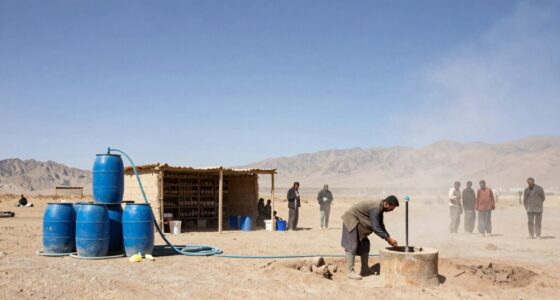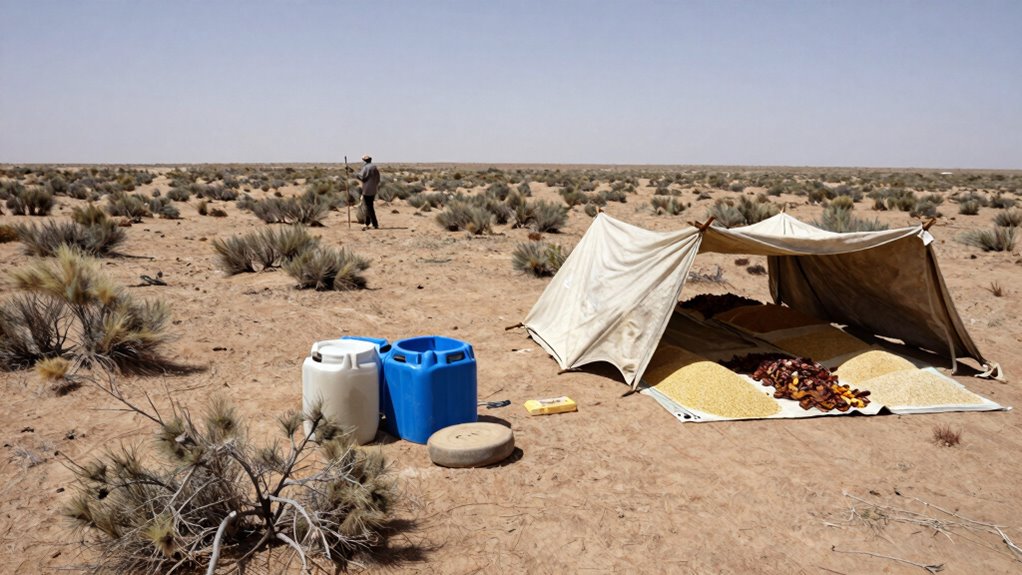

In remote areas, water and food planning become vital because limited infrastructure and environmental challenges can threaten your access to essential resources. You need to develop sustainable strategies that use local, renewable sources and involve the community’s knowledge to guarantee long-term resilience. Proper planning helps conserve water, diversify crops, and build resilient infrastructure. By understanding these approaches, you’ll learn how strategic resource management can improve survival and community well-being in isolated environments.
Open a free Amazon Business account
Business pricing, bulk buying and tax-exempt orders.
As an affiliate, we earn on qualifying purchases.
Key Takeaways
- Limited infrastructure necessitates strategic planning to ensure consistent water and food access.
- Local resource management and sustainable sourcing reduce dependency on external supplies.
- Community participation and traditional knowledge guide effective, culturally appropriate resource strategies.
- Infrastructure development like rainwater harvesting and resilient irrigation supports resource reliability.
- Education on conservation and sustainable practices enhances long-term resource availability and resilience.
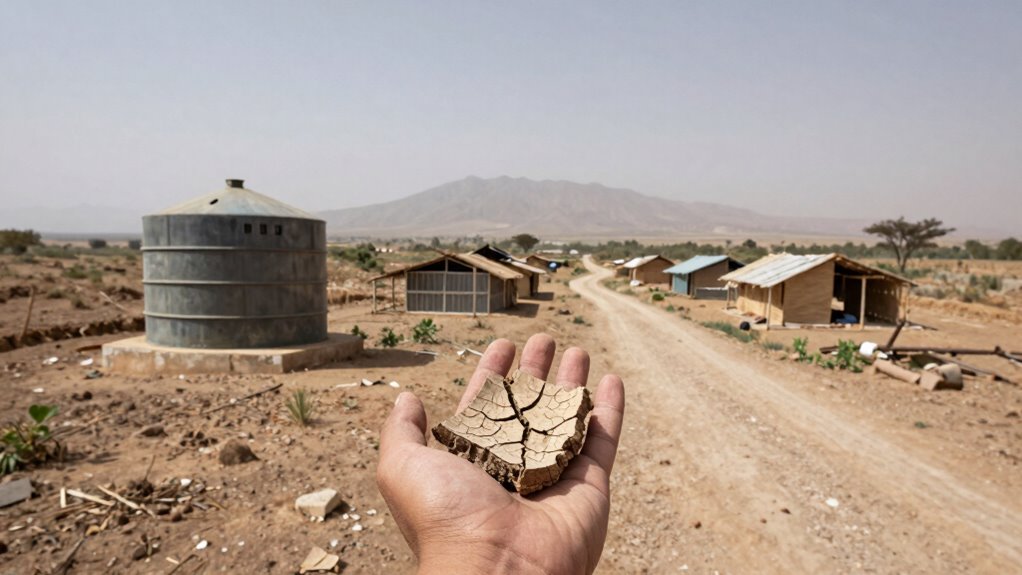
In remote areas, ensuring reliable access to water and food remains a significant challenge, especially when infrastructure is limited. Without centralized systems, you need to think creatively about how to secure resources that sustain your community. One effective approach is sustainable sourcing, which emphasizes using local, renewable resources responsibly to meet immediate needs while preserving those resources for future use. This means identifying water sources that can be maintained without depleting the environment and selecting food options that are adapted to the local climate and soil conditions. Sustainable sourcing not only minimizes environmental impact but also reduces dependence on external supplies, increasing resilience over time. Incorporating appropriate technology can further enhance resource management and efficiency in these settings. Additionally, adopting innovative resource management strategies can help optimize the use of available water and food supplies, ensuring long-term sustainability. Utilizing local knowledge is crucial in understanding the land’s capacity and limitations, guiding more effective planning. Recognizing the importance of community participation ensures that solutions are culturally appropriate and more likely to succeed.
Community engagement plays a crucial role in making water and food planning successful in these areas. When you involve local residents in decision-making, you tap into their knowledge of the land and traditional practices, which can reveal sustainable options that outsiders might overlook. Engaging the community also fosters a sense of ownership and responsibility, encouraging everyone to participate in conservation efforts and resource management. For example, organizing workshops or meetings where community members share their experiences can lead to innovative solutions for water collection or crop cultivation. Moreover, community-driven initiatives often have better acceptance and sustainability because they align with local values and customs.
Engaging local residents fosters ownership, shares traditional knowledge, and promotes sustainable water and food solutions tailored to the community.
You must prioritize strategic planning that considers seasonal variations, rainfall patterns, and potential climate impacts. This involves developing water conservation strategies, like rainwater harvesting or storage tanks, and promoting crop diversification to reduce reliance on a single food source. Building resilient infrastructure, such as simple irrigation systems or community wells, can also make a significant difference. These systems should be designed with local input, ensuring they are practical, affordable, and easy to maintain. Additionally, educating community members about sustainable practices helps ensure the longevity of these initiatives. When everyone understands the importance of conserving water and using resources wisely, the community as a whole becomes more resilient to shortages or environmental disruptions.
Ultimately, your success in water and food planning hinges on fostering strong community engagement and prioritizing sustainable sourcing. By respecting local knowledge, involving residents in decision-making, and carefully managing resources, you can create a resilient system that supports both current needs and future growth. In remote areas, this balanced approach not only improves access to essential resources but also strengthens community bonds and promotes environmental stewardship. When everyone works together, the challenges of limited infrastructure become more manageable, paving the way for sustainable development and improved quality of life in these often-overlooked regions.
rainwater harvesting system for remote areas
As an affiliate, we earn on qualifying purchases.
As an affiliate, we earn on qualifying purchases.
Frequently Asked Questions
How Do Remote Communities Access Emergency Water Supplies During Shortages?
During shortages, you access emergency water supplies through organized emergency distribution systems, often set up by local authorities or aid groups. You rely on water storage tanks or containers to stockpile water beforehand. When needed, emergency distribution points supply clean water quickly, ensuring you have enough for drinking, cooking, and sanitation. This coordinated effort helps you manage limited resources effectively and stay safe during water crises.
What Technologies Are Used to Predict Food Shortages in Isolated Regions?
You leverage agricultural innovation and data analytics to predict food shortages in isolated regions. Advanced sensors and satellite imagery collect real-time data on crop health, weather patterns, and soil conditions. This information feeds into predictive models, helping you identify potential shortages early. By continuously analyzing these insights, you can make proactive decisions on resource allocation, improve crop yields, and prevent food crises in remote communities.
How Do Cultural Preferences Influence Food Planning in Remote Areas?
You feel the warmth of traditional food filling your senses, shaping your choices. Cultural dietary preferences deeply influence food planning in remote areas, guiding what’s cultivated, stored, and shared. These traditions preserve identity amid scarcity, ensuring communities thrive on familiar, meaningful meals. By respecting and integrating traditional food practices, you help develop sustainable plans that honor heritage, foster resilience, and nourish both body and soul in these isolated regions.
What Training Is Provided for Local Residents on Water Conservation?
You receive training on water management and conservation techniques that helps you use water more efficiently. The program teaches practical skills like fixing leaks, collecting rainwater, and using low-flow fixtures. These efforts aim to reduce water waste, ensuring the community has enough resources during dry seasons. By learning these techniques, you help protect water supplies and promote sustainability, making a significant difference in your remote area’s resilience.
How Do Climate Change Impacts Affect Long-Term Water and Food Strategies?
Climate change impacts force you to rethink your long-term water and food strategies. You need to focus on climate adaptation by incorporating sustainable practices that withstand changing weather patterns. This means developing resilience in your water sources and diversifying food supplies to reduce reliance on vulnerable systems. By prioritizing sustainability strategies, you guarantee that your community remains secure and adaptable, even as climate conditions continue to evolve unpredictably.
resilient irrigation kits for drought-prone regions
As an affiliate, we earn on qualifying purchases.
As an affiliate, we earn on qualifying purchases.
Conclusion
So, next time you think water and food planning in remote areas is just a boring chore, remember it’s basically the ultimate game of survival, played out in the real world. Without careful planning, you’re basically inviting chaos—like a series of unfortunate events, but for entire communities. So, maybe, just maybe, a little foresight and strategy could save lives rather than leave everyone scrambling like headless chickens. Who knew planning could be so glamorous?
As an affiliate, we earn on qualifying purchases.
As an affiliate, we earn on qualifying purchases.
NFL season / tailgating Picks
team gear
As an affiliate, we earn on qualifying purchases.