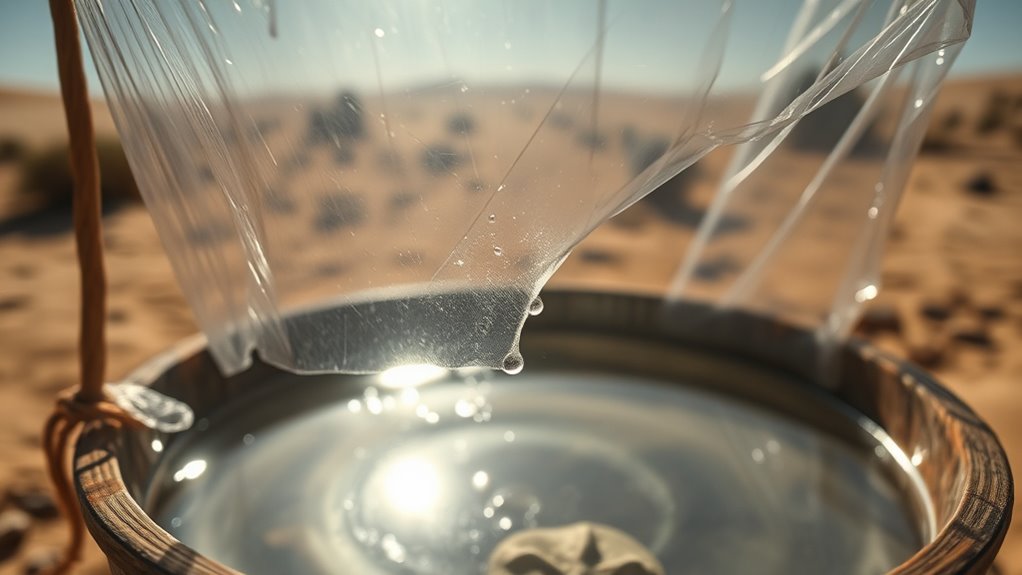

Yes, you can purify water with sunlight and plastic in a solar distiller. These systems use plastic components that withstand UV rays and heat to evaporate contaminated water, leaving impurities behind. The evaporated water then condenses into a clean, safe source for drinking. The type and quality of plastic play a big role in durability and efficiency. If you’re curious about designing or improving such systems, you’ll find useful details ahead.
Key Takeaways
- Yes, solar distillers use sunlight to evaporate and purify water, leaving impurities behind.
- Plastic components in solar distillers are essential but must be UV-resistant for durability.
- Proper plastic selection prevents degradation, leaks, and system failure during outdoor operation.
- The efficiency of water purification depends on effective solar energy absorption and system design.
- High-quality plastics extend the lifespan and reliability of solar distillers, ensuring continuous water supply.

Solar distillers are innovative devices that use sunlight to produce clean, fresh water from salty or contaminated sources. They work by harnessing the sun’s energy to evaporate water, then condensing it into a separate container, leaving behind impurities. This process can be especially useful in remote areas or during emergencies where access to safe drinking water is limited. When building or choosing a solar distiller, understanding factors like solar efficiency and plastic durability becomes vital to guaranteeing it functions effectively over time. Ensuring your system’s solar efficiency is optimized will maximize water output and reduce energy waste. Plastic durability is another critical aspect, especially since many DIY and low-cost solar distillers rely heavily on plastic components. Not all plastics are created equal; some degrade quickly when exposed to prolonged sunlight, heat, or saltwater. Choosing high-quality, UV-resistant plastics ensures that your distiller remains intact and functions properly over time. The durability of plastic parts impacts the longevity of your device—cracks, warping, or brittleness can cause leaks or system failure. Commonly used plastics like polycarbonate or high-density polyethylene (HDPE) are known for their resistance to UV rays and chemical corrosion. This means you can expect your solar distiller to withstand harsh outdoor conditions and continue providing fresh water without frequent replacements or repairs.
Frequently Asked Questions
How Long Does a Solar Distiller Last Before Needing Replacement?
A solar distiller typically lasts around 5 to 10 years, depending on its durability lifespan and maintenance requirements. You should regularly clean its surfaces, check for cracks or damage, and replace worn parts to extend its life. Proper upkeep guarantees it functions efficiently for years to come. With good maintenance and careful handling, you can maximize your distiller’s lifespan and enjoy clean water without frequent replacements.
Can Solar Distillers Remove Chemicals and Heavy Metals From Water?
Your solar distiller can do more than you think—it’s like a superhero for water purification! While it effectively removes bacteria and viruses, it doesn’t excel at chemical removal or heavy metal filtration. These contaminants often necessitate specialized filters or treatments. So, if heavy metals or chemicals are your concern, consider adding extra filtration stages to ensure your water is truly safe and pure.
Is Solar Distillation Effective for Treating Seawater?
Yes, solar distillation effectively treats seawater, but you’ll face desalination challenges like high salt content and other seawater impurities. The process removes salt, heavy metals, and chemicals, making water safe to drink. However, it’s slow and may require multiple cycles for complete purification. Despite these challenges, solar distillation is a simple, eco-friendly way to produce fresh water from seawater using just sunlight and plastic.
What Are the Main Limitations of Solar Water Distillation?
You should know that solar water distillation has limitations, mainly in energy efficiency and contamination risks. It’s not always the most energy-efficient method, especially in cloudy weather or at night, reducing its effectiveness. Additionally, if the system isn’t properly maintained, contamination risks increase, which can compromise water quality. While useful, it’s best to think about these factors and explore supplementary purification methods for safer, more reliable drinking water.
How Much Water Can a Typical Solar Distiller Produce Daily?
A typical solar distiller can produce about 1 to 3 liters of purified water per day, depending on capacity estimation and efficiency factors. You might think it’s enough for daily needs, but actual output varies with sunlight intensity, temperature, and design. To maximize your yield, guarantee your distiller receives ample sunlight and is well-ventilated. Monitoring these factors helps you get the most clean water from your solar setup.
Conclusion
Now, as the sun dips low, imagine the clear, sparkling water you’ve purified, glowing softly like liquid gold in your hands. With just sunlight and plastic, you’ve turned a simple idea into a powerful tool, harnessing nature’s warmth to quench your thirst. This eco-friendly method transforms the scorching heat into invigorating relief, proving that sometimes, the most basic resources can create miracles. So, next time the sun shines bright, remember—you have the power to turn its rays into pure, life-giving water.