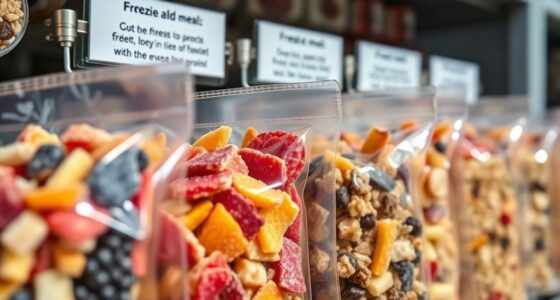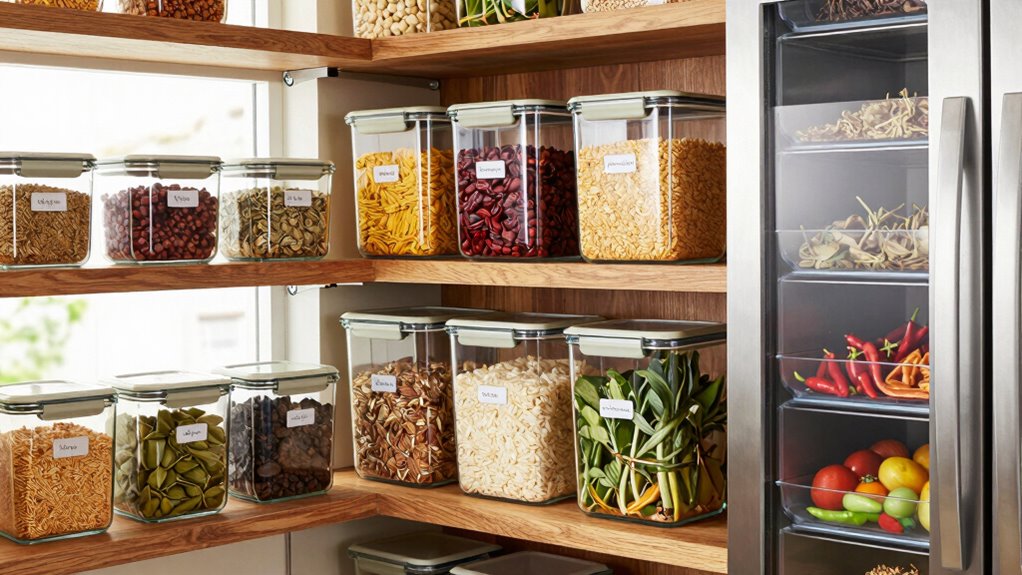

Food storage systems are essential because they keep your kitchen safe, organized, and easy to navigate. By using proper storage techniques, you prevent cross-contamination, spoilage, and food waste, saving money and ensuring freshness. Optimized containers and shelves help you find what you need quickly, reducing stress during busy meals. When you adopt effective storage methods, you’ll create a safer, more efficient kitchen environment. Keep exploring to discover how these systems can transform your space even further.
Key Takeaways
- Proper food storage minimizes cross-contamination and spoilage, ensuring safety and freshness.
- Well-organized systems simplify meal prep and reduce time spent searching for ingredients.
- Space optimization prevents clutter, making kitchen routines more efficient and less stressful.
- Using designated storage methods extends food shelf life, reducing waste and saving costs.
- Clear storage protocols help maintain food safety standards and prevent foodborne illnesses.

When it comes to keeping your food safe and organized, having an effective storage system is essential. A well-designed setup doesn’t just make your kitchen look tidy; it also streamlines your daily routines and helps prevent food waste. One key aspect to consider is meal prep, which relies heavily on organized storage. When your containers and shelves are properly arranged, you can prep meals in advance, saving you time during busy mornings or evenings. Knowing exactly where everything is allows you to quickly assemble ingredients, reducing the temptation to buy takeout or rely on unhealthy options. Plus, with a good system, you can portion out meals into individual containers, making it easier to maintain a balanced diet and control portion sizes.
Space optimization plays an important role in ensuring your food storage system works effectively. Limited kitchen space can quickly become cluttered if you’re not strategic with how you store your food. By using stackable containers, adjustable shelves, or drawer organizers, or even utilizing innovative space-saving storage solutions, you maximize every inch of your cabinet or fridge. This not only creates more room but also helps you see what’s available at a glance, minimizing forgotten leftovers or expired items. When you optimize your space, you reduce the risk of cross-contamination and spoilage, since everything has its designated spot. This approach encourages you to keep your food fresher longer while maintaining a clutter-free environment. Incorporating proper storage techniques can significantly extend the freshness and safety of your food, ultimately saving you money and reducing waste. Additionally, understanding food safety protocols is vital for preventing contamination and ensuring your stored food remains safe to consume.
food storage containers with lids
As an affiliate, we earn on qualifying purchases.
As an affiliate, we earn on qualifying purchases.
Frequently Asked Questions
How Often Should Food Storage Containers Be Replaced?
You should replace food storage containers every 1 to 2 years, depending on their container durability. Regular storage rotation helps you identify cracks, cloudiness, or staining that indicates it’s time for new containers. Using durable containers guarantees safety and longevity, but if they show signs of wear, replace them to prevent contamination. Staying proactive keeps your food fresh, safe, and your kitchen organized efficiently.
Are There Eco-Friendly Food Storage Options Available?
Yes, eco-friendly food storage options are available. You can choose reusable containers made from glass or stainless steel, which reduce waste and last longer. Additionally, biodegradable packaging options are great for environmentally conscious storage, breaking down naturally without harming the planet. Switching to these sustainable choices not only helps protect the environment but also simplifies your storage needs, making it easier to maintain a greener lifestyle.
What Are the Best Practices for Labeling Stored Food?
Get your ducks in a row by practicing good food labeling and storage organization. Clearly label all food with the date, contents, and any special instructions to avoid confusion and spoilage. Use airtight containers and color-coded labels for easy identification. Keep an inventory list and regularly check for expired items. This way, you guarantee safety, reduce waste, and keep your kitchen running smoothly, making food management a breeze.
How Can I Prevent Cross-Contamination in Food Storage?
To prevent cross-contamination, prioritize food safety by using separate containers for raw meats, vegetables, and cooked foods. Keep these containers organized in your storage area, making it easy to avoid mixing different food types. Always seal containers tightly, wash hands before handling different items, and regularly clean shelves. Proper container organization minimizes risks and guarantees your food stays safe, fresh, and free from harmful bacteria.
What Are Common Mistakes to Avoid in Food Storage?
You might forget that temperature control is essential, and improper sealing can lead to spoilage or contamination. Avoid leaving perishable items at room temperature longer than necessary, and always check that containers are properly sealed to prevent leaks and cross-contamination. Many overlook these simple steps, but they’re indispensable. Keep your food safe by maintaining correct temperatures and ensuring lids are secure—small habits that make a big difference.
stackable refrigerator storage bins
As an affiliate, we earn on qualifying purchases.
As an affiliate, we earn on qualifying purchases.
Conclusion
Proper food storage isn’t just about keeping your kitchen organized—it’s key to safety and simplicity. Did you know that improper storage causes approximately 40% of foodborne illnesses? By investing in good storage systems, you reduce waste, prevent spoilage, and protect your health. So, take a few minutes to organize your pantry and fridge today. It’s a simple step that makes your life easier and keeps your family safe from food risks.
glass food storage containers set
As an affiliate, we earn on qualifying purchases.
As an affiliate, we earn on qualifying purchases.
space-saving kitchen shelf organizers
As an affiliate, we earn on qualifying purchases.
As an affiliate, we earn on qualifying purchases.