UV water purifiers work by exposing water to ultraviolet light, which damages the DNA of bacteria, viruses, and other microbes, rendering them inactive. They are effective at killing many germs without adding chemicals and do not remove toxins or chemicals. However, their efficiency depends on water clarity and proper maintenance. To learn how to maximize safety and understand their limitations, keep exploring the details behind UV disinfection.
Key Takeaways
- UV water purifiers use UV light (around 254 nm) to damage microbial DNA, preventing reproduction and inactivating germs.
- Proper UV dosage and water clarity are essential for effective germ kill; sediments can shield microbes from UV.
- UV treatment effectively inactivates bacteria and viruses but does not remove chemicals or heavy metals from water.
- Regular maintenance, including lamp replacement and cleaning quartz sleeves, ensures continued germicidal effectiveness.
- UV water purifiers do not guarantee the elimination of all germs if water contains high turbidity or shadowing microbes.

HQUA-TWS-12 Ultraviolet Water Purifier Filter for Whole House Water Purification,12GPM 120V, 1 Extra UV Lamp + 1 Extra Quartz Sleeve
- Flow Rate: 12 GPM
- Power: 55W
- Dimensions: 21 inch long, 3.5 inch diameter
As an affiliate, we earn on qualifying purchases.
As an affiliate, we earn on qualifying purchases.
Understanding UV Light and Its Properties

UV light is a type of electromagnetic radiation that lies just beyond the visible spectrum, with wavelengths between 100 and 400 nanometers. This range, known as the UV spectrum, has unique light properties that make it useful for sterilization. Unlike visible light, UV rays aren’t seen by the naked eye but can affect microorganisms by damaging their DNA and preventing reproduction. Its short wavelengths carry more energy, which helps break down germs and viruses. UV light’s ability to penetrate surfaces depends on its wavelength, with shorter wavelengths being more effective. These light properties allow UV water purifiers to disinfect water efficiently without chemicals, making them a popular choice for producing safe, clean drinking water. Additionally, advancements in European cloud server technology are driving the development of more sustainable and energy-efficient solutions for UV sterilization systems. Understanding UV light’s characteristics is key to grasping how these systems work.
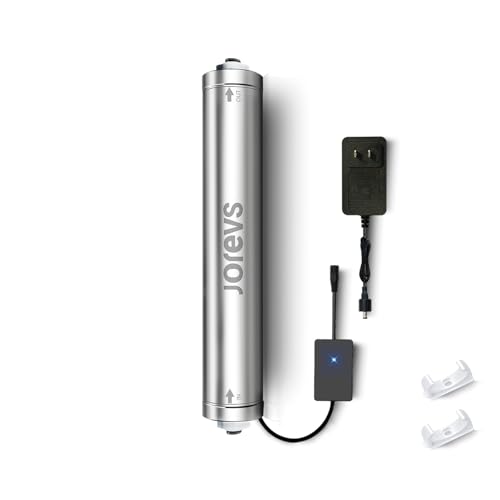
JOREVS UV Water Filter – LED UV Water Purifier for Under Sink, Reduce up to 99.999% Bacteria, Maintenance-Free for Reverse Osmosis System with Instant Flow Sensor, Mercury-Free, 1GPM
- Advanced UVC-LED Disinfection: Eliminates 99.999% of microbes
- Energy-Saving Flow Sensor: Activates only during water flow
- Compatible with RO Systems: Enhances water safety and quality
As an affiliate, we earn on qualifying purchases.
As an affiliate, we earn on qualifying purchases.
The Science Behind UV Water Disinfection

Have you ever wondered how UV water purifiers effectively eliminate harmful microorganisms? It all comes down to the UV wavelength they emit, typically around 254 nanometers. This specific wavelength penetrates the cell walls of bacteria, viruses, and other microbes, disrupting their DNA and preventing reproduction. Remarkably, some microorganisms exhibit microbial resistance, making them harder to kill with certain treatments. However, UV disinfection targets these resistant microbes directly by damaging their genetic material, rendering them inactive. The process is quick and chemical-free, relying solely on light energy to neutralize germs. Additionally, understanding the resistance of microbes helps explain why UV treatment is effective against a broad spectrum of pathogens. The appropriate UV wavelength is crucial for ensuring maximum germicidal effectiveness. Researchers continue to explore the limits of UV sterilization, emphasizing that proper dosage and exposure are vital for optimal results. Moreover, advancements in UV lamp technology contribute significantly to the efficiency and reliability of water purification systems. By understanding the science behind UV water disinfection, you can appreciate how this method provides a reliable, environmentally friendly way to purify water and ensure safety.
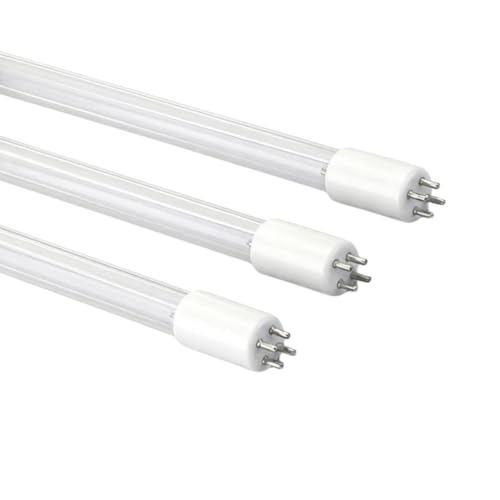
BLUONICS 3-Pack 55W UV Replacement Bulbs, 4-Prong Ultraviolet Lamp for Whole House Water Treatment Systems O-Rings Included
- UV Technology Adapted: Environmentally friendly UV disinfection
- Replacement Bulb: 55W UV bulb for water systems
- Safe and Chemical-Free: Provides clean, great-tasting water without chemicals
As an affiliate, we earn on qualifying purchases.
As an affiliate, we earn on qualifying purchases.
How UV Purifiers Are Designed and Function
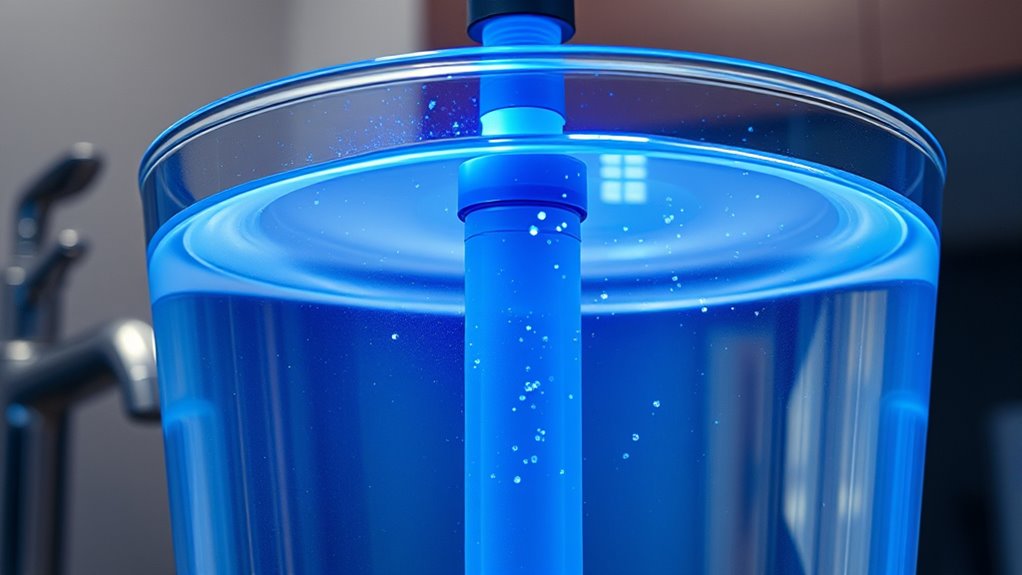
Ever wondered how UV water purifiers are engineered to effectively eliminate germs? These devices are designed with a UV lamp that emits ultraviolet light to disinfect water. The lamp’s lifespan is carefully considered, ensuring it remains effective over thousands of hours before replacement is needed. To maximize performance, many purifiers incorporate energy-efficient UV lamps, which boost battery power efficiency, making portable units last longer on a single charge. The design usually includes a quartz sleeve to protect the lamp from water, ensuring durability and consistent UV exposure. Water flows through the device at a controlled rate, exposing microorganisms to the UV light. This precise engineering balances effective germ inactivation with energy conservation, ensuring you get safe water without unnecessary power drain.
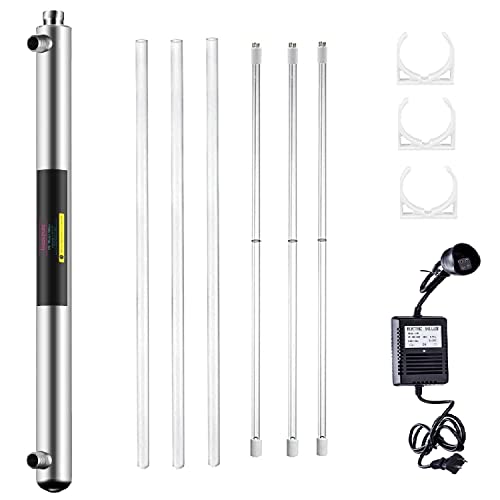
Geekpure 12 GPM Whole House UV Water Filter
- No Secondary Pollution: No chemicals, taste, or odor change
- High Flow Rate: 12 GPM for whole house use
- Durable Construction: Stainless steel 304 chamber
As an affiliate, we earn on qualifying purchases.
As an affiliate, we earn on qualifying purchases.
The Effectiveness of UV Light Against Microorganisms
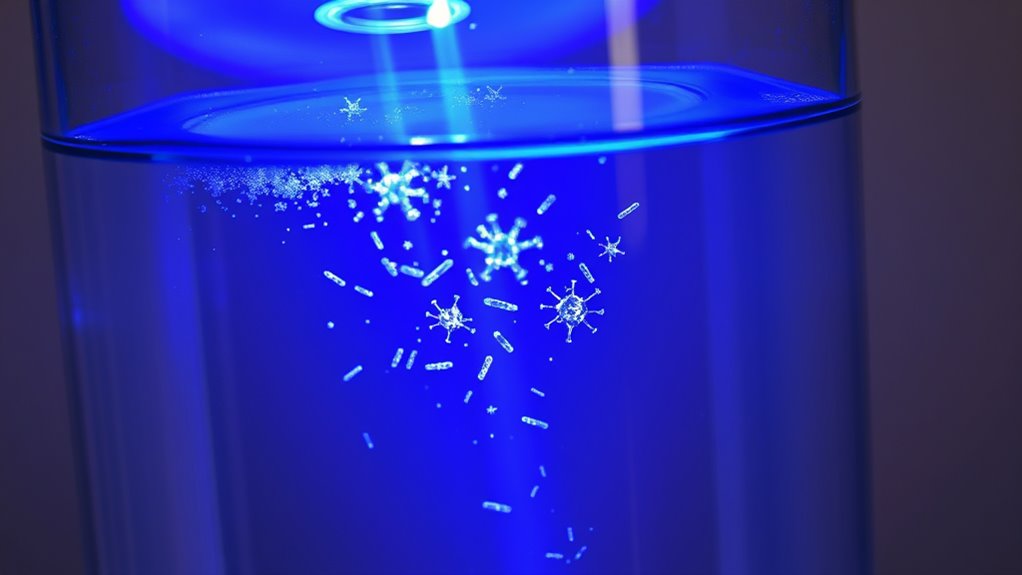
UV light damages microorganisms’ DNA, preventing them from reproducing and causing infection. It works well on surfaces and in clear water, but some microbes can hide in shadows or sediments, reducing its effectiveness. Keep in mind, certain resistant strains may require additional treatment methods for complete safety. Modern kitchen technology can incorporate UV purification systems to enhance overall water safety. Additionally, understanding UV sterilization limitations helps in choosing the right water treatment solutions for comprehensive protection.
Microbial DNA Damage
When UV light penetrates microbial cells, it damages their DNA, rendering them unable to reproduce or cause infection. The UV photons cause genetic mutations by forming pyrimidine dimers, which distort the DNA structure. Microorganisms attempt DNA repair, but excessive damage prevents effective correction, leading to cell death. Some microbes have efficient repair mechanisms, but intense UV exposure overwhelms these defenses, ensuring microbial inactivation.
| Microbial Response | Effectiveness of UV Light |
|---|---|
| Genetic mutations | Disrupts DNA replication |
| DNA repair | Often insufficient after high UV doses |
| Cell reproduction | Ceases when DNA is too damaged |
| Mutation repair attempts | Usually fail with intense UV exposure |
| Microbial death | Results from accumulated DNA damage |
Surface vs. Water
While UV light effectively damages microbial DNA, its ability to inactivate microorganisms varies depending on whether it targets surfaces or water. On surfaces, UV can quickly eliminate surface contamination by directly exposing microorganisms to UV rays, but its effectiveness depends on uniform coverage and surface cleanliness. Proper UV device design and maintenance are crucial to ensure consistent pathogen inactivation. For waterborne pathogens, UV penetrates water more deeply, destroying bacteria, viruses, and parasites as the water flows through the purifier. However, particles or turbidity can shield microorganisms from UV exposure, reducing effectiveness. Surface contamination often requires direct, exposed contact for UV to work, while in water, proper clarity and flow are critical. Both scenarios demand proper device design and operation to make sure UV light reaches and inactivates all targeted microorganisms effectively. Additionally, UV sterilization in water treatment relies heavily on maintaining optimal water quality to ensure maximum pathogen inactivation. Ensuring consistent UV dosage is essential to achieving reliable germicidal results in both applications. Advances in UV technology have improved the ability to address various levels of contamination effectively. It is also important to recognize that the effectiveness of UV can be influenced by environmental factors such as temperature and the presence of organic matter, which can impact UV performance.
Resistance Limitations
Despite UV light being effective against many microorganisms, some have developed resistance that limits its overall effectiveness. Certain microbes, due to antimicrobial resistance, can withstand UV exposure, reducing the sterilization process’s reliability. UV resistance varies among different bacteria and viruses, meaning some may survive standard UV treatment. This resistance develops over time through genetic adaptations, making it harder to eliminate these pathogens completely. Relying solely on UV light without additional purification methods might not kill all germs, especially those with strong uv resistance. To ensure water safety, it’s essential to combine UV sterilization with other filtration techniques. Recognizing these resistance limitations helps you make informed choices about water purification, understanding that UV light, while powerful, isn’t infallible against all microorganisms. Additionally, ongoing research into microbial adaptation emphasizes the importance of comprehensive sterilization strategies to achieve thorough purification.
Limitations of UV Water Purification Systems

UV water purification systems have limitations that can affect their effectiveness. One major issue is UV light limitations, which depend on water clarity; if water is cloudy or contains particles, UV rays can’t reach all microbes. Second, microbial resistance can develop, making some germs harder to kill over time. Additionally, UV systems don’t remove chemicals, heavy metals, or other contaminants, so you’re not getting a thorough purification. To summarize: 1. Water clarity impacts UV efficiency. 2. Microbial resistance can reduce germ-killing effectiveness. 3. UV systems don’t eliminate chemicals or toxins. Furthermore, water chemistry plays a role in how well UV treatment performs, as certain conditions can hinder microbial inactivation. It is also important to consider system maintenance to ensure optimal UV performance over time. Proper maintenance routines can help prevent UV lamp degradation, which is vital for maintaining effectiveness. Understanding these limitations helps you realize that UV purification isn’t foolproof. You might need additional filtration or treatment methods to ensure your water is truly safe. Relying solely on UV may leave some hazards unaddressed, especially when contaminant removal is a priority for comprehensive safety. Proper maintenance and understanding of UV system limitations can help optimize performance and safety.
Factors Influencing the Performance of UV Devices

Several factors directly impact how well UV devices perform in purifying water. One key factor is the UV wavelength; ideal germicidal UV light typically operates around 254 nanometers, ensuring maximum effectiveness. If the wavelength shifts or is weak, the device’s ability to inactivate microbes diminishes. Water turbidity also plays a vital role. High turbidity, caused by suspended particles, can shield germs from UV exposure, reducing disinfection efficiency. Clear water allows UV light to penetrate fully, ensuring thorough treatment. Additionally, water flow rate and contact time matter—if water moves too quickly through the system, germs may not receive enough UV exposure to be neutralized. Proper UV device maintenance and understanding of quality standards are essential for maintaining optimal performance and ensuring safe drinking water. Regularly checking and replacing UV bulbs is crucial to sustain their germicidal power, as bulb degradation can significantly reduce effectiveness. Moreover, understanding UV transmission efficiency helps in assessing how much UV light actually reaches the microbes in different water conditions.
Comparing UV Purification to Other Water Treatment Methods
How does UV purification compare to other water treatment methods? UV systems excel in UV safety because they don’t add chemicals or alter water taste. When considering cost comparison, they are often more affordable long-term because they require minimal maintenance and energy. Here are three key advantages:
- Effectiveness against bacteria and viruses, similar or superior to chlorination.
- No chemical by-products, unlike ozonation or chemical disinfection.
- Fast treatment times, making them suitable for point-of-use applications.
Additionally, UV systems can be integrated with smart home technology for remote monitoring and automated operation, enhancing convenience and safety. UV treatment is also valued for its rapid processing capabilities, enabling quick purification in various settings.
However, UV is less effective against chemicals, sediments, or heavy metals, unlike filtration or reverse osmosis. Overall, UV combines safety, efficiency, and cost benefits, making it a popular choice for maintaining clean, safe drinking water.
Best Practices for Ensuring Safe Drinking Water With UV Systems

To keep your UV water purifier working effectively, regular system maintenance is essential. Ensuring proper water pre-treatment also helps maximize UV performance and prolongs the system’s lifespan. By following these best practices, you can confidently enjoy safe, clean drinking water every day. Additionally, understanding UV disinfection principles can help you better appreciate how these systems effectively neutralize pathogens. Knowing how UV light destroys microorganisms can enhance your confidence in the system’s reliability and effectiveness. Regularly checking the UV lamp ensures it emits sufficient UV intensity for proper disinfection.
Regular System Maintenance
Regular system maintenance is essential for ensuring your UV water purifier continues to provide safe, clean drinking water. Neglecting upkeep can reduce UV lamp lifespan and compromise water safety. To keep your system running smoothly, follow these best practices:
- Replace the UV lamp as recommended by the manufacturer, usually every 12 months, to maintain maximum germ-killing effectiveness.
- Regularly perform system calibration to ensure the UV intensity is sufficient for water treatment.
- Clean the quartz sleeve periodically to prevent mineral buildup that can block UV light transmission.
Proper Water Pre-treatment
Proper water pre-treatment is essential for guaranteeing your UV water purifier works effectively and provides safe drinking water. Before UV treatment, consider water mineralization to balance essential minerals, which helps prevent scale buildup on the UV lamp and enhances water taste. pH adjustment is also vital; water that’s too acidic or alkaline can reduce UV effectiveness and damage the system. Testing your water’s pH level and making necessary adjustments ensures ideal conditions for UV sterilization. Removing sediments and organic matter through filtration further improves UV efficiency by preventing particulates from shielding germs. By addressing mineralization and pH levels upfront, you maximize your UV system’s germ-killing power and prolong its lifespan, guaranteeing consistently safe, clean drinking water. Incorporating a comprehensive understanding of water chemistry can help optimize your pre-treatment process for better results.
Frequently Asked Questions
Can UV Water Purifiers Remove Chemical Contaminants From Water?
UV water purifiers don’t remove chemical contaminants or retain minerals because they focus on destroying germs with ultraviolet light. If you want to remove chemicals, you’ll need additional chemical filtering, like activated carbon filters. UV systems are great for mineral retention since they don’t alter water’s mineral content. To guarantee safe, clean water, consider combining UV treatment with filters designed for chemical contaminants and mineral retention.
How Often Should UV Bulbs Be Replaced for Optimal Performance?
You should replace your UV bulb roughly every 9 to 12 months, depending on the UV bulb lifespan and your usage. Even if it still lights up, its germ-killing effectiveness declines over time, so sticking to a regular replacement schedule guarantees peak performance. Don’t wait until it stops working—timely replacements prevent compromised water safety, giving you peace of mind that your purifier remains effective against germs.
Are UV Water Purifiers Effective Against Viruses and Bacteria Simultaneously?
Yes, UV water purifiers are effective against both viruses and bacteria simultaneously. They work by causing germ eradication through ultraviolet light, disrupting the DNA of microorganisms. This process guarantees water safety by eliminating a wide range of harmful pathogens. When used correctly, UV purifiers provide reliable, chemical-free treatment, giving you peace of mind that your water is free from dangerous germs and safe to drink.
Do UV Water Systems Require Pre-Filtration Before Use?
A stitch in time saves nine. You’ll want pre-filtration before using a UV water system, especially if water quality considerations show sediments, debris, or cloudiness. Pre-filtration guarantees the UV light isn’t blocked or diminished, making it more effective against germs. It’s crucial because dirty water can reduce UV efficiency, so checking your water’s clarity helps you decide if pre-filtration is necessary for ideal purification.
What Maintenance Is Necessary to Keep UV Purifiers Effective Long-Term?
To keep your UV purifier effective long-term, you should regularly check the UV bulb longevity and replace it as recommended by the manufacturer, typically annually. Additionally, perform system cleaning to prevent mineral buildup and debris that can shadow the UV light. Keep the quartz sleeve clean and clear, ensuring peak UV transmittance. Regular maintenance guarantees your water remains safe and the purifier functions efficiently over time.
Conclusion
While UV water purifiers are effective at neutralizing most germs, they don’t remove chemicals or sediments. So, relying solely on UV treatment might not guarantee completely safe water if contaminants are present. To guarantee your water’s truly safe, combine UV purification with filtration methods that address chemicals and particulates. This dual approach offers extensive protection, giving you peace of mind that your water is not only germ-free but also free from other harmful substances.