Choosing between a DIY water filter and a high-tech purifier depends on your priorities. DIY options are affordable and eco-friendly but offer limited effectiveness and reliability, especially against viruses and chemicals. High-tech purifiers cost more but provide advanced filtration, consistent performance, and added convenience with certifications backing their safety. If you want dependable, all-encompassing purification, a high-tech device might be your best bet. Keep exploring to understand which option suits your needs best.
Key Takeaways
- High-tech purifiers offer more comprehensive and reliable removal of bacteria, viruses, heavy metals, and chemicals compared to DIY filters.
- Certified high-tech systems undergo rigorous testing, ensuring consistent safety and performance, unlike uncertified DIY solutions.
- DIY filters are cost-effective, eco-friendly, and suitable for basic needs, but may require frequent maintenance and have variable effectiveness.
- High-tech purifiers provide convenience, automated diagnostics, and longer-lasting filters, reducing user effort and enhancing reliability.
- Consider environmental impact: DIY filters are more sustainable, while high-tech systems consume energy and generate electronic waste.
Understanding the Basics of Water Purification Methods

Water purification methods remove contaminants to make water safe for drinking. You’ll find various filtration mechanisms and purification technologies designed to target different impurities. Filtration mechanisms, like activated carbon filters or ceramic filters, physically trap particles and some chemicals, improving water clarity and taste. Purification technologies, such as UV sterilization or chemical disinfection, actively kill or neutralize microorganisms and toxins. These methods work together to reduce bacteria, viruses, heavy metals, and organic compounds. Advancements in high-tech purifiers incorporate multiple processes to ensure comprehensive water safety, often utilizing auditory processing strategies to improve user interface and effectiveness. Understanding these core principles helps you choose the right setup for your needs. Whether you opt for simple filtration or advanced purification, knowing how each mechanism functions guarantees you can effectively remove contaminants and enjoy safe, clean water. Moreover, natural filtration systems like bio-sand filters are gaining popularity for their eco-friendly approach and potential for sustainable water treatment.
Cost and Accessibility: DIY Filters Vs High-Tech Devices

You might find DIY water filters to be a budget-friendly choice, since they use readily available materials. In contrast, high-tech purifiers often come with steep costs that can be out of reach for many people. This difference impacts how accessible clean water solutions are for you and your community. Additionally, understanding filter performance and maintenance requirements can help determine which option is more reliable over time. Considering water quality testing can also be crucial in ensuring that your chosen filtration method effectively meets safety standards. Moreover, evaluating hydraulic flow and filtration capacity can influence the overall effectiveness of each system. Knowing filter longevity and how often filters need replacement is also key to assessing reliability and ongoing costs. Furthermore, system scalability plays a significant role in whether a filtration solution can adapt to changing household needs.
Affordable DIY Options
While high-tech water purifiers often come with a higher price tag and require electricity, DIY filters can be assembled using inexpensive, readily available materials. This makes them ideal for affordable, portable solutions in remote areas or emergencies. You can customize your DIY filter’s aesthetic design, blending functionality with visual appeal. Imagine a simple setup like this:
| Material | Function | Portability |
|---|---|---|
| Sand & Charcoal | Filtration layers | Lightweight, easy to carry |
| Plastic Bottles | Housing & container | Compact, portable |
| Activated Carbon | Removes odors & chemicals | Easy to replace |
This approach offers an accessible way to produce clean water without breaking the bank, making DIY options practical and visually adaptable. Understanding water filtration principles can help you optimize your homemade setup for better results, especially by applying effective filtration techniques to improve water purity and safety.
Expensive High-Tech Solutions
High-tech water purifiers offer advanced filtration features and convenience, but their high costs often put them out of reach for many people. These devices come with luxury features like smart sensors, touch controls, and multi-stage filtration, which can substantially boost their price. Additionally, a strong brand reputation influences pricing, as trusted brands charge more for their reliability and quality. While these high-tech solutions promise cleaner water and ease of use, they can be a hefty investment, making them inaccessible for budget-conscious households. If you’re looking for an affordable alternative, DIY filters are more practical. However, if you prioritize top-tier features and brand assurance, high-tech purifiers might be worth the expense, despite the financial barrier. Modern kitchen technology continues to evolve, offering innovative options that can fit various budgets and needs.
Effectiveness in Removing Contaminants and Impurities

When it comes to removing contaminants and impurities, DIY water filters often rely on basic materials like charcoal, sand, or gravel to trap particles and reduce some microorganisms. While they can provide basic microbial removal through natural filtration, they may fall short against chemical contaminants. High-tech purifiers, on the other hand, use advanced methods like chemical filtration and UV sterilization to target a wider range of impurities. The table below highlights their effectiveness:
| Feature | DIY Filter | High-Tech Purifier |
|---|---|---|
| Microbial removal | Moderate | High |
| Chemical filtration | Limited | Extensive |
| Impurity range | Particles, some microorganisms | Broad spectrum, chemicals, viruses |
| Consistency | Variable | Reliable |
Additionally, certifications and quality standards play a significant role in ensuring the reliability of high-tech water purifiers. For example, advanced filtration techniques can significantly enhance impurity removal compared to basic DIY methods, providing greater peace of mind for users.
Ease of Installation and Maintenance Requirements

Installing and maintaining a DIY water filter is generally straightforward, often requiring just basic tools and household materials. However, you may face some installation challenges, like ensuring proper sealing and positioning to prevent leaks or contamination. DIY systems usually need more frequent maintenance, as filters can clog or degrade faster without advanced monitoring. You’ll need to regularly replace or clean components, which can become time-consuming depending on water quality. In addition, DIY filters may lack the advanced technology found in high-tech purifiers, which can help optimize performance. Many high-tech purifiers also feature automated diagnostics that alert you to issues before they become serious, simplifying upkeep. They often come with detailed instructions and automated features that simplify installation, reducing challenges. Their maintenance frequency is typically lower, thanks to longer-lasting filters and self-monitoring systems. Additionally, some high-tech purifiers incorporate smart home connectivity, allowing for remote monitoring and control through mobile apps, which enhances user convenience. Incorporating digital monitoring can further improve system efficiency and ease of use. When choosing between the two, consider that user-friendly design can significantly impact your experience. Overall, a DIY filter demands more hands-on effort and regular upkeep, while high-tech systems offer convenience with less frequent maintenance.
Durability and Lifespan of Each System
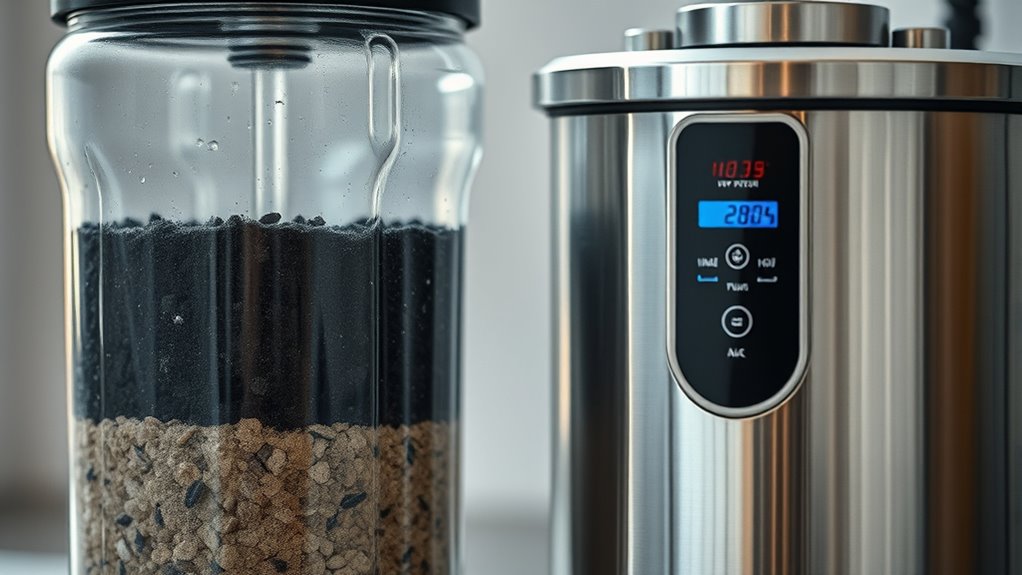
While DIY water filters can be built from affordable household materials, their durability often depends on the quality of components and water conditions, which means they may wear out or clog more quickly over time. You might find that their filter longevity is limited, requiring frequent replacements to maintain effectiveness. The device durability of DIY systems varies widely, especially if you don’t use sturdy materials or proper assembly techniques. Additionally, DIY filters may not incorporate advanced filtration technologies, which can impact their overall efficiency and lifespan. For example, the absence of advanced filtration methods like activated carbon or ceramic elements can limit their ability to remove certain contaminants effectively, affecting long-term performance. The lack of nanomaterials in DIY setups can also restrict their capacity to eliminate very small or specific pollutants, impacting overall reliability. High-tech purifiers, on the other hand, generally offer longer-lasting components designed for durability, often boasting filters with extended lifespans. Glycolic acid products are known for their effectiveness and longer lifespan, making them more reliable over time. Additionally, the use of advanced filtration technologies can contribute to the overall system longevity of high-tech purifiers. While they may require initial investment, their consistent performance and longer lifespan make them more reliable over time. Ultimately, your choice hinges on balancing upfront costs with long-term durability and filter longevity.
Certifications, Standards, and Trustworthiness

When choosing a water treatment system, you should look for regulatory certifications and endorsements that verify its safety and effectiveness. Industry standards also help guarantee the device’s reliability over time. Trustworthy options meet these recognized benchmarks, giving you confidence in your choice. Additionally, ensuring that the system maintains transparency about its affiliate relationships can further support your confidence in its credibility. For added assurance, consider whether the device has been tested for Rhythm Failure and its impact on water quality.
Regulatory Certifications and Endorsements
Regulatory certifications and endorsements play a crucial role in ensuring that water purification devices meet safety and performance standards. When choosing between DIY filters and high-tech purifiers, look for products with recognized certification standards and regulatory approvals. These certifications confirm that the device has been tested and verified by independent agencies, ensuring reliability.
Consider these key points:
- Look for certifications like NSF, EPA, or WHO approvals to verify safety and effectiveness.
- Regulatory approvals ensure the device complies with legal standards for public health.
- Trusted brands often display certification seals, giving you confidence in their adherence to rigorous certification standards.
Choosing certified devices guarantees that your water purifier has met essential safety and quality benchmarks.
Industry Standards and Reliability
Industry standards and certifications are essential indicators of a water purifier’s trustworthiness and performance. They guarantee the product has undergone rigorous reliability testing, verifying its ability to consistently deliver safe water. High-tech purifiers often meet strict industry standards like NSF/ANSI certifications or WQA Gold Seal, which validate their effectiveness against contaminants. These standards help you identify devices that are thoroughly tested and reliable over time. DIY filters, while cost-effective, usually lack formal reliability testing and industry standard compliance, making their performance less predictable. Choosing a purifier with recognized certifications and adherence to industry standards gives you confidence in its long-term dependability. Trusting a product that meets established standards minimizes risks and ensures your water remains safe and clean.
Environmental Impact and Sustainability Considerations
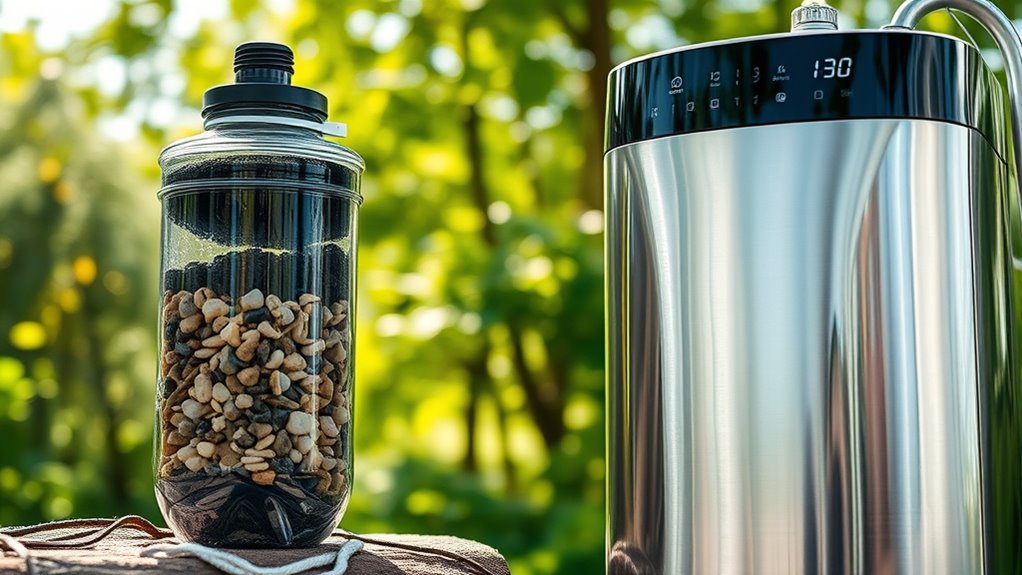
While both DIY water filters and high-tech purifiers aim to provide clean drinking water, their environmental impacts differ markedly. DIY filters often use eco-friendly materials like charcoal and sand, making them more sustainable. They also require minimal energy, sometimes relying on renewable energy sources if needed. In contrast, high-tech purifiers typically depend on electricity, which may come from non-renewable sources, increasing their carbon footprint. Consider these points:
DIY water filters are more eco-friendly and sustainable than high-tech purifiers.
- DIY filters generate less waste due to fewer disposable parts.
- High-tech purifiers may produce electronic waste and require regular replacement of filters.
- Producing high-tech devices consumes more resources, impacting sustainability.
Your choice influences not only water quality but also the environment’s health and sustainability.
User Experience and Convenience
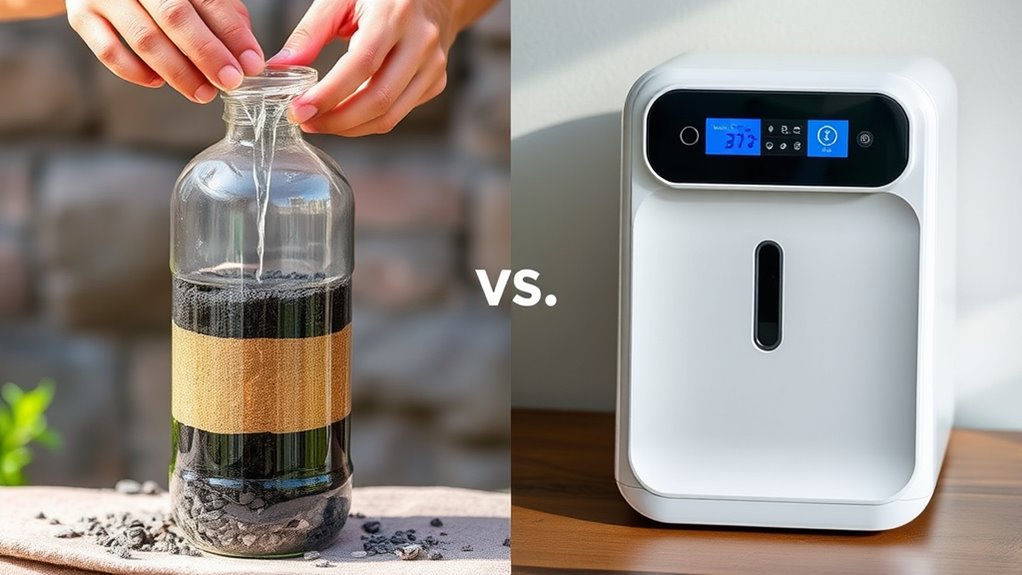
When choosing between a DIY water filter and a high-tech purifier, your daily experience and convenience matter a lot. A user-friendly design makes setup and maintenance straightforward, saving you time and effort. DIY filters often require manual assembly and regular cleaning, which can be a hassle if you’re not technically inclined. On the other hand, high-tech purifiers typically feature intuitive controls and streamlined processes that make operation simple. Customer support also plays an essential role; with advanced devices, you usually have access to professional assistance if issues arise. This support can provide peace of mind and ensure your water stays clean without stress. Ultimately, the more convenient and user-friendly the system, the more likely you’ll stick with it consistently.
Making the Right Choice for Your Needs
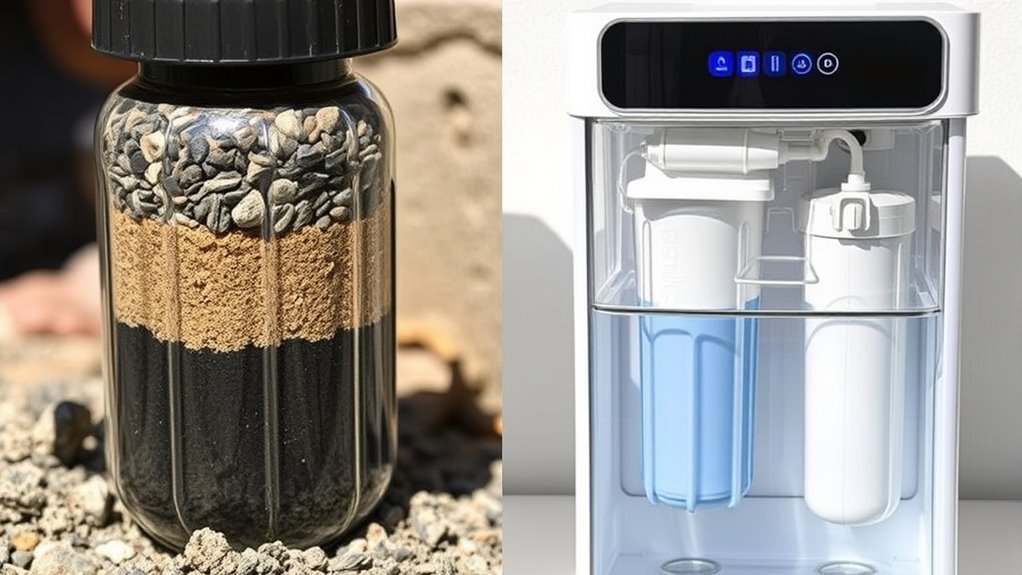
Choosing between a DIY water filter and a high-tech purifier depends on your specific needs, budget, and lifestyle. To make the right choice, consider these factors:
Selecting a DIY filter or high-tech purifier depends on your needs, budget, and lifestyle.
- Water quality: If your water source has high contamination levels, a high-tech purifier with advanced filtration efficiency might be necessary.
- Filtration efficiency: DIY filters can handle basic sediment and taste issues, but high-tech options remove a wider range of contaminants, ensuring safer drinking water.
- Maintenance and cost: DIY filters are more affordable upfront and easier to maintain, while high-tech purifiers may require regular filter replacements and higher initial investment.
Ultimately, assess your water quality concerns, how much you’re willing to spend, and how much effort you’re comfortable dedicating to maintenance to pick the best solution for your needs.
Frequently Asked Questions
Can DIY Filters Meet All Safety Standards for Drinking Water?
DIY filters generally can’t meet all safety standards for drinking water due to their limitations. You might successfully remove sediment and some contaminants, but they often fall short in safety compliance for harmful bacteria, viruses, or chemicals. Relying solely on DIY solutions risks health issues. For guaranteed safety, it’s best to select certified high-tech purifiers that meet rigorous safety standards and ensure your water is truly safe to drink.
Are High-Tech Purifiers Suitable for Emergency or Outdoor Use?
Think of a high-tech purifier like a Swiss Army knife—compact, versatile, perfect for emergencies or outdoor adventures. They’re highly suitable for portable convenience, allowing you to access clean water on the go. Plus, they’re cost-efficient over time, saving you from buying bottled water repeatedly. So, yes, high-tech purifiers are an excellent choice, providing reliable, quick purification whenever you need it most, even in the wild frontier of nature.
How Often Must Maintenance Be Performed on DIY Versus High-Tech Systems?
You need to perform maintenance on DIY filters more frequently, often replacing or cleaning components to guarantee ideal filter lifespan and water quality. High-tech purifiers usually have automated alerts and longer intervals between maintenance, making them more cost-efficient over time. While DIY systems are cheaper upfront, they require regular upkeep, whereas high-tech systems balance maintenance with durability, giving you consistent performance and better overall efficiency with less hassle.
Do High-Tech Purifiers Require a Power Source or Batteries?
Think of high-tech purifiers as the heart of your water system—they need power to beat. They do require a power source, either plugged into an outlet or batteries, depending on the model. Power dependency varies, and some purifiers have a limited battery life, so you might need to replace batteries or guarantee there’s a steady power supply. This reliance on power means they’re more vulnerable to outages but often offer advanced filtration.
Which System Is Better for Removing Microorganisms and Viruses?
High-tech purifiers are better for removing microorganisms and viruses because they specifically feature microbial removal and viral filtration technologies. They use advanced filters, UV sterilization, or ozonation to effectively eliminate harmful pathogens. DIY water filters may reduce bacteria but often lack the precision needed for thorough viral filtration. So, if you prioritize safety from microorganisms and viruses, a high-tech purifier provides more reliable microbial removal and viral filtration.
Conclusion
Ultimately, choosing between a DIY water filter and a high-tech purifier depends on your needs. Did you know that over 2 billion people lack access to safe drinking water? While DIY options are affordable and easy to set up, high-tech devices often provide superior safety and convenience. Consider your budget, water quality, and lifestyle. Trust what suits your situation best—because everyone deserves clean, safe water to drink every day.