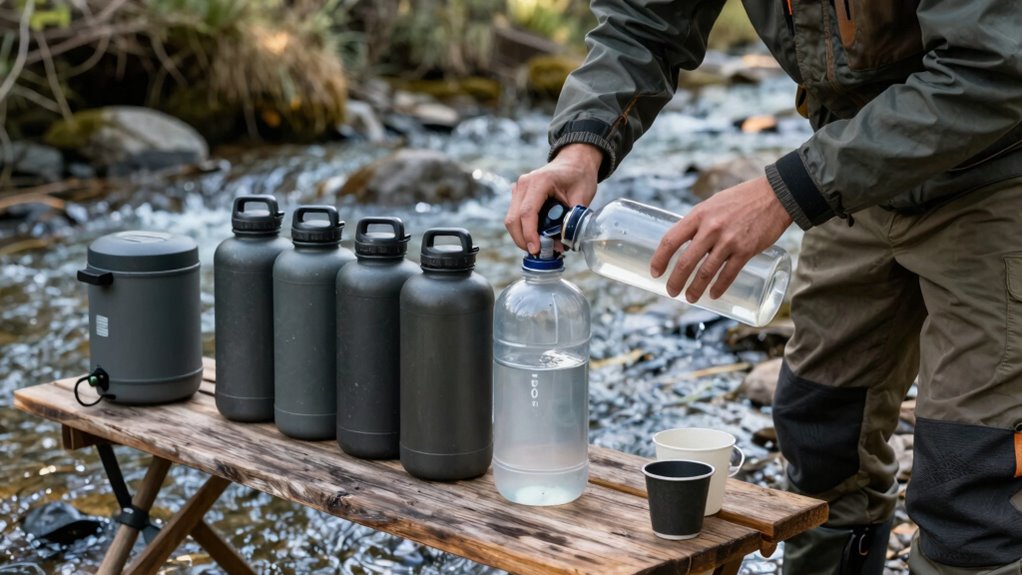
Better water handling on long camps means you prioritize reliable purification methods like boiling, filtration, and chemical treatments suited to your environment. Use durable, leak-proof containers for collecting, storing, and drinking water, and keep them clean through regular sanitization. Stay aware of contamination risks from natural sources and inspect your gear often to prevent issues. This ongoing focus on safety and efficiency guarantees your water stays clean and accessible—exploring further reveals even more effective strategies.
Open a free Amazon Business account
Business pricing, bulk buying and tax-exempt orders.
As an affiliate, we earn on qualifying purchases.
Key Takeaways
- Use multiple, durable containers for separate collection, purification, and drinking to prevent cross-contamination.
- Regularly clean and sanitize containers to maintain water safety and prevent bacterial buildup.
- Choose appropriate purification methods based on water source contaminants, combining filtration and chemical treatments if needed.
- Employ lightweight, leak-proof containers designed for outdoor conditions to ensure portability and spill prevention.
- Test water quality before treatment and monitor containers for damage, ensuring ongoing safety throughout the camp.
When you’re on a long camp, managing water efficiently becomes essential for safety and comfort. You’ll need a reliable system for water purification to ensure what you drink is safe, and smart container selection to keep your water accessible and secure. These two aspects form the backbone of effective water handling, helping you avoid illness and stay well-hydrated throughout your adventure.
First, focus on water purification. Natural water sources like streams, lakes, or even snow can be contaminated with bacteria, viruses, or parasites. To prevent health issues, you must prioritize purification techniques. Boiling water is the most straightforward method—just bring it to a rolling boil for at least one minute. If you’re in an area with high altitude, extend the boiling time to three minutes. Alternatively, portable water filters or purification tablets offer convenient options, especially when boiling isn’t practical. Water filters with activated carbon or ceramic elements can remove sediments and many pathogens, providing quick access to clean water. Purification tablets, often containing iodine or chlorine dioxide, are lightweight and easy to carry, but they take time to work and may alter the taste of your water. Combining filtration with chemical treatment offers an extra layer of safety, especially when water sources are questionable. Using water testing kits can help verify water safety before treatment in uncertain environments. Additionally, understanding the contaminants present in water sources can guide your purification choices more effectively. Being aware of contaminant types helps you select the most appropriate purification method for your situation.
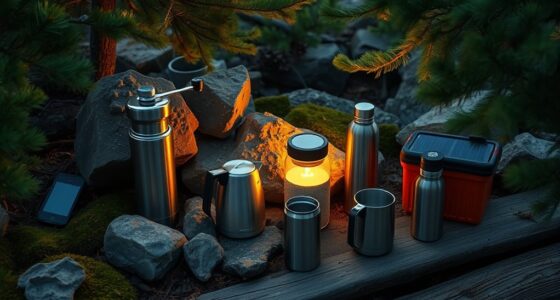
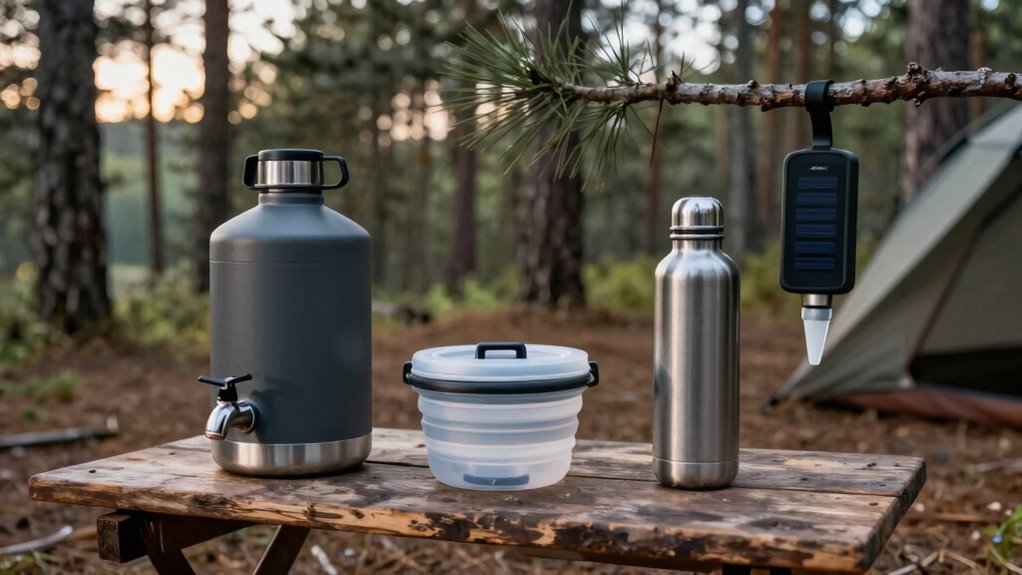
Next, container selection plays a crucial role in maintaining a steady supply of safe water. You want durable, lightweight, and leak-proof containers that suit your needs. Collapsible bottles or soft-sided bladders save space when empty but should be rugged enough to withstand outdoor conditions. Rigid bottles made of BPA-free plastic or stainless steel are ideal for long-term use—they’re easy to clean and don’t impart flavors to the water. Consider having multiple containers: one for collecting water, another for purification, and a separate one for drinking. This setup minimizes cross-contamination and makes your water handling more efficient. Also, think about the cap design—wide mouths allow for easier filling and cleaning, while narrow spouts help prevent spills during transport. Proper container maintenance is vital; clean them regularly with soap and water, and sanitize with boiling or chemical disinfectants to prevent bacterial buildup. Incorporating water treatment methods into your planning can further enhance safety when sourcing from uncertain water bodies. Regularly inspecting and replacing damaged containers ensures ongoing safety and reliability.
In essence, better water handling on long camps hinges on your ability to purify water effectively and select the right containers. By prioritizing purification methods suited to your environment and choosing containers that are durable and practical, you ensure a steady supply of safe drinking water. This approach not only keeps you healthy but also boosts your confidence as you face the challenges of extended outdoor adventures. Proper water management might seem simple, but it’s the key to staying safe, comfortable, and well-hydrated over the course of your long camp.
portable water filtration system
As an affiliate, we earn on qualifying purchases.
As an affiliate, we earn on qualifying purchases.
Frequently Asked Questions
How Do I Prevent Water Contamination During Long Camps?
To prevent water contamination during long camps, always choose a safe water source, like a treated or filtered supply. Regularly clean and sanitize your containers, and avoid dipping directly into natural sources. Keep your water covered to prevent debris and insects, and use proper hand hygiene before handling water. Be aware of contamination risks, such as nearby sewage or animal activity, and address these issues promptly to stay safe.
What Are the Best Water Purification Methods for Extended Stays?
Imagine crystal-clear water flowing from a muddy stream—your goal is to make it safe. You should combine water filtration, like a portable pump or gravity system, with chemical purification tablets or drops. This dual approach eliminates bacteria, viruses, and sediments, ensuring safe drinking water throughout your extended stay. Always follow the manufacturer’s instructions for chemical treatments, and remember, thorough filtration is your first line of defense.
How Much Water Should I Carry for a Multi-Week Trip?
For a multi-week trip, you should carry enough water to stay hydrated while considering your water storage solutions. Typically, aim for at least 2-4 liters per day, depending on activity level and climate. Use hydration tracking to monitor your intake and prevent dehydration. Pack extra water or purification supplies, like filters or tablets, for refilling. Proper planning guarantees you have enough water without overloading your gear.
How Do I Manage Waste Water Responsibly in Remote Locations?
Imagine the quiet creek you pass, reminding you of water’s preciousness—guarantee waste responsibly by packing out all used materials and avoiding contamination. Practicing water conservation and staying on top of hydration strategies ensures you don’t waste resources. Use biodegradable soaps, dispose of waste properly, and minimize water use. This mindful approach helps protect remote environments, allowing nature to thrive while you stay refreshed and well-hydrated.
What Equipment Is Essential for Efficient Water Collection?
You need essential equipment like clean, durable water storage containers to keep your water safe and accessible. Use collection techniques such as filtering rainwater or gathering from natural sources with portable filters or cloths to reduce contaminants. A reliable water collection system guarantees you efficiently gather, store, and manage your water supply, minimizing waste and ensuring safe hydration throughout your long camp. Proper equipment makes water handling safer and more sustainable.
camping water purification tablets
As an affiliate, we earn on qualifying purchases.
As an affiliate, we earn on qualifying purchases.
Conclusion
Mastering water handling on long camps isn’t just about staying hydrated; it’s about understanding the unseen challenges that lie ahead. Every sip, every drop stored, and every filtration detail could mean the difference between survival and struggle. As you prepare for your next adventure, remember, the real test isn’t just what’s in your bottles — it’s what’s lurking beneath the surface. Are you truly ready to face what’s coming?
collapsible water bottles for camping
As an affiliate, we earn on qualifying purchases.
As an affiliate, we earn on qualifying purchases.
stainless steel water bottles outdoor
As an affiliate, we earn on qualifying purchases.
As an affiliate, we earn on qualifying purchases.
Flea & tick season Picks
flea and tick prevention
As an affiliate, we earn on qualifying purchases.