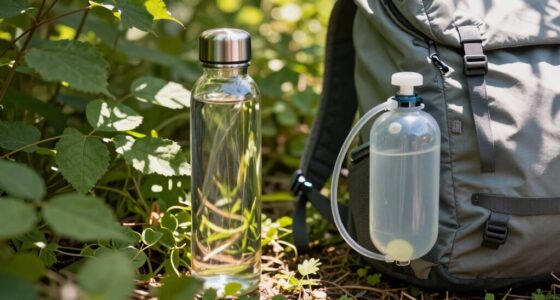
You can’t safely drink seawater without desalination because its high salt content and impurities can cause dehydration and illness. Portable desalination devices, using reverse osmosis or distillation, remove salt and contaminants to produce safe drinking water. While effective, these systems have limitations like membrane fouling and limited capacity. If you’re curious about how these devices work and how to choose the right one, there’s more to uncover below.

Get emergency and outdoor gear delivered free — and shop member deals
- Fast, free delivery on millions of items
- Access to Prime Big Deal Days deals on October 6–7
- Prime Video, Amazon Music and more included
Key Takeaways
- Seawater contains high salt levels that are unsafe to drink without desalination.
- Portable desalination devices remove salt and impurities via reverse osmosis or distillation, making seawater drinkable.
- These devices are effective but have limitations like membrane fouling and energy consumption.
- Proper maintenance is essential to ensure the safety and efficiency of portable desalination systems.
- Advances in technology aim to make portable desalination more accessible, efficient, and suitable for emergency or outdoor use.
portable seawater desalination device
As an affiliate, we earn on qualifying purchases.
As an affiliate, we earn on qualifying purchases.
What Makes Seawater Unsafe to Drink?
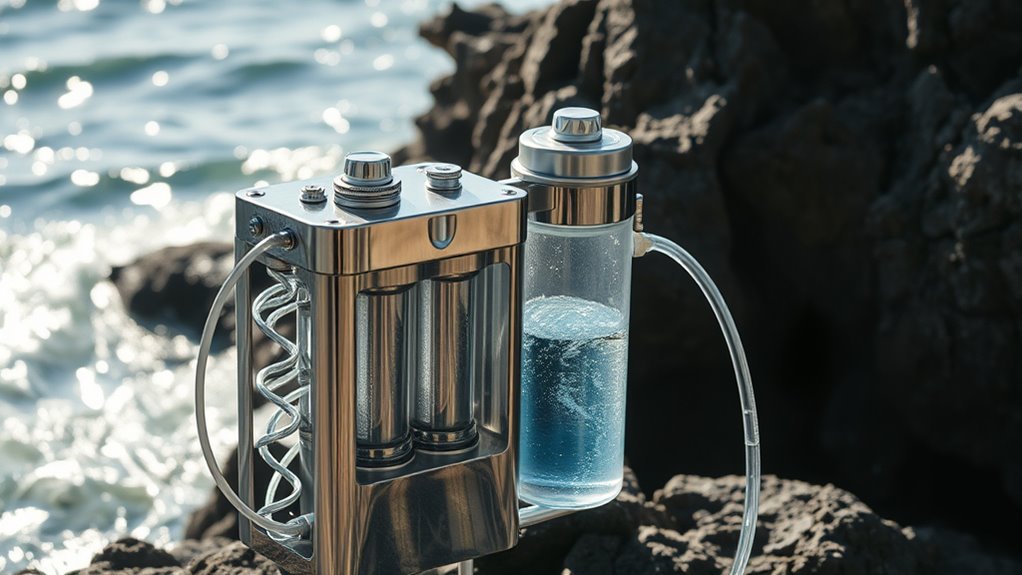
Seawater is unsafe to drink because it contains high levels of salt and other minerals that your body can’t process. The salinity levels in seawater are much higher than what your kidneys can handle, leading to dehydration instead of hydration. Drinking seawater forces your body to use more water to eliminate the excess salt, worsening dehydration. Additionally, microbial contamination poses a serious health risk. Seawater can harbor bacteria, viruses, and other microorganisms that cause illness if ingested. These contaminants can lead to stomach infections, diarrhea, and more severe diseases. Without proper treatment, consuming seawater exposes you to both dangerous salt concentrations and harmful microorganisms, making it unsafe for drinking. This is why desalination processes are essential before seawater can be safely consumed.
solar powered water purifier for camping
As an affiliate, we earn on qualifying purchases.
As an affiliate, we earn on qualifying purchases.
How Desalination Devices Work

Desalination devices remove salt and impurities from seawater, making it safe to drink. They work by using processes like reverse osmosis or distillation to achieve salt removal. In reverse osmosis, seawater is pushed through a semi-permeable membrane that blocks salt and contaminants, allowing clean water to pass through. Distillation heats seawater until it vaporizes, then condenses the vapor into freshwater, leaving salt behind. These methods are designed to minimize impact on marine life by controlling intake and discharge, preventing harm to nearby ecosystems. The key is effective filtration and separation, ensuring you get pure water without harming the environment. Modern navigation and mapping features in desalination plants can optimize operation and reduce energy consumption. Incorporating energy-efficient technologies further enhances sustainability and reduces the environmental footprint of desalination processes. Additionally, advancements in membrane materials have improved the durability and efficiency of reverse osmosis systems, making them more accessible and cost-effective for widespread use. Furthermore, ongoing research into sustainable energy sources aims to power desalination plants with renewable energy, reducing reliance on fossil fuels and lowering greenhouse gas emissions. Innovations like solar-powered desalination are increasingly demonstrating how renewable energy can make these systems more environmentally friendly.
reverse osmosis water filter for travel
As an affiliate, we earn on qualifying purchases.
As an affiliate, we earn on qualifying purchases.
Types of Portable Desalination Technologies

You have several portable desalination options to contemplate, each with its own advantages. Reverse osmosis devices are highly effective, using pressure to filter out salt and impurities. Alternatively, solar-powered systems harness renewable energy, making them ideal for remote or off-grid locations. Additionally, some systems incorporate energy-efficient filtration technologies to reduce power consumption and increase sustainability. Portable desalination units can also be designed to withstand harsh environments, ensuring reliable operation in various outdoor conditions. Incorporating durable construction materials can further enhance their longevity and performance in challenging settings. Moreover, advancements in compact design allow for easier transportation and deployment in diverse situations, emphasizing the importance of robust engineering for outdoor use.
Reverse Osmosis Devices
Reverse osmosis devices are among the most popular portable desalination technologies because they efficiently eliminate salt and impurities from seawater. These systems work by forcing seawater through a semi-permeable membrane that blocks salt molecules and contaminants. This process is especially beneficial for maintaining marine ecosystems, as it guarantees that the water you produce has a low salt concentration, making it safe to drink. Salt removal efficiency is a key advantage of reverse osmosis systems, ensuring minimal environmental impact. By reducing salt levels, reverse osmosis devices help prevent the environmental impacts associated with high salinity. Their compact design makes them ideal for outdoor use, survival situations, or remote areas. You can rely on these devices to provide clean, safe drinking water without harming delicate marine environments, ensuring you stay hydrated without compromising ecological health. Additionally, advancements in filter technology continue to improve the longevity and performance of these systems, and ongoing research is focused on improving energy efficiency to make them even more sustainable. Moreover, ongoing innovations in membrane durability are helping to extend the lifespan of these systems and reduce maintenance costs, making them a more sustainable choice for users.
Solar-Powered Desalination
Harnessing solar energy for portable desalination offers an eco-friendly and sustainable way to produce fresh water in remote or off-grid locations. Solar-powered systems utilize solar panels, whose efficiency directly impacts the amount of clean water you can generate. Higher solar panel efficiency means more energy captured, enabling faster desalination processes. These systems are scalable, so you can choose small units for individual use or larger setups for community needs. Portable solar desalination devices often combine photovoltaic panels with desalination methods like membrane filtration or solar distillation. Because they rely on renewable energy, they reduce environmental impact and operational costs. As technology advances, solar-powered desalination becomes more practical, offering reliable, off-grid solutions for those who need access to fresh water without relying on traditional power sources. Understanding system efficiency is crucial for optimizing performance and ensuring sufficient water output. Additionally, ongoing innovations in solar panel technology continue to improve overall system effectiveness and cost-efficiency, and staying informed about desalination methods helps users choose the most suitable setup for their needs. Furthermore, advancements in membrane materials are enhancing the durability and efficiency of filtration components used in portable desalination units. Keeping abreast of energy storage options can also help maintain consistent water production during periods of low sunlight.
As an affiliate, we earn on qualifying purchases.
Effectiveness and Limitations of Compact Units

Compact desalination units can be effective for personal use, but their purification efficiency has limits, especially with high salinity. You might face challenges with portability, as some units are bulky or require stable power sources. Additionally, energy consumption can be a concern, making these devices less practical for extended or remote use. Incorporating sound therapy techniques can sometimes help users better adapt to the sensory experiences associated with device operation.
Purification Efficiency Limits
While compact seawater purification units offer convenient solutions for on-the-go desalination, their effectiveness has clear limits. One key factor is salt rejection; these units often struggle to remove all dissolved salts, especially at higher salinity levels, reducing water purity. Membrane fouling also poses a significant challenge, as debris, algae, and microorganisms can clog filters and membranes, decreasing efficiency over time. This fouling not only hampers salt rejection but also increases maintenance needs and shortens device lifespan. Additionally, many portable units are limited in their filtration capacity, meaning they can process only small quantities before performance declines. Proper maintenance and adherence to recommended cleaning routines are essential to mitigate these issues and prolong device functionality. Recognizing these limitations of portable desalination helps set realistic expectations for users seeking immediate solutions in challenging environments. Furthermore, the technology used in membrane filtration plays a crucial role in determining overall effectiveness and longevity of these units. Recent advancements in membrane materials are promising but still face challenges in durability and scalability for portable applications. To maximize performance, users should also consider the power source and its impact on operational consistency.
Portability Challenges Faced
Although portable seawater purification units offer the convenience of on-the-go desalination, their effectiveness is often limited by inherent design constraints. One major challenge is battery life; smaller units rely on batteries that can drain quickly, reducing their usability during extended trips. You might find yourself needing to recharge frequently, which isn’t always practical in remote locations. Additionally, weight considerations heavily influence portability. To keep units lightweight, manufacturers often compromise on capacity or durability, making them less effective for larger needs. These trade-offs mean you may struggle to produce enough clean water efficiently or carry the device comfortably for long distances. While technology continues to improve, balancing power, weight, and performance remains a significant hurdle for truly portable seawater desalination solutions. Moreover, the net worth of figures like Kate from Breaking Amish highlights how innovation can lead to financial independence, inspiring advancements in portable tech. Developing efficient energy use in these units is crucial for overcoming some of these limitations.
Energy Consumption Concerns
Energy consumption considerably limits the effectiveness of small seawater purification units, often forcing you to choose between performance and portability. These compact units typically rely on power-intensive processes like reverse osmosis, which can drain batteries quickly. Improving energy efficiency is essential, especially if you want to use renewable sources like solar or wind power. While some units incorporate solar panels, their limited capacity can hinder continuous operation. Here’s a quick comparison:
| Feature | Limitations |
|---|---|
| Power source | High energy demands |
| Energy efficiency | Varies; impacts runtime |
| Use of renewable sources | Often limited by capacity |
| Size and portability | Balances with power needs |
| Operational sustainability | Depends on energy supply |
To maximize effectiveness, focus on units designed for minimal energy use and renewable integration.
Choosing the Right Portable Desalination System
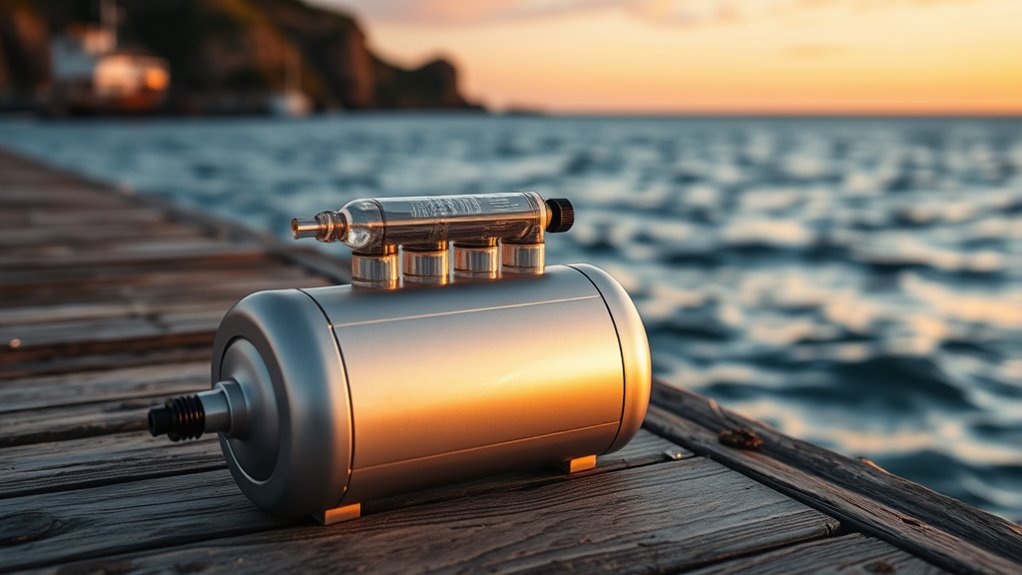
Choosing the right portable desalination system depends on your specific needs and circumstances. Take into account factors like the level of marine pollution, water salinity, and how much water you need daily. If you’re in a remote area with high salinity levels, a robust system with advanced filtration might be necessary. For short-term use, lightweight and easy-to-operate units work best. Think about power sources—solar, battery, or manual. Also, assess maintenance needs and durability. Here are some key points to consider:
- Water salinity levels and pollution impact system choice
- Power options suitable for your environment
- Capacity to meet your daily water needs
- Ease of use and portability
- Long-term durability and maintenance needs
Matching these factors ensures you pick a system that effectively handles your water source.
Real-World Applications and Success Stories

Have you ever wondered how seawater drinking technology transforms lives in challenging environments? In real-world applications, portable desalination units play a crucial role in supporting marine agriculture by providing reliable freshwater sources for aquaculture and crop irrigation. Coastal communities leverage these systems to sustain local economies and improve food security. Additionally, coastal tourism benefits profoundly, as resorts and marinas use desalination tech to supply clean drinking water, reducing reliance on distant sources. Success stories from remote islands and arid coastal regions showcase how portable desalination solutions enable communities to thrive despite water scarcity. These innovations not only enhance daily life but also promote sustainable development, demonstrating that seawater can be a valuable resource when technology is effectively applied.
Maintenance and Troubleshooting Tips
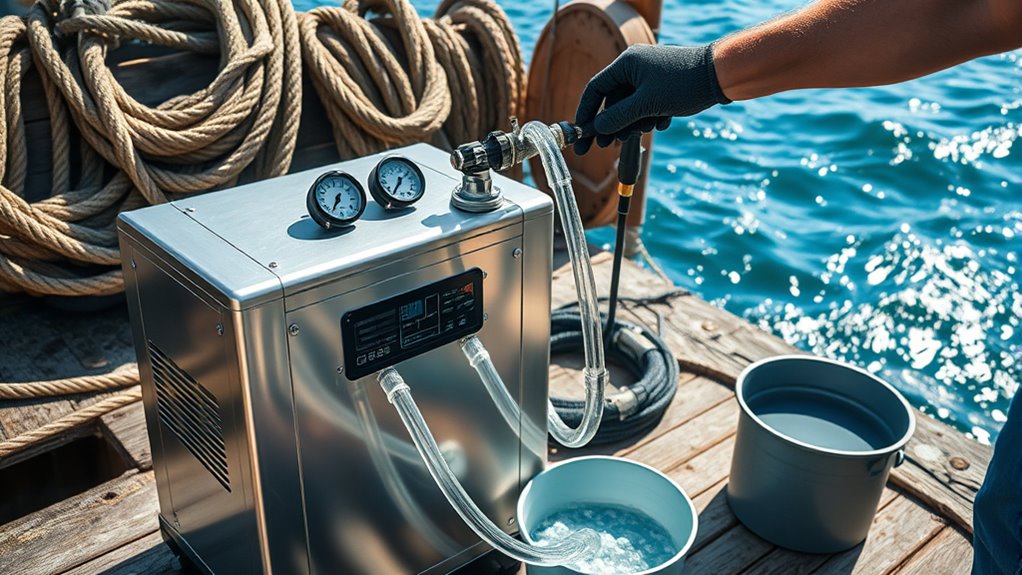
Regular maintenance is essential to keep seawater desalination systems running smoothly and prevent costly breakdowns. Proper filter maintenance ensures debris and contaminants don’t clog your system, maintaining efficiency. When troubleshooting, check for common issues like low flow rate, strange noises, or leaks, and follow specific troubleshooting procedures to identify the root cause quickly. Regularly inspect and replace filters as needed to avoid buildup that hampers performance. Keep an eye on pressure gauges and flow meters to catch early warning signs. Clean and sanitize components periodically to prevent microbial growth. Staying proactive with maintenance helps extend your system’s lifespan and ensures safe drinking water. Remember, consistent upkeep minimizes downtime and keeps your portable desalination tech functioning at its best.
Future Developments in Portable Water Purification
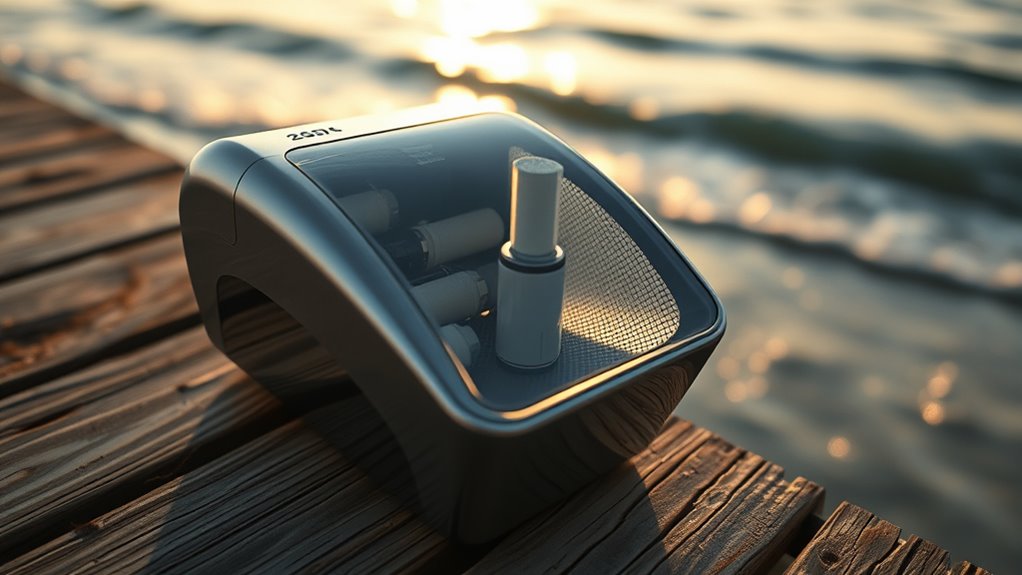
Advances in maintenance techniques and troubleshooting methods are paving the way for innovative developments in portable water purification. These improvements are driving desalination innovations that directly address portable water challenges, making devices more efficient and reliable. Future technologies may include compact, energy-efficient units with faster filtration speeds and enhanced durability. Researchers are exploring new membrane materials and solar-powered systems to reduce costs and environmental impact. Additionally, smart sensors and automation will simplify operation and maintenance, ensuring consistent water quality. These developments will help you overcome current limitations, such as limited capacity and high energy consumption, making portable desalination more accessible and practical in emergency scenarios, remote locations, or everyday use. The goal is to deliver safe, clean water anywhere, anytime.
Frequently Asked Questions
How Much Seawater Can a Portable Desalination Device Process Daily?
Your portable desalination device can process around 1 to 10 gallons of seawater daily, depending on its device capacity. It guarantees water purity by filtering out salt and contaminants effectively. For personal use or small groups, a device with a higher capacity helps meet daily water needs. Keep in mind, the efficiency and output vary based on the model, so choose one that matches your water consumption requirements.
Are Portable Desalination Units Suitable for Emergency Survival Kits?
You might find portable desalination units surprisingly handy in emergency preparedness, but don’t count on them for perfect water purity. While they can provide essential hydration, some models may not remove all contaminants, giving you a false sense of security. Still, in a pinch, they’re better than nothing—so yes, they’re suitable for survival kits, but remember, they’re not a substitute for proper water filtration or purification methods.
What Are the Environmental Impacts of Using Portable Desalination Devices?
Using portable desalination devices can impact the environment by increasing marine pollution if waste brine isn’t appropriately managed. Additionally, they consume energy, which may contribute to greenhouse gas emissions if powered by non-renewable sources. You should be aware of these impacts and guarantee proper disposal of brine and energy-efficient operation to minimize environmental harm while providing safe drinking water in emergencies or remote locations.
Can These Devices Remove All Types of Water Pollutants?
You might think portable desalination devices can eliminate every water pollutant, but they can’t perform miracles. While they excel at improving water purity and filtration efficiency, they struggle with certain chemicals, heavy metals, and microorganisms. These devices are fantastic for removing salt and many contaminants, yet some pollutants require specialized treatments. So, don’t expect them to be a one-stop solution for all water pollution issues—some pollutants still slip through the cracks.
How Long Do Portable Desalination Systems Typically Last?
Portable desalination systems typically last around 1 to 3 years, depending on device maintenance and usage. To maximize their lifespan, you should regularly clean filters, check for corrosion, and replace parts as needed. Battery life also plays a vital role; proper charging and avoiding overuse help extend it. With proper care, your device can serve you reliably during outdoor adventures or emergencies for several seasons.
Conclusion
Now, imagine reaching the shore after a long, parched journey, the sun scorching your skin and the salty air filling your lungs. Portable desalination devices can transform that harsh, unforgiving seawater into life-sustaining fresh water right in your hands. With the right tech and a bit of care, you hold the power to quench your thirst and survive any adventure. Stay prepared, stay hopeful—your future of safe drinking water is within reach.
Fall Picks
fall essentials
As an affiliate, we earn on qualifying purchases.