In today’s digital age, plant identification apps help you find edible plants quickly and accurately, making foraging safer and more accessible. These apps provide detailed images, descriptions, and habitat info, which assist you in recognizing safe, non-toxic species. However, they should complement your personal knowledge, not replace it, as misidentification can be risky. To discover essential tips for safe, ethical foraging with these tools, keep exploring the options available.
Key Takeaways
- Plant identification apps make foraging more accessible but should be used alongside personal knowledge for accuracy.
- These apps provide detailed images, habitat info, and toxicity warnings to promote safe, informed foraging.
- Relying solely on apps can lead to misidentification; combining multiple sources enhances safety.
- Ethical foraging practices, including respecting property and ecosystems, remain essential despite digital tools.
- Apps serve as helpful guides, but responsible foraging also requires cautious judgment and environmental awareness.
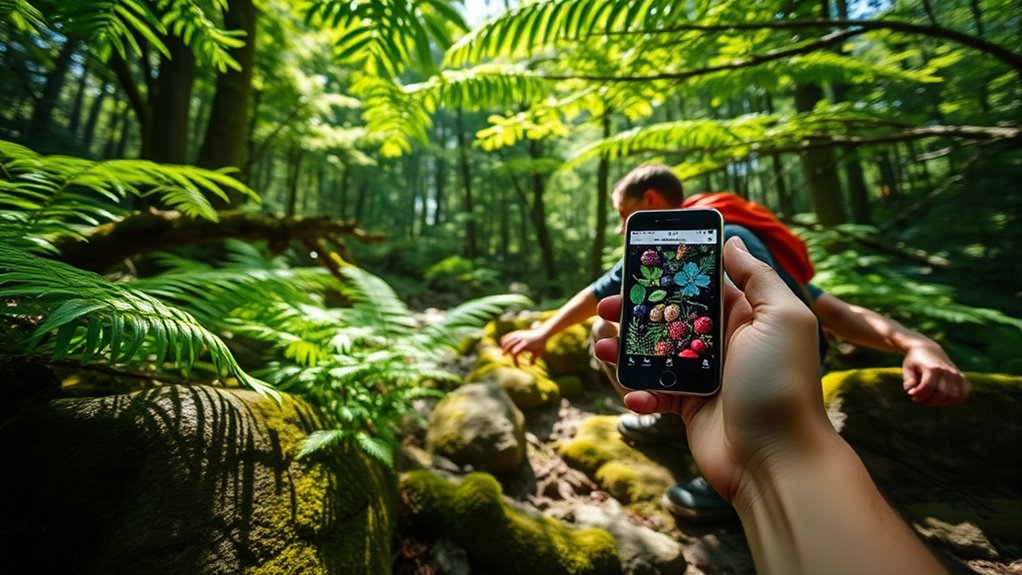
Have you ever wondered how to confidently identify edible plants in the wild? The truth is, foraging can be an incredibly rewarding experience, but it also comes with responsibilities. Ensuring plant safety is essential because misidentifying a plant could lead to serious health risks. Luckily, modern technology offers tools to help you make smarter, safer choices while respecting foraging ethics. Apps that identify edible plants have made wild foraging more accessible, but they should be used as guides—not as the sole authority. Always double-check plant identifications and consult multiple sources before consuming anything you find outdoors. These apps often include detailed images, descriptions, and habitat information, helping you recognize plants accurately. However, relying solely on technology can sometimes lead to mistakes, especially if the app’s database isn’t complete or if the plant looks similar to a toxic species. That’s why it’s imperative to combine app insights with your own knowledge and experience, maintaining a cautious approach to plant safety. Incorporating plant identification accuracy into your foraging practice can further reduce risks and improve your success rate.
Foraging ethics is another key aspect when using these apps. Respect for nature and local regulations ensures that your foraging activities don’t harm ecosystems or deplete wild populations. Many apps promote responsible harvesting practices, encouraging you to take only what you need and leave plenty behind for wildlife and future foragers. This attitude helps preserve plant populations and maintains a healthy environment. Additionally, ethical foraging involves understanding property rights and avoiding private land without permission. Use apps that provide information about legal harvesting zones or protected areas to stay within the law. By following foraging ethics, you demonstrate respect for the land and foster positive relationships with local communities and conservation efforts.
Using these apps also enhances your knowledge about plant safety. They often include warnings about look-alike species and toxic plants to avoid, which is especially helpful for beginners. Remember, even the most advanced app isn’t infallible; it’s up to you to stay vigilant. Practice safe foraging by confirming plant identities with multiple sources and, when uncertain, err on the side of caution. Incorporate learnings from the app into your growing understanding of local flora, and always respect the environment. Ultimately, these tools serve as valuable aids in your journey, but they work best when paired with your awareness, ethical practices, and a commitment to safe foraging. By doing so, you’ll enjoy the thrill of discovering wild edibles while keeping yourself and nature safe.

Identifying and Harvesting Edible and Medicinal Plants in Wild (and Not So Wild) Places
As an affiliate, we earn on qualifying purchases.
As an affiliate, we earn on qualifying purchases.
Frequently Asked Questions
How Accurate Are Plant Identification Apps Compared to Expert Opinions?
Plant identification apps can be quite accurate, but their plant accuracy varies depending on the app and user input. They often provide reliable suggestions, but you should always seek expert validation before consuming wild plants. While apps are useful tools, consulting with an experienced forager or botanist guarantees safety and correct identification. Relying solely on technology isn’t foolproof; expert validation remains essential for safe foraging.
Are There Privacy Concerns With Sharing Location Data on These Apps?
You should be cautious about sharing your location data on plant identification apps, as it raises privacy concerns. For example, if your location privacy isn’t safeguarded, someone could track where you forage and target that spot. Apps often collect data for improvements, but you need to confirm data security and understand how your location info is used. Always check privacy settings and app policies to protect your personal info.
Can These Apps Identify Invasive or Toxic Plant Species?
Yes, these apps can help you identify invasive species and toxic plants. They use image recognition and databases to distinguish between safe, edible plants and harmful ones, including invasive or toxic species. However, accuracy varies, so it’s wise to double-check with multiple sources or expert advice. Always exercise caution when foraging, especially with plants that could be invasive or toxic, to avoid health risks or ecological damage.
Do Apps Provide Detailed Information on Edible Plant Preparation?
Yes, many apps offer detailed information on edible plant preparation, including plant preparation tips and recipes. You can discover how to properly clean, cook, and incorporate plants into delicious dishes. These resources help you confidently forage and prepare your finds, ensuring safety and flavor. Explore the app’s guides and recipe sections to expand your culinary skills and enjoy your foraged ingredients in tasty, well-prepared meals.
Are There Subscription Costs or In-App Purchases Required?
Many plant identification apps do require subscription fees for full access, especially for premium features. While some offer free versions, these often limit content or functionality. If you want detailed plant info, recipes, or offline access, you’ll likely need to pay for a subscription or make in-app purchases. These costs help support updates and expanded features, ensuring you get the most reliable information for safe foraging.

The Complete Guide to Edible Wild Plants
- Comprehensive guide to edible plants: In-depth information on edible plants
- Poison identification: Detects poisonous plants and features
- Color photographs: Over 100 vivid plant images
As an affiliate, we earn on qualifying purchases.
As an affiliate, we earn on qualifying purchases.
Conclusion
With these apps in your pocket, you could become the ultimate foraging legend, confidently munching on plants that once seemed mysterious or dangerous. Imagine having the knowledge of a seasoned botanist at your fingertips—no more guesswork, no more mistakes. The digital age has turned foraging from a risky adventure into an effortless, almost superhuman skill. So go ahead, explore wild foods like a pro—your next great feast is just a tap away!
As an affiliate, we earn on qualifying purchases.
As an affiliate, we earn on qualifying purchases.