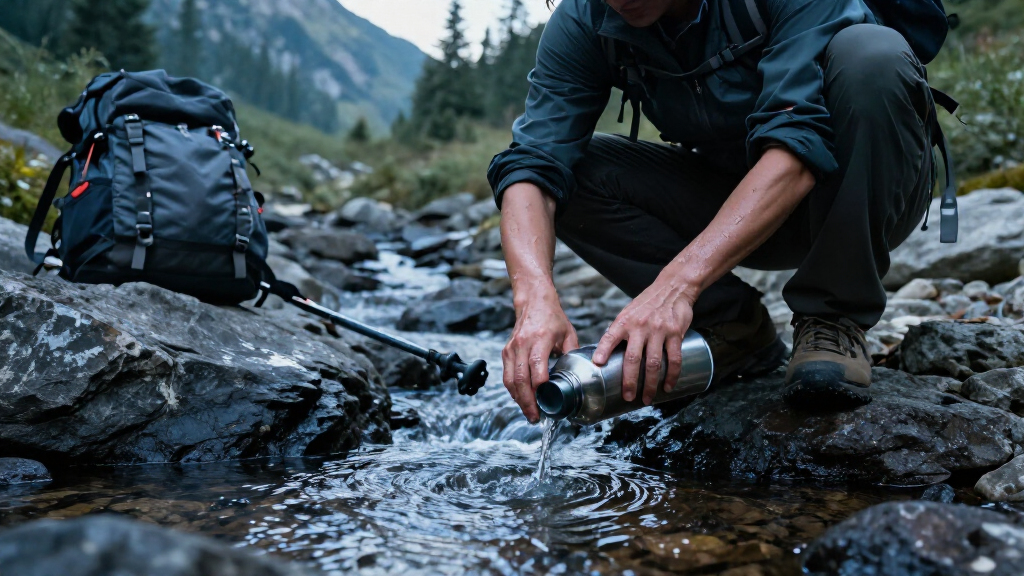

For most hikers, the Sawyer Squeeze with the Cnoc 2-liter bladder is my best overall pick because its squeeze setup pairs a versatile filter with room to carry water. The Katadyn BeFree 1L suits day hikers who want a light, simple bottle, while the GRAYL GeoPress is a better fit when purifier-style treatment matters more than low carry weight. The main tradeoffs are how much water you can process at once, how much gear you carry, and how much cleaning or setup the filter needs. Straw filters keep the kit compact but require drinking at the source; gravity and pump systems can make water for a group, with added bulk or effort. Read on for the full comparison and guidance on matching a filter to your route.

Get emergency and outdoor gear delivered free — and shop member deals
- Fast, free delivery on millions of items
- Access to Prime Big Deal Days deals on October 6–7
- Prime Video, Amazon Music and more included
Key Takeaways
The Sawyer Squeeze and Cnoc bladder stands out for adaptable water collection and carry, while the two-pouch Sawyer SP129 offers a similar squeeze approach with a different included kit.
The Katadyn BeFree 1L favors quick, lightweight access to water; its bottle format is less suited to hikers who want to filter larger batches for a group.
The GRAYL GeoPress serves a different need from the filter straws: its purifier-style bottle is a choice for broader treatment needs, with more weight and a press step to account for.
Personal straws, including LifeStraw and Practical Survival models, keep pack contents simple, but they do not provide a convenient way to fill a bottle for later or supply several hikers.
Pumps and gravity systems trade compactness for batch processing. The Katadyn Hiker Pro and Trailgo pump require hands-on effort, while the Waterdrop gravity bag needs hanging space and setup.
| Katadyn BeFree 1L Lightweight Collapsible Water Filter Bottle for Outdoors |  | Best for Fast, Light Hiking | Filter method: 0.1-micron hollow-fiber membrane | Bottle capacity: 1 liter | Flow rate: Up to 2 liters per minute | VIEW LATEST PRICE | See Our Full Breakdown |
| Trailgo Pro Portable Hand-Pump Water Filter for Camping, Hiking, and Survival |  | Best for Small Groups | Brand: Trailgo | Filter system: Three-stage: 5-micron pre-filter, PP cotton, ultrafiltration membrane | Flow rate: Up to 1.5 liters per minute | VIEW LATEST PRICE | See Our Full Breakdown |
| Sawyer Squeeze Water Filtration System, Cnoc Premium 2 Liter Bladder, Clear |  | Best for Versatile Backcountry Use | Filter method: 0.1-micron absolute hollow-fiber membrane | Bladder capacity: 2 liters (64 ounces) | System weight: Less than 6 ounces | VIEW LATEST PRICE | See Our Full Breakdown |
| LifeStraw Personal Water Filter for Hiking, Travel and Emergency, Blue, 1PK |  | Best for Simple Emergency Carry | Product type: Personal drinking straw filter | Bacteria removal: 99.999999% listed | Parasite removal: 99.999% listed | VIEW LATEST PRICE | See Our Full Breakdown |
| LifeStraw Personal Water Filter, 2-Pack, Blue |  | Best for Shared Backup Kits | Quantity: 2 filters | Color: Blue | Bacteria removal: 99.999999% listed | VIEW LATEST PRICE | See Our Full Breakdown |
| SurviMate 5-Stage Filtered Water Bottle with Built-In Compass |  | Best Filter Bottle for Taste and Tap-Water Treatment | Filtration stages: 5 | UF membrane pore size: 0.01 μm | Filter capacity: Up to 1,500 L (396 gallons) | VIEW LATEST PRICE | See Our Full Breakdown |
| LifeStraw Personal Water Filter for Hiking, Camping, Travel, and Emergency Preparedness, 5 Pack, Blue |  | Best Multi-Person Bulk Buy | Pack size: 5 filters | Bacteria removal: 99.999999% | Parasite removal: 99.999% | VIEW LATEST PRICE | See Our Full Breakdown |
| LifeStraw Peak Series Personal Water Filter, 1 Pack, Mountain Blue |  | Best Straw Filter for Fast Flow and Versatility | Bacteria removal: 99.999999% | Parasite removal: 99.999% | Microplastics removal: 99.999% | VIEW LATEST PRICE | See Our Full Breakdown |
| Practical Survival Reusable Emergency Water Filter Straws, 2-Pack |  | Best Lightweight Backup Pair | Quantity: 2 filters | Filter pore size: 0.1 micron | Filter capacity: Up to 1,800 gallons per filter | VIEW LATEST PRICE | See Our Full Breakdown |
| Practical Survival Reusable Emergency Water Filter Straws, 5-Pack |  | Best for Group Emergency Preparedness | Quantity: 5 filters, individually sealed | Filter pore size: 0.1 micron | Filter capacity: 1,800 gallons per filter | VIEW LATEST PRICE | See Our Full Breakdown |
| GRAYL GeoPress 24 oz Water Purifier & Filter Bottle – Black Camo |  | Best for Virus Protection | Capacity: 24 fl oz (710 ml) | Weight: 15.9 oz | Dimensions: 3.4 × 3.4 × 10.4 in | VIEW LATEST PRICE | See Our Full Breakdown |
| Sawyer Products SP129 Squeeze Water Filtration System with Two 32-Oz Pouches, Straw, and Hydration Pack Adapter |  | Best Overall for Lightweight Versatility | Filter pore size: 0.1 micron absolute | Filter weight: 2 oz | Included pouches: Two 32 oz BPA-free collapsible pouches | VIEW LATEST PRICE | See Our Full Breakdown |
| Waterdrop Gravity Water Filter Straw with 1.5 Gallon Water Bag – 0.1 Micron Camping Water Purifier | 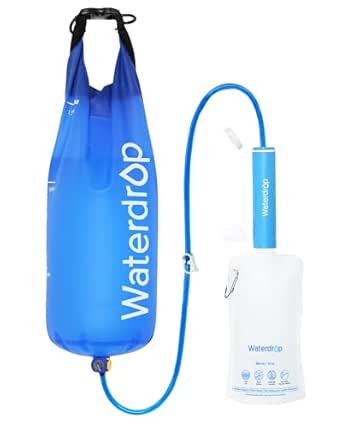 | Best for Campsite Group Water | Filter pore size: 0.1 micron | Filtration stages: 5 | Filter capacity: Up to 1,400 gal (5,300 L) | VIEW LATEST PRICE | See Our Full Breakdown |
| Sawyer Products SP128 Mini Water Filtration System, Single, Blue |  | Best Compact Backup Filter | Filter pore size: 0.1 micron absolute | Filter weight: 2 oz | Included pouch: One 16 oz reusable squeeze pouch | VIEW LATEST PRICE | See Our Full Breakdown |
| Katadyn Hiker Pro Transparent Hand Pump Water Filter | 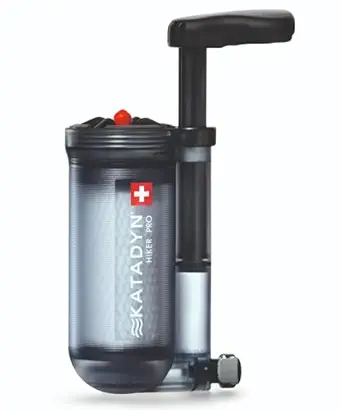 | Best for Pump-Controlled Filtering | Filter type: 0.2-micron glass-fiber microfilter | Power source: Manual | Maximum flow rate: 1 L/min | VIEW LATEST PRICE | See Our Full Breakdown |
More Details on Our Top Picks
Katadyn BeFree 1L Lightweight Collapsible Water Filter Bottle for Outdoors
The Katadyn BeFree 1L pairs a hollow-fiber filter with a collapsible bottle, so I can collect water and drink from the same compact setup without attaching a separate pouch. Its stated 2 L/min flow rate makes quick refills appealing on a moving day, while the bottle packs down when empty. Compared with the Sawyer Squeeze with CNOC 2L bladder, it is a simpler, lighter carry, but gives me less capacity and fewer ways to configure water storage. The tradeoff is that its rated life is 1,000 liters, far below the Sawyer’s stated lifetime capacity. This makes the BeFree a strong fit for solo hikers who value low weight and easy cleaning; I would look elsewhere for shared camp water or a filter intended for very long use.
Pros:- Collapsible 1-liter bottle packs down when empty.
- Stated flow rate of 2 liters per minute supports quick drinking and refills.
- Shake-or-swish cleaning needs no tools or disassembly.
- Filter and bottle form one straightforward setup.
Cons:- The 1-liter capacity is limited when collecting water for a group or dry stretch.
- Rated for up to 1,000 liters, less than the Sawyer Squeeze system’s stated capacity.
- The supplied product data does not specify virus or chemical removal.
Best for: Solo day hikers and fastpackers who want a light, collapsible bottle for drinking directly after collecting water.
Not ideal for: Groups and long-distance hikers prioritizing larger water batches or a filter with a much higher stated lifetime capacity.
- Filter method:0.1-micron hollow-fiber membrane
- Bottle capacity:1 liter
- Flow rate:Up to 2 liters per minute
- Weight:2.24 ounces
- Bottle design:Collapsible
- Cleaning:Shake or swish in water
- Material note:BPA-free
Our verdict“Choose the BeFree for solo hikes where a quick, packable bottle matters more than large capacity or maximum filter life.”
Trailgo Pro Portable Hand-Pump Water Filter for Camping, Hiking, and Survival
For hikers who need to fill several bottles at camp, the Trailgo Pro offers a different approach from the squeeze bottles in this roundup: a manual pump moves water through a three-stage system, with a stated flow of 1.5 liters per minute. Its included tubes and clamps let me draw from a source and dispense into separate containers, which is more practical for a group than passing around a personal straw such as the LifeStraw Personal. The listed filter life of up to 3,000 liters also exceeds the Katadyn BeFree’s rating. That capacity comes with extra kit bulk and the work of pumping; silty water may still clog it. I’d choose it for shared campsite water, while solo hikers moving quickly may prefer a lighter squeeze-style setup.
Pros:- Manual operation needs no batteries or electricity.
- Stated 1.5-liter-per-minute flow supports filling several containers.
- Three-stage filtration includes a 5-micron pre-filter, PP cotton, and an ultrafiltration membrane.
- Includes inlet and outlet tubes, clamps, a reusable pre-filter, and a carry bag.
Cons:- Pumping takes sustained physical effort, especially when filling multiple containers.
- The product data warns that very silty or cloudy water may clog the filter.
- The pump and accessories add more to carry than the LifeStraw Personal.
Best for: Small hiking parties of four to six who want to pump source water into multiple bottles at camp.
Not ideal for: Solo ultralight hikers who want a compact drink-through filter or dislike repeated hand pumping.
- Brand:Trailgo
- Filter system:Three-stage: 5-micron pre-filter, PP cotton, ultrafiltration membrane
- Flow rate:Up to 1.5 liters per minute
- Power:Manual hand pump
- Listed group size:Four to six people
- Included items:Filter body, reusable pre-filter, inlet and outlet tubes, clamps, carry bag, instructions
- Water sources listed:Streams, lakes, and wells
Our verdict“Pick the Trailgo Pro when a small group needs pumped water at camp and accepts extra kit weight and manual effort.”
Sawyer Squeeze Water Filtration System, Cnoc Premium 2 Liter Bladder, Clear
The Sawyer Squeeze with CNOC 2-liter bladder earns its place for hikers who want a reusable filter that can serve more than one setup. The wide-mouth bladder makes collection easier, and the filter can be used for squeezing, drinking through compatible connections, or gravity filtration. Its 0.1-micron hollow-fiber membrane and backwashing design suit repeated trail use; the supplied description states a lifetime capacity of up to 100,000 gallons. Compared with the Katadyn BeFree, this system offers more capacity and flexibility, but weighs more and needs a separate bladder and cleaning coupling. The pouch-and-filter routine also takes more handling than drinking directly from a bottle. I’d favor it for backpackers who want one adaptable system and are willing to maintain it in the field.
Pros:- Includes a 2-liter wide-mouth CNOC bladder for easier collection.
- Can be configured for squeeze, gravity, or compatible bottle use.
- Hollow-fiber filter is backwashable to restore flow.
- System weighs less than 6 ounces according to the product description.
Cons:- Requires handling a separate bladder and filter when collecting and dispensing water.
- More involved to clean than the Katadyn BeFree’s shake-or-swish method.
- The included bladder and accessories weigh more than a standalone personal straw.
Best for: Backpackers who want a reusable filter for squeezing, gravity use, and filling a 2-liter reservoir.
Not ideal for: Fast, minimalist hikers who want an all-in-one bottle and do not want to manage a pouch or backwashing.
- Filter method:0.1-micron absolute hollow-fiber membrane
- Bladder capacity:2 liters (64 ounces)
- System weight:Less than 6 ounces
- Stated filter capacity:Up to 100,000 gallons
- Bladder material:TPU
- Bladder opening:Wide mouth
- Cleaning:Backwashable; cleaning coupling and syringe included
- Warranty:Lifetime warranty against manufacturing defects for the filter
Our verdict“Choose the Sawyer Squeeze kit if you want a flexible, long-life filter system and can accommodate its extra parts and cleaning routine.”
LifeStraw Personal Water Filter for Hiking, Travel and Emergency, Blue, 1PK
The LifeStraw Personal is the simplest option here to stash as a backup: it is a standalone drinking straw, so there is no bottle or pump to pack. That makes it easier to keep in an emergency kit than the bulkier Trailgo Pro, but it only filters water as I drink directly from a source or a compatible container. The membrane is listed for 4,000 liters and for removing bacteria and parasites, plus microplastics down to 1 micron. Those claims make it useful for a straightforward trail refill, though the product data does not claim virus or chemical removal. Unlike the Katadyn BeFree, it does not offer a collapsible bottle or stated fast flow rate for filling a reservoir. I’d pick it as a compact personal backup, not as the main filter for a group’s camp water.
Pros:- Standalone straw design needs no pump, bottle, or power source.
- Rated for up to 4,000 liters of use.
- Listed to remove waterborne bacteria, parasites, and microplastics down to 1 micron.
- Product description cites testing against US EPA, NSF, and ASTM protocols.
Cons:- Requires drinking directly from the source or a container rather than filtering water into a clean bottle.
- The supplied product data does not claim virus or chemical removal.
- Less suited to group use than the pump-based Trailgo Pro.
Best for: Day hikers and emergency-kit owners who want a compact personal filter for direct drinking from natural sources.
Not ideal for: Hikers who need to fill several bottles, collect water quickly for a group, or filter viruses and chemicals.
- Product type:Personal drinking straw filter
- Bacteria removal:99.999999% listed
- Parasite removal:99.999% listed
- Microplastic filtration:Down to 1 micron
- Turbidity reduction:Down to 0.2 microns
- Materials:BPA-free
- Testing protocols cited:US EPA, NSF, ASTM
Our verdict“Keep the LifeStraw Personal as a compact backup or solo drinking filter when direct sipping suits your trail routine.”
LifeStraw Personal Water Filter, 2-Pack, Blue
The LifeStraw Personal two-pack keeps the same direct-drinking format as the single LifeStraw, but provides a second filter for a hiking partner or a separate emergency kit. Each straw is listed for up to 4,000 liters, with bacteria, parasite, and microplastic filtration claims matching the single-unit version. Compared with the Sawyer Squeeze with CNOC bladder, these straws are more immediately simple to use and do not need a pouch or backwashing routine, but they cannot conveniently fill a shared water container. They also require each person to drink directly from a source or suitable vessel. I’d choose the two-pack for paired hikers who want separate personal backups; solo hikers who need collected water or a more adaptable system will get more utility from a squeeze filter.
Pros:- Two individual filters provide one per hiker or kit.
- Each unit is rated for up to 4,000 liters.
- Listed to remove bacteria, parasites, and microplastics down to 1 micron.
- Direct-drinking design avoids pumps, batteries, and separate bladders.
Cons:- Both users must drink through their own straw rather than share filtered water from a reservoir.
- The supplied product data does not claim virus or chemical removal.
- Cannot match the Sawyer Squeeze’s stated gravity and bottle-connection options.
Best for: Two hiking partners or households preparing separate compact emergency kits with personal drinking filters.
Not ideal for: Solo backpackers who want one adaptable filter for filling bottles or hikers who need to treat water for a group.
- Quantity:2 filters
- Color:Blue
- Bacteria removal:99.999999% listed
- Parasite removal:99.999% listed
- Microplastic filtration:Down to 1 micron
- Turbidity reduction:Down to 0.2 microns
- Testing protocols cited:US EPA, NSF, ASTM
Our verdict“Choose the two-pack for paired hikers who want simple personal backups and do not need to collect clean water in a shared container.”
SurviMate 5-Stage Filtered Water Bottle with Built-In Compass
This pick makes the most sense for hikers who spend most of their time refilling from treated or municipal water sources rather than wild backcountry streams. The five-stage system pairs a 0.01-micron hollow fiber membrane with activated carbon and purification beads, so it tackles chlorine, odors, heavy metals, and sediment — categories most straw filters ignore. Compared with the LifeStraw Peak Series, which handles biology brilliantly but leaves chemicals untouched, this bottle targets the everyday-contaminant problem instead. The tradeoff is usability: it demands more suction than a standard bottle, and early pours can carry visible carbon flecks that take some flushing to clear. It is also hand-wash only, which adds friction after muddy trips. Think of it as a taste-and-chemistry specialist rather than a wilderness purifier.
Pros:- Five-stage filtration reduces chlorine, odors, heavy metals, and sediment, not just bacteria
- 0.01-micron hollow fiber membrane is finer than the 0.1-micron standard on many straw filters
- Filter rated for up to 1,500 L (396 gallons) of use
- Built-in compass adds a small but real navigation backup
Cons:- Requires noticeably more suction effort than a standard water bottle
- Not dishwasher-safe, so cleanup after silty water is manual work
- Initial filtered water may contain visible carbon particles that need flushing out
Best for: Day hikers and travelers who mostly refill from taps, fountains, or clear sources and want better taste plus chemical reduction in one bottle
Not ideal for: Backcountry hikers relying on silty streams or shallow puddles — the straw-style flow and 1,500 L capacity lag behind dedicated filters like the Sawyer Squeeze
- Filtration stages:5
- UF membrane pore size:0.01 μm
- Filter capacity:Up to 1,500 L (396 gallons)
- Filter components:Coarse screen, hollow fiber UF membrane, PP sediment membrane, purification beads, activated carbon fiber
- Certification:NSF/ANSI 42
- Special features:Built-in compass; BPA-free
- Dishwasher-safe:No
Our verdict“Buy this if your water worries are chlorine, metals, and taste rather than backcountry pathogens — skip it for serious wilderness filtration.”
LifeStraw Personal Water Filter for Hiking, Camping, Travel, and Emergency Preparedness, 5 Pack, Blue
Five filters in one box changes the math: this is the option for group trips and family emergency kits where every person carries their own unit. Each straw removes 99.999999% of bacteria and 99.999% of parasites — including E. coli, Giardia, and Cryptosporidium — with lab verification under EPA, NSF, and ASTM protocols. Compared with the Practical Survival 5-Pack, which offers higher per-filter capacity at 1,800 gallons, LifeStraw counters with stronger independent testing pedigree and microplastic removal down to 1 micron plus turbidity reduction to 0.2 microns. The main gap is honesty about limits: it does not claim virus removal, so travelers in virus-contaminated regions should consider a purifier like the GRAYL GeoPress instead. Reaching the full 4,000-liter lifespan also depends on consistent backflushing and proper storage between trips.
Pros:- Removes bacteria and parasites including E. coli, Salmonella, Giardia, and Cryptosporidium
- Filters microplastics down to 1 micron and reduces turbidity to 0.2 microns
- Up to 4,000 liters (1,000 gallons) per straw with proper maintenance
- Claims verified by labs using US EPA, NSF, and ASTM protocols
Cons:- No stated virus removal, a real limitation for travel in virus-affected regions
- Full 4,000 L lifespan requires proper use, backflushing, and maintenance
- Straw format offers no bottle or reservoir integration for on-trail carrying
Best for: Families, scout groups, and households building emergency kits who want one purchase to cover five people
Not ideal for: Solo ultralight hikers who only need one filter and would rather spend the same budget on a squeeze system with bottles
- Pack size:5 filters
- Bacteria removal:99.999999%
- Parasite removal:99.999%
- Microplastic removal:Down to 1 micron
- Turbidity reduction:Down to 0.2 microns
- Filter capacity:4,000 liters (1,000 gallons) per straw
- Testing:Lab-verified using US EPA, NSF, and ASTM protocols
Our verdict“The smart buy when you need reliable biological protection for five people at once — not the pick for solo hikers or virus-risk destinations.”
LifeStraw Peak Series Personal Water Filter, 1 Pack, Mountain Blue
Where most straw filters make you work for every sip, the Peak Series moves water at 2.5 liters per minute thanks to a clog-resistant membrane — enough to actually fill a cook pot in reasonable time. That flow rate, plus a removable threaded bottom cap that mates with water bottles and standard gravity hoses, sets it apart from the classic LifeStraw 5-Pack, which stays a bare straw with no attachment options. This model earns its spot for the hiker who wants one filter that drinks straight from a stream, screws onto a bottle, or drops into a gravity setup. The honest limits: like nearly every hollow-fiber straw, it does nothing for viruses, chemicals, or heavy metals, so it pairs poorly with agricultural runoff or developing-world tap water. Suction effort is also part of the deal in straw mode.
Pros:- Fast 2.5L/min flow with clog-resistant membrane beats standard straw filters
- Threads onto water bottles and standard gravity hoses via removable cap
- Durable, leak-proof construction built for rugged trail conditions
- Up to 1,000 gallons of filter life — roughly five-plus years of daily use
Cons:- No virus, chemical, or heavy metal removal
- Straw mode still requires suction effort like most hollow-fiber designs
Best for: Versatile backpackers who want a single filter that works as a straw, bottle filter, and gravity-system cartridge
Not ideal for: Hikers facing chemical runoff or virus risk — a purifier bottle like the GRAYL GeoPress covers threats this filter doesn’t touch
- Bacteria removal:99.999999%
- Parasite removal:99.999%
- Microplastics removal:99.999%
- Flow rate:2.5L per minute
- Filter lifespan:Up to 1,000 gallons (4,000 L)
- Compatibility:Water bottles and standard gravity hoses (removable threaded bottom cap)
- Pack size / color:1 pack, Mountain Blue
Our verdict“The most adaptable straw on this list — pick it if you value flow speed and bottle/gravity compatibility over chemical protection.”
Practical Survival Reusable Emergency Water Filter Straws, 2-Pack
At 2 ounces and 8 inches per straw, this 2-pack is built for redundancy: one rides in your pack, one in the glovebox or go-bag, and each treats up to 1,800 gallons — nearly double the rated life of a LifeStraw. The 0.1-micron hollow fiber catches over 99.99% of bacteria, parasites, and microplastics, and each unit ships individually sealed with its own backflushing plunger, which is what actually preserves that decade-long lifespan claim. Compared with the Sawyer Mini, a similarly tiny competitor, the included plunger is a genuine advantage — Sawyer owners often buy backflush gear separately. The tradeoff is the classic straw limitation: these demand direct access to a water source. You either kneel at the stream or scoop water into a container first, which is slower than a squeeze system like the Sawyer Squeeze on the move.
Pros:- Removes 99.99%+ of bacteria, parasites, and microplastics down to 0.1 micron
- 1,800-gallon capacity per filter, rated up to 10 years of use
- Featherweight at 2 oz and 8 inches per straw
- Each filter includes its own backflushing plunger for maintenance
Cons:- Straw design requires direct water-source access or a scooped container
- No chemical, heavy metal, or virus protection
Best for: Ultralight hikers and preparedness-minded buyers who want two redundant, decade-shelf-life filters stashed in different kits
Not ideal for: Hikers who prefer filling bottles or reservoirs on the trail — the straw-only design can’t attach to anything
- Quantity:2 filters
- Filter pore size:0.1 micron
- Filter capacity:Up to 1,800 gallons per filter
- Lifespan:Up to 10 years
- Weight / length:2 oz, 8 inches per filter
- Removes:99.99%+ bacteria (E. coli, Legionella), parasites (Giardia, Cryptosporidium), microplastics
- Certification / material:FDA-compliant, BPA-free
- Includes:Individual backflushing plunger per filter
Our verdict“Two long-lived, featherweight filters for the price of redundancy — ideal for stash-and-forget kits, weak for on-trail bottle filling.”
Practical Survival Reusable Emergency Water Filter Straws, 5-Pack
This 5-pack takes the same filter as the 2-pack — 0.1-micron hollow fiber, 1,800-gallon capacity, 2 oz per straw — and scales it to household-level preparedness. Five filters with a claimed 10-year lifespan and a six-year shelf life means one purchase can stock a car kit, a bugout bag, and still leave spares. Against the LifeStraw 5-Pack, the pitch is different: Practical Survival trades the LifeStraw’s EPA/NSF-verified lab pedigree for raw capacity per unit and included backflushing plungers, while staying FDA-compliant and BPA-free. Each straw is individually sealed, so you can distribute them without worrying about the unused units. The same design constraint applies: these are direct-source straws, not bottle filters, so a family used to filling reservoirs may find the kneeling-at-the-stream routine frustrating on actual hikes versus emergencies.
Pros:- Five individually sealed filters cover a whole family or multiple kits
- 1,800-gallon capacity per straw with up to 10-year lifespan
- Lightweight at 2 oz and 8 inches each
- Backflushing plunger included with every filter to extend service life
Cons:- Straw-only design with no bottle or reservoir attachment
- Lacks the third-party EPA/NSF protocol verification LifeStraw publishes
Best for: Households and groups building multi-location emergency kits who want sealed, long-shelf-life filters distributed across cars and go-bags
Not ideal for: Trail hikers who want bottle or reservoir integration — the straw format forces direct source drinking or scooping
- Quantity:5 filters, individually sealed
- Filter pore size:0.1 micron
- Filter capacity:1,800 gallons per filter
- Lifespan / shelf life:Up to 10 years use; 6-year shelf life
- Weight / dimensions:2 oz (56.7 g); 8 x 1.5 x 1.5 inches
- Removes:99.99%+ bacteria (E. coli, Legionella), parasites (Giardia, Cryptosporidium), microplastics down to 0.1 micron
- Material / compliance:BPA-free, FDA-compliant
- Includes:One backflushing plunger per filter
Our verdict“A capacity-first choice for stocking five emergency kits at once — choose the LifeStraw 5-Pack if verified lab testing matters more to you than gallons.”
GRAYL GeoPress 24 oz Water Purifier & Filter Bottle – Black Camo
The GRAYL GeoPress is the pick for hikers who want a bottle that purifies water against viruses as well as bacteria and protozoa. Fill it and press; the listed cycle takes about eight seconds and needs no pumping, batteries, or chemical treatment. That broader protection sets it apart from the Sawyer Squeeze and Sawyer MINI, which are lightweight filters for bacteria and protozoa but are not described here as virus purifiers. The tradeoff is carried weight: at 15.9 ounces, it is much heavier than either Sawyer, and each press yields only 24 ounces. Its replaceable cartridge is rated for 65 gallons, so it also has a defined service life. I’d choose it for trips where virus protection matters more than a light pack; hikers focused on low weight or frequent large-volume filtering should look elsewhere.
Pros:- Purifies against viruses, bacteria, and protozoa, with additional listed reductions for particulates and some contaminants
- About eight seconds per press, with no pump, battery, or chemical treatment
- Replaceable cartridge rated for 65 gallons (250 L)
- Bottle format combines treatment and drinking container
Cons:- At 15.9 ounces, it weighs far more than the 2-ounce Sawyer Squeeze or MINI
- The 24-ounce capacity means repeated press cycles for larger water needs
- Not suitable for water above 300 PPM TDS
Best for: Hikers and travelers who want a compact bottle-style purifier with stated protection against viruses, bacteria, and protozoa
Not ideal for: Ultralight backpackers or groups filtering large volumes, since the bottle weighs 15.9 ounces and processes only 24 ounces per press
- Capacity:24 fl oz (710 ml)
- Weight:15.9 oz
- Dimensions:3.4 × 3.4 × 10.4 in
- Purification method:Electroadsorption and activated carbon
- Maximum flow rate:5 L/min
- Cartridge life:65 gal (250 L)
- Maximum supported TDS:300 PPM
- Material:Polypropylene #5
Our verdict“Choose the GeoPress when virus protection and simple bottle use matter more than carrying the lightest filter.”
Sawyer Products SP129 Squeeze Water Filtration System with Two 32-Oz Pouches, Straw, and Hydration Pack Adapter
For a hiking filter that can adapt to different water setups, the Sawyer Squeeze earns the strongest all-around spot in this group. The filter weighs just 2 ounces, and the kit includes two 32-ounce pouches, a straw, and hydration-pack adapters. That gives it more flexibility than the Sawyer MINI, which is similarly light but comes with a smaller 16-ounce pouch. Its 0.1-micron absolute filter removes bacteria, protozoa, cysts, sediment, and microplastics, but the supplied information does not claim virus removal; the heavier GRAYL GeoPress is the option here that explicitly covers viruses. The Squeeze requires manual pressure, and its collapsible pouches can puncture over time. I’d pick it for hikers who want adaptable filtering and low carried weight, provided they’re comfortable squeezing water through the filter.
Pros:- Filter weighs just 2 ounces
- Works with included pouches, a straw, standard 28 mm threaded bottles, and hydration packs
- 0.1-micron absolute filter addresses bacteria, protozoa, cysts, sediment, and microplastics
- Includes two 32-ounce collapsible pouches
Cons:- Manual squeezing takes effort, especially when filtering repeated batches
- Collapsible pouches can puncture with use
- Virus removal is not claimed in the supplied product information
Best for: Backpackers who want one lightweight filter for squeezing into bottles, drinking through a straw, or connecting to a hydration pack
Not ideal for: Hikers who need stated virus protection or want hands-free filtering without manual squeezing
- Filter pore size:0.1 micron absolute
- Filter weight:2 oz
- Included pouches:Two 32 oz BPA-free collapsible pouches
- Included accessories:Drinking straw, hydration-pack adapters, mesh storage bag
- Bottle compatibility:Standard bottles with 28 mm threads
- Listed removals:Bacteria, protozoa, cysts, sediment, and microplastics
Our verdict“Pick the Sawyer Squeeze for a light, adaptable hiking filter if manual squeezing and pouch care fit your routine.”
Waterdrop Gravity Water Filter Straw with 1.5 Gallon Water Bag – 0.1 Micron Camping Water Purifier
The Waterdrop Gravity Water Filter Straw suits hikers who want to filter a larger reserve at camp without squeezing every bottle by hand. Its included 1.5-gallon bag feeds water through gravity, and the stated capacity of up to 1,400 gallons is far greater than the 65-gallon cartridge rating listed for the GRAYL GeoPress. That high capacity and shared reservoir make it more useful for a base camp or group than the Sawyer Squeeze’s individual pouches. In exchange, the setup is bulkier to manage on the trail, and gravity flow can feel slow when several people need water at once. The 0.1-micron hollow-fiber membrane is listed for chlorine, sediment, particulates, and taste reduction; virus removal is not claimed. I’d choose it for camp-based filtering, not for the quickest solo refill on a moving hike.
Pros:- Includes a 1.5-gallon gravity-fed water bag
- Stated filter capacity of up to 1,400 gallons
- Backwash function supports filter cleaning
- Non-electric operation and connections for bags or bottles
Cons:- Gravity flow may be slow when a group needs water at the same time
- The water bag is less convenient to carry than the Sawyer MINI’s small pouch setup
- Not suitable for water above 300 PPM TDS, and virus removal is not claimed
Best for: Small hiking groups or campsite users who want a gravity-fed shared water reserve and long stated filter capacity
Not ideal for: Solo hikers who prioritize compact trail carry, fast refills, or stated protection against viruses
- Filter pore size:0.1 micron
- Filtration stages:5
- Filter capacity:Up to 1,400 gal (5,300 L)
- Maximum flow rate:700 ml/min
- Water bag capacity:1.5 gal
- Purification method:Hollow-fiber ultrafiltration membrane
- Weight:4.64 oz
- Maximum supported TDS:300 PPM
Our verdict“Choose Waterdrop for a campsite water station and long stated capacity, rather than a compact personal filter for fast trail stops.”
Sawyer Products SP128 Mini Water Filtration System, Single, Blue
The Sawyer MINI is the smallest-feeling choice here for hikers building a lightweight backup kit: the filter weighs 2 ounces and can attach to its pouch, a standard 28 mm disposable bottle, a hydration pack, or the included straw. That connection range resembles the Sawyer Squeeze, but the MINI package has a single 16-ounce pouch instead of two 32-ounce pouches, so it is less convenient for filtering repeated batches at camp. Its 0.1-micron absolute filter is listed to remove bacteria, protozoa, and microplastics, with a stated capacity of up to 100,000 gallons. Those specs make it appealing as a long-life emergency option, though the information does not claim virus removal. I’d carry it when pack space and backup utility matter most; for a primary filter with more ready-to-use pouch capacity, the Squeeze kit is better equipped.
Pros:- Filter weighs 2 ounces and fits in the palm
- Connects to the included pouch, 28 mm bottles, hydration packs, or straw
- 0.1-micron absolute filter is listed for bacteria, protozoa, and microplastics
- Rated for up to 100,000 gallons and includes a cleaning plunger
Cons:- Includes only one 16-ounce pouch, compared with two 32-ounce pouches in the Sawyer Squeeze kit
- Manual squeezing is needed when using the pouch
- Virus removal is not claimed in the supplied product information
Best for: Ultralight hikers and emergency-kit builders who want a tiny filter with several connection options
Not ideal for: Hikers who need virus purification, a larger ready-to-filter pouch, or a high-volume gravity setup
- Filter pore size:0.1 micron absolute
- Filter weight:2 oz
- Included pouch:One 16 oz reusable squeeze pouch
- Included accessories:7 in drinking straw and cleaning plunger
- Connections:28 mm disposable bottles and hydration packs
- Listed removals:99.99999% of bacteria, 99.9999% of protozoa, and 100% of microplastics
Our verdict“Choose the MINI as a compact, versatile backup or minimalist filter if its small pouch and lack of stated virus protection suit your needs.”
Katadyn Hiker Pro Transparent Hand Pump Water Filter
The Katadyn Hiker Pro is for hikers who prefer drawing water through an intake hose and pumping it directly into a bottle or hydration pack. Its stated 1 liter-per-minute flow rate gives a clear sense of how quickly it can replenish a container, while the pre-filter helps keep larger debris away from the cartridge. That makes its workflow distinct from the Sawyer Squeeze, which is lighter but asks the user to press water through a pouch. At 11.2 ounces, the Katadyn carries a substantial weight penalty over either Sawyer, and it also requires manual pumping and cartridge cleaning or replacement. Activated carbon granules are listed to improve taste, but this 0.2-micron microfilter is not described as a virus purifier. I’d favor it for hikers who value a pump-and-hose routine and inspectable cartridge; weight-conscious walkers should choose a lighter setup.
Pros:- Stated flow rate of 1 liter per minute
- Intake pre-filter helps protect the cartridge from debris
- Transparent body lets users inspect the cartridge
- Activated carbon granules improve taste
Cons:- At 11.2 ounces, it is much heavier than the 2-ounce Sawyer Squeeze or MINI
- Manual pumping adds work at each refill
- Cartridge needs cleaning or replacement, and virus removal is not claimed
Best for: Backpackers who want pump-fed bottle or hydration-pack refills and a visible cartridge with an intake pre-filter
Not ideal for: Ultralight hikers or anyone seeking stated virus removal without manual pumping
- Filter type:0.2-micron glass-fiber microfilter
- Power source:Manual
- Maximum flow rate:1 L/min
- Filter capacity:Up to 1,150 L
- Weight:11.2 oz
- Dimensions:3 × 3 × 6 in
- Maximum supported TDS:1,000 PPM
- Compatibility:Most water bottles and hydration packs
Our verdict“Choose the Hiker Pro if you prefer controlled pump-fed refills and accept extra pack weight and maintenance.”
How We Picked
I compared these filters by the practical demands of hiking: how a person collects and drinks water, whether the setup can fill a bottle or serve more than one person, how much gear it adds, and what maintenance or effort it calls for. I also considered whether each product is a filter straw, squeeze system, bottle, gravity setup, or pump, since those formats solve different problems on the trail.
The ranking puts adaptable, hike-ready setups first, followed by options that excel for a narrower use such as light day hikes, direct drinking, group water, or purifier-style treatment. Similar products are distinguished by their included containers and carry method, not by assuming that a multi-pack or extra accessory improves filtration. Product names alone do not establish protection against every pathogen or chemical, so I treat treatment claims as model-specific and recommend checking the maker’s documentation against the water sources on a planned route.
Factors to Consider When Choosing Portable Water Filters For Hiking
I would start with the way you expect to collect water, then match the filter format to your route, group, and source conditions. A compact straw can be the right tool for a solo day hike, yet frustrating on a dry route where you need to carry treated water between sources.
Match the format to how you drink
Ask whether you want to drink directly from a source, squeeze water through a filter into a bottle, or process a batch for later. Direct-drinking straws cut down on containers, but they tether drinking to the source and can be awkward when water sits below the bank. Squeeze systems allow more flexibility if compatible bottles or reservoirs are part of the setup. Gravity filters can treat water while you handle camp tasks, though they need a place to hang and time to run. Pumps give you more control at a source but require repeated hand movement. A common mistake is buying the smallest device without checking whether its drinking method fits the route.
Plan for water between sources
On a trail with frequent reliable water, filtering as you go may work well; long dry stretches call for storage capacity as much as filtration speed. A filter that connects to a soft pouch or hydration reservoir can help carry water away from a source, while a personal straw cannot fill a spare bottle. Think about the number of people sharing the system and how much they need before the next refill. A large bag is useful only if you can carry it comfortably when full. Check whether containers are included, compatible, and replaceable before treating a kit as ready to hike. This is where a slightly heavier system may reduce the need for several separate filters.
Check what the treatment covers
Portable filters do not all address the same contaminants, and a product described as a purifier may have different capabilities from a basic filter. Read the exact model documentation for the organisms and contaminants covered, plus any limits around cloudy water, viruses, or chemicals. Match those claims to local advisories and the water sources you expect to encounter. Clear-looking water is not proof that it is safe to drink. If the source risk calls for treatment a filter does not provide, plan a compatible additional treatment method rather than expecting a straw or squeeze filter to do everything. Avoid relying on broad category labels when the specific model’s documentation is available.
Account for cleaning and cold weather
Flow can slow as a filter collects debris, so maintenance is part of trail use rather than an afterthought. Learn the manufacturer’s cleaning or backflushing procedure before leaving, and pack any required adapter or accessory. Some designs make routine cleaning simpler than others, but every model has its own instructions and limits. Cold conditions need special attention because water trapped in a filter can freeze and damage the element; follow the maker’s guidance for protecting it. A filter that is easy to carry but difficult to maintain may become a poor fit on a long trip. Do not improvise cleaning methods that conflict with the product instructions.
Weigh the full kit, not just the filter
Compare the packed system as you will actually carry it: filter, pouches, bottle, hoses, adapters, and any treatment backup. A bare mini filter may appear compact, but it may need a compatible container to work the way you intend. A bottle filter bundles storage and treatment in one item, which can simplify packing while limiting how you refill or share water. Pumps and gravity bags can support a group but occupy more space and add steps at camp. For a solo overnight, a small squeeze setup may cover several needs; for a group, one batch system may be more practical than carrying a straw for each person. Test the complete setup at home so you know every connection fits.
Frequently Asked Questions
Is a personal filter straw enough for a multi-day hike?
It can work for a solo hiker on a route with accessible water sources and no need to carry much water between them. It is less convenient when you need to fill a bottle for a dry stretch, share water, or drink away from the source. Check the straw’s rated capacity and care instructions against the length of your trip. A squeeze filter with compatible storage gives more flexibility, though it adds containers to your kit. Choose based on how you will collect and carry water, not just the filter’s packed size.
When should I choose a purifier-style bottle over a squeeze filter?
A purifier-style bottle such as the GRAYL GeoPress may suit trips where the maker’s stated treatment coverage matches your concerns and you prefer an all-in-one bottle. Its press action and bottle format differ from a squeeze filter that pushes water through an element into a separate container. That convenience can come with more weight and a slower, more deliberate routine. Read the exact model documentation for covered pathogens and contaminants before deciding it fits a particular destination. Neither format should be assumed to address every chemical or water-quality concern.
Can one hiking filter serve a group?
Yes, but choose a system that can produce clean water into a shared container or process a useful batch. Gravity bags and hand pumps can make group supply easier than passing around personal straws, though they take more space and setup. A squeeze filter can also serve multiple hikers if you bring suitable storage and allow time for refills. Consider how often the group will stop and who carries the system. For larger groups, compare the total time spent collecting and filtering water, not just the device’s individual flow claims.
Do I need a separate container with a portable hiking filter?
That depends on the format. A filtered bottle provides drinking and storage in one unit, while a straw is generally designed for drinking at the source. Squeeze, gravity, and pump systems may need a clean container to receive or store treated water, and included kit contents vary. Confirm that the container and connections are compatible with your filter before a trip. Carrying a separate bottle can add weight, but it also lets you refill and drink away from the water source.
What should I do if my filter slows or freezes on the trail?
For slow flow, follow the manufacturer’s cleaning or backflushing directions and use only compatible accessories. Do not force a method that the instructions prohibit, since it could damage the filter. In freezing weather, protect the filter from freezing according to the maker’s guidance; a water-filled element can be damaged even if its exterior looks intact. If you suspect damage or cannot restore flow safely, switch to a backup treatment method that is appropriate for the source. Plan for this before setting out, especially on remote routes.
Conclusion
For a versatile setup, I would choose the Sawyer Squeeze with the Cnoc 2-liter bladder as best overall; hikers who want a similar squeeze approach with included pouches can compare the Sawyer SP129. The Katadyn BeFree 1L is my best value-style pick for hikers who prize a simple, light bottle format, while the GRAYL GeoPress is the premium choice for buyers seeking a purifier-style bottle and willing to carry its added weight. Beginners who want direct, straightforward drinking may prefer a LifeStraw Personal, provided they do not need to fill bottles or serve a group. For group water, look at the Waterdrop gravity system or a pump such as the Katadyn Hiker Pro; for a compact backup, consider the Sawyer Mini. Match treatment claims to your water sources and check the exact model instructions before you go.
Fall Picks
fall essentials
As an affiliate, we earn on qualifying purchases.