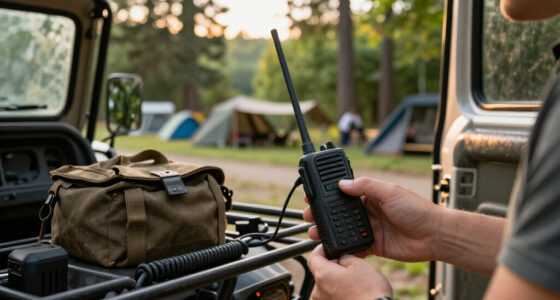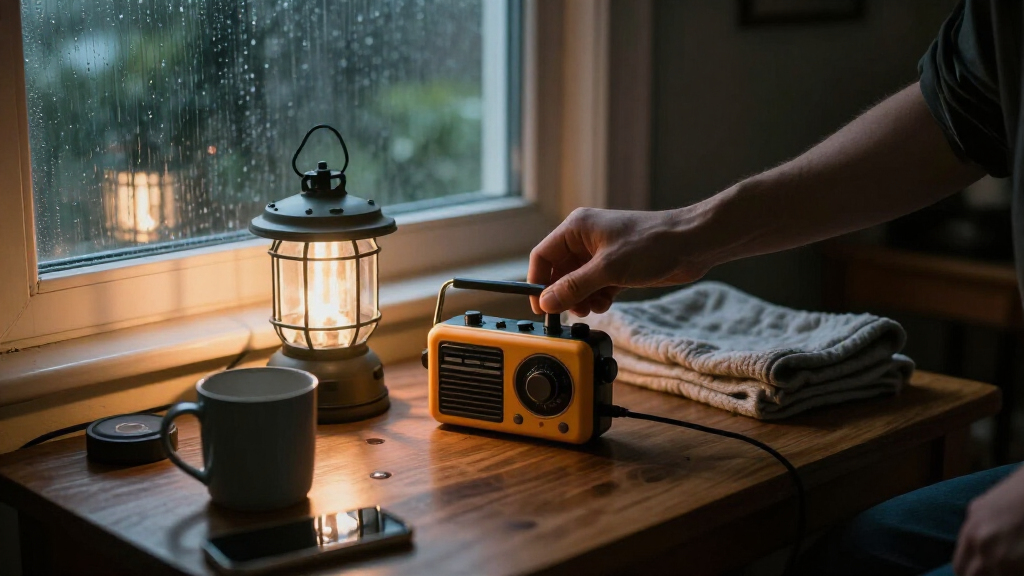

Hand crank emergency radios can provide weather updates and light when normal power is unavailable, but battery size, charging options, and ease of use vary widely. My best overall pick is the Midland ER310, a focused emergency-radio option with a recognized weather-radio format and crank power. The Sangean MMR-99 stands out for added Bluetooth versatility, while the Leaton 10,000mAh model is a stronger match for shoppers prioritizing a large stated battery capacity. The main tradeoff is between a radio built around emergency readiness and a multifunction unit offering more charging or entertainment features. Read on for how the 15 options differ and which one best fits your backup plan.

Get emergency and outdoor gear delivered free with Prime
- Fast, free delivery on millions of items
- Prime Video, Amazon Music and more included
- Member-only deals all year
Key Takeaways
- The Midland ER310 leads this comparison as the most focused pick for shoppers seeking a dedicated emergency weather radio rather than a feature-heavy general-purpose device.
- The Sangean MMR-99 and Midland ER310PRO add a different kind of value: Bluetooth and broader everyday use, which may matter more to some buyers than maximum battery capacity.
- Several listed radios advertise 10,000–12,000mAh batteries, including models from Leaton, Raynic, and other brands, but capacity alone does not establish radio runtime or how much phone charging is practical.
- The compact iRonsnow and RunningSnail options favor simpler, lighter emergency kits, while larger-capacity models may suit stationary home storage better.
- Crank and solar charging are backup methods, not guarantees of continuous power; buyers should compare the radio’s primary battery setup and controls, then plan to keep it charged before an outage.
| Leaton Hand Crank Emergency Radio with NOAA, AM/FM, and 10,000mAh Battery |  | Best Compact All-Rounder | Battery capacity: 10,000mAh | Radio bands: AM 520–1710kHz, FM 87–108MHz, NOAA 162.400–162.550MHz | Charging methods: USB-C, solar, hand crank | VIEW LATEST PRICE | See Our Full Breakdown |
| Emergency Radio with Hand Crank, Solar Charging, NOAA Weather Band, AM/FM, and 12,000mAh Battery |  | Best for High-Capacity Backup Power | Battery capacity: 12,000mAh | Power sources: Rechargeable battery, hand crank, solar, USB-C | Radio bands: NOAA weather, AM/FM | VIEW LATEST PRICE | See Our Full Breakdown |
| Raynic Emergency Weather Radio with 12,000 mAh Battery, Solar and Hand-Crank Charging |  | Best for Weather Monitoring and Band Variety | Battery capacity: 12,000mAh / 44,400mWh | Radio bands: AM, FM, shortwave, weather band | Charging options: Rechargeable battery, AC adapter, USB input, hand crank, solar panel, 3 AAA batteries (not included) | VIEW LATEST PRICE | See Our Full Breakdown |
| Raynic Emergency Weather Radio with Solar and Hand Crank Charging |  | Best for Automatic NOAA Alerts | Battery capacity: 5,000mAh / 18,500mWh | Radio bands: AM, FM, shortwave, NOAA | Charging options: Rechargeable battery, AC adapter, USB, hand crank, solar panel, 3 AAA batteries (not included) | VIEW LATEST PRICE | See Our Full Breakdown |
| Sangean MMR-99 AM/FM Bluetooth Weather Emergency Radio |  | Best Premium Feature Set | Battery: 2,600mAh rechargeable lithium-ion | Radio bands: AM/FM and 7 NOAA weather channels | Power options: Hand crank, solar panel, USB-C | VIEW LATEST PRICE | See Our Full Breakdown |
| RunningSnail Hand Crank Emergency Radio with Flashlight |  | Best Compact Pick | Radio bands: AM/FM/NOAA | Battery capacity: 2000mAh / 7400mWh | Power sources: Hand crank, solar, rechargeable battery | VIEW LATEST PRICE | See Our Full Breakdown |
| FosPower A1 NOAA Emergency Weather Radio with Solar and Hand Crank, Orange |  | Best for Multiple Lighting Needs | Model: FOSPWB-2376 | Radio bands: AM, FM, NOAA weather band | Power sources: Solar, hand crank, AAA batteries, USB | VIEW LATEST PRICE | See Our Full Breakdown |
| Emergency Weather Radio with Hand Crank, Solar Charging, and 10,000 mAh Battery |  | Best for Longer Battery Reserve | Battery capacity: 10,000mAh / 37,000mWh | Charging methods: Hand crank, solar, rechargeable battery | Radio bands: AM, FM, WB, NOAA | VIEW LATEST PRICE | See Our Full Breakdown |
| Solar Hand Crank Emergency Radio with 7,400 mWh Battery |  | Best for Built-In Device Cables | Battery capacity: 7,400mWh (2,000mAh) | Power sources: USB-C, hand crank, solar, AAA batteries | Radio bands: AM/FM/NOAA weather band | VIEW LATEST PRICE | See Our Full Breakdown |
| Emgykit Emergency Hand Crank Radio with AM/FM/NOAA Weather Band |  | Best for a Bright Emergency Flashlight | Model number: 086S | Radio bands: AM/FM/NOAA | Power sources: Hand crank, solar panel, USB-C | VIEW LATEST PRICE | See Our Full Breakdown |
| Sony ICF-B300 Emergency Radio with Hand Crank, Solar Charging, and LED Light |  | Best Compact All-Rounder | Radio bands: FM and AM | Charging methods: Hand crank, solar, USB | Connectivity: USB | VIEW LATEST PRICE | See Our Full Breakdown |
| Midland ER310PRO Portable Emergency Bluetooth Weather AM/FM Radio |  | Best Feature-Rich Weather Radio | Radio bands: AM, FM, NOAA weather | Charging methods: Solar, hand crank, USB | Power bank capacity: 10,000 mAh | VIEW LATEST PRICE | See Our Full Breakdown |
| iRonsnow Solar Emergency Hand Crank Weather Radio, 2000mAh, NOAA AM/FM |  | Best Lightweight Packable Pick | Radio bands: AM, FM, NOAA weather | Battery capacity: 2,000 mAh | Power sources: USB-C, solar, hand crank | VIEW LATEST PRICE | See Our Full Breakdown |
| 12000mAh Solar Emergency Radio with Hand Crank |  | Best for Extended Outages | Battery capacity: 12,000 mAh lithium battery | Radio bands: NOAA, FM, AM | Power sources: Solar panel, hand crank, USB-C, 3 AAA batteries | VIEW LATEST PRICE | See Our Full Breakdown |
| Midland ER310 Emergency Crank Weather AM/FM Radio |  | Best for Simple Weather Readiness | Radio bands: AM/FM and NOAA weather | Power sources: Solar and hand crank | Battery option: 6 AA batteries included | VIEW LATEST PRICE | See Our Full Breakdown |
| hand crank emergency radio | Radio bands | Water resistance | Battery capacity | Dimensions |
|---|---|---|---|---|
| Leaton Hand Crank Emergency Ra | AM 520–1710kHz, FM 87–108MHz, NOAA 162.400–162.550MHz | IPX6 | 10,000mAh | 6.3 × 3.5 × 3.1 in |
| Emergency Radio with Hand Cran | NOAA weather, AM/FM | IPX6 | 12,000mAh | — |
| Raynic Emergency Weather Radio | AM, FM, shortwave, weather band | IPX3 | 12,000mAh / 44,400mWh | — |
| Raynic Emergency Weather Radio | AM, FM, shortwave, NOAA | IPX3 | 5,000mAh / 18,500mWh | — |
| Sangean MMR-99 AM/FM Bluetooth | AM/FM and 7 NOAA weather channels | — | — | — |
| RunningSnail Hand Crank Emerge | AM/FM/NOAA | Water repellent | 2000mAh / 7400mWh | 5 × 1.8 × 2.4 inches |
| FosPower A1 NOAA Emergency Wea | AM, FM, NOAA weather band | Water resistant | — | — |
| Emergency Weather Radio with H | AM, FM, WB, NOAA | Water resistant | 10,000mAh / 37,000mWh | — |
| Solar Hand Crank Emergency Rad | AM/FM/NOAA weather band | Waterproof; rating not specified | 7,400mWh (2,000mAh) | 6.49 × 1.9 × 2.9 inches |
| Emgykit Emergency Hand Crank R | AM/FM/NOAA | — | 2000mAh | 5.16 × 2.09 × 2.6 inches |
| Sony ICF-B300 Emergency Radio | FM and AM | IPX4 | — | 3.15 × 2.28 × 5.2 in |
| Midland ER310PRO Portable Emer | AM, FM, NOAA weather | — | — | 8.1 × 2.8 × 3.4 in |
| iRonsnow Solar Emergency Hand | AM, FM, NOAA weather | Water resistant; rating not specified | 2,000 mAh | 5 × 1.8 × 2.4 in |
| 12000mAh Solar Emergency Radio | NOAA, FM, AM | — | 12,000 mAh lithium battery | 6.8 × 4.7 × 2.9 in |
| Midland ER310 Emergency Crank | AM/FM and NOAA weather | Not water resistant | — | 9.61 × 2.95 × 6.85 in |
More Details on Our Top Picks
Leaton Hand Crank Emergency Radio with NOAA, AM/FM, and 10,000mAh Battery
The Leaton is a practical pick for a kit that needs radio, light, and backup charging without taking up much room. At 1.1 pounds, it is lighter than the 1.6-pound Emergency Radio with Hand Crank, Solar Charging, NOAA Weather Band, AM/FM, and 12,000mAh Battery, while its 10,000mAh battery still gives it more stated capacity than the Sangean MMR-99. USB-C, solar, and crank charging offer several ways to replenish it, and IPX6 protection handles splashes and water spray. The tradeoff is information access: NOAA broadcasts require manual tuning, with no automatic alerts, so it will not warn you while switched off or tuned elsewhere. Its 5V/1A USB output is also modest. I would choose it for portable preparedness, not hands-free weather monitoring.
Pros:- USB-C, solar, and hand-crank charging support different outage conditions.
- Lightweight 1.1-pound body suits vehicle kits and backpacks.
- Flashlight, reading lamp, compass, and USB phone output combine several emergency functions.
- IPX6 rating protects against splashes and water spray.
Cons:- NOAA broadcasts require manual tuning; automatic alerts are not supported.
- 5V/1A USB output is limited for phone charging.
- Not rated for immersion or heavy rain.
Best for: Backpackers, drivers, and households building a compact kit with several charging options and basic emergency lighting.
Not ideal for: Buyers who need automatic NOAA alerts, stronger phone-charging output, or protection for immersion and heavy rain.
- Battery capacity:10,000mAh
- Radio bands:AM 520–1710kHz, FM 87–108MHz, NOAA 162.400–162.550MHz
- Charging methods:USB-C, solar, hand crank
- USB output:5V/1A
- Water resistance:IPX6
- Dimensions:6.3 × 3.5 × 3.1 in
- Weight:1.1 lbs (500g)
- Lighting:High, Low, and SOS flashlight modes; 1.3W reading lamp
Our verdict“Choose the Leaton for a lightweight, multi-purpose emergency kit if manual weather tuning is acceptable.”
Emergency Radio with Hand Crank, Solar Charging, NOAA Weather Band, AM/FM, and 12,000mAh Battery
This model stands out for buyers who want a larger stated battery and prominent emergency signals in one crank radio. Its 12,000mAh capacity exceeds the Leaton’s 10,000mAh, and the 5W LED flashlight, 12-LED reading lamp, and 120dB SOS alarm give it a more signal-focused setup. DSP processing is listed for clearer reception, while USB-C, solar, and hand-crank charging give it multiple replenishment routes. Compared with the Raynic radio with a 12,000mAh battery, solar, and hand-crank charging, this one is heavier at 1.6 pounds and does not list shortwave or automatic weather alerts. NOAA listening requires the radio to be on and tuned, so it is not a silent standby alert system. I would favor it for power and signaling features, accepting the added weight.
Pros:- 12,000mAh battery capacity is higher than the Leaton’s stated 10,000mAh.
- USB-C, solar, and hand-crank charging provide three ways to replenish power.
- 5W flashlight, 12-LED reading lamp, and 120dB SOS alarm support visibility and signaling.
- DSP signal processing is included for radio reception.
Cons:- At 1.6 pounds, it is heavier than the Leaton and the 1.2-pound Raynic models.
- NOAA broadcasts require the radio to be powered on and tuned to a station.
- Solar charging depends on available sunlight.
Best for: Campers and households prioritizing a larger stated battery, a loud SOS alarm, and bright emergency lighting.
Not ideal for: Buyers seeking a lightweight pack radio, automatic NOAA alerts, or shortwave reception.
- Battery capacity:12,000mAh
- Power sources:Rechargeable battery, hand crank, solar, USB-C
- Radio bands:NOAA weather, AM/FM
- Flashlight:5W LED
- Reading lamp:12 LEDs
- SOS alarm:120dB
- Water resistance:IPX6
- Dimensions and weight:6.81 × 2.91 × 4.76 in; 1.6 lbs
Our verdict“Pick this radio if battery capacity and loud emergency signaling matter more to you than low carry weight or automatic alerts.”
Raynic Emergency Weather Radio with 12,000 mAh Battery, Solar and Hand-Crank Charging
The Raynic earns its place for buyers who want more ways to hear broadcasts and more ways to power the radio. It covers AM, FM, shortwave, and weather band, and its NOAA alert scanning is a meaningful step up from the Leaton, which requires manual tuning and has no automatic alerts. Six listed power options include hand crank, solar, USB input, AC adapter, rechargeable battery, and three AAA batteries (not included). The 12,000mAh capacity matches the Emergency Radio with Hand Crank, Solar Charging, and 12,000mAh Battery, but this Raynic is lighter at 1.2 pounds and adds a headphone jack. Its main compromise is IPX3 water resistance, which offers less protection than the IPX6 Leaton or that 12,000mAh alternative. It suits indoor preparedness and fair-weather outings better than wet exposure.
Pros:- NOAA weather alert scanning provides more hands-off monitoring than the Leaton’s manual tuning.
- AM, FM, shortwave, and weather-band reception offer broad listening options.
- Six listed power options include hand crank, solar, AC adapter, USB input, and AAA batteries.
- USB phone output and a 3.5 mm headphone jack add practical utility.
Cons:- IPX3 protection is limited compared with the IPX6 Leaton.
- Three AAA batteries are not included.
- Solar charging depends on available sunlight.
Best for: Households and radio listeners who want NOAA alert scanning, shortwave reception, and multiple backup power sources.
Not ideal for: People expecting regular exposure to rain or spray, or buyers who need AAA batteries included.
- Battery capacity:12,000mAh / 44,400mWh
- Radio bands:AM, FM, shortwave, weather band
- Charging options:Rechargeable battery, AC adapter, USB input, hand crank, solar panel, 3 AAA batteries (not included)
- Display:LCD
- Lighting:3W flashlight; 2.5W reading lamp
- Water resistance:IPX3
- Weight and dimensions:1.2 lb; 6.8 × 3.7 × 2.9 in
- Connectivity:USB charging output; 3.5 mm headphone jack
Our verdict“Choose this Raynic for alert scanning and broad radio-band coverage if its limited water protection fits your use.”
Raynic Emergency Weather Radio with Solar and Hand Crank Charging
For emergency-radio buyers, the standout feature here is automatic severe-weather alerts: unlike the Leaton, this Raynic can alert rather than relying on you to tune in and listen. It also receives AM, FM, shortwave, and NOAA broadcasts, and its six listed power options include hand crank, solar, AC adapter, USB, and three AAA batteries (not included). The tradeoff is the 5,000mAh battery, less than half the capacity listed for the Raynic 12,000mAh model and well below the 10,000mAh Leaton. Both Raynic options share an IPX3 rating, so neither is the stronger choice for wet outdoor use compared with the IPX6 Leaton. This model makes the most sense for a home or shelter where alerting is the priority and carrying a smaller power reserve is acceptable.
Pros:- Automatic NOAA severe-weather alerts reduce the need to monitor a tuned station.
- AM, FM, shortwave, and NOAA reception cover several broadcast types.
- Multiple power options include hand crank, solar, USB, AC adapter, and AAA batteries.
- Flashlight, reading lamp, SOS alarm, LCD, and headphone jack add useful emergency functions.
Cons:- 5,000mAh battery capacity is substantially lower than the 12,000mAh Raynic model.
- Three AAA batteries are not included.
- IPX3 water resistance provides limited protection compared with the IPX6 Leaton.
Best for: Home emergency-kit owners who want automatic NOAA alerts and multiple backup power methods in a compact radio.
Not ideal for: Buyers who need a larger battery for extended phone charging or stronger protection from rain and spray.
- Battery capacity:5,000mAh / 18,500mWh
- Radio bands:AM, FM, shortwave, NOAA
- Charging options:Rechargeable battery, AC adapter, USB, hand crank, solar panel, 3 AAA batteries (not included)
- Flashlight output:3W
- Reading lamp output:2.5W
- Display:LCD
- Water resistance:IPX3
- Weight and dimensions:1.2 lb; 6.8 × 3.7 × 2.9 in
Our verdict“Choose this Raynic if automatic weather alerts matter more than battery capacity or stronger water resistance.”
Sangean MMR-99 AM/FM Bluetooth Weather Emergency Radio
The Sangean is the most entertainment-oriented choice here: Bluetooth, AUX-in, and up to 45 AM/FM presets make it more useful between emergencies than the simpler Leaton, which focuses on basic radio reception and emergency tools. It also receives seven NOAA weather channels, has USB-C, solar, and hand-crank charging, and includes a USB-A output for small-device charging. Its IP55 rating adds dust resistance alongside water protection, a different kind of outdoor safeguard from the IPX6 rating on the Leaton and 12,000mAh emergency radio. The compromise is capacity: its 2,600mAh battery is much smaller than the other listed options, limiting its appeal as a phone-power reserve. Product details also conflict on audio-output configuration and preset count, so I would choose it for connectivity and radio use, not maximum backup power.
Pros:- Bluetooth and AUX-in support listening beyond AM/FM and NOAA broadcasts.
- Up to 45 AM/FM presets can make familiar stations easier to access.
- Hand crank, solar, and USB-C provide several charging methods.
- IP55 rating includes dust resistance as well as water resistance.
Cons:- 2,600mAh battery capacity is much lower than the Leaton and both 12,000mAh radios.
- USB-A output is limited to 5V/1A for small-device charging.
- Product details are inconsistent about audio output and preset count.
Best for: Buyers who want an emergency radio that also supports Bluetooth listening, preset stations, and dust-resistant outdoor use.
Not ideal for: People prioritizing a large battery for phone charging or who need clear, consistent specifications for audio output and presets.
- Battery:2,600mAh rechargeable lithium-ion
- Radio bands:AM/FM and 7 NOAA weather channels
- Power options:Hand crank, solar panel, USB-C
- Presets:Up to 45 AM/FM presets
- Connectivity:Bluetooth, AUX-in, stereo headphone output
- USB output:USB-A, 5V/1A
- Water and dust resistance:IP55
- Display and color:LCD; Forest Green
Our verdict“Pick the Sangean for Bluetooth and station convenience, but choose a higher-capacity model if phone backup power is the priority.”
RunningSnail Hand Crank Emergency Radio with Flashlight
At just 5 × 1.8 × 2.4 inches and half a pound, this RunningSnail is the easiest choice here to tuck into a small emergency kit or day pack. It covers AM, FM, and NOAA broadcasts and offers hand-crank, solar, and rechargeable-battery power, so it is less reliant on disposable cells than the FosPower A1, which also accepts AAA batteries. Its USB output can provide backup power to a compatible device, but the 2,000mAh battery is modest: treat that feature as an emergency top-up, not a dependable phone-charging plan. The built-in 1W flashlight and water-repellent finish add practical utility, though the description provides no water-resistance rating. I’d choose it for compactness over the larger FosPower, but skip it if battery capacity is the priority.
Pros:- Compact 0.5 lb design is easy to store or carry.
- Receives AM, FM, and NOAA weather broadcasts.
- Hand crank, solar, and rechargeable-battery options reduce reliance on disposable batteries.
- USB output and built-in 1W LED flashlight add basic emergency utility.
Cons:- The 2,000mAh battery offers limited reserve for charging other devices.
- Water repellency is stated without a formal resistance rating.
Best for: People assembling a lightweight emergency kit who want NOAA reception, a basic light, and several ways to power a compact radio.
Not ideal for: Buyers who expect substantial phone charging or want a quantified water-resistance rating; its battery is only 2,000mAh and the finish is described only as water repellent.
- Radio bands:AM/FM/NOAA
- Battery capacity:2000mAh / 7400mWh
- Power sources:Hand crank, solar, rechargeable battery
- Flashlight:1W LED
- Dimensions:5 × 1.8 × 2.4 inches
- Weight:0.5 lb
- Connectivity:USB
- Water resistance:Water repellent
Our verdict“Choose the RunningSnail if a small, carry-friendly radio matters more than a large battery or extensive lighting.”
FosPower A1 NOAA Emergency Weather Radio with Solar and Hand Crank, Orange
The FosPower A1 earns its place through useful emergency functions beyond basic radio reception: it pairs a 1W flashlight with a four-LED reading light, plus an SOS alarm. That gives it a stronger campsite and shelter-use case than the simpler RunningSnail, which has a flashlight but no separate reading light listed. It receives AM, FM, and NOAA weather broadcasts, and its power choices include solar, hand crank, USB, and four AAA batteries. The AAA option is a practical fallback if the rechargeable reserve runs down, but it means keeping spare cells on hand. Its 2,000mAh power bank can top up small devices rather than replace a larger battery radio, such as the 10,000mAh Emergency Weather Radio in this roundup. The added lights and alarm also come with a larger body than the compact RunningSnail.
Pros:- Combines a flashlight with a four-LED reading light for different tasks.
- Offers solar, hand-crank, USB, and AAA-battery power options.
- Receives AM, FM, and NOAA weather broadcasts and includes an SOS alarm.
- Can provide backup USB power to small devices.
Cons:- Requires four AAA batteries for that backup power mode, and they are not described as included.
- Its 2,000mAh power bank is limited for repeated or substantial device charging.
- Larger than the RunningSnail compact radio.
Best for: Campers and households who want a hand-crank NOAA radio with a separate reading light, SOS alarm, and replaceable-battery backup.
Not ideal for: Minimalist kit builders seeking the smallest radio, or buyers who do not want to store four AAA batteries as a backup power source.
- Model:FOSPWB-2376
- Radio bands:AM, FM, NOAA weather band
- Power sources:Solar, hand crank, AAA batteries, USB
- Power bank capacity:7400mWh (2000mAh)
- Battery requirement:4 AAA batteries
- Lighting:1W flashlight and 4-LED reading light
- Speaker output:2W
- Water resistance:Water resistant
- Dimensions and weight:6.2 × 2.1 × 2.9 inches; 310 g
Our verdict“Pick the FosPower A1 if task lighting and a replaceable-battery fallback matter more than minimal size or battery capacity.”
Emergency Weather Radio with Hand Crank, Solar Charging, and 10,000 mAh Battery
This radio stands apart from the 2,000mAh RunningSnail and FosPower A1 with a listed 10,000mAh rechargeable battery, giving it a more credible reserve for device charging and radio use between recharges. It keeps the core emergency features—hand-crank and solar charging, AM/FM reception, NOAA weather channels, an LED flashlight, and an SOS alarm—while adding a USB port and headphone jack. Its seven weather channels and LED tuner display make it a feature-rich choice for monitoring broadcasts, though the product data does not state battery runtime or how quickly crank and solar charging replenish power. The included thermal blanket and survival bracelet broaden the kit, but they do not resolve those power details. I’d favor this over the smaller-battery options for capacity, while buyers wanting a proven charging profile should compare its sparse performance information carefully.
Pros:- 10,000mAh battery is substantially larger than the 2,000mAh reserves in the RunningSnail and FosPower A1.
- Receives AM, FM, and weather broadcasts across seven weather channels.
- Hand crank and solar charging provide alternatives when ordinary charging is unavailable.
- Includes USB charging, a headphone jack, flashlight, SOS alarm, thermal blanket, and survival bracelet.
Cons:- Battery runtime and charging performance are not specified.
- Water resistance is stated without a rating.
- The extra accessories do not establish how reliably the radio can replenish its larger battery.
Best for: Preparedness buyers who want a larger stated battery reserve, NOAA channel access, and extra survival accessories in one package.
Not ideal for: Buyers who need documented runtime, a rated water-resistance level, or a compact radio with a clearly defined charging performance.
- Battery capacity:10,000mAh / 37,000mWh
- Charging methods:Hand crank, solar, rechargeable battery
- Radio bands:AM, FM, WB, NOAA
- Weather channels:7
- Maximum speaker output:2 watts
- Connectivity:USB; headphone jack
- Display:LED tuner display
- Water resistance:Water resistant
- Included accessories:Thermal blanket, survival bracelet
Our verdict“Choose this model for its larger stated battery and bundled emergency gear, but not if you need clearly documented runtime or charging rates.”
Solar Hand Crank Emergency Radio with 7,400 mWh Battery
The clearest reason to choose this model is its three built-in charging cables: Lightning, USB-C, and Micro USB cover several common device connections without making a separate cable part of the emergency kit. That convenience is unusual beside the FosPower A1, which has a USB power bank but no built-in cable set listed. The radio also offers USB-C, hand-crank, solar, and AAA-battery power, plus AM/FM/NOAA reception, a three-mode flashlight, six reading LEDs, and an SOS alarm. Its 7,400mWh (2,000mAh) battery is modest compared with the 10,000mAh Emergency Weather Radio, so its charging features are best treated as a backup. The product is described as waterproof, but no rating is supplied; runtime and charging performance are also unspecified. I’d pick it for cable convenience, not for a large power reserve.
Pros:- Built-in Lightning, USB-C, and Micro USB cables support multiple device types.
- Four listed power options include USB-C, hand crank, solar, and AAA batteries.
- Six reading lights, a three-mode flashlight, and an SOS alarm add emergency utility.
- Receives AM, FM, and NOAA weather broadcasts.
Cons:- The 2,000mAh battery is much smaller than the 10,000mAh Emergency Weather Radio’s battery.
- Runtime and charging performance are not specified.
- AAA batteries are not listed as included, and no waterproof rating is provided.
Best for: People who want an emergency radio that can connect to several common phone types without packing separate charging cables.
Not ideal for: Buyers seeking a high-capacity power bank, documented charging or runtime figures, or confirmation of the AAA batteries’ inclusion.
- Battery capacity:7,400mWh (2,000mAh)
- Power sources:USB-C, hand crank, solar, AAA batteries
- Radio bands:AM/FM/NOAA weather band
- Built-in charging cables:Lightning, USB-C, Micro USB
- Lighting:Three-mode flashlight and six LED reading lights
- Water resistance:Waterproof; rating not specified
- Dimensions:6.49 × 1.9 × 2.9 inches
- Display:Analog
- Included battery:Lithium-ion
Our verdict“Choose this radio if built-in cables and varied lighting matter more to you than a large battery or published performance figures.”
Emgykit Emergency Hand Crank Radio with AM/FM/NOAA Weather Band
The Emgykit’s standout is its specified 140-lumen flashlight, paired with an SOS alarm rated above 80 dB. That makes it a better fit for buyers who want a small radio that can also serve as a strong signal-and-light tool, rather than the FosPower A1, whose appeal is its separate reading light and AAA-battery option. Emgykit covers AM, FM, and NOAA and can run from hand-crank, solar, or USB-C power; its 2,000mAh battery can also charge small devices. Those are useful basics, but the battery is no larger than the RunningSnail’s, and the listed drawback of noisy cranking matters if quiet operation is important. The plastic enclosure and one-year warranty are straightforward, but the data does not give a water-resistance rating. I’d choose it for its flashlight output, not for extended power needs.
Pros:- 140-lumen flashlight output is clearly specified.
- SOS alarm is rated above 80 dB.
- Hand crank, solar panel, and USB-C offer three power options.
- Receives AM, FM, and NOAA weather broadcasts and can charge small devices.
Cons:- The 2,000mAh battery limits backup charging compared with the 10,000mAh Emergency Weather Radio.
- Hand-crank charging may be noisy.
- No water-resistance rating is provided.
Best for: Drivers or home emergency-kit owners who prioritize a bright flashlight, loud SOS alarm, and USB-C charging alongside NOAA reception.
Not ideal for: People who need a large device-charging reserve, a quiet hand crank, or a stated water-resistance rating.
- Model number:086S
- Radio bands:AM/FM/NOAA
- Power sources:Hand crank, solar panel, USB-C
- Battery capacity:2000mAh
- Flashlight:3 LED beads, 140 lumens
- SOS alarm:Over 80 dB
- Dimensions:5.16 × 2.09 × 2.6 inches
- Weight:0.51 lb
- Warranty:1 year
Our verdict“Pick the Emgykit if a specified bright flashlight and loud SOS alarm matter more than battery capacity or quiet cranking.”
Sony ICF-B300 Emergency Radio with Hand Crank, Solar Charging, and LED Light
The Sony ICF-B300 suits buyers who want a small radio with backup power options, rather than a high-capacity power bank. At just 395 g and about five inches long, it is easier to pack than the larger Midland ER310PRO, while still receiving AM and FM and supporting hand-crank, solar, and USB charging. Its IPX4 water resistance adds reassurance for splashes, and the LED spotlight and phone-charging output cover basic outage needs. The tradeoff is that the listed information gives no battery capacity or expected phone-charge output, so I would not choose it as my main device-charging reserve. An AC adapter is not specified as included, either. Compared with the iRonsnow IR-088, the Sony offers a stated splash-resistance rating but less detail about its battery and lighting.
Pros:- Hand-crank, solar, and USB charging provide several ways to replenish power.
- Compact 395 g body is easier to store or carry than the Midland ER310PRO.
- IPX4 water resistance offers protection from splashes.
- Built-in LED spotlight and USB phone charging add useful emergency functions.
Cons:- Battery capacity and radio runtime are not specified in the provided product data.
- No USB AC adapter is specified as included.
- AM/FM reception does not include a stated NOAA weather band.
Best for: People assembling a compact home or travel emergency kit who want AM/FM reception, several charging methods, and splash resistance.
Not ideal for: Buyers who need a documented high-capacity phone-charging reserve or want an included AC adapter.
- Radio bands:FM and AM
- Charging methods:Hand crank, solar, USB
- Connectivity:USB
- Lighting:Built-in LED flashlight
- Water resistance:IPX4
- Battery:1 lithium-ion battery included
- Dimensions:3.15 × 2.28 × 5.2 in
- Weight:395 g
Our verdict“Choose the Sony ICF-B300 for a compact, splash-resistant AM/FM backup radio, but pick a higher-capacity model if phone charging is a priority.”
Midland ER310PRO Portable Emergency Bluetooth Weather AM/FM Radio
The Midland ER310PRO is the most capable choice here for buyers who want weather alerts and emergency signaling alongside hand-crank power. Its NOAA scan across seven weather channels and severe-weather alerts make it more useful for keeping track of conditions than the Sony ICF-B300, which lists only AM/FM. Bluetooth adds a way to play audio from a phone, while the 10,000 mAh power bank, 130-lumen flashlight, SOS beacon, and rescue siren give it a broader emergency role. The cost of that feature set is a larger 8.1-inch body and plastic enclosure, so it is less packable than the iRonsnow IR-088. Its stated up to 200 hours applies to radio use, not every function, and the listed single battery does not make it a multi-battery setup.
Pros:- Scans seven NOAA weather channels and provides severe-condition alerts.
- 10,000 mAh power bank supports USB charging for phones and tablets.
- Includes a 130-lumen flashlight, SOS beacon, and rescue siren.
- Bluetooth and an LCD broaden its everyday use beyond emergency broadcasts.
Cons:- Its 8.1-inch length makes it less compact than the iRonsnow IR-088.
- The up-to-200-hour runtime is specified for radio use, not all functions.
- Product data lists one lithium-polymer battery, with no spare battery included.
Best for: Households and campers who want NOAA alerts, audible and visual emergency signals, Bluetooth, and phone charging in one radio.
Not ideal for: Minimalist kit builders who need a compact, lightweight radio or buyers who expect the 200-hour figure to apply while using lights and charging devices.
- Radio bands:AM, FM, NOAA weather
- Charging methods:Solar, hand crank, USB
- Power bank capacity:10,000 mAh
- Radio battery life:Up to 200 hours
- Flashlight brightness:130 lumens
- Connectivity:Bluetooth
- Display:LCD
- Dimensions:8.1 × 2.8 × 3.4 in
Our verdict“Pick the ER310PRO if weather alerts and emergency signaling matter more than compact size.”
iRonsnow Solar Emergency Hand Crank Weather Radio, 2000mAh, NOAA AM/FM
The iRonsnow IR-088 prioritizes portability without dropping the basic functions expected of a hand-crank emergency radio. At 7.84 ounces and five inches long, it is easier to tuck into a daypack than the 1.6-pound, 12,000 mAh model in this lineup. It receives AM, FM, and NOAA weather broadcasts, and offers USB-C, solar, and crank charging, plus a three-level light and SOS alarm. The 2,000 mAh battery is enough to provide an emergency phone-charging option, but it is a much smaller reserve than the Midland ER310PRO’s 10,000 mAh capacity. Solar and hand-crank charging may also replenish it slowly compared with USB-C. I would favor this model for carrying and basic alerts, not for keeping several devices powered through a long outage.
Pros:- Light 7.84-ounce design is more packable than the 1.6-pound 12,000 mAh radio.
- Receives NOAA weather, AM, and FM broadcasts.
- USB-C, solar, and hand-crank charging offer multiple replenishment options.
- Three-level flashlight, SOS alarm, and battery indicator support basic emergency use.
Cons:- The 2,000 mAh battery is far smaller than the Midland ER310PRO’s 10,000 mAh power bank.
- Solar and hand-crank charging can be slower than USB-C charging.
- Product versions may differ in flashlight configuration.
Best for: Hikers, commuters, and emergency-kit builders who want a lightweight radio with NOAA reception and basic phone charging.
Not ideal for: People seeking a substantial phone-charging bank, extended lighting, or a clearly specified water-resistance rating.
- Radio bands:AM, FM, NOAA weather
- Battery capacity:2,000 mAh
- Power sources:USB-C, solar, hand crank
- Flashlight:1 W LED with three brightness levels
- Emergency features:SOS alarm, battery level indicator
- Phone charging:USB output
- Dimensions:5 × 1.8 × 2.4 in
- Weight:7.84 oz
- Water resistance:Water resistant; rating not specified
Our verdict“Choose the IR-088 when low weight and NOAA reception matter more than a large battery reserve.”
12000mAh Solar Emergency Radio with Hand Crank
For buyers who want a larger built-in reserve, this 12,000 mAh emergency radio offers more capacity on paper than the iRonsnow IR-088 and adds several backup power routes: USB-C, solar, hand crank, and three AAA batteries. NOAA, AM, and FM reception cover weather and general broadcasts, while a flashlight, separate reading lamp, and SOS alarm make it useful around a shelter or campsite. The reading lamp is a practical distinction from the Sony ICF-B300’s spotlight, since it can light a nearby area rather than just a direction. That flexibility comes with a 1.6-pound weight and a body nearly seven inches long, so it is not the easiest carry-on option. The instructions also recommend a full charge before first use, a step to plan for before an outage.
Pros:- 12,000 mAh battery provides more stated capacity than the iRonsnow IR-088.
- Can run from USB-C, solar, hand crank, or three AAA batteries.
- Separate flashlight and reading lamp support both directional and nearby area lighting.
- NOAA, AM, and FM reception plus SOS alarm serve varied emergency needs.
Cons:- At 1.6 pounds, it is heavier than compact choices such as the iRonsnow IR-088.
- Instructions recommend fully charging the unit before first use.
- Water resistance is described without a rating, so its protection level is unclear.
Best for: Households preparing for longer power interruptions who want a larger battery, multiple backup power sources, and both task and area lighting.
Not ideal for: Ultralight hikers or anyone who needs a small radio that can be packed without much space or weight.
- Battery capacity:12,000 mAh lithium battery
- Radio bands:NOAA, FM, AM
- Power sources:Solar panel, hand crank, USB-C, 3 AAA batteries
- USB-C input:5 V / 2 A
- Lighting:Flashlight and reading lamp, each with two brightness levels
- Flashlight range:Up to 260 ft
- Speaker output:5 W
- Dimensions:6.8 × 4.7 × 2.9 in
- Weight:1.6 lb
Our verdict“Choose this model for a home emergency kit where battery capacity and flexible lighting outweigh carry weight.”
Midland ER310 Emergency Crank Weather AM/FM Radio
The Midland ER310 is a straightforward pick for buyers who want weather monitoring and hand-crank backup without the ER310PRO’s Bluetooth and larger feature bundle. It receives AM/FM and NOAA broadcasts, scans for weather information, and provides alerts, while its solar panel and hand crank add charging options when household power is unavailable. The ultrasonic dog whistle is an unusual extra that may appeal to some users, but it is not a substitute for the ER310PRO’s stated rescue siren and SOS beacon. This older, simpler lineup entry also takes six AA batteries for battery-powered use, which means keeping spares on hand. Unlike the Sony ICF-B300, it is explicitly listed as not water resistant, so I would keep it sheltered from rain and splashes.
Pros:- NOAA weather scan and alert add emergency information beyond AM/FM broadcasts.
- Solar and hand-crank charging provide alternatives when the power is out.
- Six included AA batteries offer a replaceable battery option.
- Built-in flashlight, SOS feature, and ultrasonic dog whistle add emergency functions.
Cons:- Not water resistant, unlike the Sony ICF-B300’s IPX4-rated design.
- Battery-powered use requires six AA batteries, so spares may be needed.
- No power-bank capacity or Bluetooth connectivity is specified.
Best for: Home users who want NOAA weather scan and alerts, hand-crank and solar power, and a radio that can also use replaceable AA batteries.
Not ideal for: Campers expecting rain exposure, or buyers who want Bluetooth, a stated power-bank capacity, or a built-in rechargeable battery reserve.
- Radio bands:AM/FM and NOAA weather
- Power sources:Solar and hand crank
- Battery option:6 AA batteries included
- Emergency features:NOAA weather scan and alert, SOS
- Additional feature:Ultrasonic dog whistle
- Connectivity:USB
- Display:LED
- Dimensions:9.61 × 2.95 × 6.85 in
- Water resistance:Not water resistant
Our verdict“Pick the ER310 for basic NOAA weather readiness and replaceable AA power, provided you can keep it protected from water.”
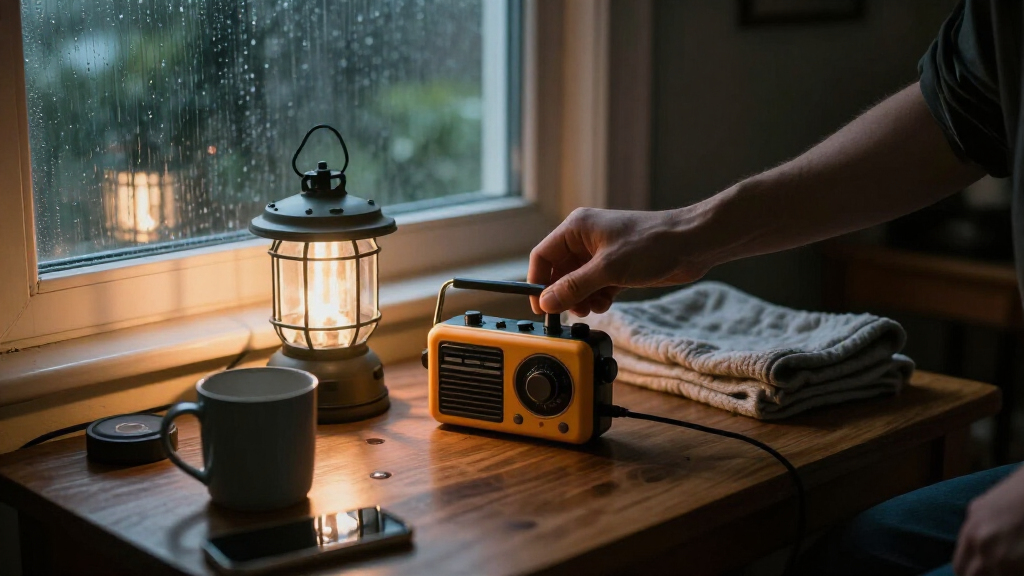
How We Picked
I ranked these hand crank emergency radios by how well their stated features support an actual outage plan: weather-band access, power choices, practical controls, lighting, portability, and the usefulness of extra functions. I gave more weight to a clear emergency-radio purpose and a balanced set of core features than to headline battery capacity or a long list of add-ons. A large battery can help, but it does not by itself show how long the radio runs or how effectively the unit charges another device.
The order also reflects who each radio appears best suited to. Dedicated weather-radio models lead for buyers who want an emergency-first tool; Bluetooth and other everyday features help distinguish versatile options, while smaller or simpler models fit compact kits and straightforward use. Product names and supplied feature details do not establish reception quality, exact runtime, durability, or charging speed, so I avoid treating those as proven advantages. Before buying, check the manufacturer’s specifications for supported alert features, battery details, and operating instructions.
Factors to Consider When Choosing Hand Crank Emergency Radios
The right emergency radio depends less on the longest feature list than on how it will fit into your outage plan. I would decide where it will live, what information you need from it, and whether you expect to use it mainly as a radio or also as a light and phone-charging source.
Choose the power plan, not just the battery number
Battery capacity figures can help compare models, but they do not tell the full story about radio runtime or phone charging. The radio’s display, speaker, light, and charging output can all affect how quickly stored power is used. Hand cranking and solar charging are useful fallback methods, but both depend on time, conditions, and the device’s charging design. A common mistake is treating either method as a replacement for charging the radio before an emergency. For a home kit, I would favor a model with a rechargeable battery and keep a separate power bank if phone charging is a priority. Check the manual for stated runtime and charging guidance rather than estimating from capacity alone.
Match weather alerts to the information you need
NOAA weather-band reception can be useful when mobile networks or internet access are disrupted, but a radio only helps if it can receive the broadcasts available in your area. Some buyers need weather listening; others specifically want automatic alert behavior, which should be confirmed in the model’s documentation rather than inferred from the words “weather radio.” Reception can also vary with location, terrain, buildings, and antenna placement. Before buying, check which bands and alert functions are supported and whether the controls make those functions easy to find. If the radio will stay at home, consider where you can place it for reception without blocking access to the crank. For travel, confirm that setup and tuning will be manageable without a long search through menus.
Treat phone charging as an occasional backup
Emergency radios that offer USB device charging can provide a useful reserve for a phone, but that feature should not be confused with a dedicated power bank. Phone charging draws from the radio’s stored energy, potentially leaving less for listening or lighting. A hand crank may replenish some power, yet the effort and time required can make it a poor way to refill a phone from empty. Think about whether you need a small emergency boost for a call or dependable phone power over several days; those are different needs. If communications are a priority, pair the radio with a separate charged power bank and conserve the radio’s battery for broadcasts. Check the output and charging instructions before relying on a particular phone or cable.
Balance portability against controls and stability
A compact radio is easier to put in a go-bag, but small controls and displays can be harder to use in darkness or under stress. Larger units may offer a more comfortable grip or room for a brighter display, though they take up more storage space. Consider who will operate the radio: a device intended for an older adult or a shared household should have controls that are easy to identify and a crank that is practical to turn. Do not judge portability by weight alone; check dimensions, grip, antenna placement, and how the radio rests while being operated. For a vehicle kit, a compact model may make sense, while a home shelter kit can accommodate a larger radio. Keep the manual or a short setup note with the device if its controls are not immediately intuitive.
Decide whether extra features earn their space
Bluetooth, multiple light functions, and device charging can make an emergency radio more useful between outages, but every extra function adds another feature to understand and potentially another drain on stored power. The Sangean MMR-99 and Midland ER310PRO illustrate why some buyers may favor broader everyday utility over a simpler emergency-first setup. If the radio will sit untouched in a kit, familiar controls and dependable basic functions may matter more than entertainment extras. If you plan to use it regularly, Bluetooth or additional features may justify choosing a more versatile model. Check which functions operate independently and how the manufacturer describes their power use. Avoid paying for features you will not practice using.
Plan for upkeep before an outage
A hand crank does not remove the need for maintenance. Rechargeable batteries can lose charge while stored, and solar panels cannot be counted on to restore a depleted unit quickly indoors or during poor weather. Set a reminder to inspect the radio, test tuning and lights, and recharge it according to the manufacturer’s instructions. Store it where household members can reach it, with the charging cable and any needed adapters nearby. A common failure is buying a radio for an emergency kit and never learning how to tune it or activate its alert features. A brief practice check turns a collection of features into a tool people can actually use.
Frequently Asked Questions
Is a 10,000mAh or 12,000mAh emergency radio the better buy?
Not automatically. A larger stated capacity may offer more stored energy, but it does not show how long the radio runs, how much power remains after using the light, or how effectively it charges a phone. Compare the manufacturer’s runtime and output details when available, along with the radio’s size and charging methods. If you mainly need weather updates, a balanced radio with clear controls may serve you better than a larger battery figure. If phone charging matters, plan on a separate power bank rather than relying on the radio alone.
Can hand cranking keep my phone charged during a long outage?
It can provide a backup source of power on some models, but it is not a dependable substitute for a fully charged power bank. Cranking takes sustained effort, and the energy gained may be modest compared with what a phone needs. The radio’s own battery can also be depleted by listening, lighting, and charging a device. Check the manufacturer’s charging guidance and USB output before counting on this function. For a long outage, reserve the crank for essential radio use and keep a separate power bank charged for communications.
Should I choose a radio with NOAA weather alerts or one with Bluetooth?
Choose based on the job you need the radio to do. For an emergency kit where weather information is the priority, confirm that the model supports the alert functions you want; weather-band listening and automatic alerts are not necessarily the same feature. Bluetooth adds everyday entertainment and can make a radio more useful outside emergencies, as with the Sangean MMR-99 and Midland ER310PRO. Those extras may be less valuable if the unit will stay packed away. Check the manual for the exact alert behavior and Bluetooth power requirements before deciding.
Is solar charging enough if I store the radio in a go-bag?
Solar charging is best treated as a supplementary option, not the only way to keep a stored radio ready. A bag may sit indoors, in a vehicle, or in a place with limited sunlight, and charging conditions can vary. Recharge the radio before storing it and follow its maintenance instructions. A hand crank offers another fallback but also requires time and effort. If the radio is for a go-bag, check whether it fits comfortably and keep its charging cable accessible rather than buried under other gear.
What should I check before relying on a radio for local emergency broadcasts?
Confirm the supported bands and any alert features in the manufacturer’s documentation, then test reception at the place where the radio will be used. Buildings, terrain, and antenna position can affect what it receives, so a product’s feature list cannot promise reception in every location. Learn how to tune the radio and activate alerts before an emergency. Keep an eye on the battery level and follow the maker’s storage and charging guidance. If reliable updates are especially important for your household, keep another way to receive local alerts as a backup.
Conclusion
For most buyers seeking an emergency-first radio, I would start with the Midland ER310 as my best overall pick; its role in this lineup is clearer than options led mainly by high capacity claims or extra features. For best value, compare the simpler RunningSnail, FosPower A1, and Emgykit options against the specific functions you need rather than choosing by a battery number alone. The Sangean MMR-99 is my best premium-style choice for shoppers who want Bluetooth alongside emergency-radio use, while the RunningSnail is a straightforward pick for beginners who prefer a simpler kit option. For larger stated battery capacity, look at the Leaton, Raynic, and 12,000mAh models, then verify runtime and charging details in their specifications; for a more versatile radio, compare the Midland ER310PRO. My final choice would depend on whether your priority is weather information, everyday usability, compact storage, or extra power for devices.
Halloween Picks
halloween
As an affiliate, we earn on qualifying purchases.