TL;DR

Get emergency and outdoor gear delivered free with Prime
- Fast, free delivery on millions of items
- Prime Video, Amazon Music and more included
- Member-only deals all year
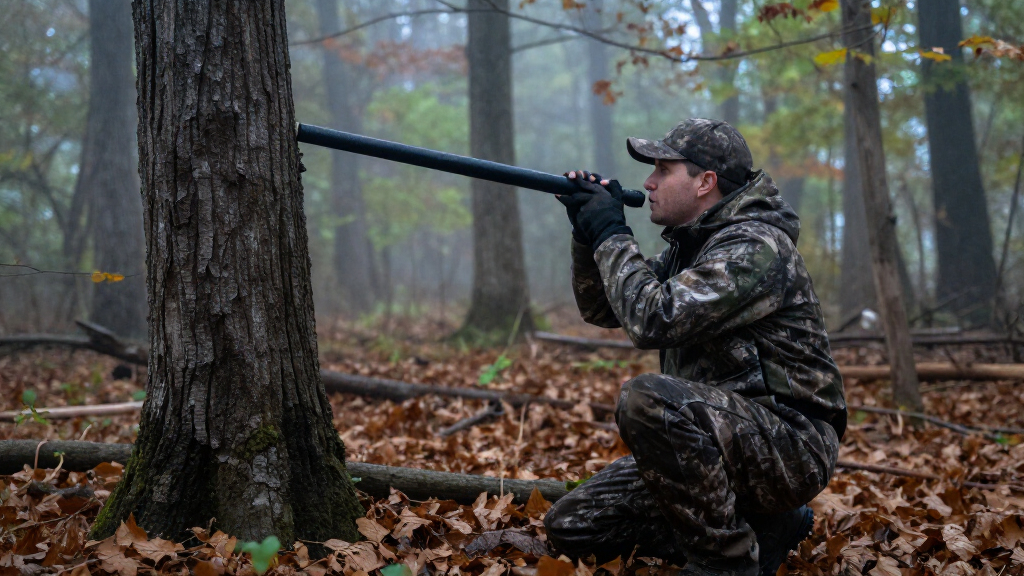
An Outdoor Life report published Oct. 16, 2026, explains when hunters may use grunt tubes to attract whitetail bucks and how to avoid overcalling. The advice is experience-based: calls can prompt a buck to investigate, but results are uncertain and calling can also put deer off.
Outdoor Life published guidance Oct. 16 on using a grunt tube to call whitetail bucks, describing when hunters may try a call and why restraint matters. The report says a grunt can draw a buck that is nearby, but it is not a guaranteed tactic and may work against a hunter if used in the wrong situation.
The report focuses on calling bucks with a grunt tube, drawing on hunting contributors’ advice and personal field accounts. Its central point is to treat the tube as one option among several hunting tactics: a hunter can try it when deer are not visible but may be within hearing distance, while recognizing that silence can be the better choice in some conditions.
Outdoor Life contributor Natalie Krebs recounts calling during a lull in strong, gusty wind after not seeing a buck. She says a buck later came within range and that subsequent seasons brought other bucks to her calls. These are personal hunting experiences, not controlled evidence that calling will reliably produce the same result for other hunters.
The article also describes differences among deer vocalizations. It says bleats can be made by fawns, does and bucks, while softer, shorter grunts are associated with does and young bucks. Hunters are advised to consider the sound they are imitating and the situation: a call may get a distant buck’s attention, but repeated calling after a deer is already approaching could be unnecessary. The source material also notes that a buck may stop responding or move away.
Why Call Timing Matters
For hunters, the practical value of a grunt tube is that it may bring a buck’s attention toward a position when the animal is out of sight or moving at a distance. That can create an opportunity that otherwise might not arise, according to the report’s field accounts. But the same choice carries a risk: a deer that hears a call may not respond as hoped, and a poorly timed or excessive call can alert or discourage it.
The advice is especially relevant during fall, when deer vocalize and hunting activity increases. Rather than treating a grunt tube as a magic shortcut, hunters can weigh wind, distance, deer behavior and the opportunity to remain quiet. The report presents calling as a situational tool, not a substitute for careful observation or a guarantee of seeing a buck.
As an affiliate, we earn on qualifying purchases.
The Calls Deer Make
The Outdoor Life report explains that deer use several vocalizations, including grunts and bleats, and that the sounds can vary with age and circumstance. It cites a 1988 University of Georgia study that identified and recorded about 400 whitetail vocalizations in a captive herd, grouping them into 12 types. The report describes that research as the largest published study of whitetail vocalizations; the supplied material does not provide further study details.
Its practical sections distinguish a bleat, often linked with fawns and doe groups, from softer grunts associated with does and yearling bucks. It also cautions that not every grunt means the same thing, mentioning tending and dominant grunts as examples. For a hunter using a tube, the point is to match a call to the situation rather than assume one sound fits every encounter.
As an affiliate, we earn on qualifying purchases.
Calling Results Remain Uncertain
The report does not establish how often grunt calls attract bucks or which call sequence works best across different locations, weather and hunting conditions. Its examples are individual accounts and practical advice, not a controlled comparison of calling methods. A buck’s response may depend on factors that are not visible to the hunter, including its distance and behavior.
The supplied report excerpt does not include all of its advice on grunt sequences or the full descriptions of the vocalizations it discusses. It also does not set out a universal schedule for calling. Readers should not interpret the examples as a promise that a call will bring a buck into range.
As an affiliate, we earn on qualifying purchases.
Use Calls With Restraint
Hunters considering a grunt tube can use the report as a starting point: learn the differences among common deer sounds, observe the situation, and make a call only when there is a reason to believe a deer may hear it. If a buck is already moving toward the hunter, the report’s advice favors waiting rather than calling repeatedly. If the animal stops or loses interest, a measured call may be an option, though the outcome remains uncertain.
Outdoor Life’s article does not announce a future test or follow-up. The next step for readers is to apply the guidance cautiously and compare what they observe in their own hunting conditions, while following local hunting rules and safety requirements.
As an affiliate, we earn on qualifying purchases.
Key Questions
What is a grunt tube used for?
A grunt tube imitates deer grunts in an attempt to get a buck’s attention or prompt it to investigate. The Outdoor Life report says it can help in the right situation, but does not guarantee a response.
When might a hunter try a grunt call?
The report describes trying a call when a buck is not visible or when deer have not been seen for a while and may be within hearing distance. It presents calling as a situational choice, not a fixed rule for every hunt.
Should you keep calling when a buck approaches?
Not necessarily. The report’s advice is to avoid calling again while a buck is already moving toward you, and to consider another call only if it stops. Repeated calling may not help and could change the animal’s response.
Does a grunt call always attract bucks?
No. Outdoor Life says a grunt tube is not magic and may fail or work against the hunter in some circumstances. The examples in the report are personal accounts, not proof of a consistent success rate.
Source: rss
Halloween Picks
halloween
As an affiliate, we earn on qualifying purchases.