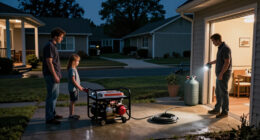
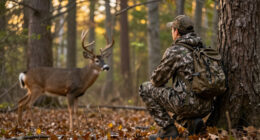
To stay secure in unfamiliar campsites, arrive early to explore and identify hazards and safe pathways. Keep your campsite organized and avoid clutter, and set up tents away from water or dense woods. Store food securely to prevent wildlife encounters, and always stay alert for environmental cues or unusual sounds. Trust your instincts if something feels off, and carry safety gear like a whistle or bear spray. For more tips on securing your campsite, keep exploring these essential safety strategies.

Get emergency and outdoor gear delivered free with Prime
- Fast, free delivery on millions of items
- Prime Video, Amazon Music and more included
- Member-only deals all year
Key Takeaways
- Arrive early to familiarize yourself with the site and identify potential hazards and safe pathways.
- Choose well-lit, open areas away from water and dense woods for tent placement.
- Secure food in bear-proof containers or hang it high to prevent wildlife encounters.
- Keep valuables locked in tents and maintain situational awareness of sounds and wildlife behavior.
- Carry safety gear like whistles, bear spray, and a flashlight, and trust your instincts if something feels off.
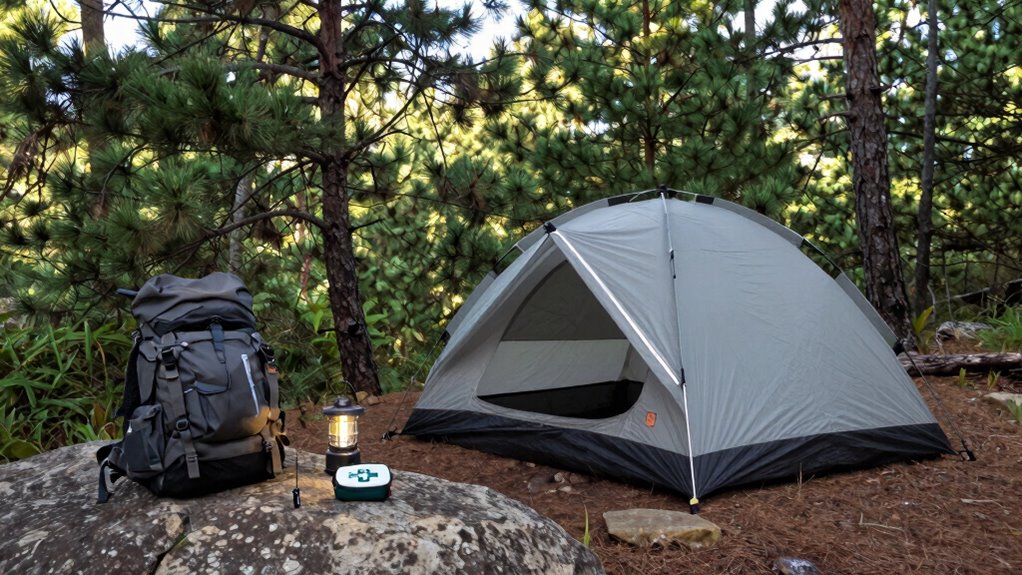
When you’re camping at an unfamiliar site, your focus should be on enjoying nature, but safety must always come first. The key to staying secure in new campsites is being prepared and attentive to your surroundings. Start by familiarizing yourself with the area as soon as you arrive. Look for potential hazards such as uneven ground, loose rocks, or low-hanging branches that could cause injury. Keep your campsite organized and clear of clutter, which can help prevent accidents and make it easier to spot wildlife or intruders.
Familiarize yourself with the area, identify hazards, and keep your campsite organized for safety and awareness.
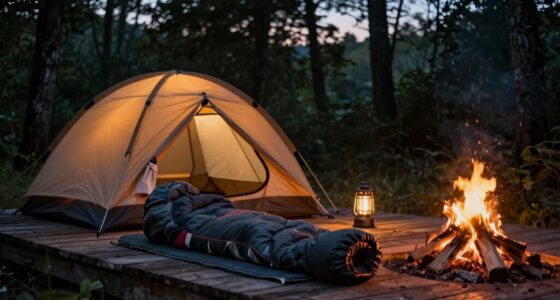
Campfire safety is essential whenever you’re setting up a fire in an unknown location. Always use designated fire rings if available, and keep your fire small and manageable. Never leave it unattended, and ensure it’s completely extinguished before sleeping or leaving the site. Carry water or a fire extinguisher nearby, so you’re prepared for emergencies. Being cautious with your campfire not only prevents wildfires but also keeps you and fellow campers safe.
Wildlife awareness is another crucial aspect of campsite security. When you arrive, take the time to learn about local animals and how to avoid conflicts. Store your food securely in bear-proof containers or hang it high in a tree away from your tent, as many animals can be attracted to smells. Never feed wildlife, as this can encourage aggressive behavior and disrupt their natural habits. Be vigilant at night, and avoid leaving food or scented items outside your tent, which could draw unwanted visitors. Additionally, understanding local wildlife behavior can help you better anticipate and respond to animal encounters. Knowing how animals typically behave in the area can help you stay calm and react appropriately if you encounter them. It’s also helpful to carry appropriate safety gear such as whistles or bear spray, which can be essential in case of an unexpected animal encounter.
It’s also wise to set up your tent in a well-lit area if possible, while avoiding spots that offer easy access to the woods or water’s edge. Keep a flashlight handy, and familiarize yourself with the campsite’s layout so you can quickly find your way if you need to leave in a hurry. Always lock your tent and avoid leaving valuables in plain sight. Listening to local advice or posted safety notices can provide valuable insights into specific risks like wildlife activity or local regulations. Remember, campsite safety measures are often tailored to the environment and can help you avoid common pitfalls. Being aware of environmental hazards in the area can further enhance your safety and preparedness. Additionally, staying informed about safety protocols can assist you in responding effectively to emergencies.
In unfamiliar terrain, trust your instincts. If something feels off or unsafe, don’t hesitate to move to a different part of the site. Pay attention to sounds, smells, and the behavior of nearby animals, which can serve as natural alerts. Staying alert and prepared is your best defense, helping you enjoy your adventure while keeping yourself and others secure. By combining good campfire safety, wildlife awareness, and situational vigilance, you can confidently explore new campsites without compromising your safety.
As an affiliate, we earn on qualifying purchases.
Frequently Asked Questions
What Should I Do if I Encounter Wildlife Near My Campsite?
If you encounter wildlife near your campsite, stay calm and keep your distance. Observe their behavior quietly, avoiding sudden movements or loud noises that could provoke them. Use food storage tips like hanging food away from your tent or in bear-proof containers to prevent attracting animals. Remember, understanding wildlife behavior helps you stay safe. Never feed or approach wild animals, and back away slowly if they come too close.
How Can I Identify Safe Drinking Water Sources?
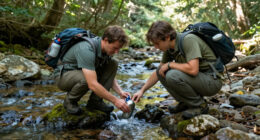
Think of safe drinking water sources as hidden gems in a vast landscape. To identify them, look for clear, flowing water away from potential contamination, such as animal activity or human waste. Use water filtration devices to purify your water, ensuring any bacteria or parasites are eliminated. Always prioritize contamination prevention by collecting water from swift-moving streams or spring sources, and avoid stagnant or murky water to stay safe and well-hydrated.
What Are Common Signs of a Secure Campsite?
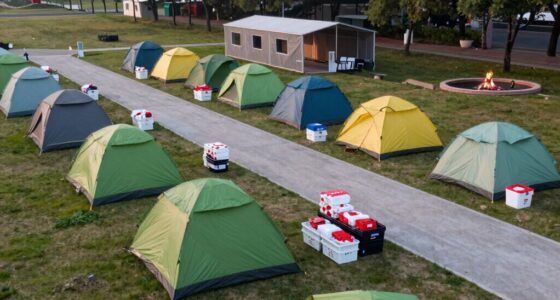
You can spot a secure campsite by checking campground reviews for safety tips and noting well-lit areas, clear signage, and maintained facilities. A security checklist helps you evaluate the presence of security personnel, surveillance, and emergency contacts. Look for signs of active management or staff presence, and observe how other campers behave. These indicators suggest the site prioritizes safety, giving you peace of mind during your stay.
How Do I Handle Language Barriers With Locals or Other Campers?
Think of language barriers as a tangled knot; patience and cultural sensitivity are your best tools. Use basic communication tools like gestures, translation apps, or pictures to bridge gaps. Speak slowly, smile, and show respect for local customs. You’ll find that your genuine effort to connect opens doors, making your campsite stay more comfortable and enriching. Remember, kindness and understanding often speak louder than words.
What Personal Items Are Best to Carry for Quick Security Checks?
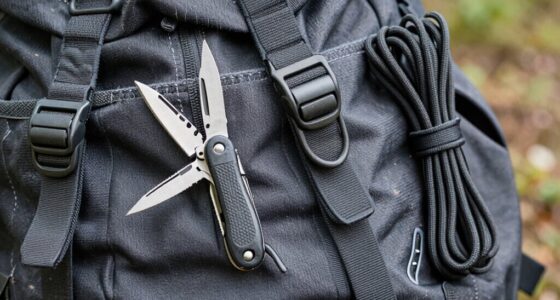
You should carry essential personal safety items like a flashlight, a whistle, and a small multi-tool for quick security checks. Pack your camping gear thoughtfully, including a first aid kit, a portable phone charger, and personal identification. These items help you respond swiftly to any concerns, guarantee your safety, and make security checks more efficient. Keep them easily accessible so you can quickly verify your safety and stay prepared in unfamiliar campsites.
As an affiliate, we earn on qualifying purchases.
Conclusion
Staying secure in unfamiliar campsites is like planting seeds of caution in new soil—you’ll grow confidence and peace of mind. Always stay alert, trust your instincts, and keep your belongings close. Remember, a little vigilance can turn any unfamiliar spot into a safe haven. Just like a sturdy tree stands strong against the wind, your awareness will help you enjoy your adventure without worry. Stay alert, stay safe, and relish every moment under the stars.
As an affiliate, we earn on qualifying purchases.
As an affiliate, we earn on qualifying purchases.
Fall Picks
fall essentials
As an affiliate, we earn on qualifying purchases.