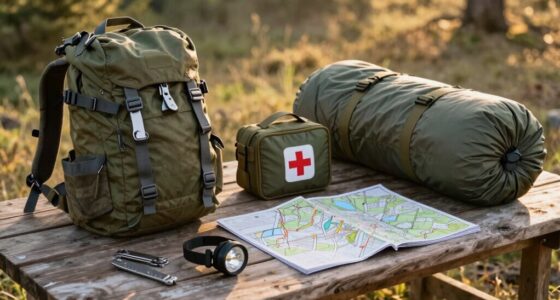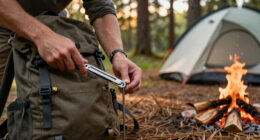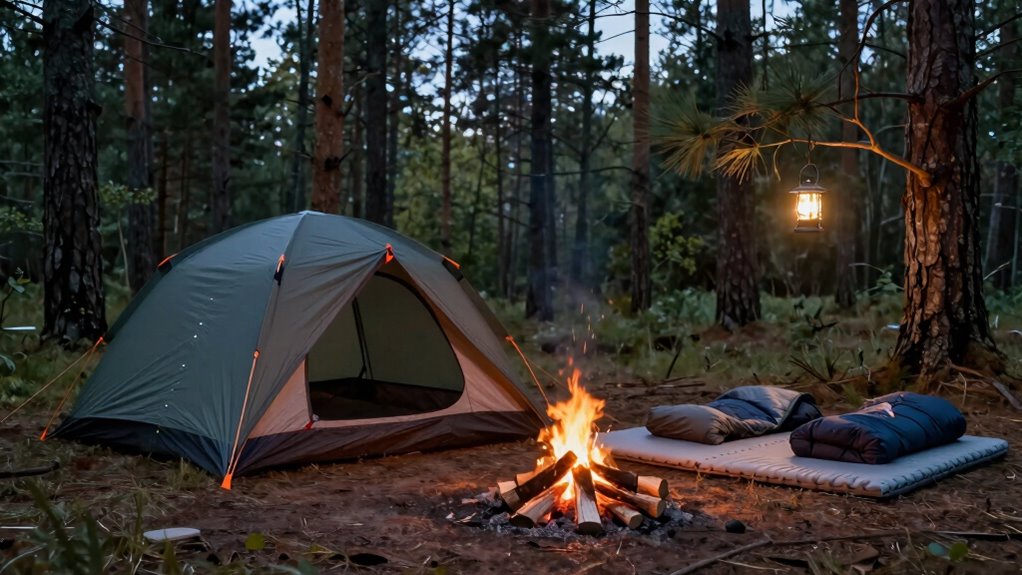

To create a safer overnight setup, clear your campsite of leaves, sticks, and flammable materials, and set up your tent on level ground away from water. Keep a small, manageable fire, never leave it unattended, and have water or a fire extinguisher nearby. Store food in bear-proof containers or hang it high in trees, and keep your area clean to avoid wildlife. Stay aware of natural hazards and communicate your plans, ensuring your safety and that of nature.

Get emergency and outdoor gear delivered free with Prime
- Fast, free delivery on millions of items
- Prime Video, Amazon Music and more included
- Member-only deals all year
Key Takeaways
- Choose a flat, low-traffic area away from water and natural hazards for your campsite setup.
- Securely stake your tent, ensuring proper ventilation and a clear, level sleeping space.
- Keep a fire small, manageable, and never leave it unattended; always have water or a fire extinguisher nearby.
- Store food in bear-proof containers or hang it high to prevent wildlife encounters.
- Carry a first aid kit, use navigation tools, and inform someone about your plans and expected return time.
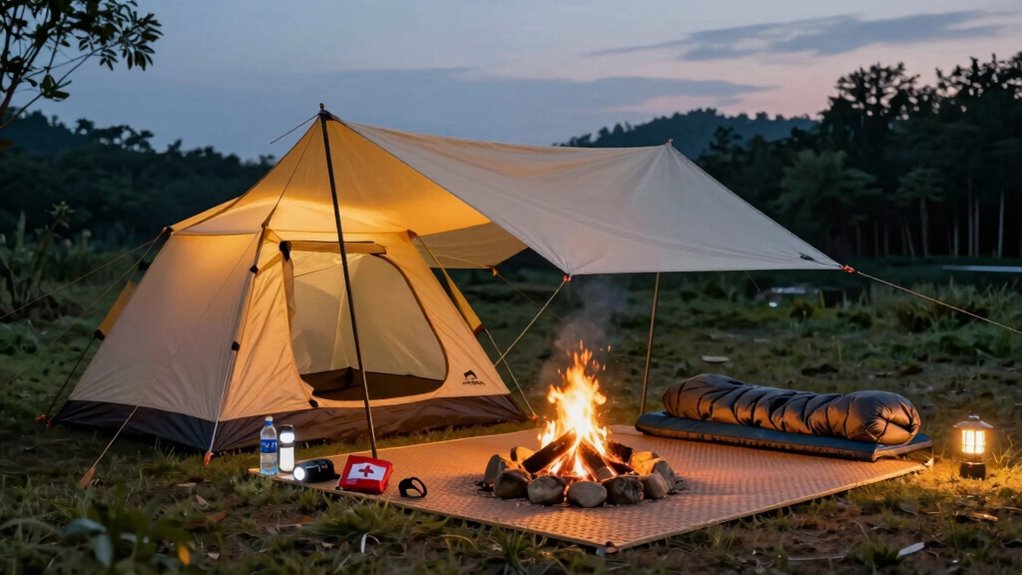
Are you nervous about staying overnight in the woods for the first time? It’s completely normal to feel a bit apprehensive, but with some preparation, you can make your camping experience safe and enjoyable. The key is setting up a secure campsite where you’re aware of your surroundings and prepared for any situation. Starting with campfire safety is essential. Always clear the area around your fire pit, removing leaves, sticks, and any flammable materials. Keep your fire small and manageable, never leave it unattended, and make certain you have a way to extinguish it quickly—like a bucket of water or a fire extinguisher. When you’re done, verify the fire is completely out by stirring the ashes and pouring water over them until everything is cool to the touch. This reduces the risk of wildfires and keeps the environment safe.
Wildlife awareness is another vital aspect. Respect the animals that share the woods with you by storing your food properly. Use bear-proof containers or hang your food high in a tree, away from your tent. Avoid leaving food scraps or trash nearby, as they attract animals and increase the risk of unwanted encounters. Keep your campsite tidy and clean, and never feed wildlife—it can alter their natural behavior and create safety hazards. Be aware of the animals native to your area and learn how to respond if you encounter them. For example, knowing how to react if you see a bear or a mountain lion can make all the difference. Always keep a safe distance and avoid surprising animals, especially at night when their senses are heightened. Understanding wildlife behavior can help you stay safe and minimize your impact on their habitat. Additionally, familiarizing yourself with natural features of the area can improve your overall safety and help you navigate more confidently. Being aware of local flora and fauna can also assist in identifying potential hazards or safe routes during your trip. Making sure you recognize hazardous plants and insects can prevent uncomfortable or dangerous situations.
Setting up your sleeping area on level ground, away from water sources, can also prevent potential problems. Make sure your tent is securely staked and properly ventilated. Carry a first aid kit and know basic first aid procedures in case of minor injuries. It’s helpful to have a map and compass or a GPS device, especially if you’re unfamiliar with the area. Communicate your plans with someone outside the campsite, so they know your location and expected return time. By preparing properly, paying attention to campfire safety, and practicing wildlife awareness, you create a safer environment for yourself and respect the natural habitat around you. Remember, camping is about enjoying nature responsibly, so stay alert, stay prepared, and embrace the adventure with confidence.
Popular right now

Bose QuietComfort Wireless Noise-Cancelling Headphones, Cypress Green

Dyson V15 Detect Cordless Vacuum

KitchenAid 5.5-Qt Bowl-Lift Stand Mixer, Porcelain White (KSM55SXXX)
As an affiliate, we earn on qualifying purchases.
Frequently Asked Questions
What Is the Best Type of Tent for Beginner Campers?
For beginner campers, a dome tent is your best choice because it’s easy to set up and sturdy. Make sure you include it in your camping checklist and practice tent maintenance before your trip. A reliable dome tent provides good ventilation, weather resistance, and space. Its simple design helps you learn quickly, making your first camping experience safer and more enjoyable.
How Do I Prevent Wildlife From Entering My Campsite?
Worried about wildlife entering your campsite? You can prevent this by storing food properly in bear-proof containers or hanging it away from your tent. Keep your campsite clean by disposing of trash and food scraps regularly. Have you considered how a tidy, food-free area deters curious animals? By maintaining good food storage and cleanliness, you create a less inviting environment for wildlife and enjoy a safer camping experience.
What Are Essential First Aid Items for Camping?
For camping safety, your first aid kit is essential. Make sure it includes bandages, antiseptic wipes, tweezers, pain relievers, and allergy medication. Always pack any personal medications and consider adding a flashlight, emergency blanket, and insect repellent. A well-stocked first aid kit helps you handle minor injuries quickly, keeping everyone safe and comfortable during your trip. Remember, being prepared is key to a safe and enjoyable camping experience.
How Can I Stay Warm During Cold Nights?
You can stay warm during cold nights by using effective layering techniques, starting with moisture-wicking base layers, adding insulating layers, and finishing with a windproof outer shell. Keep a safe distance from your campfire to guarantee safety. Practice campfire safety by maintaining a controlled fire and keeping a bucket of water nearby. These strategies help retain body heat and keep you safe and warm throughout the night.
What Should I Do if I Encounter a Wild Animal?
If you encounter a wild animal, stay calm, stand tall, and speak loudly to deter it. Comprehend wildlife behavior—most animals avoid humans if they sense no threat. Use animal deterrents like noise-makers or bear spray if needed. Keep your distance, avoid sudden movements, and never feed or approach the animal. Your calmness and awareness help guarantee safety for both you and the wildlife.
Conclusion
By taking these simple steps, you’re laying a sturdy foundation for your camping adventure, turning the night into a peaceful lullaby rather than a restless symphony. Think of your setup as a lighthouse guiding you safely through the dark, your preparedness shining bright amidst the shadows. With a little planning and care, every star overhead becomes a whisper of reassurance, turning your first camping night into a memorable, safe haven where you can truly relax and embrace the wild.