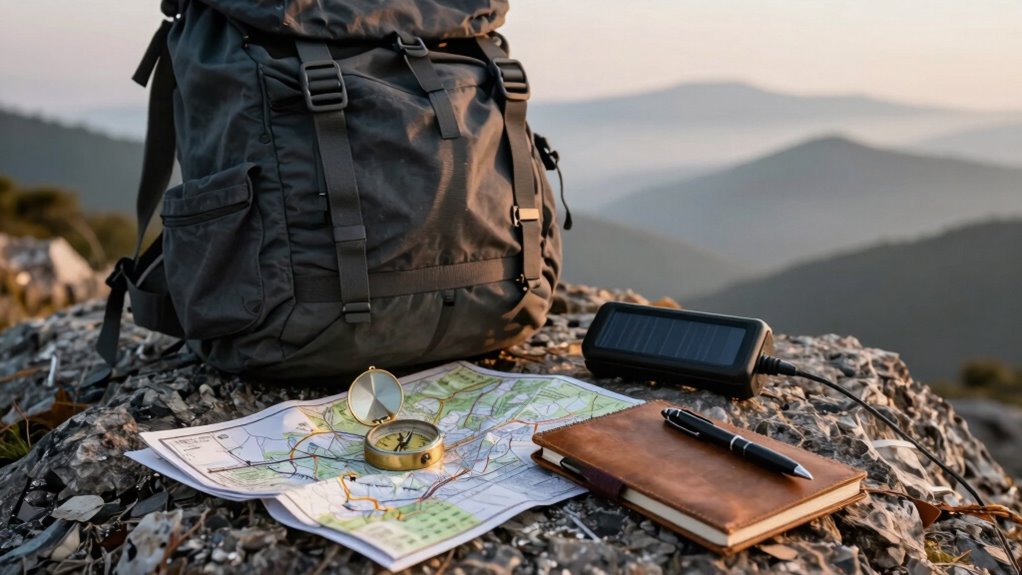

To prepare for trips where devices might fail early, you should carry physical maps and printed directions, and familiarize yourself with the area beforehand by noting landmarks and key routes. Practice using traditional navigation tools like a compass and offline maps, and share your plans with someone trusted. Always carry extra batteries or a power bank for essential devices. Staying aware of your surroundings and developing navigation skills boosts your confidence—if you continue, you’ll find even more tips to stay safe and prepared.

Get emergency and outdoor gear delivered free — and shop member deals
- Fast, free delivery on millions of items
- Access to Prime Big Deal Days deals on October 6–7
- Prime Video, Amazon Music and more included
Key Takeaways
- Carry physical maps and printed directions as reliable navigation backups.
- Familiarize yourself with the area and key landmarks before the trip.
- Bring a compass and practice using non-digital navigation tools.
- Share your travel plans and route details with a trusted person.
- Pack extra batteries or a power bank to ensure devices stay charged.
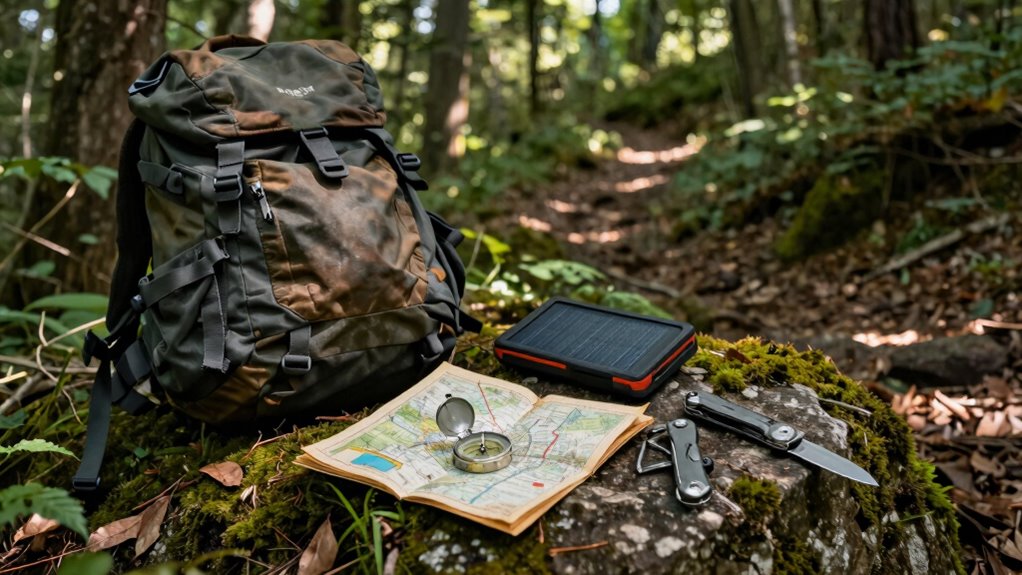
When you’re heading into an unfamiliar environment, especially where technology might not be reliable, it’s essential to plan ahead. Relying solely on your devices can leave you stranded if they fail unexpectedly. To avoid this, prepare an emergency backup plan that includes ways to find your way without digital assistance. Carrying physical maps or printed directions ensures you’ll have a reliable reference point if your phone or GPS stops working. It’s also smart to familiarize yourself with the area beforehand, noting landmarks and key routes. This way, you won’t be entirely dependent on technology to navigate your surroundings.
Plan ahead with physical maps and familiarize yourself locally to navigate confidently without relying solely on technology.
Having an alternative navigation method is crucial. While digital tools are convenient, they can be compromised by low batteries, dead zones, or technical glitches. To counter this, bring a compass or a traditional map of the region. Practice using these tools before your trip, so you’re comfortable relying on them if needed. Additionally, consider downloading offline maps or navigation apps that don’t require an internet connection. This extra step ensures you can still access directions even when your device can’t connect to the network. Being aware of navigation limitations helps you plan better and reduces the risk of unexpected issues. Also, staying adaptable and observant can help you improvise when necessary.
Another tip is to share your travel plans with someone you trust. Let them know your intended route and estimated arrival times. This way, if your devices fail and you’re unsure of your location, someone back home can assist or alert authorities if necessary. It’s also wise to carry a portable power bank or extra batteries for your essential devices. This small investment can give you additional hours of navigation and communication, reducing the risk of being completely cut off.
In unfamiliar environments, always pay attention to your surroundings. Look for signs, street names, or unique landmarks that can help you orient yourself. When using digital navigation, cross-reference with physical cues to verify your position. Remember, maintaining situational awareness is your best defense if technology fails. Keep a mental note of key landmarks and routes, so you’re less likely to get lost. Ensuring you have backup navigation methods in place will significantly improve your confidence and safety when technology isn’t reliable. Developing navigation skills can also enhance your overall travel independence.
Preparation is your best tool for travel safety when devices might fail early. Combining an emergency backup plan, alternative navigation methods, and situational awareness ensures you stay on track, even when technology lets you down. By taking these simple but effective steps, you’ll confidently navigate unexpected challenges and enjoy your trip without unnecessary stress.
As an affiliate, we earn on qualifying purchases.
Frequently Asked Questions
What Are the Common Devices That Typically Fail Early During Trips?
Common devices that often fail early during trips include smartphones, portable chargers, and cameras. These devices tend to have lower device durability, making them prone to damage or malfunction under rough conditions. To prevent issues, you should focus on power management—carry extra batteries, power banks, and guarantee your devices are fully charged before departure. Regularly check and maintain your gadgets to avoid unexpected failures and stay connected throughout your trip.
How Can I Backup My Essential Data Before Traveling?
Imagine your important data as delicate butterflies fluttering in a garden; you want to keep them safe. You should back up your essential data using digital storage devices like external hard drives and also utilize cloud backups. This way, if your devices fail early during your trip, your precious information remains secure and accessible from anywhere, allowing you to focus on enjoying your journey without worry.
What Offline Activities Are Best When Devices Fail?
When devices fail, you should turn to offline entertainment like books, puzzles, or card games to pass the time. Additionally, manual navigation with printed maps or a compass helps you stay on course without digital assistance. These activities keep you engaged and safe, ensuring that even without technology, you can enjoy your trip and navigate confidently. Always carry printed maps and offline entertainment options as reliable backups.
Are There Specific Travel Insurance Options for Tech Failures?
Think of travel insurance as a safety net woven with coverage options that catch your tech mishaps. Yes, some plans specifically include tech repair and device failure coverage, acting like a shield against unforeseen glitches. You’ll want to look for policies that detail tech failure, ensuring your gadgets are protected. By choosing the right coverage, you turn potential tech disasters into minor hiccups, keeping your journey smooth and worry-free.
How Can I Troubleshoot Device Issues on the Go?
When device issues arise, start with basic device maintenance—check for loose connections, restart your device, and guarantee software updates are current. Carry troubleshooting guides or manuals for quick reference, and keep essential tools like chargers and spare batteries handy. If problems persist, consult online forums or manufacturer support. Staying proactive with regular maintenance and having troubleshooting guides can save you time and frustration during your trip.
As an affiliate, we earn on qualifying purchases.
Conclusion
Remember, expecting the best but preparing for the worst keeps you flexible and ready for anything. By packing backup chargers, offline maps, and essential tools, you’re less likely to be caught off guard if devices fail early. Embrace the mindset that “a stitch in time saves nine,” and your trip will stay smooth despite technological hiccups. Stay prepared, stay calm, and enjoy your adventure—technology may falter, but your spirit won’t.
compass for hiking and navigation
As an affiliate, we earn on qualifying purchases.
As an affiliate, we earn on qualifying purchases.
offline maps app for smartphones
As an affiliate, we earn on qualifying purchases.
As an affiliate, we earn on qualifying purchases.
Fall Picks
fall essentials
As an affiliate, we earn on qualifying purchases.