
Good preparedness for casual campers means bringing essential safety tools like a whistle, mirror, and charged phone for emergencies. You should plan your route, check the weather, and pack layers to stay comfortable. Store food safely and pack non-perishable snacks to keep energy up. Be mindful of wildlife and follow Leave No Trace principles to protect the environment. If you keep exploring, you’ll discover more tips to make your outdoor adventure safe and enjoyable.
Key Takeaways
- Carry essential safety tools like a whistle, mirror, and fully charged phone for emergency signaling.
- Pack non-perishable food and keep perishables cool to ensure safe, reliable nutrition.
- Understand wildlife behavior and store food properly to prevent dangerous encounters.
- Plan routes, bring navigation tools, and inform others of your trip for safe exploration.
- Check weather forecasts and pack appropriate gear to handle changing conditions and emergencies.

Ever wondered how to enjoy a casual camping trip without running into avoidable problems? The key lies in good preparedness. When you’re out in nature, unexpected situations can arise, but with a few simple strategies, you can handle them smoothly. Start by packing essentials that focus on safety and practicality. For emergency signaling, carry a whistle, a mirror, and a fully charged cell phone with portable chargers. These tools are compact and effective in alerting others if you get lost or need help. Knowing basic signaling techniques, like creating visible signals or using sound, helps you communicate your location quickly. It’s a small step that can make a big difference in emergencies, giving you peace of mind and increasing your safety. Additionally, understanding emergency signaling techniques enhances your ability to respond effectively in critical situations. Food preservation is another critical aspect of being prepared. When you bring perishable foods, pack them properly to avoid spoilage and foodborne illnesses. Use insulated coolers with ice packs, and keep raw foods separate from cooked or ready-to-eat items. Consider bringing non-perishable snacks, dried fruits, nuts, and energy bars, which are easy to store and don’t spoil easily. If you plan to cook, bring a portable stove and ensure your ingredients are stored securely to prevent spoilage, especially in warm weather. Proper food preservation not only keeps your meals safe but also reduces waste and the hassle of dealing with spoiled food. It allows you to enjoy your trip without worries about stomach issues or running out of edible options. Proper food storage is also crucial to avoid attracting pests or animals to your campsite. Being aware of wildlife safety tips can further help prevent encounters that might threaten your safety or disrupt your camping experience. Learning about wildlife behavior can help you better understand how to avoid conflicts and stay safe in the wilderness. Developing a basic understanding of leave no trace principles can also ensure you minimize your environmental impact while camping.
Pack essential safety tools like a whistle, mirror, and charged phone to stay prepared and communicate in emergencies.
Beyond these specific points, good preparedness involves packing a well-stocked first aid kit, appropriate clothing for changing weather, and necessary tools like a multi-tool or knife. Planning your route and knowing the area helps you avoid getting lost, while informing someone about your plans adds an extra layer of safety. Bringing a map and compass or GPS device ensures you can navigate confidently. It’s also wise to check the weather forecast before heading out, so you can adjust your gear accordingly.
Ultimately, being prepared means thinking ahead and packing smartly. It’s about anticipating possible problems and having solutions ready. When you prioritize emergency signaling and proper food preservation, you’re setting yourself up for a safer, more enjoyable camping experience. With these simple steps, you can relax and truly enjoy the beauty of nature, knowing you’re ready for whatever might come your way.
portable camping first aid kit
As an affiliate, we earn on qualifying purchases.
As an affiliate, we earn on qualifying purchases.
Frequently Asked Questions
What Are Essential Safety Tips for Casual Campers?
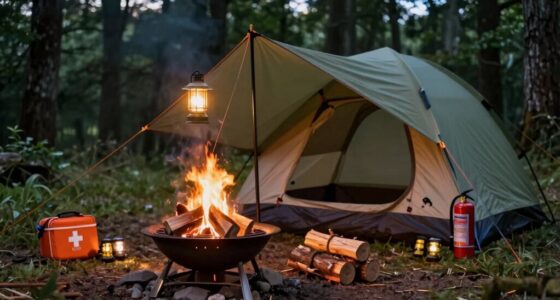
To stay safe, always prioritize campfire safety by keeping fires small, never leaving them unattended, and fully extinguishing before leaving. Be aware of wildlife awareness by storing food securely, avoiding attracting animals, and respecting their space. Carry a first aid kit, stay on marked trails, and check weather conditions. These precautions help prevent accidents and guarantee a fun, safe camping experience for you and your fellow campers.
How Do I Choose the Right Campsite?
Choosing the right campsite is like finding the perfect stage for your adventure. Start with campground selection by considering location, safety, and nearby attractions. Look for campsite amenities that match your needs, like clean water, restrooms, or fire pits. Check reviews and maps to verify a good fit. Trust your instincts, and pick a spot where you feel comfortable and excited to explore, making your camping trip memorable and enjoyable.
What Should I Do in Case of an Emergency?
In an emergency, stay calm and assess the situation. If you encounter wildlife, back away slowly and avoid surprising it. For weather preparedness, seek shelter immediately during storms or heavy rain, and keep an eye on weather updates. Carry a first aid kit, a flashlight, and a whistle for signaling help. Staying aware of your surroundings and having a plan guarantees you can handle wildlife encounters and weather emergencies confidently.
How Can I Reduce Campsite Environmental Impact?
You can reduce your campsite’s environmental impact by practicing Leave No Trace and eco-friendly practices. Think of it as leaving a pristine canvas behind rather than a mess. Pack out all trash, avoid damaging plants, and stick to designated trails. Use biodegradable soap and minimize campfire impact. Small choices like these protect nature’s beauty, ensuring future campers enjoy the same pristine experience you did.
What Are the Best Beginner-Friendly Camping Gear Options?
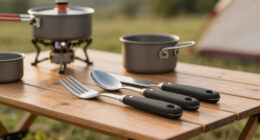
As a beginner, start with a lightweight, easy-to-use tent that’s quick to set up, and choose a sleeping bag suited for your climate. For campfire cooking, pick a portable stove or simple cookware to minimize impact. Focus on versatile gear that’s durable and easy to carry, making your experience stress-free. With these options, you’ll enjoy your camping trip while keeping setup and cooking straightforward and eco-friendly.
non-perishable camping snacks
As an affiliate, we earn on qualifying purchases.
As an affiliate, we earn on qualifying purchases.
Conclusion
In the end, being prepared means you’re ready to enjoy your camping adventure without any hiccups—like a seasoned scout or a savvy traveler from a bygone era. Pack your gear thoughtfully, keep safety in mind, and embrace the wild with confidence. Remember, even the most intrepid explorers of yore knew the value of good planning. So, when you hit the trail, go forth with the heart of a pioneer, and let nature be your grand adventure!
outdoor emergency signaling tools
As an affiliate, we earn on qualifying purchases.
As an affiliate, we earn on qualifying purchases.
camping cooler with ice packs
As an affiliate, we earn on qualifying purchases.
As an affiliate, we earn on qualifying purchases.