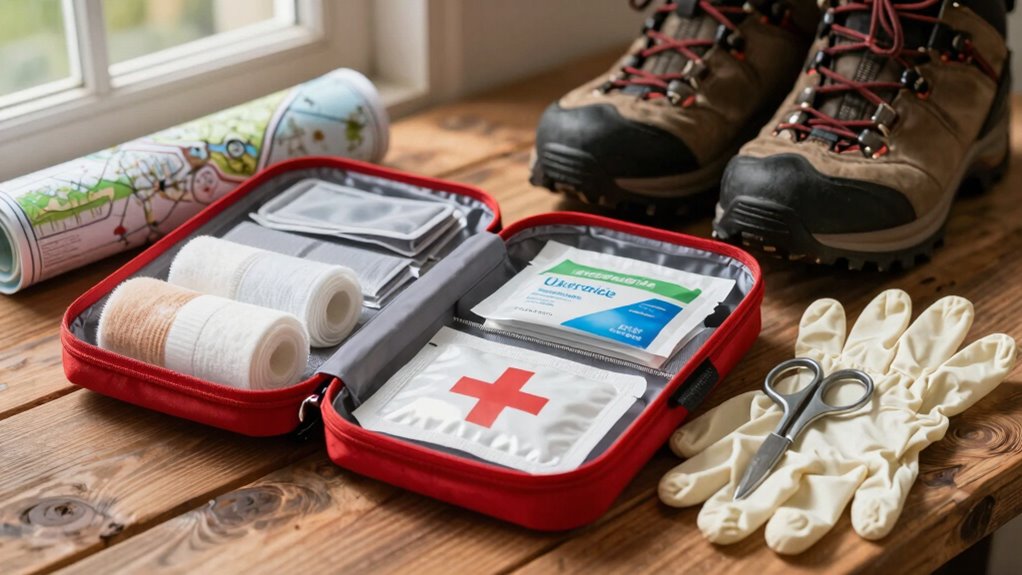

You need a good first aid and trauma strategy long before your trip because preparation reduces chaos and speeds up your response. By researching hazards, planning your safety protocols, and training your group, you create a clear plan that everyone understands. This way, you’ll act confidently and effectively during emergencies. Proper planning also guarantees everyone knows their roles, making your trip safer. Keep exploring to discover more ways to prepare and stay safe.

Get emergency and outdoor gear delivered free — and shop member deals
- Fast, free delivery on millions of items
- Access to Prime Big Deal Days deals on October 6–7
- Prime Video, Amazon Music and more included
Key Takeaways
- Early planning ensures proper training, familiarization with first aid skills, and availability of necessary supplies before emergencies occur.
- Establishing safety protocols in advance reduces chaos and confusion during a crisis.
- Researching environmental hazards and medical infrastructure helps tailor effective emergency responses.
- Clear communication and role assignment before the trip improve team coordination during emergencies.
- Regular drills and review reinforce preparedness, making reactions swift and confident when needed.
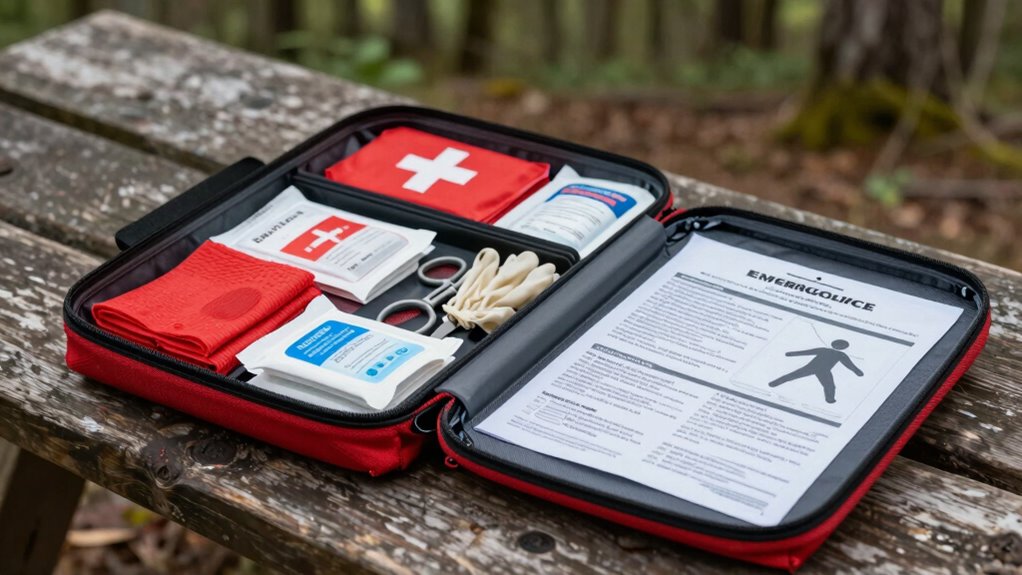
When emergencies happen, having a solid first aid and trauma strategy can be the difference between life and death. Preparing in advance isn’t just about packing a kit; it’s about understanding how to respond quickly and effectively when something goes wrong. That’s why your first step should be focusing on emergency preparedness. Knowing what types of injuries or health issues might occur during your trip helps you anticipate needs and develop a plan. It’s not enough to just have supplies—you need to know how to use them and when to call for professional help. Incorporating safety protocols into your planning guarantees everyone on your trip understands their role in an emergency, reducing chaos and confusion when time is critical.
Your safety protocols should outline specific actions everyone needs to take if an accident happens. This includes establishing a clear chain of command, designating roles, and practicing emergency drills. When you’ve rehearsed these steps beforehand, they become second nature, allowing you to act swiftly without hesitation. It’s also essential to keep your first aid kit accessible and well-stocked, but supplies are useless if you don’t know how to use them. Take time to learn basic first aid skills, such as controlling bleeding, treating burns, and performing CPR. Many courses are available online or in person and can boost your confidence in handling trauma situations. Additionally, understanding your environment is vital. If you’re traveling to remote or unfamiliar locations, research potential hazards and plan accordingly. Knowing where the nearest medical facilities are located can save precious minutes. Being aware of emergency response procedures and local medical infrastructure can further enhance your preparedness.
Establish clear roles, rehearse emergency drills, and master basic first aid skills for quick, confident responses during crises.
Furthermore, understanding your environment is vital. If you’re traveling to remote or unfamiliar locations, research potential hazards and plan accordingly. Knowing where the nearest medical facilities are located can save precious minutes. Additionally, using airless paint sprayers for painting projects can reduce cleanup time and mess, allowing more focus on safety procedures. Sharing your emergency plan with everyone in your group, so everyone knows what to do if something happens. This shared knowledge enhances your overall safety protocols and minimizes panic during the actual event. Incorporating household safety tips such as keeping pathways clear and securing loose rugs can also prevent common accidents during your trip or stay.
Finally, familiarizing yourself with first aid training can drastically improve your response capabilities and confidence in an emergency. Ultimately, a good first aid and trauma strategy isn’t a last-minute addition; it’s a foundational element of your trip planning. When you prioritize emergency preparedness and safety protocols beforehand, you’re creating a safer environment for everyone involved. This foresight can prevent minor incidents from escalating and improve your chances of a positive outcome in serious situations. Remember, preparedness isn’t just about having supplies—it’s about knowing how to use them confidently and effectively. The effort you put into planning now can make all the difference when an emergency strikes.
As an affiliate, we earn on qualifying purchases.
Frequently Asked Questions
What Specific First Aid Supplies Should I Pack for Remote Trips?
You should pack a well-stocked first aid kit with essentials like antiseptic wipes, bandages, adhesive tape, tweezers, pain relievers, and allergy medications. Include gloves and a CPR mask for safety. Organize your supplies in a portable, waterproof container to guarantee quick access. Prioritizing emergency preparedness and kit organization helps you respond effectively to injuries, especially in remote settings where medical help might be far away.
How Often Should I Update My First Aid Training?
You should update your first aid certifications every two to three years to stay current with best practices. Regular training enhances your emergency preparedness, ensuring you’re ready for any situation. By maintaining up-to-date skills, you’ll respond more confidently and effectively during emergencies. Keep your certifications current and review first aid techniques periodically, so you’re always prepared to handle injuries or trauma on remote trips or in everyday life.
Are There Legal Considerations for Carrying First Aid Kits Internationally?
Yes, there are legal considerations when carrying first aid kits internationally. You need to guarantee legal compliance with local regulations regarding medical supplies and their use. Carrying a well-stocked kit can also protect you from liability coverage issues if an accident occurs. Research specific country laws beforehand, and consider obtaining permits if necessary, so you’re fully prepared and legally protected during your trip.
How Do I Prioritize Injuries in a Multi-Incident Scenario?
Imagine you’re the captain steering through stormy seas—your first step is a quick triage assessment to gauge injury severity. You prioritize injuries that threaten life or limb first, like severe bleeding or breathing issues. Less critical injuries, such as minor cuts or bruises, come second. By focusing on the most urgent, you guarantee each victim receives the care they need, keeping everyone safe until help arrives.
What Are Common Myths About First Aid That I Should Avoid?
First aid misconceptions can lead you to make critical errors, so avoid trauma myths like the idea that you should always move a person to a safer spot or that you should give food or water to someone injured. Instead, focus on proper assessment and stabilization. Recognize that not every injury requires immediate action, and knowing these trauma myths helps you respond effectively and safely in emergencies.
As an affiliate, we earn on qualifying purchases.
Conclusion
So, next time you plan a trip, remember that your best surprise isn’t just the destination but your preparedness. The moment you think about first aid and trauma strategy, fate seems to align—like finding that perfect kit just when you need it most. By starting early, you’re not only protecting yourself but also creating a little coincidence of safety and confidence. After all, being prepared isn’t just smart; it’s what turns a good trip into a great one.
As an affiliate, we earn on qualifying purchases.
emergency response kit for trips
As an affiliate, we earn on qualifying purchases.
As an affiliate, we earn on qualifying purchases.
Fall Picks
fall essentials
As an affiliate, we earn on qualifying purchases.