Starting your emergency plan before your trip helps you identify potential risks early and develop strategies to manage them. You’ll find out how to access local services, contact authorities, and prepare backup documents—all to boost your confidence and safety. Sharing your itinerary keeps loved ones informed, while budget planning ensures you’re ready for unforeseen expenses. If you want to learn how to build a solid pre-travel safety net, keep exploring the essential steps to stay safe abroad.
Key Takeaways
- Early planning identifies potential risks, enabling proactive measures and reducing panic during emergencies.
- Familiarizing with local safety info ensures swift, informed responses to unexpected situations.
- Sharing travel details with trusted contacts creates an additional safety network and accountability.
- Preparing documents and backup plans minimizes disruptions and delays during crises.
- Budgeting for emergencies ensures financial readiness, reducing stress and enabling prompt action.

Before you set out on your travels, it’s vital to prepare an emergency plan to guarantee your safety and peace of mind. This early preparation forms the foundation of effective travel safety, ensuring you’re ready for unexpected situations. When you think ahead, you can identify potential risks and develop contingency strategies that allow you to respond swiftly and confidently. It’s tempting to focus solely on the fun and excitement of your trip, but taking the time to plan for emergencies makes all the difference if things go awry.
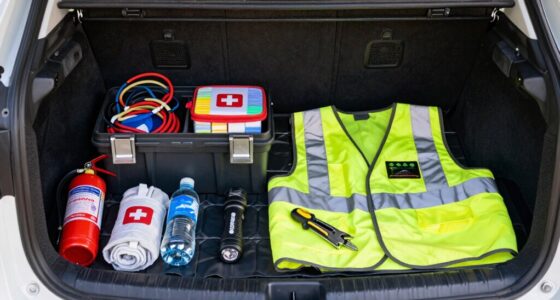
Creating a thorough emergency plan involves more than just packing a first aid kit. You should research the local health facilities, understand the emergency numbers, and familiarize yourself with the area’s safety advisories. Knowing how to contact local authorities or your country’s embassy can save precious time in a crisis. Additionally, sharing your itinerary with a trusted friend or family member provides a safety net—if they know your whereabouts, they can alert authorities if you don’t check in as planned. This simple step enhances your overall travel safety and ensures someone is looking out for you even when you’re miles away.
Developing contingency strategies means thinking through different scenarios. For example, if your accommodation becomes unavailable, do you have backup options? If you lose your passport or essential documents, do you know where to get replacements or how to report the theft? Planning for these possibilities beforehand allows you to act quickly, minimizing stress and disruption. It’s also wise to carry digital copies of important documents, such as your passport, insurance details, and emergency contacts. These can be accessed easily if the originals are lost or stolen. Incorporating emergency preparedness into your travel routine ensures you’re not caught unprepared in unfamiliar environments. Being aware of local safety advisories can also significantly help you avoid risky areas and stay informed about potential hazards.
Additionally, understanding vetted and up-to-date information about local services and safety recommendations can significantly strengthen your preparedness. Budgeting for emergencies is another essential aspect. Set aside extra funds specifically for unforeseen expenses, so you’re not caught off guard if you need to seek medical care or change travel plans unexpectedly. This financial cushion becomes part of your contingency strategies, giving you peace of mind to handle emergencies without panic.
international travel emergency kit
As an affiliate, we earn on qualifying purchases.
As an affiliate, we earn on qualifying purchases.
Frequently Asked Questions
How Often Should Emergency Plans Be Reviewed and Updated?
You should review and update your emergency plans at least once a year to maintain travel safety. Regularly practicing your preparedness routines guarantees you’re ready for unexpected situations. Before each trip, revisit your plans to account for new destinations or potential risks. Staying proactive helps you respond confidently during emergencies, making travel safer and less stressful. Consistent updates and reviews keep your safety measures current and effective.
What Are the Most Common Emergency Scenarios Travelers Face?
You often face common emergency scenarios like medical issues, lost passports, natural disasters, or transportation disruptions. To guarantee your travel safety, prioritize emergency preparedness by researching local risks and keeping important documents handy. Being aware of these scenarios enables you to act swiftly and confidently, reducing stress. Always have a plan in place, stay informed, and carry essential supplies, so you’re ready for unexpected situations during your trip.
How Can I Ensure My Emergency Contacts Are Always Accessible?
You need to be proactive—think of it as covering all your bases. To keep your emergency contacts always accessible, verify them regularly through emergency contact verification, and use digital contact storage for quick access on your devices. Save important numbers in your phone and cloud accounts, and make certain your loved ones know where to find this info. This way, help is just a tap away, no matter what happens.
What Essential Items Should Be Included in a Travel Emergency Kit?
You should include essential items like a first aid kit with bandages, antiseptic wipes, and pain relievers. Safety gear such as a flashlight, whistle, and multi-tool can be lifesavers. Pack extra batteries, a copy of important documents, and any necessary medications. Consider including a reusable water bottle, snacks, and a small blanket. These items guarantee you’re prepared for unexpected situations and can help you stay safe and comfortable during emergencies.
How Do I Communicate Effectively During an Emergency Abroad?
To communicate clearly during an abroad emergency, stay calm and use simple sentences, gestures, and visual aids to bridge language barriers. Prepare by learning key phrases related to emergencies in the local language. Respect cultural differences, listen actively, and maintain eye contact to build trust. If needed, use translation apps to facilitate understanding. Remember, patience and empathy are your best tools for effective, empathetic communication in foreign situations.
digital copies of travel documents
As an affiliate, we earn on qualifying purchases.
As an affiliate, we earn on qualifying purchases.
Conclusion
Remember, taking a few moments to plan for emergencies before your trip isn’t just smart—it’s essential. Some might think it’s unnecessary or time-consuming, but the peace of mind it brings is priceless. By preparing now, you’ll be ready to handle unexpected situations confidently, instead of scrambling when they happen. Don’t wait until it’s too late—your safety and well-being depend on proactive emergency thinking. Start planning today, and travel with confidence tomorrow.
travel safety whistle and flashlight
As an affiliate, we earn on qualifying purchases.
As an affiliate, we earn on qualifying purchases.
As an affiliate, we earn on qualifying purchases.