The most overlooked safety layer in modern camping is your mindset and mental preparedness. While gear, navigation tools, and emergency kits are essential, staying calm and focused during unexpected situations makes all the difference. Your ability to remain composed helps you handle wildlife encounters, changing weather, or emergencies more effectively. Cultivating mental resilience guarantees you respond appropriately rather than panic. If you want to discover how to strengthen this vital safety element, there’s more to uncover here.
Key Takeaways
- Mental preparedness and mindset are often neglected but crucial for effective emergency response.
- Calmness and focus during crises prevent escalation and improve decision-making.
- Building mental resilience through practice enhances overall outdoor safety.
- Proper planning and situational awareness depend heavily on mental readiness.
- Recognizing the importance of psychological factors complements physical safety measures in camping.

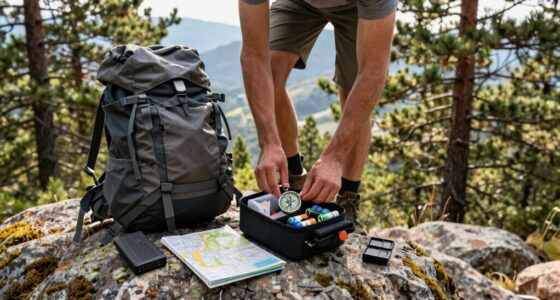
Have you ever wondered how modern campers stay safe in unpredictable outdoor environments? It’s a question that often goes unspoken, but the answer lies in more than just sturdy gear or reliable navigation tools. One of the most overlooked safety layers is your mental readiness—your ability to respond calmly and effectively during emergencies. This involves understanding how to handle unexpected situations, like severe weather, injuries, or encounters with wildlife. Many campers focus on physical safety equipment, but without proper mental preparedness, even the best gear can fall short. Emergency preparedness isn’t just about having a first aid kit; it’s about knowing how to use it, recognizing when help is needed, and staying composed under pressure. This mental edge can be the difference between a small incident escalating and a safe resolution.
Wildlife encounters are another aspect of outdoor safety that often catches campers off guard. You might think you’re prepared with bear spray or noise makers, but if you’re not mentally prepared for an unexpected animal encounter, panic can set in. When you’re calm and aware, you’re more likely to follow safety protocols, keep your distance, and avoid provoking animals. Understanding local wildlife behavior, knowing how to react, and maintaining respect for nature are essential. Recognizing signs of wildlife activity and local wildlife behavior can help you stay alert and avoid risky situations altogether. Incorporating portable power solutions into your safety planning can ensure your devices stay charged, allowing you to call for help or use safety apps in emergencies. Developing mental resilience through practice and awareness can help you stay focused during high-stress moments, ultimately enhancing your safety. Proper planning also plays a crucial role in managing outdoor risks effectively.
This safety layer is subtle but vital. It requires ongoing awareness, practice, and education. You can’t simply pack a survival manual and call it a day; you need to internalize safety procedures, stay alert, and adapt to changing conditions. For example, during a sudden storm, staying composed allows you to secure your campsite quickly and avoid injury. During a wildlife encounter, your calm approach can prevent escalation. Cultivating a mindset of situational awareness can significantly improve your ability to respond appropriately in emergencies. This mental resilience complements your physical safety tools and helps you navigate the wilderness more confidently. In the end, the most overlooked safety layer in modern camping is your own mindset—your preparedness to handle the unexpected with clarity and calmness. Being mentally prepared transforms potential crises into manageable situations, ensuring your outdoor adventures remain safe and enjoyable.
mental resilience camping safety
As an affiliate, we earn on qualifying purchases.
As an affiliate, we earn on qualifying purchases.
Frequently Asked Questions
What Is the Least Obvious Safety Measure in Camping?
The least obvious safety measure in camping is preparing for wildlife encounters and practicing campfire safety. You might focus on packing gear or navigation, but overlooking wildlife can lead to dangerous situations. Keep food stored securely to avoid attracting animals, and always set up campfires safely, ensuring they’re fully extinguished before sleeping or leaving. These simple precautions greatly reduce risks and ensure a safer, more enjoyable outdoor experience.
How Do Weather Changes Impact Campsite Safety?
Weather changes can dramatically impact your campsite safety if you’re not prepared. Sudden storms, high winds, or temperature drops require you to stay alert and adapt quickly. Good weather preparedness involves checking forecasts and packing appropriate gear. Emergency planning guarantees you know how to respond if weather worsens, such as seeking shelter or evacuating. Staying proactive helps you avoid surprises and keeps you safe amid unpredictable weather conditions.
Are There Safety Layers Specific to Solo Campers?
You might think solo camping is safer—fewer people, fewer problems. But surprisingly, it’s more vulnerable to wildlife encounters and the need for emergency signaling. Without a buddy, you’re your own first responder, so carrying a whistle or signal mirror becomes essential. Be prepared for unexpected wildlife visits and know how to summon help quickly. Irony strikes: your independence demands extra safety layers most overlooked by solo adventurers.
What Safety Equipment Is Often Overlooked by Campers?
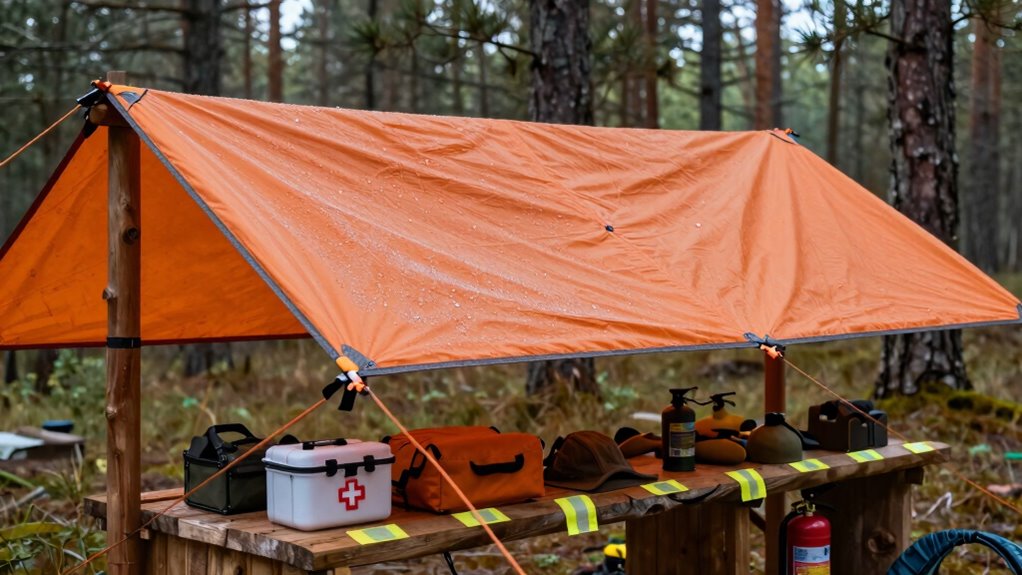
You often overlook essential safety equipment like wildfire preparedness tools and water purification supplies. Carrying a fire-resistant blanket, a portable fire extinguisher, or a wildfire escape plan can save your life during a blaze. Don’t forget water purification methods—such as filters or tablets—that guarantee safe drinking water. These overlooked items add vital layers of safety, especially in remote or unpredictable environments where emergencies can escalate quickly.
How Can Campsite Location Affect Overall Safety?
Choosing a campsite is like planting a safety seed—you want it to grow strong and secure. Your campsite’s location impacts safety because accessible campgrounds reduce injury risks, and understanding natural hazards like floods or falling branches protects you. If you overlook campground accessibility and natural hazard awareness, you risk accidents that could ruin your trip. Pick wisely, study the area, and always prioritize safety to enjoy your adventure fully.
As an affiliate, we earn on qualifying purchases.
Conclusion
Don’t overlook this essential safety layer—your first aid kit. It’s easy to think emergencies won’t happen to you, but imagine slicing your finger or getting a sudden scrape far from help. With a well-stocked kit, you can stop minor injuries from worsening and keep calm until help arrives. Trust me, being prepared isn’t just about safety; it’s about peace of mind, letting you enjoy your adventure fully, knowing you’re ready for the unexpected.
As an affiliate, we earn on qualifying purchases.
emergency communication devices for camping
As an affiliate, we earn on qualifying purchases.
As an affiliate, we earn on qualifying purchases.