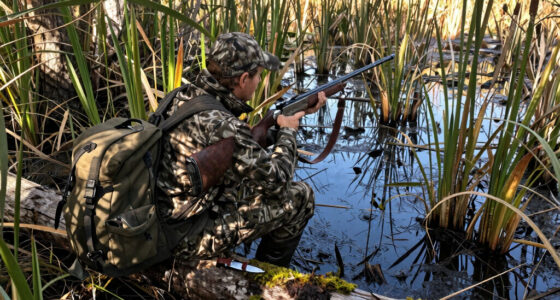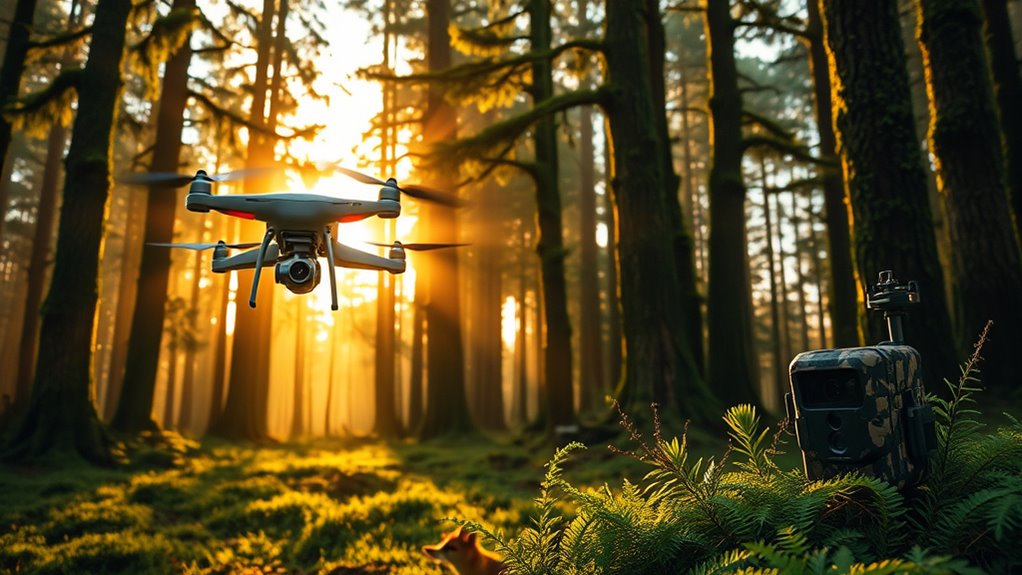

When using drones and trail cams, you need to be mindful of wildlife to avoid causing stress or disruption. Keep a safe distance, avoid loud or aggressive movements, and be aware of sensitive seasons like breeding periods. Place cameras discreetly to prevent disturbance, and regularly check them to reduce intrusion. Responsible use supports conservation efforts and helps animals maintain their natural routines. If you want to learn how to practice this responsibly, continue exploring effective guidelines.
Key Takeaways
- Maintain a safe distance from wildlife when operating drones to prevent stress and disturbance.
- Choose discreet, non-intrusive locations for trail cam placement to respect animals’ privacy.
- Avoid noisy or aggressive drone flying patterns, especially during sensitive periods like breeding seasons.
- Regularly check and maintain camera equipment to minimize unnecessary habitat disruption.
- Use conservation technology responsibly to support wildlife protection and habitat preservation efforts.

Have you ever paused to contemplate how your actions impact the wildlife around you? When engaging with nature through tools like drones and trail cams, it’s imperative to consider your role in preserving their habitat and well-being. Ethical photography isn’t just about capturing beautiful moments; it’s about doing so in a way that minimizes disturbance and respects animals’ natural behaviors. Using conservation technology responsibly means you’re not just observing wildlife—you’re supporting their survival by avoiding intrusive or disruptive practices.
Drones can offer incredible perspectives and help document species without physically intruding on their space. However, if you’re not careful, they can cause stress or even displace animals from their habitats. To practice ethical photography with drones, always maintain a safe distance, avoid noisy or aggressive flying patterns, and be mindful of sensitive periods like breeding seasons. This approach ensures your presence doesn’t become a threat, allowing animals to go about their routines undisturbed. When you use conservation technology thoughtfully, you contribute to a larger effort to monitor and protect species while maintaining their natural behaviors.
Trail cameras are another powerful tool for observing wildlife without direct interference. When deploying trail cams, choose discreet, non-invasive locations and avoid placing them in areas that could infringe on animals’ privacy or disrupt their activities. Regularly check and maintain your equipment to prevent unnecessary disturbance and ensure data collection remains respectful. Properly used, trail cams can provide valuable insights into animal populations, migration patterns, and habitat health—information that can inform conservation strategies. By embracing ethical photography principles, you help foster a positive relationship between humans and wildlife, reinforcing the importance of non-intrusive observation methods.
Incorporating conservation technology responsibly means you’re actively participating in a broader movement to protect wildlife and their habitats. It’s about recognizing that every action, whether capturing images or monitoring populations, carries weight. Respectful use of these tools helps ensure that wildlife remains undisturbed and that your efforts contribute to meaningful conservation outcomes. Remember, your goal isn’t just to get the perfect shot or gather data—it’s to do so in a way that honors the animals’ right to live free from human interference. By practicing ethical photography and using conservation technology thoughtfully, you’re playing a crucial part in safeguarding the natural world for future generations. Additionally, understanding the impact of human activities on ecosystems can guide more responsible and sustainable practices in wildlife observation.
As an affiliate, we earn on qualifying purchases.
Frequently Asked Questions
Can Drones Disturb Nocturnal Animals?
Yes, drones can disturb nocturnal animals, as the drone noise impact often causes nocturnal animal stress. The loud sounds and sudden movements may scare or disorient these animals, disrupting their natural behaviors. To minimize this, you should keep a safe distance, avoid flying during peak activity times, and choose quieter drone models. Being mindful of your drone’s impact helps protect nocturnal animals and preserves their natural habitat.
What Are the Legal Limits for Trail Cam Placement?
Legal limits for trail cam placement vary, but you should always prioritize ethical placement and privacy considerations. You’re generally allowed to set trail cams on your property without issue, yet placing them on public land or private property without permission can lead to legal trouble. Always check local regulations, avoid infringing on neighbors’ privacy, and steer clear of areas where your presence might disturb wildlife or people.
How Do Drones Affect Bird Nesting Behaviors?
Drones can substantially affect bird nesting behaviors by causing wildlife stress and nesting disruption. When you fly a drone near nesting sites, birds often become alarmed, abandon nests, or reduce their reproductive efforts. To minimize these impacts, keep your drone at a respectful distance, avoid nesting seasons, and stay mindful of wildlife signals. By doing so, you help protect birds and maintain healthy ecosystems.
Are There Eco-Friendly Trail Cam Batteries?
Eco-friendly trail cam batteries are becoming popular, especially solar-powered options, which reduce waste and reliance on disposable batteries. Did you know that only 5% of batteries are recycled properly? You can help by choosing trail cams with rechargeable batteries or participating in battery recycling programs. Solar-powered batteries are a great sustainable choice—they harness sunlight, lower environmental impact, and eliminate frequent replacements, making your wildlife monitoring more eco-conscious.
How Can I Identify Species Captured on Trail Cams?
To identify species captured on your trail cam, start by reviewing the footage and noting distinguishing features like size, markings, and color. Use your camera’s settings to optimize image quality, such as adjusting resolution and exposure, which helps with species identification. If unsure, compare your images with online guides or wildlife apps. Regularly check and label images to build a clear record, making future identification easier.
quiet drone for wildlife photography
As an affiliate, we earn on qualifying purchases.
As an affiliate, we earn on qualifying purchases.
Conclusion
By using drones and trail cams responsibly, you help protect wildlife and their habitats. Remember, studies show that improper use can disturb animals in over 30% of cases, so always keep a respectful distance. When you observe nature thoughtfully, you not only enjoy its beauty but also make certain that future generations can experience it too. Your mindful approach makes a difference—so keep exploring with care and respect for the wild creatures you encounter.
As an affiliate, we earn on qualifying purchases.
noise-reducing drone for wildlife
As an affiliate, we earn on qualifying purchases.
As an affiliate, we earn on qualifying purchases.