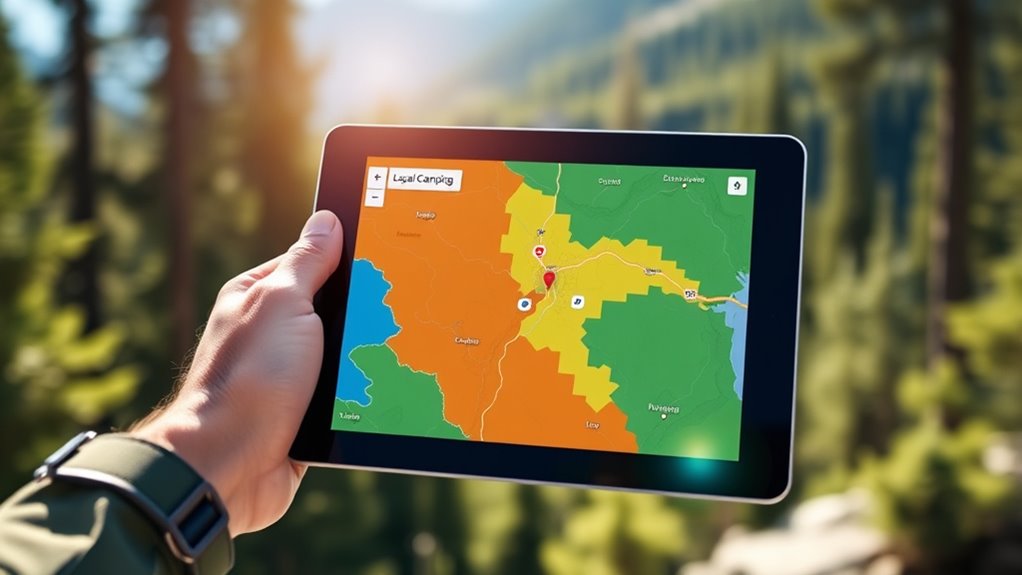
To camp legally, using dedicated apps can be a great help. These tools provide verified private campsite listings, show where wild camping is permitted, and display interactive maps with land boundaries and designated zones. They also offer community reports and real-time updates to guarantee you stay within local laws. By choosing the right app, you can find safe, legal spots and avoid fines. Keep going to discover how these apps make responsible outdoor adventures easier.
Key Takeaways
- Use camping apps with verified private site listings to ensure legal and designated camping spots.
- Access wild camping guidelines and restrictions within apps to stay compliant with local laws.
- Utilize interactive maps showing boundaries, camping zones, and prohibited areas for responsible planning.
- Leverage community tools and reviews to find trusted, legal camping locations and report issues.
- Rely on real-time data and alerts in apps to avoid illegal camping and protect outdoor spaces.
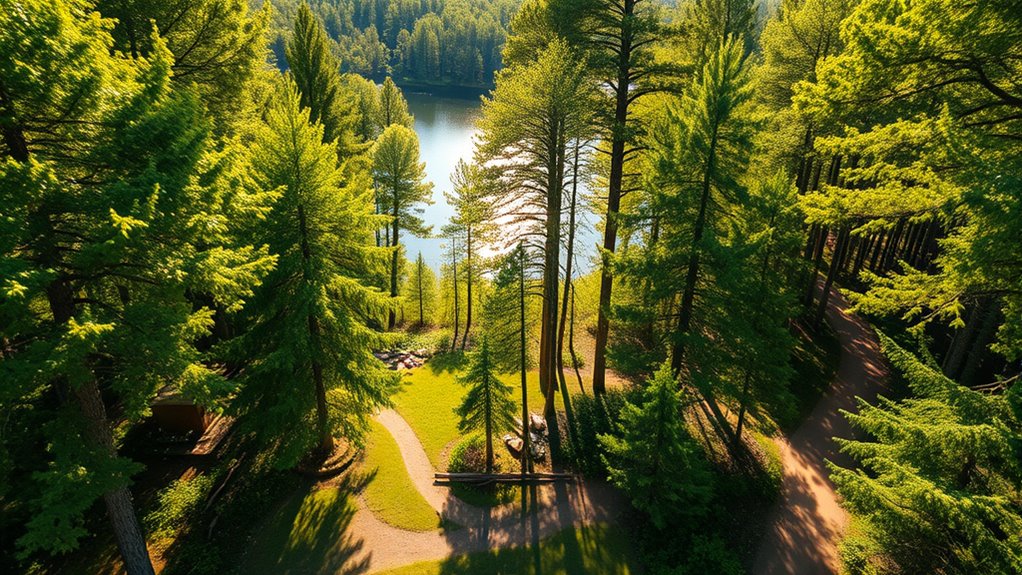
Have you ever wondered what it truly means to attend a camp that’s run entirely by legal standards? It’s more than just setting up a tent anywhere you like; it’s about respecting the rules that protect both you and the environment. Using apps to find legal camping spots can make all the difference, especially when you’re searching for a private campsite or trying to navigate wild camping regulations. These tools help you stay compliant, avoid fines, and enjoy your outdoor experience without worry.
Discover the importance of legal camping and how apps help you stay compliant and protect the environment.
When you’re looking for a private campsite, these apps are invaluable. They often include detailed listings of legal sites that are designated for camping, ensuring you’re not trespassing on private property or breaking any laws. Many private campgrounds have facilities, security, and amenities that make your stay comfortable, and these apps make it easy to discover such spots. Instead of wandering aimlessly or risking legal trouble, you get direct access to verified locations where you can pitch your tent confidently. Plus, many apps include reviews and photos, so you can choose a spot that suits your needs and preferences.
Wild camping regulations can be complex, but the right apps simplify the process. They provide up-to-date information about where wild camping is permitted and the conditions you must follow. For example, some areas might allow wild camping only if you’re a certain distance from inhabited buildings or water sources, while others might prohibit it altogether. By using apps that track these regulations, you can avoid penalties and guarantee you’re respecting local laws. This transparency helps you plan your trip responsibly, knowing exactly where you can pitch your tent without infringing on protected land or private property.
Many of these apps also feature interactive maps, allowing you to see land boundaries and designated camping zones. Some include features for reporting illegal camping or issues, fostering a community committed to respecting wild camping regulations. Others provide essential info like fire bans, weather conditions, and local contact details, helping you prepare thoroughly for your outdoor adventure. With these tools, you can focus on enjoying nature while staying within legal boundaries, which is vital for preserving public lands and private properties.
In essence, these apps empower you to camp legally, whether on private land or in wild areas. They help you respect regulations, find suitable locations, and avoid potential legal issues. By making informed decisions about where to pitch your tent, you’re not only protecting yourself but also supporting responsible outdoor recreation. So, before you set out on your next adventure, explore the best camping apps available—your key to enjoying the wilderness legally and responsibly. Recognizing the importance of wave and wind considerations ensures a safer and more sustainable outdoor experience for everyone.
camping app for legal sites
As an affiliate, we earn on qualifying purchases.
As an affiliate, we earn on qualifying purchases.
Frequently Asked Questions
Are There Free Apps for Finding Legal Camping Spots?
Yes, there are free apps that help you find legal camping spots. Apps like AllTrails and iOverlander offer user-generated maps, showing designated campgrounds, wildlife safety tips, and nearby facilities. They also include weather forecasts to prepare you for your trip. These apps are easy to use, helping you locate safe, legal camping areas while staying informed about wildlife safety and weather conditions, all at no cost.
Can These Apps Help Locate Private Land Camping Options?
These apps are like keys to hidden treasures, helping you find private land camping options. They often include info on campsite ownership, making it easier to identify private land where you can pitch your tent legally. While not all private land is listed, many apps connect you with landowners or local communities, increasing your chances of discovering unique private land spots. Always verify permission before setting up camp.
Do the Apps Include Information on Campfire Regulations?
Yes, these apps often include information on fire regulations and campfire restrictions. When you search for camping spots, you’ll find details about local fire bans, open fire rules, and safety guidelines. This way, you can plan your trip responsibly and avoid penalties. Always double-check the latest fire regulations before lighting a campfire, as restrictions can change quickly due to weather or fire danger levels.
Are Offline Maps Available in Case of No Service?
Yes, many camping apps offer offline maps for navigation when you have no service. These offline navigation features guarantee you can still access accurate maps, which helps maintain map accuracy even in remote areas. Before your trip, download the maps you need, so you’re prepared for areas with limited or no connectivity. This way, you can confidently find your way and pitch your tent without worries about losing signal.
How Frequently Is the Campsite Data Updated?
Campsite data updates vary by app, but most aim for frequent updates to guarantee map accuracy and campsite verification. You should check each app’s update schedule, as some refresh weekly or monthly, while others rely on user reports for real-time accuracy. Regular updates help you find legitimate camping spots, prevent surprises, and confirm that the campsite info, including restrictions and amenities, remains current for your trip.
![Boundary Waters Canoe Area Wilderness [Map Pack Bundle] (National Geographic Trails Illustrated Map)](https://m.media-amazon.com/images/I/416JPMfloVL._SL500_.jpg)
Boundary Waters Canoe Area Wilderness [Map Pack Bundle] (National Geographic Trails Illustrated Map)
Boundary Waters Canoe Area Wilderness [Map Pack Bu
As an affiliate, we earn on qualifying purchases.
As an affiliate, we earn on qualifying purchases.
Conclusion
Now that you know about apps that help you find legal camping spots, you’re better prepared for your outdoor adventures. Did you know that over 70% of campers use location-based apps to plan their trips? This shows how technology is transforming the way we explore nature responsibly. So, next time you’re planning a camping trip, trust these apps to guide you to legal sites, ensuring a safe and enjoyable experience in the great outdoors.
private campground booking app
As an affiliate, we earn on qualifying purchases.
As an affiliate, we earn on qualifying purchases.
campground reviews and verified sites
As an affiliate, we earn on qualifying purchases.
As an affiliate, we earn on qualifying purchases.