
TL;DR

Get emergency and outdoor gear delivered free with Prime
- Fast, free delivery on millions of items
- Prime Video, Amazon Music and more included
- Member-only deals all year
An Outdoor Life report published Oct. 28, 2026, explains how to sharpen several broadhead styles using stones, strops and belt sharpeners. Its core advice is to match the existing bevel, work through a burr with progressively finer abrasives and protect your hands while handling exposed blades.
Outdoor Life published a guide to sharpening broadheads on Oct. 28, 2026, describing methods for fixed-blade, single-bevel, multi-blade, mechanical and replaceable-blade heads. The report’s central instruction is to follow the existing bevel and sharpen with controlled pressure, while taking precautions against cuts from exposed blades.
The guide, written by Drew Conover, recommends coloring a broadhead’s bevel with a permanent marker before sharpening. The mark shows whether the sharpening surface is contacting the existing angle evenly. Matching that angle can reduce unnecessary steel removal and help keep the edge consistent, according to the report.
Conover advises using light pressure to work one side until a thin burr forms at the edge, then repeating on the other side. The process continues with a finer grit until the burr can no longer be felt. Sharpeners can stop there or use a leather strop to polish the edge, maintaining the angle and applying light pressure.
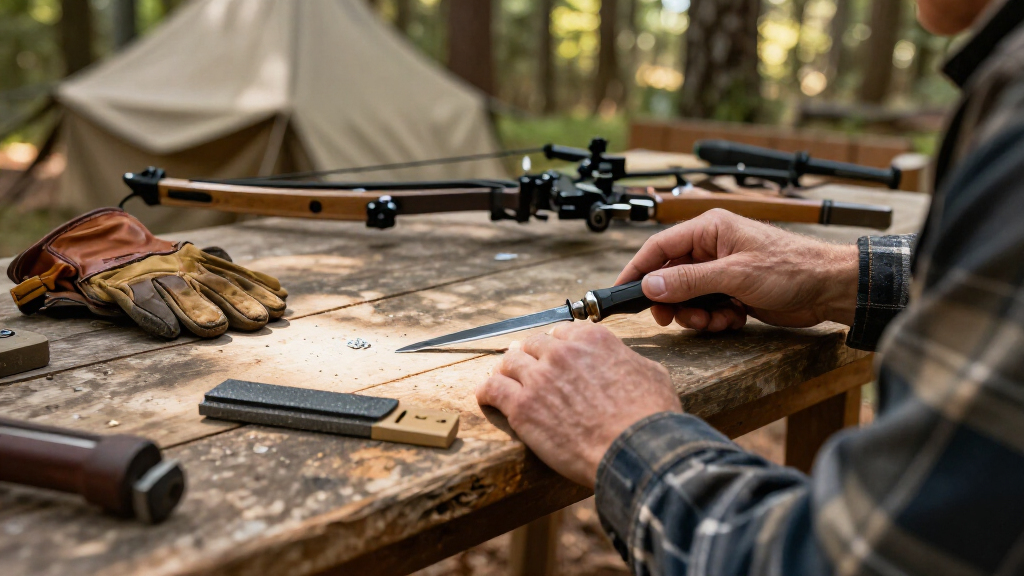
The listed equipment includes a coarse-and-fine sharpening stone, a leather strop and, optionally, a fixed-angle sharpening system. A belt sharpener is another option for fixed and replaceable-blade heads; the report says it can produce a slight convex edge. Conover also suggests attaching the head to a short piece of arrow shaft as a handle. For people new to sharpening, he recommends thin leather or cut-resistant gloves because the process may require holding a broadhead by one of its blades.
Broadheads are used to cut during bowhunting, and edge condition is one factor that hunters can control when preparing equipment. The report argues that a sharp edge matters alongside shot placement for an ethical kill. That is the author’s assessment, not a guarantee that sharpening alone will produce a particular hunting outcome.
The instructions also offer a way to avoid taking off more metal than needed: check the factory bevel first, then use the least aggressive method suited to the edge’s condition. A relatively sharp head may need honing rather than full sharpening. The guide describes honing as polishing or realigning an existing edge, rather than removing steel, and says a ceramic rod or strop can be used for that purpose.
Safe handling is a practical concern because broadhead blades are exposed and exceptionally sharp edges can cut during maintenance. The report’s gloves and arrow-shaft suggestions are intended to improve control, but readers still need to handle the head carefully and use a method suited to its design.
Popular right now

Philips Café Aromis Automatic Espresso Machine with LatteGo Pro Milk System

Dreame G10 Pro Wet and Dry Vacuum Mop

Samsung QN65LS03FAFXZA 65 The Frame QLED 4K Art Mode Vision AI Smart TV (2025)
As an affiliate, we earn on qualifying purchases.
Choosing a Method by Head Style
The article covers several broadhead types rather than prescribing one sharpening setup for all of them. For a two-blade fixed head, it compares freehand sharpening on a stone with belt sharpeners and fixed-angle systems. Conover recommends learning to sharpen on a stone, while describing a fixed-angle system as an easier route to a consistent result for some users.
The report says stones are versatile across head types and portable enough to take on a hunting trip. A two-sided stone or dual-grit diamond stone provides a coarse surface for damaged edges and a finer one for refining the edge. A strop is optional. Belt sharpeners can work quickly on fixed and replaceable blades, but require practice; the report says their action creates a slightly convex edge.
For heads that are still reasonably sharp, the article distinguishes honing from sharpening. It also lists mechanical and multi-blade heads among the designs covered, though the supplied report excerpt does not include the full step-by-step instructions for each. The methods and product examples are attributed to Outdoor Life and Conover, who identifies himself as a professional knife sharpener.
“Match the Angle”
— Drew Conover, Outdoor Life author
Instructions Not Shown in Excerpt
The supplied report material names single-bevel, three-blade, mechanical and replaceable-blade heads as topics, but it does not provide all of the detailed instructions for those types. The exact angles, sharpening sequences and compatibility of a particular tool with a specific broadhead are not established in the excerpt.
The article lists specific products and says it may earn revenue from products featured on its page through affiliate programs. The supplied material does not include independent testing or comparative performance data for those products. It also does not establish that any sharpening method guarantees a successful or ethical hunt.
Check the Head Before Use
Hunters following the guide should first identify the broadhead design and inspect its edge, then choose an appropriate stone, system or belt sharpener. The article’s sequence is to mark and match the bevel, work up a burr on both sides, refine with a finer grit and optionally strop. Those unfamiliar with sharpening should use protective gloves and a stable handle, and should follow any manufacturer instructions for the particular head.
The source material reports no new product release, rule change or scheduled follow-up. The next practical step is maintenance before use: check the edge and the head’s condition, and replace or repair components where required by the manufacturer rather than assuming sharpening addresses every defect.
Key Questions
What is the first step when sharpening a broadhead?
Color the bevel with a permanent marker, then adjust the sharpening angle until the abrasive removes the mark evenly across the bevel, according to Outdoor Life.
What does raising a burr mean?
A burr is a thin piece of metal formed at the edge of the bevel as material is removed. The guide recommends raising one side’s burr, repeating on the other side, then moving to a finer grit until the burr is no longer felt.
Do broadheads that are still sharp need sharpening?
Not necessarily. The report distinguishes honing, which it describes as polishing or realigning an existing edge, from sharpening, which removes steel. It suggests a ceramic rod or strop for honing.
What gear does the guide recommend?
Its general options include a coarse-and-fine stone, a leather strop and an optional fixed-angle sharpening system. It also discusses belt sharpeners for fixed and replaceable-blade heads.
How can beginners reduce the risk of cuts?
Conover recommends thin leather or cut-resistant gloves for people new to sharpening. The article also suggests using a short piece of arrow shaft as a handle to improve control; users should still handle exposed blades carefully.
Source: rss