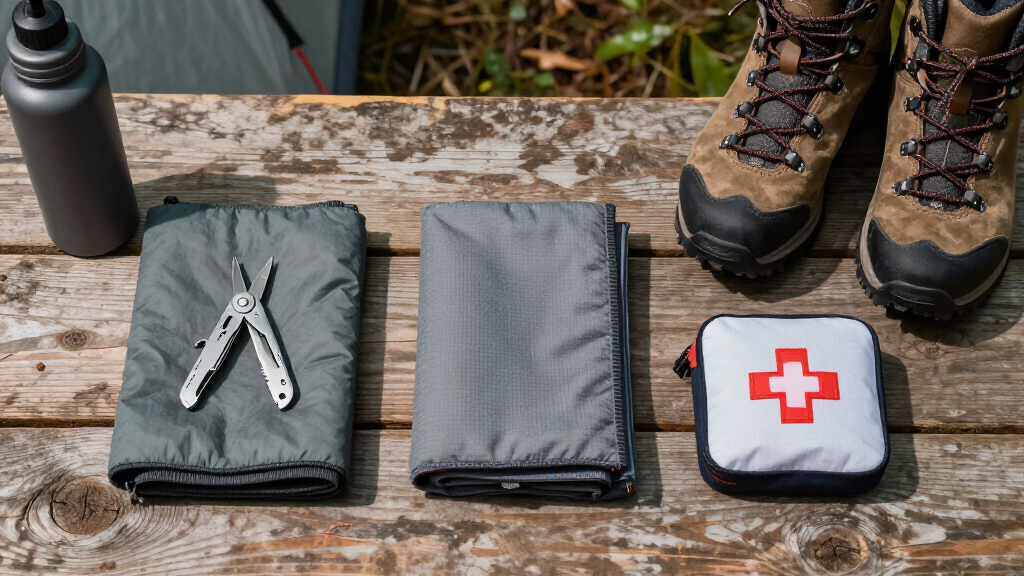

Survival gear kits range from compact 14-in-1 tool sets to 294-piece emergency kits packed into tactical backpacks, and the right choice depends on whether you’re preparing for a home emergency, building a bug-out bag, or stocking a glovebox for camping trips. The 294-piece Survival Kit earned my best overall spot for the sheer depth of its first aid and tool selection at a mid-range commitment level, while the Ready America 2-Person 3-Day Backpack stands out as the most disaster-focused option with food, water, and warmth rather than just gadgets. The main tradeoff in this category is breadth versus quality: kits that advertise huge piece counts often include filler items, while smaller kits like the 17-in-1 with a waterproof case concentrate on durable, genuinely useful tools. Serious preppers will also want to compare MOLLE-compatible pouch kits like the TacPreps Bug Out Bag against piecemeal builds. Keep reading for the full breakdown of all 15 kits and which one fits your situation.

Get emergency and outdoor gear delivered free — and shop member deals
- Fast, free delivery on millions of items
- Access to Prime Big Deal Days deals on October 6–7
- Prime Video, Amazon Music and more included
Key Takeaways
- Piece count proved to be a misleading metric: the 294-piece and 262-piece kits led on first aid depth, but the 32-in-1 and 17-in-1 kits delivered better tool quality because they skip low-value filler like cheap plastic clips and tiny bandage rolls.
- Only two kits in the lineup — the Ready America 2-Person 3-Day Backpack and the TacPreps Bug Out Bag — treat water, food, and shelter as priorities; the rest assume you can source those separately, which matters for true emergency preparedness.
- Carrying systems separated the field more than contents: tactical backpack kits (251-piece, TacPreps) scale better for vehicle or home storage, while MOLLE pouch kits (236-piece, 256-in-1, TAIMASI 238) attach to existing gear but lack room for additions.
- Waterproof hard cases, found only in the 17-in-1 kit, offered the best protection for boating, fishing, and wet-climate use — every soft-bag kit in this comparison left contents vulnerable to moisture.
- Gift-oriented kits like the 14-in-1 Fathers Day set performed fine as entry points but duplicated tools most outdoor enthusiasts already own, making them weak value for experienced buyers.
| Survival Kit, 294 Pcs Survival Gear Emergency Supplies First Aid Kit |  | Best Overall | Number of pieces: 294 | Bag material: Military-grade 1000D nylon | Bag dimensions: 11 x 9 x 6 inches | VIEW LATEST PRICE | See Our Full Breakdown |
| Survival Kit, 268 Pcs Emergency Survival Gear and Equipment Supplies with First Aid Kit, Camping Axe, Headlamp, Crossbody Bag for Camping Hiking Hunting |  | Best for Active Campers | Number of pieces: 268 | Bag material: 1000D nylon | Bag type: MOLLE-compatible crossbody bag | VIEW LATEST PRICE | See Our Full Breakdown |
| Survival Kit 32 in 1 |  | Best for Beginners | Number of items: 32 | Storage: Large-capacity backpack | Included tools: Flashlight, pen, bracelet, compass, and whistle | VIEW LATEST PRICE | See Our Full Breakdown |
| Survival Kit and First Aid Kit, 236PCS Emergency Medical Supplies with Tactical MOLLE Pouch for Outdoor Adventure, Camping, Hiking, Hunting |  | Best Compact MOLLE Kit | Number of pieces: 236 | Pouch material: 600D nylon | Pouch dimensions: 8.2 x 5.5 x 4.5 inches | VIEW LATEST PRICE | See Our Full Breakdown |
| 17-in-1 Survival Kit with Waterproof Case – Emergency Gear for Outdoor Adventures, Camping, Hunting, and Fishing |  | Best Compact Backup Kit | Number of pieces: 17 | Case: Waterproof case | Case dimensions: 7.3 x 4.3 x 2 inches (18.5 x 11 x 5 cm) | VIEW LATEST PRICE | See Our Full Breakdown |
| Gifts for Men Fathers Day 14-in-1 Survival Kit – Outdoor Tactical Gear Set |  | Best Gift Pick | Number of tools: 14 | Case dimensions: 8.3 x 4.6 x 2.2 inches | Case type: Waterproof hard case | VIEW LATEST PRICE | See Our Full Breakdown |
| Angieast 35-in-1 Survival Kit |  | Best Budget Starter Kit | Number of items: 35 | Dimensions: 6.6 x 4.3 x 1.9 inches | Weight: 1.11 pounds | VIEW LATEST PRICE | See Our Full Breakdown |
| Survival Kit with 251 Pieces – Emergency Gear & Supplies in Tactical Backpack |  | Best for Families | Number of items: 251 | Bag material: 600D nylon | Bag features: Detachable crossbody strap, MOLLE webbing, multi-compartment | VIEW LATEST PRICE | See Our Full Breakdown |
| TacPreps Bug Out Bag Backpack Survival Kit |  | Best True Bug-Out Bag | Capacity: 45 liters | Suitable for: 1 to 2 people | Duration: Up to 3 days | VIEW LATEST PRICE | See Our Full Breakdown |
| 250-Piece Survival Kit with Molle System Compatible Bag |  | Best Modular Build | Number of pieces: 250 | Bag material: Water-resistant 1000D nylon | Bag dimensions: 8 x 6.5 x 6 inches | VIEW LATEST PRICE | See Our Full Breakdown |
| 256-in-1 Survival First Aid Kit with Molle Pouch for Outdoor and Emergency Use |  | Best Tool-and-Trauma Combo | Number of tools: 256 | Pouch material: 1000D nylon | Key tools: Hatchet, folding shovel, compass, flashlight, survival bracelet, tactical pen, fire stone, wire saw | VIEW LATEST PRICE | See Our Full Breakdown |
| 27-in-1 Survival Gear Kit for Camping, Hiking, and Emergencies |  | Best Compact Starter Kit | Number of tools: 27 | Case dimensions: 8.3 x 4.8 x 2.6 inches | Material: Military-grade | VIEW LATEST PRICE | See Our Full Breakdown |
| Survival Kit, 262-Piece Emergency Gear with First Aid and Camping Supplies |  | Best Family Disaster Kit | Pieces: 262 | Includes: First aid kit, survival tools, tent, camping axe, shovel, water container, flashlight, glow sticks, multi-use tools | Axe and shovel material: Carbon steel | VIEW LATEST PRICE | See Our Full Breakdown |
| Ready America 70280 Emergency 2-Person 3-Day Survival Backpack |  | Best Grab-and-Go Emergency Bag | Food: 2 emergency food bars (4800 calories total) | Water: 12 sealed pouches (4.225 oz each) | First aid: 33-piece kit | VIEW LATEST PRICE | See Our Full Breakdown |
| TAIMASI 238 Pcs Emergency Survival Kit with First Aid Kit and Molle Pouch | 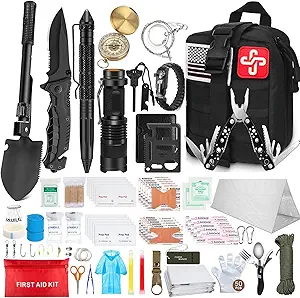 | Best Value All-Rounder | Total items: 238 pieces | Survival tools: 22 tools including 4-in-1 shovel and pick, knife, wire saw, pliers, fire starter, compass | First aid kit: 45 pieces | VIEW LATEST PRICE | See Our Full Breakdown |
More Details on Our Top Picks
Survival Kit, 294 Pcs Survival Gear Emergency Supplies First Aid Kit
The 294-piece kit is my broadest all-around pick for buyers who want medical supplies and core survival gear together. Its 1000D nylon MOLLE-compatible bag gives the set a more rugged, expandable home than the compact waterproof case in the 17-in-1 Survival Kit, while the included shelter, lighting, and fire starters cover needs beyond basic tool carry. Compared with the 236-piece Survival Kit and First Aid Kit, this one offers a larger stated item count and a bigger 11-by-9-by-6-inch bag, which may suit a vehicle or base-camp setup better.
That capacity comes with bulk and complexity: minimalists may carry more than they need, and a high piece count does not tell me how capable each individual tool is. I’d choose it for broad preparedness, then check and organize the contents before relying on them.
Pros:- Combines first aid supplies with survival tools
- Includes emergency shelter, lighting, and fire starters
- 1000D nylon MOLLE-compatible bag supports portable organization
- Larger stated item count than the 236-piece MOLLE pouch kit
Cons:- Bag size may be excessive for minimal day hikes
- The item count can make contents harder to sort quickly
- Product data does not detail the quality of individual tools
Best for: Campers and vehicle owners who want first aid, shelter, lighting, and survival tools packed together in a MOLLE-compatible bag.
Not ideal for: Ultralight hikers or buyers seeking a small, simple kit; the 11-by-9-by-6-inch bag and 294 pieces may be cumbersome to carry and sort.
- Number of pieces:294
- Bag material:Military-grade 1000D nylon
- Bag dimensions:11 x 9 x 6 inches
- Bag compatibility:MOLLE-compatible
- Included supplies:First aid supplies and survival tools
- Shelter:Emergency shelter
- Lighting and fire:Lighting and fire starters
Our verdict“Choose this kit for broad, bag-based preparedness with medical and shelter gear, provided you are comfortable carrying and organizing a larger set.”
Survival Kit, 268 Pcs Emergency Survival Gear and Equipment Supplies with First Aid Kit, Camping Axe, Headlamp, Crossbody Bag for Camping Hiking Hunting
The crossbody format gives this 268-piece kit a distinct use case: it is aimed at people who want their gear carried as a single grab-and-go bag for camping, hiking, or hunting. A headlamp keeps both hands free, while the camping axe adds a heavier camp tool that is not specified for the 294-piece Survival Kit. Its 1000D nylon bag is described as water-resistant and tear-proof, useful when the kit is exposed to rough outdoor handling.
Compared with the 236-piece MOLLE pouch kit, this set has more stated pieces and names several tools, including a raincoat and tactical pen. The tradeoff is weight: a crossbody bag can be awkward when loaded, and the product data gives no weight or detailed instructions for some tools. It suits active outings better than a pared-down emergency kit.
Pros:- Includes a headlamp for hands-free lighting
- Camping axe adds a camp tool absent from the 294-piece kit’s listed contents
- Water-resistant, tear-proof 1000D nylon bag
- Crossbody bag keeps the set together for outdoor outings
Cons:- The loaded bag may feel cumbersome to carry
- Some tools may duplicate gear experienced users already own
- Product data offers limited instructions for some tools
Best for: Campers, hikers, and hunters who prefer a single crossbody bag with a headlamp, axe, first aid supplies, and weather protection.
Not ideal for: Experienced survivalists assembling a lean custom kit or anyone sensitive to carrying a heavy crossbody load; some contents may be redundant.
- Number of pieces:268
- Bag material:1000D nylon
- Bag type:MOLLE-compatible crossbody bag
- Weather resistance:Water-resistant and tear-proof
- First aid:First aid kit
- Named tools:Camping axe, headlamp, and tactical pen
- Other included gear:Thermal blanket and raincoat
Our verdict“Pick this for outdoor trips where a headlamp, axe, and crossbody carry matter more than keeping the load minimal.”
Survival Kit 32 in 1
This 32-item kit is the approachable entry point in a lineup otherwise dominated by larger sets that combine substantial first aid supplies with survival gear. Its listed tools include a flashlight, compass, whistle, and fishing equipment, giving a new camper a starting assortment without the 200-plus-piece counts of the 294-piece and 236-piece kits. The included large-capacity backpack also gives the tools a straightforward way to travel together.
That simplicity has limits. The listing describes the tools as basic and provides little material detail, so I would not treat this as a substitute for purpose-chosen navigation, lighting, or medical equipment. Compared with the compact 17-in-1 waterproof-case kit, it offers a backpack and fishing gear; compared with the larger kits, it provides less stated medical coverage. It makes more sense as a starter or backup set than as a complete emergency system.
Pros:- A smaller stated item count than the 236- and 294-piece kits
- Includes a compass, whistle, flashlight, and fishing equipment
- Large-capacity backpack provides carry space
- Useful as a beginner or gift-oriented starter set
Cons:- Tool quality and materials are not detailed
- Basic tools may not meet experienced users’ needs
- Product data does not specify first aid contents
Best for: New campers, teens, or gift buyers who want a starter assortment of basic outdoor tools in a backpack.
Not ideal for: Experienced outdoor users or emergency planners who need detailed medical contents, specified material quality, or professional-grade tools.
- Number of items:32
- Storage:Large-capacity backpack
- Included tools:Flashlight, pen, bracelet, compass, and whistle
- Fishing gear:Fishing equipment included
- Listed uses:Camping, hiking, hunting, outdoor sports, and travel
- Tool level:Described as basic; material details are not specified
Our verdict“Choose this as a beginner’s general outdoor starter kit, and plan to add purpose-selected medical and navigation gear for serious preparedness.”
Survival Kit and First Aid Kit, 236PCS Emergency Medical Supplies with Tactical MOLLE Pouch for Outdoor Adventure, Camping, Hiking, Hunting
The compact pouch is the main reason to choose this 236-piece kit. At 8.2 by 5.5 by 4.5 inches, it is smaller than the 294-piece Survival Kit’s 11-by-9-by-6-inch bag, making it easier to attach to other gear or stow in a pack. It still pairs first aid supplies with survival tools and names an emergency tent, blanket, and 4-in-1 shovel, so the reduced pouch size does not mean the contents are limited to pocket tools.
Compared with the 268-piece crossbody kit, this set has fewer listed pieces and a smaller carry format, which favors pack integration over ready-to-wear access. The tradeoff is that the pouch may leave little room for personal additions, and the listing gives limited detail about individual tool quality. I’d pick it when compact MOLLE attachment matters more than a standalone bag.
Pros:- Compact 8.2-by-5.5-by-4.5-inch pouch
- MOLLE design supports attachment to compatible gear
- Combines first aid supplies with survival tools
- Lists an emergency tent, blanket, and 4-in-1 shovel
Cons:- Pouch may be too small for larger gear or added supplies
- Individual tool quality is not described in detail
- Smaller stated item count than the 268- and 294-piece kits
Best for: Hikers and campers who want first aid and basic survival gear in a compact MOLLE pouch attached to a larger pack.
Not ideal for: Buyers seeking a standalone high-capacity emergency bag or room to add substantial personal supplies; the pouch is compact and product details on tool quality are limited.
- Number of pieces:236
- Pouch material:600D nylon
- Pouch dimensions:8.2 x 5.5 x 4.5 inches
- Pouch type:Tactical MOLLE pouch
- Medical supplies:First aid supplies
- Named tools:Multipurpose survival tools and 4-in-1 shovel
- Emergency gear:Emergency tent and blanket
Our verdict“Choose this kit when you want a compact MOLLE pouch with medical and survival basics that can ride on a larger pack.”
17-in-1 Survival Kit with Waterproof Case – Emergency Gear for Outdoor Adventures, Camping, Hunting, and Fishing
The waterproof case makes this 17-in-1 kit the easiest option to stash in a travel bag or keep as a compact backup. At 7.3 by 4.3 by 2 inches, it takes up far less space than the backpack-based Survival Kit 32 in 1 and the MOLLE pouches in this roundup. Its listed tools include a compass, flashlight, fire starter, wire saw, emergency blanket, and multi-function tool card, giving it a useful spread of basic functions in a small package.
Its compactness also sets a clear ceiling: it is a tool kit, not the broader medical-and-shelter package offered by the 294-piece set. The flashlight needs batteries that are not included, and some tools may take practice. A one-month warranty is also limited. I’d use this as a compact backup or gift, not as my only survival kit for extended trips.
Pros:- Compact 7.3-by-4.3-by-2-inch case
- Waterproof case helps protect a small set of tools
- Includes compass, fire starter, wire saw, and emergency blanket
- Easy to pack as a backup or give as an outdoor-themed gift
Cons:- Flashlight batteries are not included
- Does not list the broader first aid and shelter supplies found in larger kits
- One-month warranty is limited
Best for: Travelers and casual campers who want a small, water-resistant-to-the-case kit for basic tools and emergency backup.
Not ideal for: People assembling a primary emergency kit who need substantial first aid supplies, a backpack, or extended-trip gear; batteries are also not included for the flashlight.
- Number of pieces:17
- Case:Waterproof case
- Case dimensions:7.3 x 4.3 x 2 inches (18.5 x 11 x 5 cm)
- Included components:Compass, flashlight, fire starter, wire saw, emergency blanket, and multi-function tool card
- Flashlight power:Batteries not included
- Warranty:One month
- Packaging:Luxury gift box
Our verdict“Choose this as a compact backup for basic outdoor tools, while relying on a larger kit for medical supplies and extended emergencies.”
Gifts for Men Fathers Day 14-in-1 Survival Kit – Outdoor Tactical Gear Set
This option stands out as the most gift-ready kit in the lineup, thanks to its tidy waterproof case and a well-chosen mix of tools that skew recreational rather than hardcore. The fishing bait and 8-in-1 spool make it feel tailored to anglers and weekend campers, which is a sharper identity than the Angieast 35-in-1 kit’s broader but shallower spread. Compared with the TacPreps Bug Out Bag, this is a fraction of the size — that makes it pocket-friendly for gloveboxes and daypacks, but it means no food, water, or real first aid coverage. The hatchet is a nice touch at this scale, though buyers should temper expectations on individual tool durability.
Pros:- Waterproof case keeps everything organized and protected
- Fishing-focused items give it a clear identity for anglers
- Compact enough for gloveboxes, boats, and daypacks
- Includes a hatchet, which many small kits omit
Cons:- Flashlight arrives without batteries
- No first aid or sustenance items, limiting real emergency value
- Individual tool quality is unverified at this price tier
Best for: Gift shoppers buying for dads, anglers, or casual campers who want a presentable, organized kit
Not ideal for: Anyone building genuine emergency preparedness — it lacks food, water, and meaningful medical supplies
- Number of tools:14
- Case dimensions:8.3 x 4.6 x 2.2 inches
- Case type:Waterproof hard case
- Key tools:Hatchet, fire starter, flashlight, survival bracelet, tactical pen
- Fishing gear:Included (bait, wire saw)
- First aid items:None
Our verdict“Buy this as a thoughtful gift for a hobbyist outdoorsman, not as your family’s emergency backbone.”
Angieast 35-in-1 Survival Kit
For someone buying their first survival kit, this option makes the most sense: it is light, cheap-feeling in a good way at 1.11 pounds, and covers more bases than the 14-in-1 kit above — including bandages and alcohol pads that the smaller set skips entirely. The tradeoff is depth. Where the 250-piece Molle kit packs a folding shovel and tent, the Angieast relies on miniaturized basics like a wire saw and flint stone that work but won’t impress experienced preppers. Instructions are thin, so beginners should plan to watch tutorial videos before an emergency, not during one.
Pros:- Genuinely lightweight at 1.11 pounds for a 35-item kit
- Includes basic first aid, unlike smaller gift-style kits
- Waterproof box doubles as organized storage
- Low-commitment entry point for trying survival gear
Cons:- Tools are basic versions, not rugged enough for heavy use
- Minimal instructions included for each item
- Coverage is broad but shallow — no shelter or food
Best for: First-time buyers, students, or day hikers who want broad coverage without cost or weight
Not ideal for: Experienced preppers — the individual tools are entry-level and too basic for advanced scenarios
- Number of items:35
- Dimensions:6.6 x 4.3 x 1.9 inches
- Weight:1.11 pounds
- Waterproof box:Yes
- First aid items:Bandages, alcohol pads
- Key tools:Compass, flint stone, tactical pen, paracord bracelet, fire tinder
Our verdict“A sensible, low-cost way to start a survival kit collection, as long as you treat it as a foundation to build on.”
Survival Kit with 251 Pieces – Emergency Gear & Supplies in Tactical Backpack
This kit earns its spot by pairing serious medical supplies — including a tourniquet, scissors, and tweezers — with solid survival tools in a 600D nylon pack that can actually be worn comfortably. The MOLLE webbing and multi-compartment layout beat the Angieast’s small hard case for a family that needs to grab-and-go during an earthquake or wildfire evacuation. Compared with the 250-piece Molle kit, the backpack format is the difference: a detachable crossbody strap and organized compartments mean two adults can split duties in a crisis. The catch is weight and redundancy — long-time preppers will already own half these items, so this is best as a household’s first comprehensive kit.
Pros:- Tourniquet and trauma supplies go beyond bandage-level first aid
- Multi-function axe/hammer and shovel handle real shelter and fire tasks
- Tactical backpack with MOLLE and compartments stays organized under stress
- Emergency tent and thermal blanket cover immediate shelter needs
Cons:- Heavy when fully packed — harder for kids or older adults to carry
- Redundant items for anyone with an existing gear collection
Best for: Households and families who want one grab-and-go bag covering both trauma care and survival basics
Not ideal for: Ultralight hikers or experienced preppers who’d be paying for gear they already own
- Number of items:251
- Bag material:600D nylon
- Bag features:Detachable crossbody strap, MOLLE webbing, multi-compartment
- Medical supplies:Tourniquet, bandages, antiseptic swabs, scissors, tweezers
- Key gear:Axe/hammer, shovel/pick, fire starter, emergency tent, SOS flashlight
- Shelter:Emergency tent and thermal blanket
Our verdict“The most complete household emergency option here — buy it for the family car or closet, not for ultralight trips.”
TacPreps Bug Out Bag Backpack Survival Kit
This is the only kit in this lineup that includes actual food and water filtration, which changes what it’s for entirely. The Ready America 2-person backpack covers similar 72-hour territory, but the TacPreps 45L pack adds a water filter and hydration pouches — the difference between rationing what you carry and sourcing more along the way. It’s sized for one to two people for up to three days, making it the closest thing here to a complete bug-out solution rather than a toolbox. The tradeoffs are real: it’s heavy when packed, and couples with kids or pets will outgrow it immediately.
Pros:- Includes food, water filter, and hydration pouches, not just tools
- Genuine 72-hour duration for 1-2 people
- Water-resistant 45L tactical backpack with organized compartments
- Covers shelter, first aid, and tools in one package
Cons:- Heavy when fully packed — plan for who actually carries it
- Some gear requires practice to deploy effectively under stress
Best for: Couples or solo adults who want a ready-to-grab 72-hour bag with food and drinkable water built in
Not ideal for: Families of three or more — the 1-2 person capacity runs out fast
- Capacity:45 liters
- Suitable for:1 to 2 people
- Duration:Up to 3 days
- Includes:Food, water, shelter, first aid, tools
- Water system:Water filter and hydration pouches
- Bag:Durable water-resistant tactical backpack
Our verdict“If your goal is a true bug-out bag rather than a camping toolkit, this is the pick — just size up if your household exceeds two people.”
250-Piece Survival Kit with Molle System Compatible Bag
Where the 251-piece tactical backpack kit is built to be carried as one unit, this option is built to be attached to other gear. The 1000D nylon Molle-compatible bag is the standout — tougher than the 600D pack on the 251-piece kit — and it lets you strap the whole kit to a larger pack, vest, or vehicle kit. That modularity suits hunters and overlanders who already run Molle systems and want survival supplies to slot in cleanly. The pieces themselves (folding shovel, axe, tent, blanket) overlap heavily with the TAIMASI 238-piece kit, so the real differentiator is the bag, not the contents. It’s bulky for its footprint, and casual day hikers will find it overkill.
Pros:- Heavy-duty 1000D water-resistant nylon outclasses most kit bags here
- Molle compatibility lets it attach to packs, vests, and vehicle rigs
- 250 pieces cover tools, shelter, and emergency supplies
- Designed with input from survival experts
Cons:- Heavy and bulky despite compact bag dimensions
- Contents overlap heavily with cheaper kits — you’re paying for the bag
- Limited instructions for some of the more technical tools
Best for: Hunters, overlanders, and Molle-system users who want to integrate a survival kit into existing loadouts
Not ideal for: Casual day hikers — the weight and bulk overwhelm short trips
- Number of pieces:250
- Bag material:Water-resistant 1000D nylon
- Bag dimensions:8 x 6.5 x 6 inches
- Molle compatible:Yes
- Key components:Folding shovel, axe, tent, blanket
- Model number:HHG-BIGQSGJ
Our verdict“Choose this if you already run Molle gear and want survival supplies that bolt onto your existing setup rather than replacing it.”
256-in-1 Survival First Aid Kit with Molle Pouch for Outdoor and Emergency Use
What separates this kit from similarly sized options like the 262-Piece Emergency Gear kit is its balance: the 256-in-1 leans harder into trauma-grade medical supplies, including a tourniquet and CPR mask that most budget kits omit. The 1000D nylon Molle pouch is also a step up in durability compared with the 600D nylon used by the TAIMASI 238-piece kit, which matters if you plan to strap it to a pack or vehicle seat for years. The tradeoff is breadth over depth — the hatchet, folding shovel, and fire starter are serviceable but not professional-grade, and casual campers may find 256 small items more than they will ever touch. For buyers who want one bag covering both bushcraft basics and serious first aid, this pick makes the most sense.
Pros:- Tourniquet and CPR mask elevate the first aid component beyond typical kits
- 1000D nylon pouch is more abrasion-resistant than the 600D fabric common in this category
- Genuinely broad tool coverage from hatchet and shovel to fishing hooks and wire saw
- Molle attachment makes it easy to pair with a larger bug-out setup
Cons:- Hundreds of small parts are easy to lose or mismanage without disciplined repacking
- Individual tool quality is mid-tier — serious bushcrafters will want to upgrade key items
Best for: Outdoor adventurers who want serious trauma supplies alongside survival tools in a single Molle-ready pouch
Not ideal for: Casual day hikers who only need a few basics — the sheer item count adds weight and clutter
- Number of tools:256
- Pouch material:1000D nylon
- Key tools:Hatchet, folding shovel, compass, flashlight, survival bracelet, tactical pen, fire stone, wire saw
- First aid supplies:Bandages, emergency blanket, tourniquet, CPR mask, medical tape, iodine pads, gloves, tweezers
- Attachment:Molle-compatible pouch
- Best use:Camping, hiking, emergency preparedness
Our verdict“This is the kit for buyers who refuse to choose between a survival toolkit and a real first aid kit.”
27-in-1 Survival Gear Kit for Camping, Hiking, and Emergencies
Where the Ready America 70280 focuses on food and water for riding out a disaster at home, this 27-in-1 kit is built around tools you carry on your person. The military-grade waterproof case slips into a glovebox, tackle box, or daypack at 8.3 x 4.8 x 2.6 inches — a fraction of the footprint of the crossbody-bag kits like the 262-Piece set. This option stands out for genuinely useful core tools: the multi-function axe, tactical pen, and fire starter cover the fundamentals without overwhelming a newcomer. The honest tradeoff is depth — there are no medical supplies beyond an emergency blanket, and experienced survivalists will find the toolset basic compared with the 256-in-1 kit’s hatchet-and-shovel lineup. Think of it as a first survival kit, not a last one.
Pros:- Waterproof military-grade case survives glovebox and pack abuse
- Small enough for everyday carry or glovebox storage
- Core tools (axe, fire starter, tactical pen) cover the survival basics
- Low-maintenance design with few tiny parts to lose
Cons:- Almost no medical component beyond an emergency blanket
- Tools are entry-level and may disappoint experienced outdoorsmen
Best for: Beginners and day hikers who want an affordable, waterproof tool kit small enough to always keep in a pack or car
Not ideal for: Anyone building a home disaster kit — no food, water, or real first aid supplies are included
- Number of tools:27
- Case dimensions:8.3 x 4.8 x 2.6 inches
- Material:Military-grade
- Case type:Waterproof hard case
- Key tools:Multi-function axe, tactical pen, fire starter, emergency blanket
- Best use:Camping, hiking, fishing, emergency preparedness
Our verdict“A smart first purchase for casual hikers who need portable basics, not a substitute for a full emergency kit.”
Survival Kit, 262-Piece Emergency Gear with First Aid and Camping Supplies
Compared with the 256-in-1 kit, this 262-piece set shifts the emphasis from medical detail toward family disaster readiness: it adds a tent, a water container, and full-size 17-inch carbon steel axe and shovel rather than compact survival tools. That makes it better suited to sheltering through a storm or setting up a camp than patching a deep wound. The crossbody bag with MOLLE straps and compartments organizes the load better than the single-pouch layouts of the TAIMASI 238-piece kit, though it is bulkier on the trail. Be realistic about the tradeoff: 262 pieces is a lot to inventory, and items like glow sticks and multi-use tools are only useful if someone in the household knows where they are and why.
Pros:- Includes actual shelter (tent) and water storage, not just tools
- Full-size 17-inch carbon steel axe and shovel outperform compact alternatives
- Crossbody bag with compartments keeps 262 items findable in a crisis
- Covers food, water, signaling, and first aid categories
Cons:- Bulkier and heavier than pouch-style survival kits
- Some items overlap or duplicate for casual campers
- Requires a household inventory session to be genuinely useful
Best for: Households preparing for earthquakes, storms, or extended outages who need shelter, water, and tools in one organized bag
Not ideal for: Ultralight backpackers — the full-size axe, shovel, and tent make this too heavy for trail use
- Pieces:262
- Includes:First aid kit, survival tools, tent, camping axe, shovel, water container, flashlight, glow sticks, multi-use tools
- Axe and shovel material:Carbon steel
- Axe and shovel length:17 inches
- Packaging:Crossbody bag with compartments and MOLLE straps
- Best use:Family disaster preparedness and camping
Our verdict“The strongest choice here for families who want disaster-scale coverage — shelter and water included — rather than a trail kit.”
Ready America 70280 Emergency 2-Person 3-Day Survival Backpack
This is the only kit in this lineup built around sustenance rather than tools. While the 262-Piece set gives you an axe and a tent, the Ready America 70280 gives you 4800 calories of emergency food bars, 12 sealed water pouches, ponchos, blankets, and dust masks — the supplies that actually matter in the first 72 hours of a hurricane or wildfire evacuation. That focus makes it the most honest grab-and-go option: no assembly, no learning curve, just grab the backpack and leave. The tradeoffs are real, though. The 33-piece first aid kit is basic compared with the tourniquet-and-CPR-mask medical loadout of the 256-in-1 kit, it serves only two people, and the food and water carry a five-year shelf life that requires a replacement cycle many owners forget.
Pros:- Includes actual food and water for 72 hours, not just tools
- Zero learning curve — organized, ready to grab and go
- Covers often-forgotten items like dust masks, ponchos, and nitrile gloves
- Compact lightweight backpack is easy to store in a closet or car
Cons:- Hard limit of two people per kit
- Basic 33-piece first aid kit lacks trauma supplies
- Food and water expire in five years and need planned replacement
Best for: Couples and small households who want a ready-to-grab 72-hour evacuation bag with no assembly required
Not ideal for: Larger families or anyone wanting serious tools and medical capability — it covers the basics, not trauma care
- Food:2 emergency food bars (4800 calories total)
- Water:12 sealed pouches (4.225 oz each)
- First aid:33-piece kit
- Shelter:2 survival blankets, 2 emergency ponchos
- Other:2 lightsticks (12-hr), 4 dust masks, 2 pairs nitrile gloves, whistle
- Capacity:2 people for 72 hours
- Shelf life:5 years (food and water)
Our verdict“Buy this if your disaster plan is evacuation, not bushcraft — it is the most turnkey option in the roundup.”
TAIMASI 238 Pcs Emergency Survival Kit with First Aid Kit and Molle Pouch
The TAIMASI 238-piece kit earns its spot by covering every category at once — 22 survival tools, a 45-piece first aid kit, shelter, fishing tools, and 150 consumables like gloves and swabs — in a tighter 8 x 6.5 x 6-inch package than the 262-Piece crossbody kit. The 4-in-1 shovel and pick is the standout tool here, doing the work of several separate implements. Compared with the 256-in-1 kit, the pouch drops to 600D nylon, which is lighter but less abrasion-resistant over years of hard use. It also includes 100 cotton swabs and 50 gloves that pad the piece count without adding survival value — a common trick in this category worth knowing about. Still, for the price of one bag you get tools, trauma supplies, and shelter, which makes this the most balanced buy for general preparedness.
Pros:- Genuinely broad coverage: tools, 45-piece first aid, shelter, and fishing gear
- 4-in-1 shovel and pick consolidates multiple tools into one
- Molle straps and velcro panel integrate well with existing packs
- Compact 8 x 6.5 x 6-inch pouch fits easily in a car trunk or closet
Cons:- 600D nylon pouch is less durable than the 1000D fabric on competing kits
- 150 of the 238 pieces are consumables like swabs and gloves, inflating the count
- Sparse instructions make some tools confusing for newcomers
Best for: Budget-minded buyers who want tools, first aid, and shelter covered in one affordable, packable kit
Not ideal for: Ultralight thru-hikers and buyers bothered by piece-count padding from consumables
- Total items:238 pieces
- Survival tools:22 tools including 4-in-1 shovel and pick, knife, wire saw, pliers, fire starter, compass
- First aid kit:45 pieces
- Consumables:100 cotton swabs, 50 disposable gloves
- Bag material:600D nylon
- Bag dimensions:8 x 6.5 x 6 inches
- Attachment:MOLLE-compatible straps, velcro panel
Our verdict“The best balance of coverage, size, and value for someone buying their first serious all-in-one kit.”
How We Picked
I evaluated each kit against four questions a buyer actually faces. First, contents versus mission fit: does the kit serve emergency preparedness, outdoor recreation, or both, and does every item earn its place? Kits stuffed with filler counted against their totals. Second, build quality of core items — a survival kit is only as good as its axe, knife, fire starter, and first aid supplies, so I weighed whether the load-bearing tools felt durable enough to rely on under stress.
Third, I assessed the carrying system: hard cases, MOLLE pouches, and tactical backpacks each suit different users, and a great kit in a flimsy bag loses real-world value. Fourth, I considered expandability and organization — internal compartments, room for additions, and whether the layout lets you find gear quickly in the dark or with cold hands. Ranking prioritized kits that balance depth with quality at their intended use case, with bonus weight given to kits covering water, warmth, and shelter rather than tools alone.
Factors to Consider When Choosing Survival Gear Kits
Before choosing a survival gear kit, it helps to understand what actually separates a reliable emergency resource from a box of gadgets. These are the factors I weighed most heavily, and the mistakes I’d avoid as a buyer.Match the Kit to a Real Scenario
The single biggest mistake buyers make is purchasing a generic kit without defining the emergency it should cover. A home earthquake or hurricane kit needs water, food, warmth, and light — tools are secondary. A vehicle kit prioritizes jumper cables territory: light, signaling, first aid, and warmth. A hiking or hunting kit centers on fire starting, navigation, cutting tools, and shelter. Many buyers discover too late that their 250-piece kit contains forty bandages but no way to purify water or stay warm overnight. Decide your scenario first, then judge every kit against that specific list of needs rather than its advertised piece count.
Piece Count Is Marketing — Audit the Contents
Manufacturers inflate piece counts with cotton swabs, safety pins, and single bandages, which is how a ‘300-piece kit’ can contain fewer useful tools than a 17-piece one. When comparing kits, mentally sort contents into three columns: medical supplies, survival tools, and filler. A quality ratio worth targeting is roughly one genuine tool per five declared pieces. Bandage quantity matters for a family first aid role, but if you’re buying for wilderness use, weight the fire starter, knife, compass, and cordage far more heavily than gauze counts. Reading the actual item list before buying will save you from kits that pad totals with items you’d toss in a drawer.
The Bag Matters as Much as the Gear
The carrying system determines whether a kit survives its first year and whether you can actually deploy it under stress. Hard waterproof cases protect contents but limit expansion. MOLLE pouches attach to backpacks and vests but offer minimal internal organization, so small items end up loose at the bottom. Tactical backpacks provide compartments and growth room but cost more and take up storage space. Consider too where the kit lives: a soft pouch in a damp garage or boat compartment will ruin medical supplies that expired the day moisture reached them. Zipper quality is a quiet failure point on budget kits — a split zipper on your bug-out bag is an emergency inside an emergency.
Cover Water, Warmth, and Signaling First
Survival priorities follow the rule of threes: you can survive roughly three hours in harsh conditions, three days without water, three weeks without food. Most gadget-heavy kits invert this, loading up on cutting tools while ignoring the basics. Look for water purification tablets or filters, emergency blankets, fire starting capability with backup, and a whistle or signal mirror. Only a couple of kits in this roundup include food and water rations, which means most buyers need to supplement — and that’s fine, as long as you plan for it rather than assuming the kit is complete. A twenty-dollar addition of water pouches and a life straw often does more for your safety than a hundred extra bandages.
Know When to Build Your Own Instead
Pre-assembled kits trade quality control for convenience, and that tradeoff intensifies as your budget grows. If you already own a good knife, headlamp, and first aid supplies, a mid-range kit mostly duplicates what you have — buying individual missing pieces often yields better gear for similar money. Kits make the most sense for beginners, gift recipients, and second locations like a car, cabin, or office where convenience beats customization. If you go the DIY route, budget for a quality bag too, since that’s the hidden cost most people forget. A reasonable hybrid approach: start with a solid kit, then replace its weakest three items with upgrades over time.
Maintenance and Expiration Reality
A survival kit is a perishable asset, not a buy-once purchase. Medications, antiseptic wipes, water purification tablets, and food rations all carry expiration dates, typically one to five years out. Batteries in flashlights and headlamps leak if left unattended, and cheap lighters dry out. Build a twice-yearly inspection habit, ideally tied to daylight saving time changes, and store the kit somewhere temperature-stable — trunk-of-car storage in summer heat degrades medical supplies quickly. When comparing kits, check whether replacement first aid refills are easy to source, since some proprietary kits make refreshing contents harder than buying a new one.
Frequently Asked Questions
Are high piece-count survival kits actually better than smaller ones?
Not usually, and this comparison made that clear. Piece counts are padded with individually wrapped bandages, cotton swabs, and other low-cost items, so a 294-piece kit and a 32-in-1 kit can contain a nearly identical set of genuinely useful tools. The larger kits win on first aid depth, which matters for family or group use, while smaller kits often include better individual tools because the manufacturer’s budget isn’t spread across hundreds of items. My advice is to compare the actual item list rather than the number, and to weight fire starting, water, cutting tools, and shelter above medical filler if your priority is wilderness survival rather than home first aid.
Do these kits include food and water, or do I need to add them?
Almost none of the kits in this roundup include food or water rations — the Ready America 2-Person 3-Day Backpack is the main exception, which is exactly why it stands out for disaster preparedness. The rest assume you’ll source food, water, and purification separately, so budget for that. At minimum, add water pouches or bottles, purification tablets or a filter, and a few calorie-dense bars sized to your household for three days. Doing this turns almost any tool-focused kit in this list into a legitimately complete emergency kit, and it usually costs far less than buying a premium pre-stocked alternative.
Is a MOLLE pouch kit or a tactical backpack kit the better choice?
It depends on how you plan to carry and store the kit. A MOLLE pouch like the TAIMASI 238 or the 236-piece kit attaches to a pack, vest, or belt you already own, keeping everything compact — but internal space is tight and there’s no room for additions like extra water or a jacket. A tactical backpack kit like the 251-piece or TacPreps options works as a standalone bug-out bag with room to grow, making it better for vehicle storage or grab-and-go home emergencies. If you already hike with a compatible pack, the pouch wins; if this is your primary emergency kit, the backpack is the more complete platform.
Are budget survival kits safe to rely on in a real emergency?
Partially. The medical supplies in budget kits — bandages, gauze, antiseptics — are generally reliable since they’re standardized consumables. The risk concentrates in the mechanical tools: cheap knives, multitools, and fire starters are where corners get cut, and a folding knife that fails or a fire steel that produces weak sparks is a genuine problem when it matters. A practical approach is to buy the budget kit for its medical and organizational value, then spend twenty to forty dollars upgrading the knife, lighter, and flashlight with trusted brands. That hybrid approach outperforms most premium pre-assembled kits at a similar total cost.
Do these kits work as gifts for someone who already camps or hunts?
With caution. Experienced outdoorspeople usually own a knife, headlamp, and fire starter already, so a 14-in-1 or 17-in-1 kit may duplicate most of their gear and end up in a drawer. Gift kits work far better for beginners, casual campers, new drivers, or someone setting up their first apartment or vehicle emergency kit. If your recipient is experienced, look at the kits that lean heavily on first aid contents or disaster supplies instead of tools — consumables and medical supplies never go to waste the way a redundant multitool does. Pairing a smaller kit with a single quality item, like a good water filter, is another way to avoid the duplicate-gear problem.
Conclusion
For most buyers, the 294-piece Survival Kit is the best overall choice — it balances first aid depth, tool variety, and a carry bag that works for home, vehicle, and camping use, and supplementing it with water rations closes its only real gap. If budget leads your decision, the 32-in-1 kit delivers the core survival tools without piece-count padding, making it the best value for occasional campers. On the premium end, the TacPreps Bug Out Bag Backpack is the most deployment-ready platform, built as a true grab-and-go system rather than a tool collection. Beginners and gift buyers should start with the 17-in-1 waterproof kit — its hard case and focused tool selection teach the fundamentals without overwhelming. For disaster-specific preparedness, the Ready America 2-Person 3-Day Backpack is unmatched here because it covers food, water, and warmth for two people, which no gadget kit addresses. Whichever direction you take, audit the contents against your actual scenario, add water and warmth if the kit lacks them, and put a maintenance reminder on your calendar — a survival kit only works if it’s current when you need it.
Fall Picks
fall essentials
As an affiliate, we earn on qualifying purchases.