
To effectively communicate with rescuers, use clear visual signals like bright cloths, reflective objects, or flashlight flashes that repeat steadily. Combine these with loud, distinct sounds such as whistles or shouting, making sure signals are consistent and recognizable. Maintain eye contact and stay calm to help responders interpret your cues. Use simple gestures and keep signaling until you’re noticed. If you follow these tips, you’ll improve your chances of a quick rescue and discover more helpful strategies.
Key Takeaways
- Use bright, consistent visual signals like waving or flashing lights to attract rescuers’ attention.
- Employ clear, distinct sound signals such as whistles or shouting for better recognition.
- Maintain eye contact and stay calm to ensure rescuers interpret your signals accurately.
- Combine visual cues with simple gestures or basic phrases to overcome language barriers.
- Persist with signals and stay visible until help arrives, practicing patience and clarity.
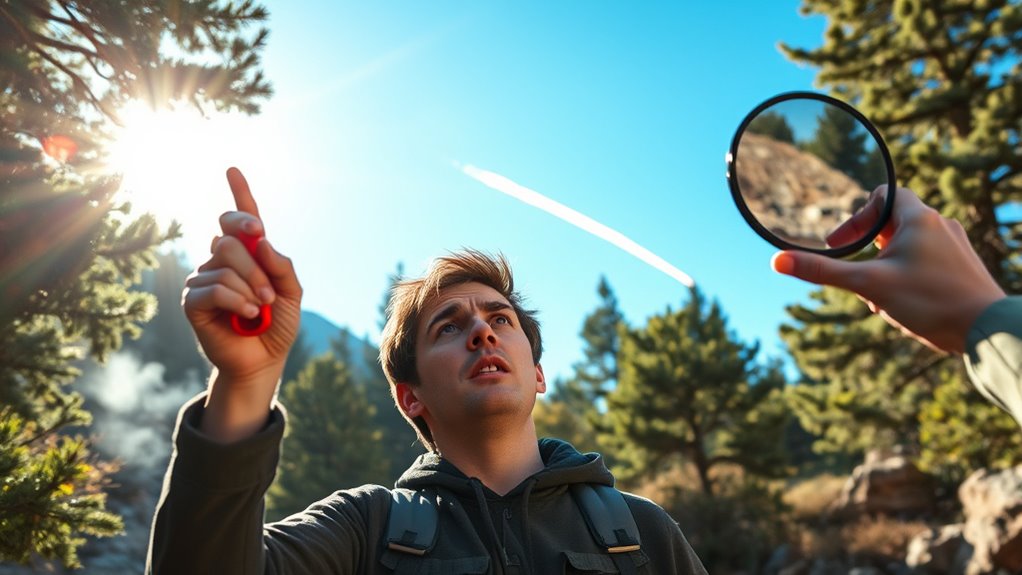
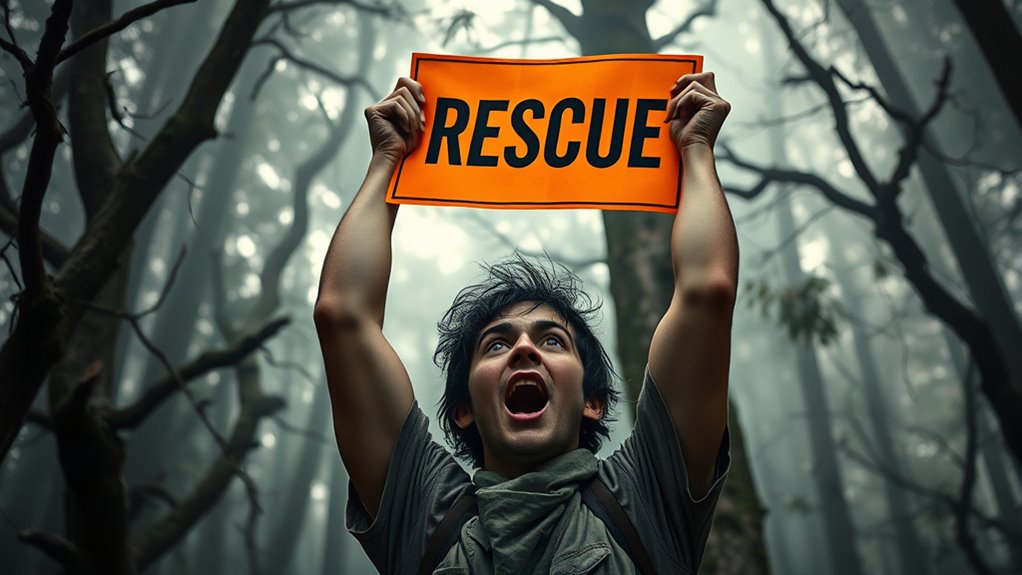
When you’re in a situation where help is urgently needed, effective communication with rescuers can make all the difference. One of the most critical aspects of this is using proper signaling techniques. If you’re trapped, injured,, or lost, your ability to clearly signal for assistance can substantially speed up your rescue. Visual signals like waving a bright cloth, flashlight flashes, or using reflective objects can attract attention from afar. Sound signals such as whistles or shouting can also be effective, especially in noisy environments or when rescuers are nearby. The key is to use simple, consistent signals that stand out against your surroundings. For example, repeatedly waving an item with high visibility, or making a series of distinct sounds, ensures that rescuers recognize your distress call. Remember, the more recognizable your signals, the faster they can locate you.
Equally important is understanding that language barriers can complicate communication with rescuers, especially in unfamiliar or international settings. If you don’t speak the local language, it’s helpful to have basic phrases prepared or visual aids ready. Carrying a small card with essential information, like your location or medical needs, can be invaluable. Using universally understood gestures, such as pointing to your injuries or indicating your location, can bridge communication gaps. If possible, keep a translation app on your phone, or learn a few key phrases beforehand, like “Help,” “I am injured,” or “Rescue needed.” When direct communication isn’t possible, simple gestures and signals become your best tools. For instance, raising both hands above your head or making a “X” with your arms can convey that you need help or cannot move.
Additionally, maintaining eye contact and being as clear and calm as possible can help rescuers interpret your signals accurately. If language barriers exist, patience and persistence are crucial. Keep trying different signals or gestures until you find one that resonates with the rescuers or they understand your distress. Always remember to stay visible, stay calm, and keep signaling consistently. Proper use of signaling techniques can significantly improve your chances of being located quickly in emergencies. Combining visual signaling techniques with effective use of gestures and understanding of language barriers maximizes your chances of being found quickly. In high-stress situations, clarity and simplicity are your best allies. The more you prepare in advance—such as knowing signaling techniques and basic communication strategies—the better your chances of successful rescue.

Life Gear 300 Lumen CREE LED Searchlight Flashlight and Powerful Emergency Signaling Rescue Beacon Light, Waterproof and Impact Resistant, Camping, Hiking, Hunting, Backpacking, Batteries Included
- Brightness Levels: 300 Lumens high, 50 Lumens low
- Multiple Light Modes: High beam, low beam, red signal, rescue beacon
- Durable Construction: Anodized aerospace aluminum, waterproof, impact resistant
As an affiliate, we earn on qualifying purchases.
As an affiliate, we earn on qualifying purchases.
Frequently Asked Questions
How Can I Signal for Help Without a Phone or Radio?
If you don’t have a phone or radio, use visual signaling with improvised tools. Create large, noticeable signals like an SOS pattern using rocks, sticks, or reflective objects. Use a mirror or shiny surface to reflect sunlight toward rescuers. You can also tie bright clothing or fabric to a visible spot, or create smoky signals by safely burning leaves or other materials. These methods improve your chances of attracting attention and getting rescued.
What Should I Do if Rescuers Don’t Hear My Signals?
What if your distress signals go unnoticed? You should try to improve your visibility and sound, using loud noises, bright colors, or reflective objects. Keep repeating your signals calmly, and watch for signs of rescue coordination. Remember, persistence is key. If rescuers don’t hear you, stay patient, stay active, and continue your efforts—your consistent signals increase the chances they’ll find you.
How Do I Stay Calm While Waiting for Rescue?
To stay calm while waiting for rescue, focus on emotional resilience by accepting your situation and maintaining hope. Use breathing techniques like slow, deep breaths to reduce anxiety and keep your mind clear. Remind yourself that help is coming, and stay positive. Keep your body relaxed, avoid panicking, and concentrate on your breathing to manage stress. This will help you conserve energy and stay alert until rescuers arrive.
Can Animals Help in Signaling Rescuers?
Animals can indeed help in signaling rescuers through their natural instincts and training. Some animals, like dogs, are trained in rescue training to recognize emergencies and communicate with humans using animal communication skills. They might bark, paw, or lead you to help. If you have a trained rescue animal, stay calm and trust their signals. Your calmness helps the animal perform effectively, increasing your chances of being rescued quickly.
What Are Common Mistakes to Avoid When Communicating With Rescuers?
You should avoid miscommunication pitfalls like unclear signals or shouting too loudly, which rescuers might misinterpret. Stay calm and speak clearly, providing essential details about your location and condition. Refrain from moving around excessively, as it can cause confusion. Using simple, consistent signals helps prevent misinterpreted signals, ensuring rescuers understand you quickly. Clear, direct communication saves time and increases your chances of being rescued effectively.

LuxoGear Emergency Whistles with Lanyard Safety Whistle Survival Shrill Loud Blast for Kayak Life Vest Jacket Boating Fishing Boat Camping Hiking Hunting Rescue Signaling Kids Lifeguard Plastic 2 Pack
- Loudness: 120dB high-pitched sound over a mile
- Design: Pealess, no moving parts for durability
- Material: Lightweight, fail-safe plastic construction
As an affiliate, we earn on qualifying purchases.
As an affiliate, we earn on qualifying purchases.
Conclusion
Think of yourself as a lighthouse shining through the storm, guiding rescuers safely to shore. Your voice, clear and steady, is the beacon that cuts through the darkness, leading them to your location. Remember, every word you speak is like a shining ray of light, helping rescuers find their way. Stay calm, be precise, and keep shining brightly—your voice is the essential signal that can bring help when it’s needed most.

Colorful Reflective Stretch Fabric Cloths Fashion at Night for Clothing Sew On Size: 55 in x 1 yd
- Size: 55 inches x 1 yard
- Material: Stretch fabric with reflective coating
- Thickness: 0.3mm thick
As an affiliate, we earn on qualifying purchases.
As an affiliate, we earn on qualifying purchases.

Eco-Fused 2X Survival Whistle and 2X Signal Mirror – Outdoor Survival Kit Rescue Flash Mirror – Clip-on Whistle with Lanyard – Backpacking, Camping, Marine Use, Outdoor Activities
- Dual Survival Whistles: Loud sound with reflective lanyards
- High-Reflectivity Signal Mirrors: Acrylic mirrors for sunny and light conditions
- Versatile Outdoor Use: Suitable for camping, hiking, boating, and emergencies
As an affiliate, we earn on qualifying purchases.
As an affiliate, we earn on qualifying purchases.