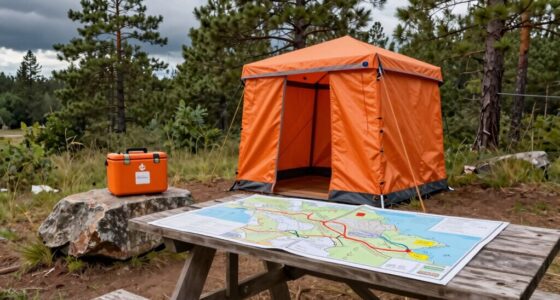
To stay ready for wildfire smoke and air quality issues, create an emergency kit with N95 masks, bottled water, medications, and important documents. Monitor air quality forecasts daily and stay informed about wildfire updates. Develop multiple evacuation routes and practice them regularly. Keep windows and doors closed during smoky days, use air purifiers, and avoid outdoor activities during peak smoke times. If you want to guarantee your safety and feel prepared, there’s more you should know.
Key Takeaways
- Prepare an emergency kit with masks, bottled water, medications, and important documents for quick access during smoke events.
- Monitor air quality data and wildfire updates regularly to plan outdoor activities and stay informed.
- Establish and practice multiple evacuation routes and procedures with all household members.
- Keep windows and doors closed, use air purifiers, and wear N95 masks when outdoor smoke exposure is unavoidable.
- Reduce outdoor activities during peak smoke times and incorporate stress-reduction methods to maintain well-being.

Wildfire smoke can quickly become a serious health threat, especially during peak fire season. When the air quality drops and smoke fills the sky, your first priority is protecting your respiratory health. One of the best ways to do this is by preparing in advance. Building an emergency kit that includes masks with N95 filters, bottled water, and necessary medications will help you stay safe during smoky days. Having these supplies ready means you won’t waste precious time searching for essentials when smoke levels rise suddenly. Additionally, keep a supply of clean, breathable air—such as portable air purifiers—if available, and guarantee they are functioning properly. Staying informed about air quality forecasts through weather apps or local alerts can help you plan your days better and avoid outdoor exposure during the worst times.
Prepare an emergency kit with masks, water, medications, and stay informed about air quality to protect your health during wildfires.
Another critical step is establishing and practicing evacuation plans. Wildfire smoke often signals that a wildfire may be nearby, and in some cases, evacuation becomes necessary. Knowing your escape routes and having a clear plan in place can reduce panic and confusion. Make sure everyone in your household understands the evacuation procedures, where to go, and what to bring. Your plan should include multiple routes out of your area, in case one is blocked by fire or debris. Keep important documents, medications, and a copy of your emergency kit ready to grab quickly. Practice these plans regularly so they become second nature, especially when smoke levels are high and visibility is poor. Incorporating air quality monitoring into your routine can help you better anticipate when indoor or outdoor precautions are needed. Regularly checking air quality forecasts can also help you decide whether outdoor activities are safe. Staying up-to-date with local wildfire updates and understanding fire risk zones can further enhance your preparedness.
During smoky conditions, you should also minimize outdoor activity and keep windows and doors closed as much as possible. Use air conditioning or air purifiers to filter indoor air, and stay in rooms with the best air quality. If you need to go outside, wear an N95 mask properly fitted over your nose and mouth to reduce inhalation of harmful particles. If you or someone in your household has pre-existing respiratory conditions or other health issues, consult your healthcare provider about additional precautions. Research into sound vibrations suggests that listening to calming music or using sound therapy might help reduce stress and promote relaxation during stressful smoky days.
Furthermore, considering the use of electric tools or vehicles with advanced filtration systems can help reduce exposure when outdoor activities are necessary, especially in areas with ongoing wildfire threats. Being prepared means more than just having supplies; it involves understanding your environment, staying informed, and having a plan to evacuate if necessary. By assembling emergency kits, practicing evacuation routes, and taking steps to improve indoor air quality, you’ll be in a stronger position to protect yourself and your loved ones from the health impacts of wildfire smoke. The key is to stay proactive and ready, so you can respond quickly and confidently when smoke starts to fill the sky.
As an affiliate, we earn on qualifying purchases.
Frequently Asked Questions
Can Wildfire Smoke Affect Indoor Air Quality Even With Windows Closed?
Yes, wildfire smoke can still affect your indoor air quality even with windows closed. Smoke particles can seep through small gaps or cracks in your home’s structure, impacting indoor air. To minimize this, improve indoor ventilation with exhaust fans or air filtration systems, which help remove pollutants. Regularly replace filters and consider using HEPA filters to guarantee cleaner air inside, even when the windows stay shut during smoky conditions.
Are There Specific Masks Recommended for Wildfire Smoke Protection?
You should use masks that meet N95 or higher respirator standards, as they offer reliable protection against wildfire smoke. These masks have high filtration efficiency, effectively filtering out harmful particles. Avoid cloth masks or surgical masks, which don’t meet respirator standards. Make certain the mask fits snugly over your nose and mouth to guarantee maximum protection, especially during heavy smoke events. Properly fitting masks are essential for reducing your inhalation of dangerous pollutants.
How Often Should Air Purifiers Be Replaced During Wildfire Season?
You should replace your air purifier filters every 1 to 3 months during wildfire season, depending on usage and air quality levels. Regular air purifier maintenance and adhering to the filter replacement schedule guarantee peak performance. Check the manufacturer’s recommendations and monitor filter indicators if available. During heavy smoke days, consider replacing filters more frequently to maintain clean indoor air and protect your health effectively.
What Are Symptoms of Short-Term Wildfire Smoke Exposure?
Wildfire smoke can cause noticeable health symptoms within hours. You might experience respiratory issues like coughing, throat irritation, or shortness of breath. In fact, studies show that even short-term exposure can worsen asthma and increase respiratory distress. You may also notice eye irritation, headaches, or fatigue. Keep an eye out for these signs, especially if you have pre-existing conditions, and take immediate action to reduce exposure to protect your health.
Can Wildfire Smoke Impact Pets and Livestock?
Wildfire smoke can seriously impact pets and livestock, posing significant wildfire hazards to their health. Smoke contains harmful pollutants that irritate respiratory systems, leading to coughing, difficulty breathing, and other health issues. You need to monitor animal health closely during smoke events, provide clean, ventilated spaces, and reduce outdoor activity. Protecting your animals from smoke exposure helps prevent long-term health problems and keeps them safe amid wildfire threats.
As an affiliate, we earn on qualifying purchases.
Conclusion
Staying ready means staying informed, prepared, and proactive. Keep an eye on air quality updates, stock up on masks and supplies, and plan your indoor air filtration. Stay informed to know when to stay indoors, stay prepared to protect your health, and stay proactive to minimize risks. By doing these, you can breathe easier, stay healthier, and face wildfire smoke with confidence. Remember, being prepared today keeps you safe tomorrow.
emergency kit supplies for wildfire
As an affiliate, we earn on qualifying purchases.
As an affiliate, we earn on qualifying purchases.
portable air purifiers for indoor use
As an affiliate, we earn on qualifying purchases.
As an affiliate, we earn on qualifying purchases.