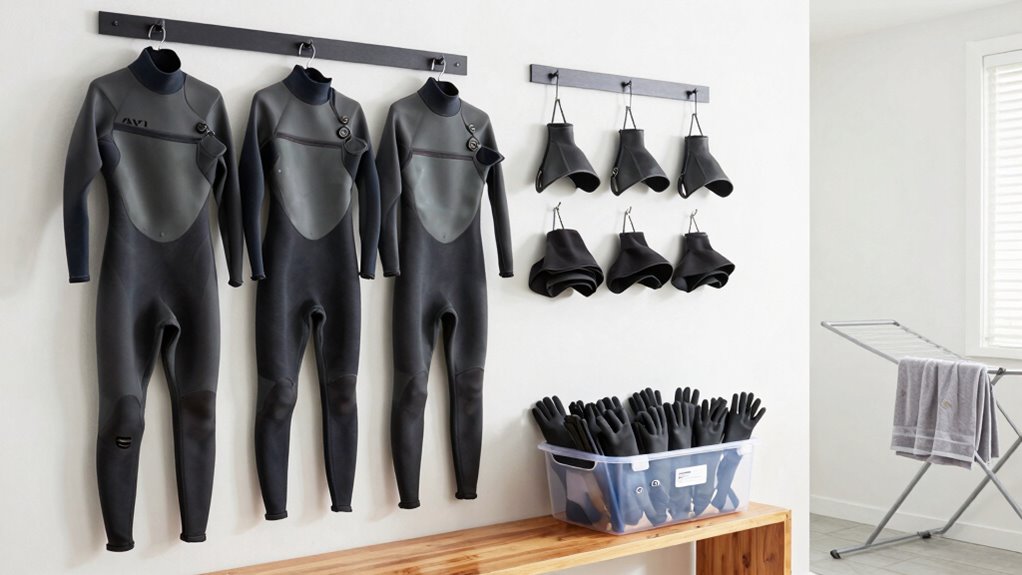

Better wet-gear management means organizing your gear with waterproof bags, ventilated racks, or hooks to prevent mold and odors. It involves thorough cleaning after every use, like rinsing away dirt and salt, and drying gear quickly in well-ventilated areas or with fans. Developing habits such as hanging wet gear immediately and managing humidity helps prolong its life. Keep things tidy and maintain routines—doing so makes wet-gear handling easier and more effective. Continue to explore how these tips can transform your outdoor routine.
Key Takeaways
- Use dedicated, waterproof storage solutions that promote air circulation and prevent mold.
- Ensure gear is thoroughly dried in well-ventilated areas before storage.
- Rinse gear with fresh water after each use to remove dirt and salt, minimizing damage.
- Develop consistent habits like hanging gear immediately and quick cleaning routines.
- Regularly inspect and maintain gear to prolong its lifespan and ensure optimal performance.
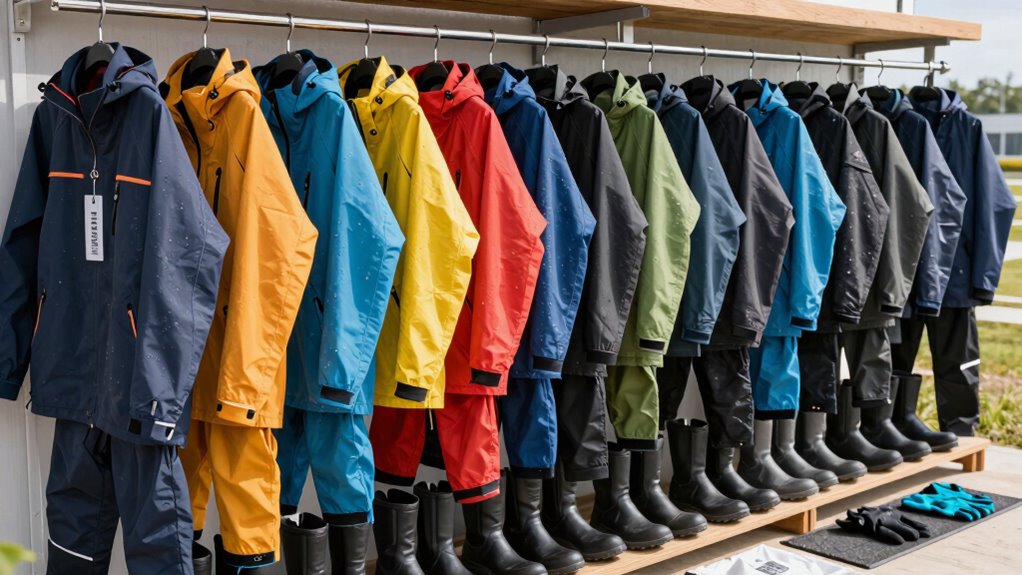
Have you ever struggled with keeping your wet gear organized and dry? If so, you’re not alone. Managing wet gear can feel like a constant battle between moisture, clutter, and odor. Better wet-gear management starts with smart gear storage solutions that prevent your gear from becoming a soggy mess and spreading dampness to other belongings. Using appropriate storage options, like waterproof bags, mesh containers, or dedicated hooks, helps keep your gear contained and allows air to circulate, speeding up the drying process. Proper gear storage isn’t just about convenience—it also reduces the risk of mold and foul smells that develop when gear stays damp for too long. Developing consistent cleaning protocols is equally essential. After every use, take a moment to rinse your gear with fresh water to remove salt, mud, or debris that can cause deterioration over time. Drying your gear thoroughly before storing it is fundamental to prevent bacteria and mold growth, which can lead to unpleasant odors and damage. You might find that hanging your gear in well-ventilated areas or using a fan speeds up the drying process, especially in humid environments. Incorporating regular cleaning protocols into your routine guarantees that your gear remains in good condition, prolongs its lifespan, and keeps it ready for your next adventure. A key aspect of better wet-gear management is establishing a routine that balances storage and cleaning. Instead of tossing your gear into a corner or leaving it crumpled in a bag, develop habits like hanging wet jackets or boots to air dry immediately after use. If you’re dealing with particularly muddy or salty gear, a quick rinse before storage can prevent dirt from setting into fabrics and causing stains or deterioration. Investing in dedicated storage solutions, such as ventilated racks or sealed containers, can make a significant difference by keeping your gear accessible, dry, and odor-free. Additionally, understanding the impact of moisture on gear longevity can help you make more informed maintenance decisions. Incorporating 3D scanning and printing technologies can also help create custom storage solutions tailored to your gear, enhancing organization and drying efficiency. Proper storage and maintenance also help prevent dampness and mold, ensuring your gear stays fresh and functional for longer. Finally, being proactive about gear maintenance shows in how well your equipment performs and how long it lasts. Consistent cleaning and proper gear storage aren’t just chores—they’re investments that pay off by saving you money and hassle in the long run. When you adopt these practices, managing wet gear becomes less of a chore and more of a seamless part of your outdoor routine. With a little effort upfront, you can enjoy fresh, dry gear ready to tackle your next adventure, all while keeping your gear in top shape.
As an affiliate, we earn on qualifying purchases.
Frequently Asked Questions
How Often Should Wet Gear Be Cleaned?
You should clean your wet gear after every use to maintain proper gear maintenance and prevent mold or odor buildup. Regular cleaning routines involve rinsing with fresh water and thoroughly drying gear before storing. If gear gets heavily soiled or exposed to saltwater, clean it more frequently, ideally after each session. This guarantees your gear stays in good condition, prolongs its lifespan, and keeps it safe and ready for your next adventure.
What Are the Best Storage Options for Wet Gear?
You should store wet gear in ventilated containers to allow airflow and prevent mold. Durable shelving is ideal for organizing and keeping gear off damp floors, promoting quick drying. Make sure your storage area is well-ventilated and easy to access, so you can regularly check and dry your gear. This approach keeps your equipment fresh, prolongs its lifespan, and prevents unpleasant odors, making your wet gear management more effective.
Can Wet Gear Be Dried Quickly?
Yes, wet gear can be dried quickly with proper drying techniques. Use a well-ventilated area and hang your gear to promote airflow, avoiding direct sunlight that might damage delicate materials. For quick drying, consider using a fan or a dehumidifier. Keep in mind that material durability varies; some fabrics dry faster and withstand heat better, so always check manufacturer instructions to prevent damage and extend your gear’s lifespan.
How Do I Prevent Mold in My Wet Gear Storage?
To prevent mold in your wet gear storage, you should focus on mold prevention and gear organization. After each use, rinse your gear thoroughly and dry it completely before storing. Keep your storage area well-ventilated and avoid stacking wet gear tightly together. Use breathable containers or hang gear individually to promote airflow. Regularly inspect and clean your storage space to prevent mold spores from settling and growing.
What Materials Are Best for Wet Gear Management?
Think of your wet gear storage as a fortress—robust and resilient. Opt for materials like quick-drying nylon or PVC, which excel in moisture resistance and durability. These materials stand firm against mold and mildew, keeping your gear fresh and ready for the next adventure. Avoid porous fabrics that trap moisture, and instead, choose sturdy, water-resistant options that protect your gear and your peace of mind.
As an affiliate, we earn on qualifying purchases.
Conclusion
Effective wet-gear management isn’t just about drying faster; it’s about embracing the chaos of your environment while maintaining control. You might think a simple rack or bag suffices, but true mastery lies in understanding the delicate balance between organization and spontaneity. When you manage your gear well, you create space for adventure and unpredictability, turning what seems like clutter into a tool for freedom. Ultimately, good wet-gear management transforms mess into mastery, empowering you to ride with confidence and ease.
As an affiliate, we earn on qualifying purchases.
gear drying rack for outdoor gear
As an affiliate, we earn on qualifying purchases.
As an affiliate, we earn on qualifying purchases.