
To manage your shelter better during the rainy season, regularly inspect and repair your roof and weatherproof seals around windows and doors. Keep gutters clear of debris and guarantee proper drainage away from your property. Elevate critical utilities and have an emergency kit ready. Stay informed about local flood warnings and plan evacuation routes in advance. Consistent maintenance and quick response are key—keep exploring to discover more ways to protect your shelter effectively.
Key Takeaways
- Regularly inspect and repair roofing, gutters, and seals to prevent water intrusion during heavy rains.
- Ensure drainage systems are clear of debris and slope away from the property foundation.
- Elevate utilities and electrical outlets to protect them from floodwaters.
- Develop and rehearse an emergency evacuation plan tailored to flood risks.
- Maintain an emergency kit and stay informed about local flood warnings and weather updates.

Have you ever wondered how to keep your shelter safe and dry during the rainy season? It’s a common concern, but with proper planning and routine maintenance, you can protect your space effectively. Flood preparedness becomes your first line of defense. Start by evaluating your shelter’s vulnerabilities—look for weak spots like loose shingles, unsealed windows, or poorly drained areas around your property. Installing proper gutters and ensuring they’re clear of debris is essential, as clogged gutters can cause water to overflow and seep into your shelter. Elevating critical utilities and electrical outlets above potential flood levels also minimizes damage and keeps your home safe.
Evaluate vulnerabilities, install clear gutters, and elevate utilities to protect your shelter during heavy rains.
Flood preparedness isn’t just about immediate measures; it’s about being proactive. You should have an emergency kit ready, containing essentials like clean water, non-perishable food, flashlights, batteries, and a first aid kit. Keep important documents in a waterproof container and know your local flood warning systems. Planning routes for evacuation and designating a safe gathering spot helps you respond swiftly if heavy rains lead to flooding. Remember, early action is key—pay attention to weather forecasts and act before floodwaters threaten your shelter.
Alongside flood preparedness, maintaining routines that reinforce your shelter’s resilience is vital. Regular maintenance routines help identify potential issues before they escalate. Check your roof periodically for loose or damaged shingles, especially after storms, and repair any damage immediately. Clear your gutters and downspouts frequently to prevent water backup. Inspect seals around windows and doors to ensure they’re intact and replace worn weatherstripping. Keep drainage systems around your property free of debris and ensure the ground slopes away from your shelter to direct water flow away from foundations. Additionally, understanding how flood risk assessments are conducted in your area can help you better prepare and implement appropriate mitigation measures. Developing an understanding of local flood zones can also guide your preventative actions and property modifications.
Furthermore, researching and applying effective drainage solutions can significantly reduce flood risk by improving water flow around your property. You should also keep an eye on your plumbing system—leaks or clogged drains can worsen flooding issues. Test sump pumps if you have them, especially before the rainy season begins, to confirm they’re working correctly. Interior maintenance routines like sealing cracks in walls and floors can prevent water seepage. These small, consistent actions build a robust barrier against the heavy rains and help maintain the integrity of your shelter.
In essence, managing your shelter during the rainy season involves a combination of proactive flood preparedness and diligent maintenance routines. By staying vigilant, performing regular inspections, and acting swiftly on issues, you guarantee your shelter remains safe, dry, and secure no matter how heavy the rain falls. This approach not only protects your property but also provides peace of mind, knowing you’re ready for whatever the season brings.

Liquid Rubber Waterproof Sealant – DIY Leak Repair Coating for Flat, Metal & Low Slope Roofs, Foundations, Gutters & More – Flexible Protective Membrane – Black – 1 Gallon
INDUSTRIAL STRENGTH BITUMEN FORMULA – Create a seamless waterproof membrane on flat roofs, metal roofs, low slope roofs,…
As an affiliate, we earn on qualifying purchases.
As an affiliate, we earn on qualifying purchases.
Frequently Asked Questions
How Can Shelters Prevent Water Leakage During Heavy Rains?
To prevent water leakage during heavy rains, you should guarantee your shelter has a leak-proof roofing system, sealing all gaps and joints. Implement rainwater harvesting systems to divert excess water away from the shelter’s foundation, reducing pressure. Regularly inspect and maintain the roof, gutters, and drainage channels. These steps will keep your shelter dry and secure, even during intense storms, ensuring safety and comfort for all occupants.
What Materials Are Best for Waterproof Shelter Construction?
You should use materials with high durability like corrugated metal, treated wood, or waterproof canvas for shelter construction. These materials withstand heavy rains and resist water damage. Combine them with effective construction techniques, such as sloped roofs and sealed joints, to enhance waterproofing. Properly selecting resilient materials and applying smart construction methods ensures your shelter remains dry and secure throughout the rainy season.
How Should Shelters Be Reinforced for Storm Resilience?
When storms threaten, you’d think fortresses are needed, but really, it’s emergency preparedness and community involvement that matter most. Reinforce shelters with sturdy, weather-resistant materials, add extra bracing, and secure roofs tightly. Coordinate with locals to spot vulnerabilities early. Remember, resilient shelters aren’t built overnight—they’re a community effort rooted in planning, teamwork, and a dash of humor to face rain and wind with confidence.
What Are Immediate Steps to Take After Flood Damage?
After flood damage, you should quickly assess the shelter’s safety and clean up debris. Restock emergency supplies like clean water, food, and first aid kits. Make certain the shelter is ventilated and dry to prevent mold. Conduct community training on flood response and safety procedures, so everyone knows what to do. Acting swiftly helps protect residents’ health and prepares everyone for ongoing challenges during the rainy season.
How to Ensure Hygiene and Sanitation in Rainy Season Shelters?
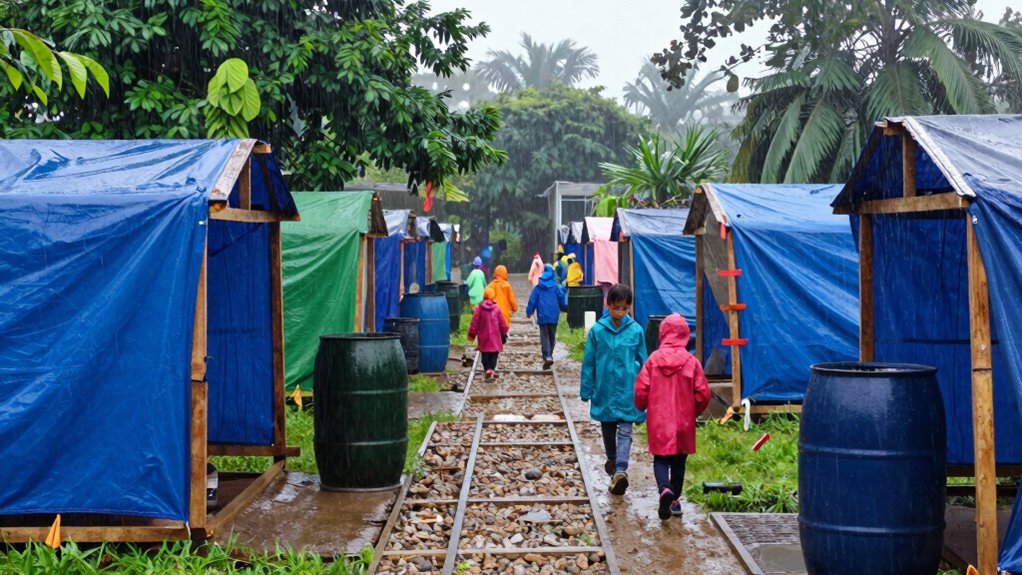
Imagine a shelter during heavy rains, where children play happily despite the storm outside. To guarantee hygiene and sanitation, provide accessible sanitation facilities and conduct hygiene education sessions regularly. Encourage proper waste disposal and handwashing with soap, especially before meals. You can set up handwashing stations near toilets and bathing areas, promoting good habits. Maintaining cleanliness prevents disease outbreaks and creates a safer, healthier environment for everyone in the shelter.

Orbit 58543 Telescoping Gutter Cleaning Wand, Silver
TELESCOPING POLE: This wand easily extends from 40 in. to 70 in. making those hard-to-reach rain gutters easy…
As an affiliate, we earn on qualifying purchases.
As an affiliate, we earn on qualifying purchases.
Conclusion
As rain pours relentlessly, your shelter management becomes the fortress that shields everyone inside from nature’s fury. By staying vigilant, sealing leaks, and fortifying your space, you transform a simple shelter into an unbreakable haven. With each well-placed repair, you prevent chaos and chaos’s chaos from overtaking your sanctuary. Remember, your effort isn’t just maintenance—it’s the mighty shield that keeps disaster at bay, turning a rainy season into a manageable, even safe, chapter of your year.

Ready America 72 Hour Emergency Kit, 4-Person, 3-Day Backpack, Includes First Aid Kit, Survival Blanket, Emergency Food Portable Disaster Preparedness Go-Bag for Earthquake, Fire, Flood
Emergency kit or disaster preparedness: Stay prepared for emergency situations everywhere you go. Ready America emergency survival kits…
As an affiliate, we earn on qualifying purchases.
As an affiliate, we earn on qualifying purchases.

GE Advanced Silicone Caulk for Window & Door, Clear, 2.8 fl oz Tube, 1 Pack – 100% Waterproof Silicone Sealant, 5X Stronger Adhesion, Freeze & Sun Proof
100% Waterproof and Weatherproof: 100% silicone formula offers protection against water damage, providing a reliable seal in areas…
As an affiliate, we earn on qualifying purchases.
As an affiliate, we earn on qualifying purchases.