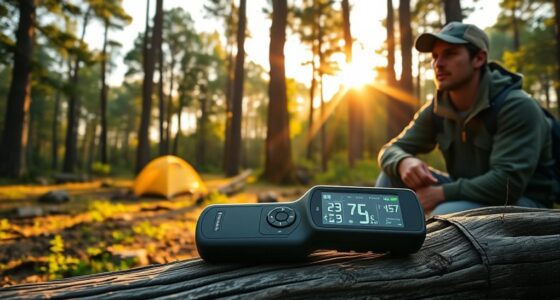

When tech fails on your camping trip, having reliable backup plans is essential. Carry paper maps and learn compass skills to navigate without electronics. Pack extra batteries, portable power banks, and even manual chargers like hand-crank devices. Keep a physical first aid kit and non-electronic lighting such as lanterns or candles ready. Backup communication tools like satellite phones or walkie-talkies guarantee safety. Master basic survival skills and have offline plans in place—you’ll discover all you need to stay prepared when technology lets you down.
Key Takeaways
- Carry multiple power sources like portable chargers, solar panels, and hand-crank devices to ensure continuous device operation.
- Prepare non-electronic navigation tools such as paper maps, compasses, and natural landmarks for orientation.
- Keep backup communication devices like satellite phones and walkie-talkies fully charged and readily accessible.
- Use manual tools like hand-crank flashlights and water purifiers to maintain safety without relying on electronics.
- Regularly test and organize backup gear, including batteries and spare devices, to ensure readiness in case of tech failure.
Classic Paper Maps and Compass Skills

Even in today’s digital age, knowing how to read paper maps and use a compass remains an essential backup skill for tech campers. Relying solely on digital map apps and GPS technology can leave you stranded if devices malfunction or lose signal. Learning to navigate with a paper map ensures you can find your way without power or internet. Practice orienting the map with natural landmarks and understanding scale and symbols. A compass complements this by helping you determine directions accurately, even in poor visibility. These skills give you confidence and independence, especially in remote areas where technology might fail. Additionally, understanding concepts like contrast ratio can help you choose the right equipment for optimal visibility in various lighting conditions, further enhancing your outdoor navigation experience. Developing a reliable backup system ensures you’re prepared for unexpected situations, making your outdoor adventures safer and more enjoyable. Incorporating knowledge of natural navigation techniques can further enhance your ability to find your way when traditional tools are unavailable. Moreover, practicing compass triangulation can improve your accuracy when pinpointing your location using features of the landscape. Mastering map reading skills is also crucial for interpreting terrain features and planning your route effectively.
Portable Power Banks and Extra Batteries

To make certain your devices stay powered throughout your tech camping trip, bringing along portable power banks and extra batteries is essential. These backups ensure you stay connected, even off the grid. Consider these options:
Ensure your devices stay powered with portable power banks and extra batteries on your camping adventure.
- Solar chargers: Efficiently recharge power banks during the day, reducing the need for electrical outlets. Utilizing renewable energy sources can further enhance your camping power setup.
- Extra batteries: Keep spares for cameras, flashlights, or other gadgets that run on replaceable batteries. Proper battery management can extend the life of your devices during your trip.
- Power bank maintenance: Regularly clean and store your power banks properly to maximize lifespan and guarantee they’re ready when needed. Using storage techniques helps prevent damage and ensures reliable performance.
- Be aware of lease terms related to device rentals or warranties that might cover repairs or replacements during your trip. Additionally, familiarizing yourself with device troubleshooting can help you address minor issues on the go.
Analog Cameras and Film for Memories
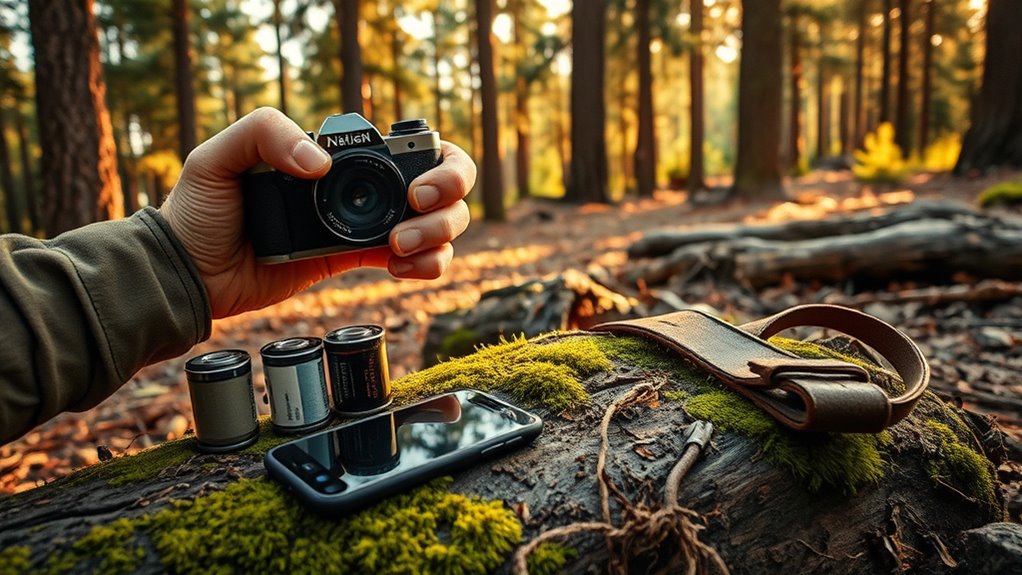
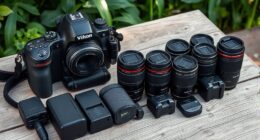
While digital photos are convenient, bringing along analog cameras and film adds a special touch to your memories. Film photography offers a tactile, nostalgic experience that digital can’t match. Vintage cameras are reliable backups, requiring no batteries and less prone to technical failures. You’ll appreciate the anticipation of waiting to develop your film, making each shot more deliberate. Pack a few rolls of film suited for outdoor lighting conditions, and learn basic film handling skills beforehand. Using analog cameras lets you focus on composition and lighting, enhancing your photography skills. Plus, physical photos won’t be affected by power issues or device malfunctions. These timeless devices ensure you’ll have tangible, lasting memories, even when your digital gadgets hit a snag in the wilderness. Incorporating smart design principles into your gear setup can further streamline your photography process and keep your equipment protected in rugged conditions, just as resilient public figures have shown through their versatility and adaptability in various careers. Additionally, practicing film preservation techniques can help maintain the quality of your images over time.
Physical Emergency and First Aid Kits
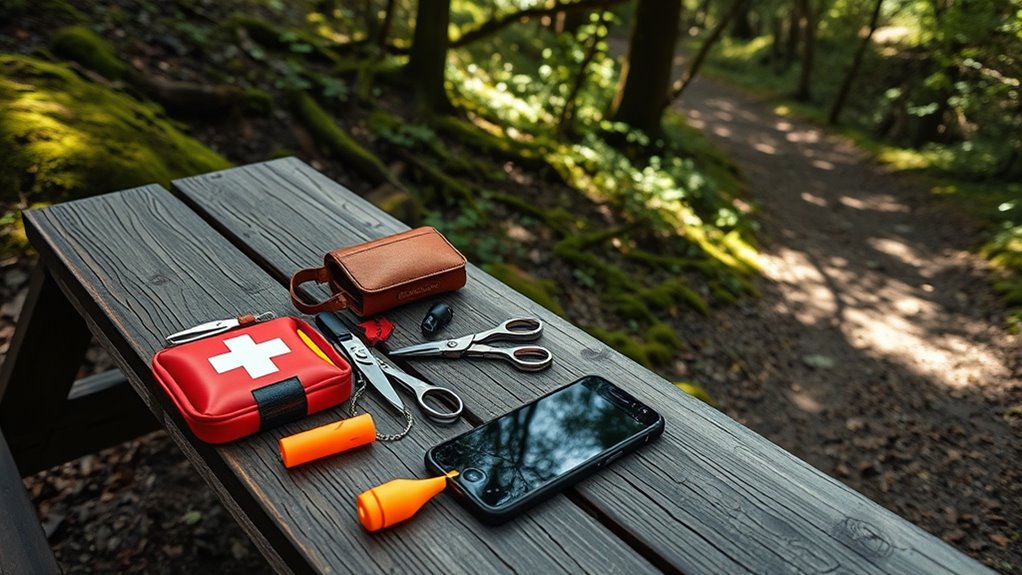
Having a well-stocked physical emergency and first aid kit is essential for any camping trip, especially in remote areas where help may be hours away. Your kit should include basic emergency supplies to handle injuries or illnesses until help arrives. Focus on first aid essentials like bandages and antiseptic wipes, but also consider items for unexpected situations. To ensure your safety, include energy-efficient cloud servers to help plan and communicate effectively in remote locations. These servers can support your communication devices, ensuring you stay connected even in low-signal environments. Incorporating survival tools such as multi-tools and flashlights can further enhance your preparedness. Here are three vital items to include:
- Sterile gauze and adhesive bandages for cuts and scrapes
- Antiseptic ointment to prevent infection
- Tweezers for removing splinters or debris
Non-Electronic Lighting Options

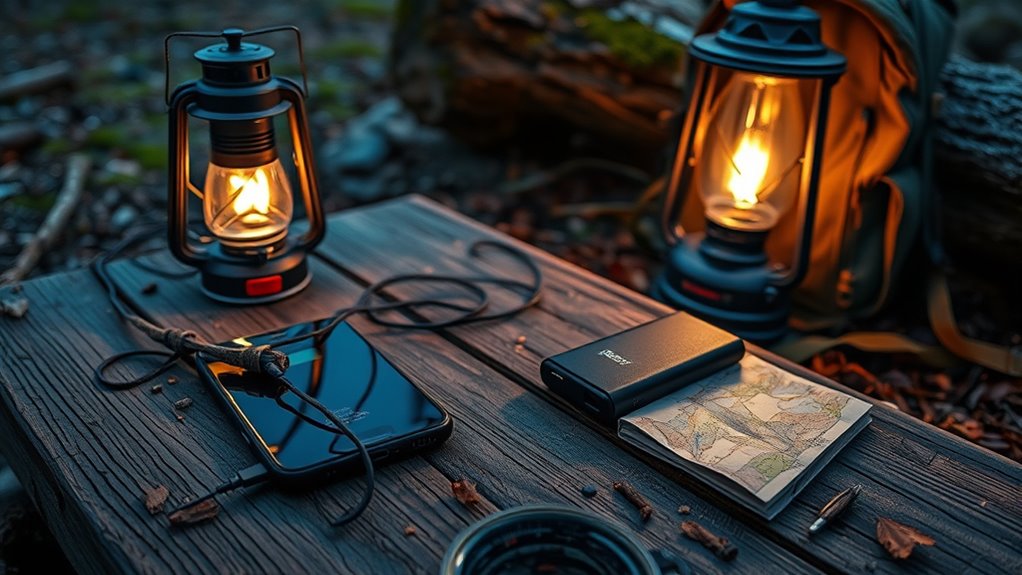
When electronic devices fail, lanterns and candles can provide reliable light sources. Solar-powered lights are also a great eco-friendly option that charges during the day for nighttime use. Exploring these non-electronic lighting options guarantees you’re never left in the dark during your camping trip. Incorporating traditional lighting methods ensures a dependable light source, especially when modern gadgets are unavailable. Additionally, understanding vintage lighting technology can enhance your camping experience by introducing classic solutions that require minimal maintenance. Learning about basic electrical principles can help campers troubleshoot and adapt non-electronic lighting to various situations. For example, knowledge of candles and their safety can prevent accidents and maximize their effectiveness in outdoor environments.
Lanterns and Candles
Ever wonder how to light your campsite without relying on batteries or electricity? Lanterns and candles are dependable options. They provide steady illumination and set a cozy mood. To maximize safety, use fire starting techniques carefully and keep flames away from tents and dry foliage. Always have a fire extinguisher nearby and follow wildlife safety tips by keeping flames contained and extinguishing candles when not in use. Here are some essentials: 1. Stock up on durable, windproof lanterns and long-burning candles. 2. Use candleholders or lanterns with protective covers to prevent accidents. 3. Pack extra supplies like matches, lighters, and fire starters for quick lighting. Incorporating visual and auditory cues can also aid in maintaining safety and awareness around open flames. Additionally, selecting protective styling options such as lanterns with safety features can further reduce risks. Being aware of market trends and pump detection tools can help in understanding potential market fluctuations, even when technology fails. These simple tools ensure you have reliable light, even if tech fails, while keeping safety a top priority.
Solar-powered Lights
Solar-powered lights offer a reliable, eco-friendly way to illuminate your campsite without relying on batteries or electricity. These lights harness renewable energy from the sun, making them an excellent backup option when electronic devices fail. These lights are especially beneficial for those practicing digital minimalism, as they help reduce screen time and reliance on electronic gadgets. Simply place them in a sunny spot during the day, and they’ll charge automatically. At night, they provide steady, ambient light without the need for power outlets or extra batteries. Solar-powered lights come in various styles, from lanterns to string lights, giving you flexibility in lighting your campsite. They’re durable, low-maintenance, and environmentally conscious, helping reduce your carbon footprint. With solar-powered lights, you guarantee your campsite stays lit comfortably, even when your main electronic sources are unavailable. They’re a smart addition to any tech-free backup plan. Additionally, many solar lights are designed with weather-resistant features, ensuring they can withstand the outdoor elements and provide reliable illumination over time. Incorporating solar energy into your camping setup not only enhances sustainability but also ensures consistent lighting when traditional power sources are inaccessible.
Manual Tools and Hand-Crank Devices
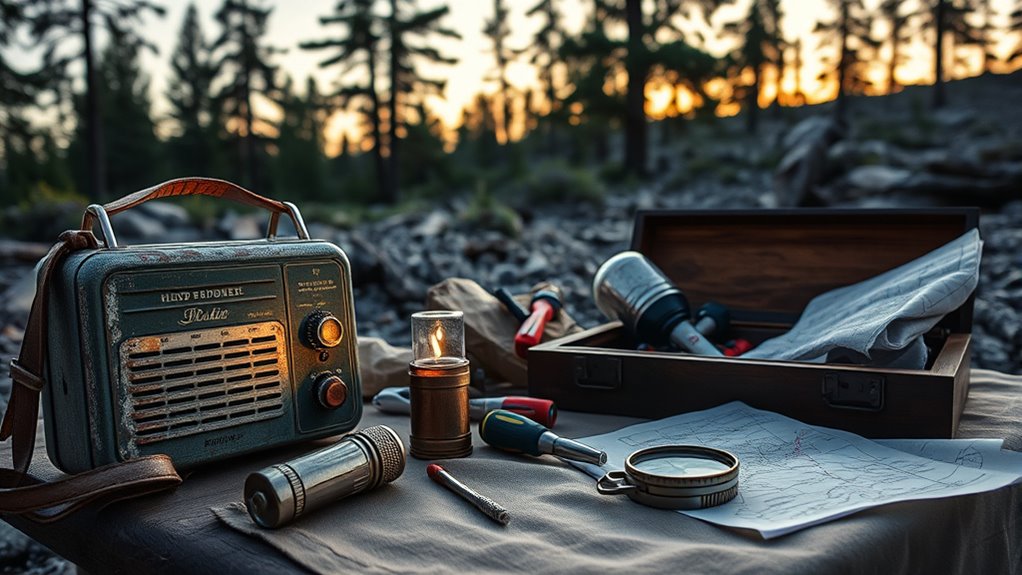
Manual tools and hand-crank devices can be lifesavers when electronic options fail. Portable power generators, hand-crank flashlights, and manual water purifiers keep you powered and prepared in any situation. Incorporating these tools guarantees you stay connected and safe without relying on batteries or electricity.
Portable Power Generators
When traditional power sources are unavailable, manual tools and hand-crank devices become essential for maintaining electricity. A solar battery paired with a portable inverter can keep your devices charged without relying on grid power. These generators are lightweight, easy to use, and perfect for camping trips. They allow you to power small electronics, charge batteries, or run essential gadgets during emergencies. To maximize their utility, consider these options:
- A hand-crank generator that converts manual effort into electricity.
- A solar battery with a built-in inverter, harnessing sunlight for continuous power.
- A portable inverter that can connect to a manual or solar power source, providing AC outlets for multiple devices.
Together, these tools ensure your tech stays alive, even off-grid.
Hand-Crank Flashlights
Hand-crank flashlights are reliable tools to keep in your camping kit, especially when power sources are scarce. They don’t rely on batteries, so you won’t be left in the dark if your batteries die. Instead, you generate power by turning the crank, making them a dependable backup. Pair a hand-crank flashlight with solar-powered lanterns for extended light during multi-day trips. Rechargeable flashlights are also useful, but they depend on charged batteries, which can run out unexpectedly. With a hand-crank model, you can generate light on demand without worrying about battery life or sunlight. These devices are compact, durable, and easy to use, making them an essential part of your emergency gear. They ensure you stay illuminated, no matter how unreliable your main power source becomes.
Manual Water Purifiers
A manual water purifier is an essential tool for guaranteeing safe drinking water when you’re off the grid. It provides reliable manual water purification, especially when power sources are unavailable. With portable filtration, you can quickly access clean water without relying on electronics. Here are three key benefits:
- Ease of use: Simply pump or crank to filter water, making it perfect for remote camping trips.
- Durability: Built to withstand rough conditions, ensuring your water stays safe no matter where you are.
- Cost-effective: No batteries or electricity needed, saving you money and hassle.
Having a manual water purifier guarantees you won’t be caught without safe water. It’s a dependable backup for your hydration needs, especially when tech gadgets fail or aren’t available.
Backup Communication Methods
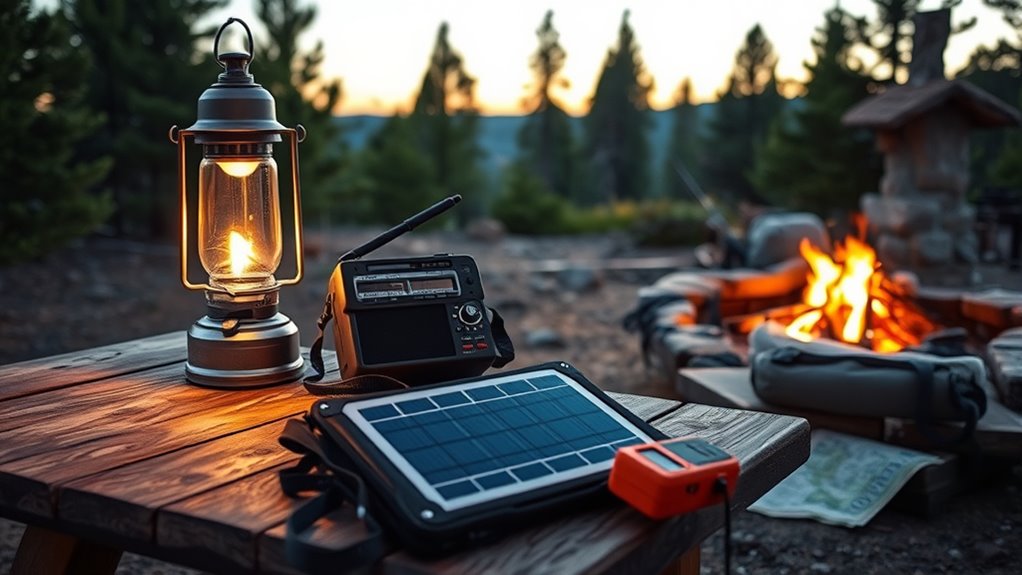
Ever consider what you’ll do if your primary communication device fails in the middle of your tech camping trip? It’s smart to have backup options like satellite phones and walkie talkies. Satellite phones work almost anywhere, ensuring you can call for help if needed, even in remote areas. Walkie talkies are reliable for short-distance communication with your hiking group or campmates, without relying on cellular networks. Keep a charged satellite phone packed and test it beforehand. For walkie talkies, choose models with good range and clear audio, and keep extra batteries handy. These tools provide peace of mind, keeping you connected when your main device isn’t an option. Planning ahead with these backup methods means you’re prepared for any communication hiccup in the wilderness.
Offline Navigation and Planning Tools

Since cell service can be unreliable in remote areas, it’s essential to have offline navigation and planning tools ready. These tools ensure you stay on track even when your phone loses signal. Here are three must-haves:
- Download offline maps of your route and surrounding area. This gives you access to detailed terrain and trail information without internet.
- Use GPS backups like dedicated handheld devices or apps that work offline. They provide reliable positioning when your smartphone can’t connect.
- Save your planned route and waypoints beforehand. Having a physical or digital copy helps you navigate confidently, regardless of network issues.
Basic Survival Skills and Knowledge
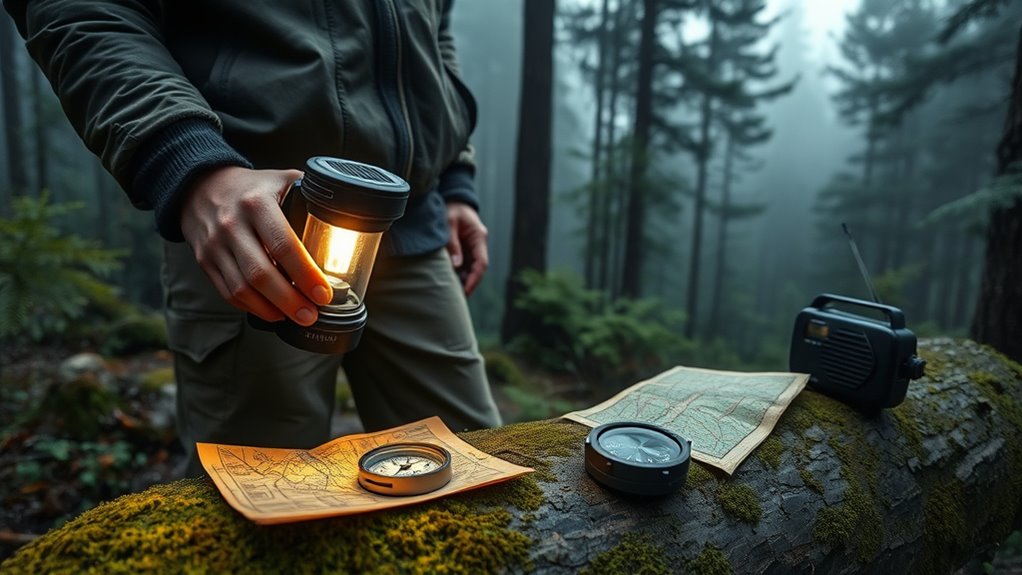
Having basic survival skills is essential when venturing into remote or wilderness areas, especially if unexpected situations arise. A digital detox allows you to disconnect from screens and focus on fundamental survival techniques. Knowing how to build a fire, find clean water, and identify edible plants can make all the difference if your tech fails. Wilderness survival skills also include navigation without GPS, signaling for help, and first aid. These skills give you confidence and independence, reducing reliance on gadgets. Remember, even in a tech-heavy world, mastering these foundational abilities ensures you’re prepared for emergencies. Practicing them before your trip makes you more self-sufficient and better equipped to handle the unexpected, turning a challenging situation into a manageable one.
Redundancy in Essential Gear
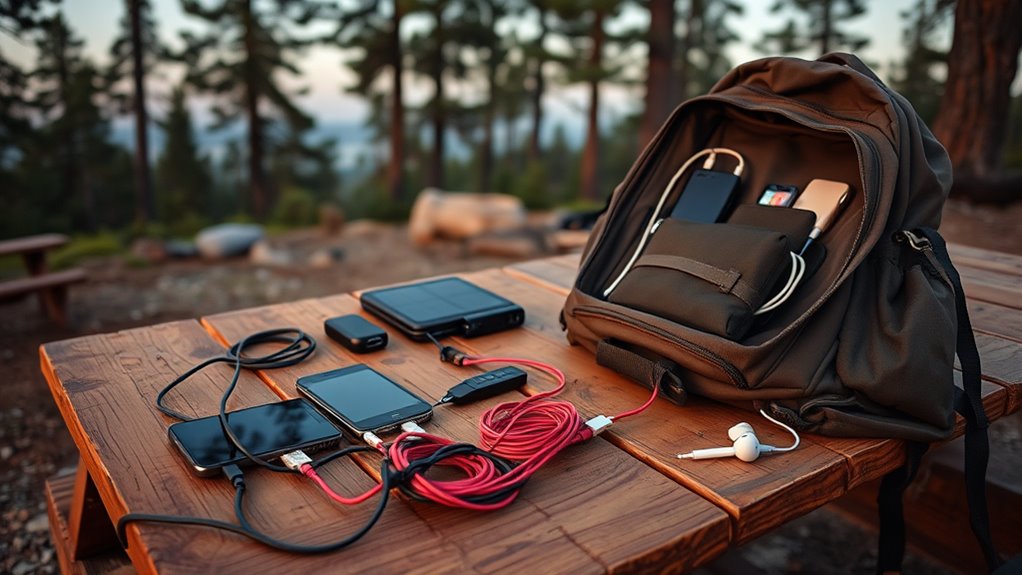
Having backup gear guarantees you stay connected and powered even if your main devices fail. Carry multiple power sources, such as portable batteries and solar chargers, to keep your tech running. Don’t forget spare charging equipment and backup communication devices to stay in touch if your primary methods go down.
Multiple Power Sources
Are you prepared for a power outage or equipment failure? Having multiple power sources ensures you stay connected and powered up. First, consider a portable solar charger; it’s eco-friendly and recharges during daylight. Second, keep a power bank on hand for quick battery swapping, so you don’t run out of juice when you need it most. Third, carry extra batteries for essential gadgets like headlamps and radios. This redundancy means you won’t be left in the dark if your main device fails or runs out of power. Combining solar charging with battery swapping offers a reliable backup plan that keeps your gear operational, no matter what. Stay prepared, stay powered, and enjoy your camping adventure with confidence.
Backup Communication Devices
To make certain you stay connected even if your primary communication device fails, it’s vital to carry backup communication tools. Satellite phones are indispensable for remote areas where cell service isn’t available, guaranteeing you can call for help or coordinate with others. Walkie talkies offer instant, reliable communication over short distances, perfect for coordinating with your camping group without relying on cellular networks. Keep a fully charged satellite phone in your emergency kit, along with extra batteries or a portable charger. Walkie talkies are lightweight and easy to use, making them a practical addition. Having these backup devices ensures you maintain contact in any situation, increasing safety and peace of mind during your outdoor adventure.
Spare Charging Equipment
Ever considered what would happen if your primary charging device failed when you needed it most? Having spare charging equipment guarantees you’re never left powerless. To stay connected, pack these essentials:
- A reliable power bank, serving as a quick backup when outlets are scarce.
- Solar chargers, which harness sunlight, providing renewable energy during long hikes or cloudy days.
- Power bank alternatives like hand-crank chargers, offering manual power in emergencies.
Frequently Asked Questions
How Do I Choose the Best Non-Digital Navigation Tools?
To choose the best non-digital navigation tools, focus on traditional maps and compass navigation. Pick a sturdy, detailed topographic map of your region, ensuring it’s up-to-date. Pair it with a reliable compass, practicing how to read bearings and orient the map. Test your skills beforehand, and consider carrying a magnifying lens for better detail. These tools give you confidence and independence when digital devices fail or aren’t available.
What Are the Most Reliable Manual Tools for Camping Emergencies?
You can rely on mechanical compasses and manual flashlights for camping emergencies. Mechanical compasses are proven to be accurate and dependable, especially when electronic devices fail or lose power. Manual flashlights, powered by batteries or hand-crank mechanisms, offer illumination without relying on electricity. These tools have stood the test of time, making them the most trustworthy options for orienting oneself and staying safe when tech isn’t an option.
How Long Do Backup Batteries Typically Last in Extreme Temperatures?
In extreme temperatures, backup batteries like solar chargers usually last 2 to 4 years, but their lifespan can be impacted. Cold temperatures slow chemical reactions, reducing battery efficiency and lifespan, while heat accelerates wear. To maximize your solar charger’s performance, store it in a cool, shaded spot when not in use, and regularly check its condition. Proper care helps guarantee your backup power stays reliable during your camping adventures.
Which Analog Devices Are Most Effective for Communication Without Cell Service?
Ever find yourself lost in the woods and wishing for a lifeline? Satellite phones and Morse code radios are your best bets for communication without cell service. Satellite phones work globally, providing direct links to emergency services, while Morse code radios can be crucial for sending messages over long distances with minimal power. Both are reliable, simple, and essential backups that keep you connected when technology fails.
How Can I Ensure My Physical First Aid Kit Remains Effective Over Time?
You should regularly perform First aid kit maintenance by checking all supplies and replacing expired items. Keep a schedule for Shelf life monitoring to ensure medications, ointments, and bandages are within their expiration dates. Store your kit in a cool, dry place and avoid direct sunlight. By routinely inspecting and updating your supplies, you guarantee your kit remains effective and ready for emergencies whenever you need it.
Conclusion
When tech fails, your backup plans become your lifeline. Imagine finding yourself under a starlit sky, flashlight dead, but your trusty compass guiding you. Or reaching for that offline map just in time. Sometimes, it’s the smallest backup—like extra batteries—that makes all the difference. With a little preparation, you’ll turn unexpected glitches into moments of confidence, proving that classic skills and simple tools can keep your adventure safe and memorable, no matter what surprises come your way.