In wilderness emergencies, having medical apps and portable devices in your pocket can dramatically improve your response and patient outcomes. These tools offer step-by-step first aid guidance, visual aids, checklists, and decision trees, helping you make quick, accurate decisions. Portable diagnostic devices like pulse oximeters and ECG monitors enable critical assessments on-site, while integrated apps with GPS and medical databases streamline your workflow. Stay informed about how these technologies can boost your emergency care skills—more helpful details are ahead.

Get emergency and outdoor gear delivered free — and shop member deals
- Fast, free delivery on millions of items
- Access to Prime Big Deal Days deals on October 6–7
- Prime Video, Amazon Music and more included
Key Takeaways
- Mobile apps provide step-by-step first aid guidance, visual aids, and decision trees to support wilderness emergency response.
- Portable diagnostic tools like pulse oximeters and ECG monitors enable on-site health assessments.
- Integration of apps and devices streamlines workflow with GPS, medical references, and incident documentation.
- Rugged, user-friendly technology improves accuracy and confidence during challenging outdoor conditions.
- Advancements in connected apps and portable devices enhance real-time data sharing and patient care in remote environments.
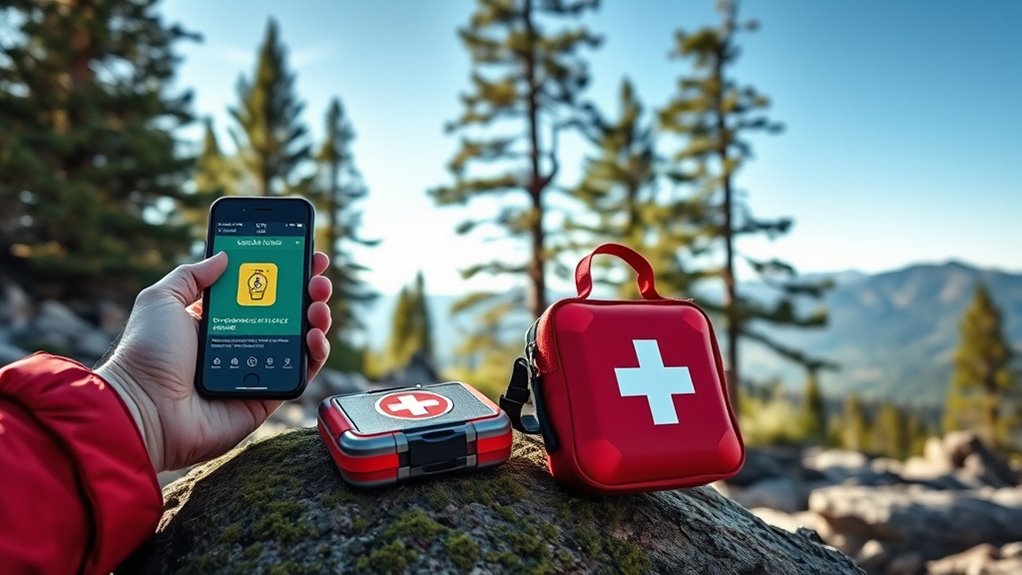
Emergency medical technicians (EMTs) rely on a growing array of innovative apps and devices to enhance patient care and streamline operations. In wilderness settings, where immediate access to advanced medical facilities might be limited, these tools become even more essential. One of the key aspects of effective emergency response in such environments is quickly applying the correct first aid protocols. With specialized apps on your smartphone or tablet, you can access step-by-step guidance tailored to a wide range of injuries and conditions. These apps often include visual aids, checklists, and decision trees that help you determine the appropriate actions when seconds count. By having reliable, portable references at your fingertips, you reduce the chance of errors and improve patient outcomes, even in the most challenging conditions.
Alongside first aid protocols, portable diagnostic tools are transforming wilderness emergency care. These compact devices enable you to perform critical assessments on the spot, rather than relying solely on physical examination or guesswork. For example, handheld pulse oximeters measure oxygen saturation levels in a patient’s blood, providing immediate insight into respiratory status. Portable ECG monitors can track heart activity, alerting you to potential cardiac issues in real time. Blood glucose meters, thermometers, and other diagnostic gadgets are designed to be rugged and easy to operate in outdoor environments, helping you make informed decisions quickly. These tools, often connected to your mobile app via Bluetooth or Wi-Fi, allow you to record, analyze, and transmit data to medical control or specialists for further guidance. Natural environments can pose unique challenges that make these portable tools even more vital for effective emergency care.
The integration of apps and portable diagnostic devices doesn’t just support emergency assessments; it also enhances your overall workflow. Many apps include features like GPS navigation, which can help you reach patients faster or coordinate with rescue teams. Others provide access to medical databases, drug references, and incident documentation, all in one place. This connectivity reduces the need for bulky paper charts or manual note-taking, saving precious time and effort. Plus, many of these apps are designed to be user-friendly, with intuitive interfaces that make complex procedures easier to follow even under stress.
In the wilderness, where every second counts, having access to reliable first aid protocols and portable diagnostic tools can be a game-changer. They empower you to deliver more precise, effective care, and make critical decisions with confidence. As technology continues to evolve, these tools will become even more integrated into your daily practice, ensuring that no matter how remote the location, you’re equipped to handle emergencies efficiently and expertly.
portable pulse oximeter for outdoor use
As an affiliate, we earn on qualifying purchases.
As an affiliate, we earn on qualifying purchases.
Frequently Asked Questions
How Do Medical Apps Ensure Data Security in Wilderness Environments?
In wilderness environments, medical apps secure your data through robust measures like data encryption, which scrambles your information to prevent unauthorized access, and user authentication, ensuring only authorized users can access sensitive info. These apps often use secure login methods and encrypted data storage, so you can confidently rely on them for patient info and personal safety. You’re protected even when connectivity is limited or unreliable.
Are These Devices Waterproof or Weather-Resistant for Outdoor Use?
Many medical devices and apps designed for outdoor use feature waterproof durability and weather resistance, ensuring they function reliably in harsh conditions. You can typically find devices with rugged casings, sealed ports, and water-resistant ratings like IP67 or IP68. These features protect against rain, splashes, and accidental submersion, allowing you to rely on them during wilderness aid, even in extreme weather. Always check the manufacturer’s specifications for specific weather-resistance standards.
What Is the Battery Life of Common Emergency Medical Devices?
You might worry about your emergency devices dying when needed most, but with proper device power management and battery conservation strategies, you can extend their life considerably. Most common emergency medical devices offer 8 to 12 hours of battery life on a full charge. To maximize longevity, turn off unnecessary features, carry spare batteries, and use power-saving modes. This way, your devices stay reliable during critical moments in the wilderness.
Can These Apps Function Offline Without Internet Access?
Yes, many emergency medical apps have offline functionality, allowing you to access critical information without internet access. You can often download essential data beforehand and use the app in remote areas. Keep in mind, some apps synchronize data when you’re back online, ensuring your information stays current. This offline capability helps you provide effective wilderness aid, even in remote locations where internet access is limited or unavailable.
How Accurate Are the Diagnostic Tools in Wilderness Medical Apps?
The diagnostic tools in wilderness medical apps are generally quite accurate when properly calibrated and used with a clear user interface design. You should regularly calibrate your device to guarantee precise readings, especially in challenging outdoor environments. A user-friendly interface helps you quickly interpret results under stress, increasing your confidence in making accurate diagnoses. Keep these factors in mind to maximize the reliability of your app’s diagnostic capabilities.
As an affiliate, we earn on qualifying purchases.
Conclusion
With these medical apps and devices in your pocket, you’re basically carrying a full-sized emergency room everywhere you go. No matter how remote or wild the terrain, you’ll have the power to diagnose, treat, and save lives faster than ever before. It’s like having a team of top doctors, paramedics, and nurses packed into your smartphone—ready to tackle any crisis at a moment’s notice. Truly, you’re transforming into a one-person rescue squad, unstoppable and fully prepared.
first aid app for hiking emergencies
As an affiliate, we earn on qualifying purchases.
As an affiliate, we earn on qualifying purchases.
rugged medical diagnostic devices
As an affiliate, we earn on qualifying purchases.
As an affiliate, we earn on qualifying purchases.
Halloween Picks
halloween
As an affiliate, we earn on qualifying purchases.