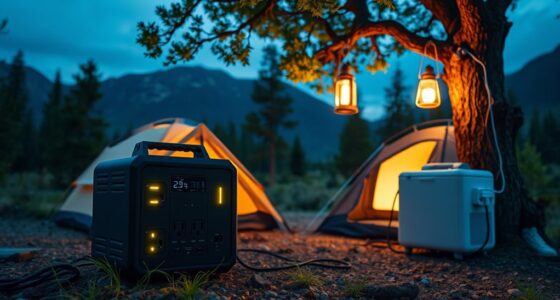
When choosing camp lighting, consider your priorities. Solar lights are eco-friendly, cost-effective, and low-maintenance, making them great for sustainable outdoor adventures. Fuel lanterns offer brighter light and longer-lasting power, ideal for remote areas or dark conditions. If you prefer something easy to use and environmentally conscious, solar might suit you better. However, if maximum brightness and reliability in challenging weather are your goals, fuel lanterns could be the way to go. Keep exploring to find what fits your outdoor style best.
Key Takeaways
- Solar lights are eco-friendly, energy-efficient, and require minimal maintenance, ideal for sustainable camping.
- Fuel lanterns offer brighter, more widespread illumination and are better for areas with limited sunlight.
- Solar lights depend on sunlight availability, while fuel lanterns provide consistent power regardless of weather.
- Solar lighting reduces ongoing costs and environmental impact, whereas fuel lanterns involve fuel costs and emissions.
- Choose solar for eco-conscious, low-maintenance needs; opt for fuel lanterns when maximum brightness and power are priorities.
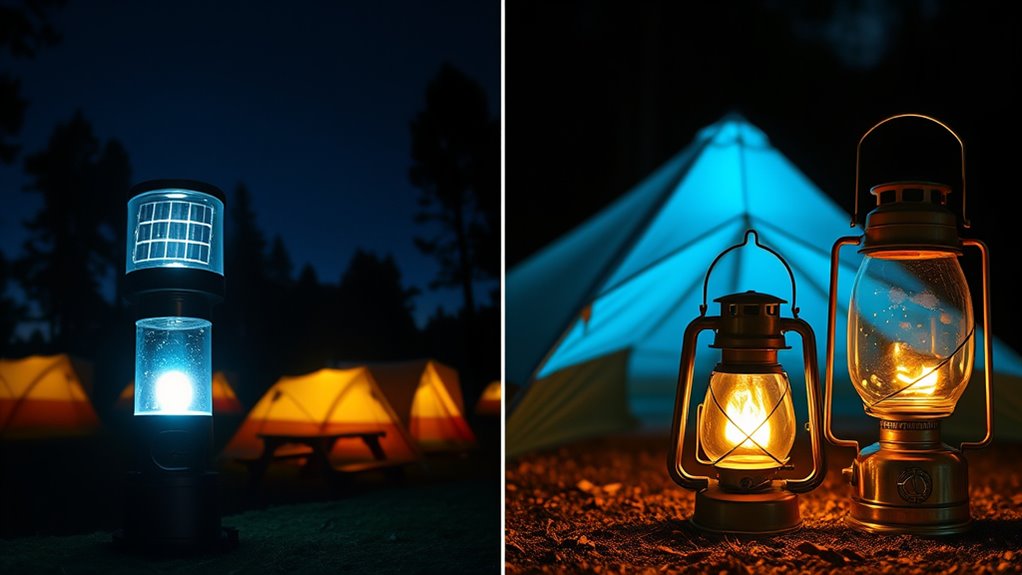
Ever wondered which camp lighting option is better: solar lights or fuel lanterns? When it comes to choosing the right lighting for your outdoor adventures, understanding their differences can make a big impact on your experience. One key factor to evaluate is energy efficiency. Solar lights harness the sun’s energy during the day, storing it in rechargeable batteries, so they glow brightly at night without consuming any additional power. This means they’re incredibly efficient, providing consistent illumination with minimal waste. Fuel lanterns, on the other hand, rely on burning fuel such as kerosene or propane, which consumes resources and produces heat and light. While they can be bright and effective, they are less energy-efficient because you’re constantly using fuel, which can run out quickly and require carrying extra supplies.
The environmental impact of your lighting choice also plays a significant role. Solar lights are environmentally friendly since they don’t emit greenhouse gases or pollutants during operation. They use renewable energy and produce no emissions, making them a sustainable option that aligns with eco-conscious camping. Fuel lanterns, however, have a larger environmental footprint. Burning fuel releases carbon dioxide and other pollutants into the air, contributing to pollution and climate change. Additionally, the production, transportation, and disposal of fuel can create waste and environmental hazards. If you care about reducing your carbon footprint and protecting nature, solar lights are the greener choice.
Beyond energy efficiency and environmental impact, solar lights offer convenience. They’re easy to set up—just place them in a sunny spot during the day, and they’ll automatically charge. Many models are portable, weather-resistant, and require no maintenance beyond occasional cleaning. Fuel lanterns, while often more powerful and capable of providing brighter, more widespread light, demand more effort. You need to carry extra fuel, ensure proper ventilation, and handle the risk of spills or leaks. They can be turned on instantly and work well in cloudy conditions or at night when sunlight isn’t available, but they come with ongoing costs and environmental concerns. Additionally, advancements in projector technology have made solar-powered options more efficient and brighter, enhancing their practicality for outdoor use.
Ultimately, your choice hinges on your priorities. If you value sustainability, low maintenance, and energy efficiency, solar lights are the way to go. They’re cost-effective over time and kinder to the planet. If you need maximum brightness, long-lasting power, or are in remote areas with limited sunlight, fuel lanterns might be more suitable despite their drawbacks. By weighing these factors carefully, you can select the camp lighting that best matches your outdoor lifestyle and environmental values.
Frequently Asked Questions
How Do Solar Lights Perform in Extremely Cloudy or Rainy Weather?
In extremely cloudy or rainy weather, solar lights may struggle to perform well because they rely on sunlight to charge. During cloudy weather, their batteries might not fully recharge, leading to dim or shorter-lasting light. Rainy conditions can further reduce their efficiency, especially if the solar panels aren’t waterproof. To guarantee reliable lighting, consider backup options like fuel lanterns or waterproof solar lights with higher capacity batteries for these conditions.
What Are the Long-Term Environmental Impacts of Fuel Lanterns?
Fuel lanterns contribute to environmental pollution through emissions and release of unburned fuel, which can harm local ecosystems. They also cause resource depletion by consuming non-renewable fuels like kerosene or propane. Long-term use increases your carbon footprint and risks contaminating soil and water sources. Opting for solar-powered options helps you reduce environmental pollution and conserve resources, making your camping experience more eco-friendly.
Can Solar Lights Charge Effectively During Winter or Low Sunlight Seasons?
Yes, solar lights can charge effectively during winter or low sunlight seasons, but their efficiency depends on winter sunlight conditions. You should position them in areas with maximum exposure and clean the panels regularly to optimize solar charging. Keep in mind that shorter days and weaker sunlight mean less energy, so consider solar lights with higher capacity or alternative charging options if you need reliable illumination during winter camping trips.
Are There Safety Risks Associated With Fuel Lanterns Indoors or in Tents?
You should know that fuel lanterns indoors or in tents pose serious safety risks. Indoor hazards like carbon monoxide buildup and fire risk make them dangerous, especially in confined spaces. A small spark or leak can quickly turn into a disaster. Always prioritize safety by choosing alternative lighting options. Never underestimate how quickly a cozy camping night can turn into a life-threatening emergency with fuel lanterns nearby.
How Do Maintenance Requirements Compare Between Solar Lights and Fuel Lanterns?
You’ll find solar lights require minimal maintenance, mainly just occasional cleaning and ensuring batteries are charged or replaced when needed. In contrast, fuel lanterns need regular fuel refilling and bulb checks, and their battery lifespan is less relevant. Fuel lanterns demand more upkeep, but they offer consistent brightness. Solar lights are more convenient long-term, while fuel lanterns require ongoing attention to fuel levels and maintenance to keep them functioning safely.
Conclusion
Choosing between solar lights and fuel lanterns is like picking the right brush for your canvas. Solar lights shine gently, harnessing the sun’s power to brighten your campsite sustainably. Fuel lanterns, on the other hand, flicker with warm, nostalgic glow, fueling your adventures with a fiery spirit. Whichever you choose, remember that your decision shapes the glow of your outdoor story. Light up your camp like a guiding star, and let your nights be memorable.