The biggest mistake campers make with solar chargers is underestimating how important proper setup, choosing the right efficiency, and maintenance are for reliable power. Many rush into buying cheap panels or place them in shady spots, which damages performance. To fix this, research high-efficiency options, position panels in direct sunlight, and keep them clean and protected. If you want to stay connected on your trip, understanding these key steps will make a difference.
Key Takeaways
- Using low-efficiency solar panels reduces power generation, so choose high-efficiency models for better outdoor performance.
- Mismatched capacity to your device needs can lead to insufficient charging; select appropriately sized solar chargers.
- Improper panel placement and angle decrease sunlight absorption; position panels in direct sunlight and adjust regularly.
- Overlooking durability causes early damage; invest in weather-resistant, rugged solar panels suited for outdoor conditions.
- Lack of research on your energy needs and equipment hampers effective setup; plan and select solutions accordingly.
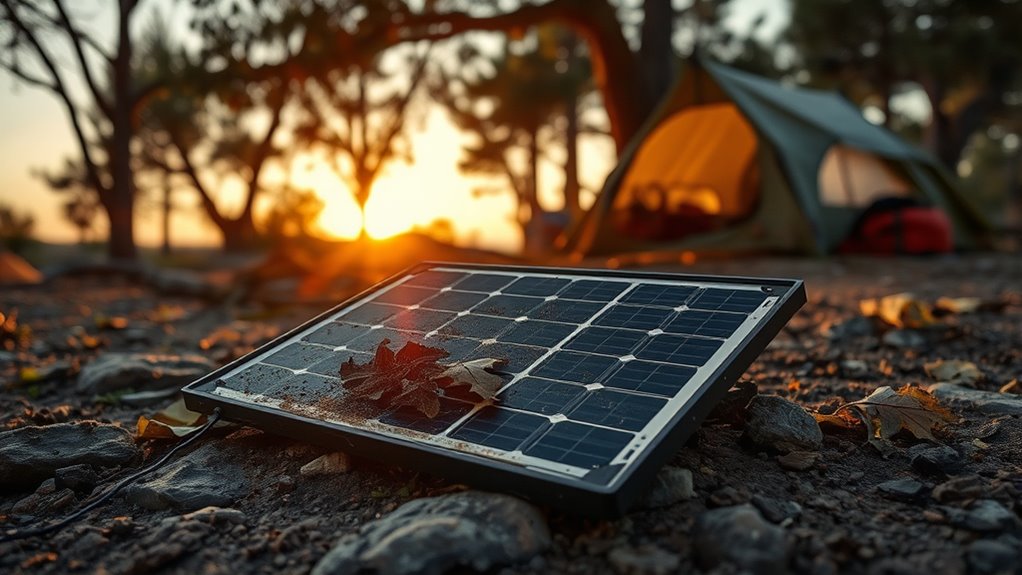
When you’re out camping, staying connected and powered up can be a challenge, but solar chargers make it easier. Many campers rely on portable power solutions to keep their devices charged, but one common mistake is not paying attention to solar panel efficiency. Not all solar chargers are created equal, and choosing one with low efficiency can leave you frustrated when you need power most. Solar panel efficiency determines how well a panel converts sunlight into usable electricity. If you pick a model with poor efficiency, you might find that even on a sunny day, it doesn’t generate enough power to keep your devices running. This oversight can lead to disappointment and the false assumption that solar chargers aren’t reliable. To avoid this, you should research and select solar chargers with high solar panel efficiency, ensuring you get the most out of every ray of sunlight.
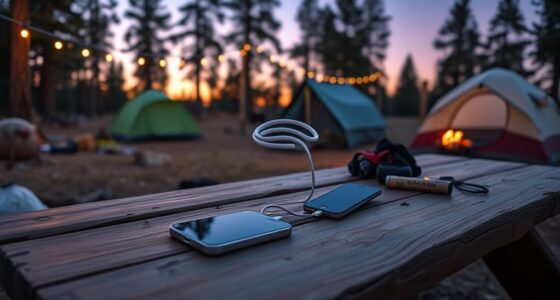
Another mistake is failing to consider the importance of portable power solutions that suit your specific needs. Some campers buy bulky panels or underpowered units that aren’t capable of charging multiple devices or larger batteries. This can be especially problematic if you’re planning a longer trip or relying heavily on electronic gear. Instead, look for portable power solutions that are lightweight, durable, and designed for your energy demands. For example, if you need to charge smartphones, tablets, and small gadgets, a compact panel with a decent wattage will suffice. But if you want to power larger devices or backup batteries, investing in a more robust system makes sense. The key is to match your solar charger’s capacity with your usage pattern.
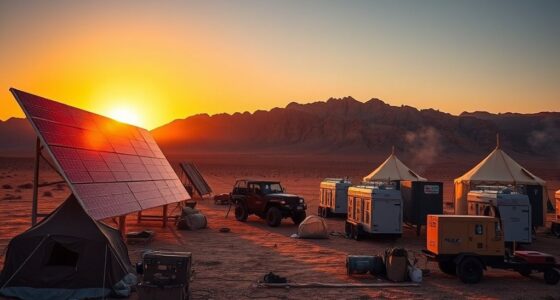
Many campers also forget that ideal positioning of the solar panel is critical for maximizing efficiency. Even the best solar panel can underperform if it’s not angled correctly toward the sun. During your trip, set up your solar panel in a spot where it receives direct sunlight for the majority of the day, free from shadows cast by trees or tents. Adjust the angle periodically to follow the sun’s movement. This simple step can considerably improve the amount of energy your solar charger collects, making your portable power solutions more effective.
Additionally, understanding the importance of solar panel durability can help you select a long-lasting and reliable device that withstands outdoor conditions. Ultimately, avoiding these mistakes involves doing a bit of homework before your trip. Invest in a high-efficiency solar panel, choose a portable power solution tailored to your needs, and ensure proper setup during your camping adventure. When you pay attention to these details, solar chargers become reliable allies rather than sources of frustration. You’ll stay connected longer, enjoy your trip more, and truly harness the sun’s power to keep your devices alive in the great outdoors.
Frequently Asked Questions
What Size Solar Charger Do I Need for My Camper?
You need a solar charger that matches your camper’s energy needs, considering your battery capacity planning. To determine the right size, account for your daily power consumption and the solar panel efficiency. Usually, a 100W to 200W panel works well for most campers, but if you use more appliances, go bigger. Always oversize slightly to compensate for cloudy days and efficiency losses, ensuring your batteries stay charged.
How Do I Store Solar Chargers During Off-Season?
To store your solar charger during the off-season, follow these storage tips for seasonal maintenance. First, clean the panels gently with a damp cloth to remove dirt and dust. Next, disconnect and store the charger in a cool, dry place away from direct sunlight and extreme temperatures. Keep the battery partially charged to prevent deterioration, and check it periodically during storage to guarantee maximum performance when you’re ready to use it again.
Can Solar Chargers Power All Camper Appliances?
Solar chargers can power many camper appliances, but you need to check your camper battery compatibility first. They often don’t handle high-power devices like microwaves or air conditioners. To keep your system running smoothly, perform regular solar panel maintenance and guarantee your batteries are compatible with the charger’s output. This way, you maximize efficiency and avoid overloading your system, making your camping experience more enjoyable.
Are Portable Solar Chargers Durable in Extreme Weather?
Portable solar chargers can be durable in extreme weather if they’re designed with weather resistance and made from high-quality materials. Look for models with waterproof, snowproof, and dustproof features to guarantee longevity. Properly maintaining and storing your charger during severe conditions also helps. Remember, a well-built solar charger with sturdy material durability will perform reliably, even in harsh weather, giving you peace of mind during your camping adventures.
How Long Does It Take to Fully Charge a Camper With Solar?
It usually takes between 4 to 8 hours to fully charge your camper’s battery, depending on its capacity and sunlight hours. If you have a larger battery capacity, it’ll take longer, especially on cloudy days or in less intense sunlight. To speed up charging, position your solar panels where they receive maximum sunlight and keep them clean. Monitoring sunlight hours helps you estimate charging time more accurately.
Conclusion
Don’t let a simple mistake zap your camping trip’s energy like a leaky faucet. By positioning your solar charger properly and avoiding shadows, you’ll guarantee it works as hard as you do. Think of your solar setup as a loyal companion — if you give it the right space and attention, it’ll keep your devices powered up no matter how long you stay out in the wild. Stay smart, stay charged, and let the sun do the heavy lifting.