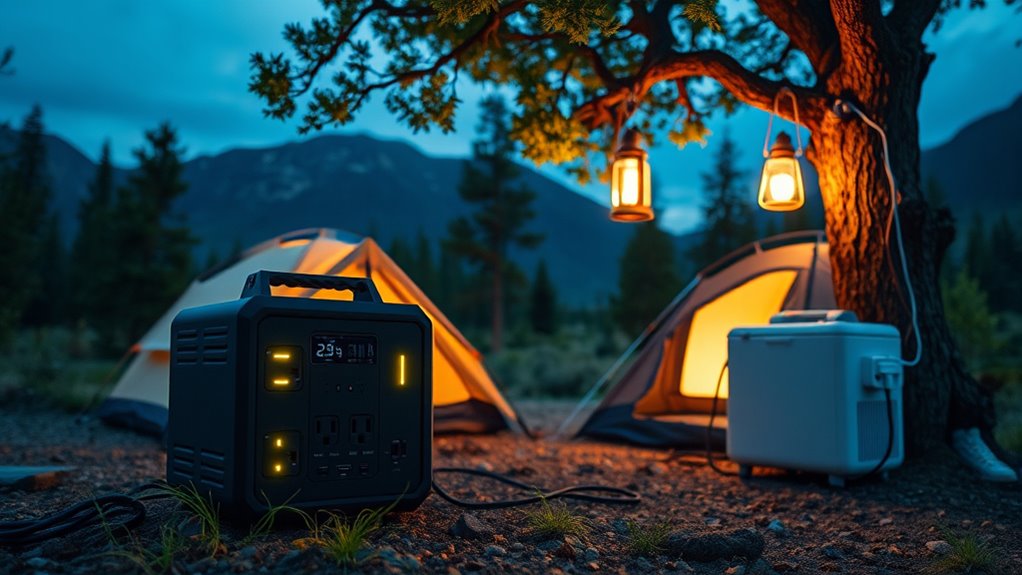

A portable power station stores electrical energy for your camping trips, keeping devices charged and ready to use. It offers multiple outputs like AC and DC ports, can be recharged via solar panels, and varies in capacity to suit your needs. Choosing the right model involves balancing power, weight, and safety features. Want to learn how to choose, use, and maintain yours for the best outdoor experience? Keep exploring to discover essential tips and tricks.
Key Takeaways
- Portable power stations store and convert electrical energy, providing reliable AC and DC power for camping devices.
- Choose models with solar compatibility for eco-friendly recharging during outdoor trips.
- Prioritize lightweight, compact units for easy portability and handling in outdoor environments.
- Manage power usage by turning off unused devices and monitoring consumption to extend runtime.
- Follow safety practices like avoiding overloading, proper connections, and regular maintenance for long-term use.
What Is a Portable Power Station and How Does It Work

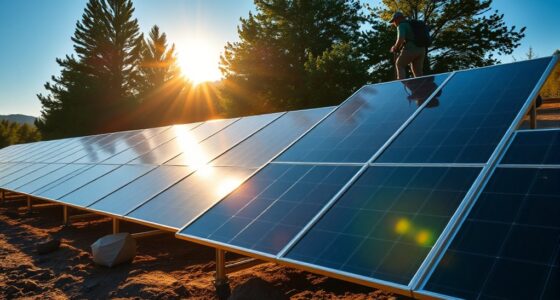
Ever wondered what a portable power station really is and how it keeps your devices running? It’s a compact device that stores electrical energy for later use, making it perfect for camping or emergencies. The core of its operation involves inverter technology, which converts stored DC power into AC power, so your laptops and gadgets work smoothly. Many portable power stations can be recharged with solar panels, harnessing sunlight to generate electricity sustainably. This integration allows you to charge the station during the day and use it at night or when off-grid. Fundamentally, it’s a versatile energy hub that combines advanced inverter technology with renewable power sources, giving you reliable, portable electricity wherever you go—without needing a traditional power outlet. Additionally, some models are designed with European standards and can be integrated into sustainable energy systems, promoting eco-friendly and secure power solutions. The use of battery management systems helps ensure safe operation and prolongs the lifespan of the power station. Incorporating portable power station safety tips can further optimize performance and safety during your adventures. For example, understanding how energy storage works can help you better appreciate the device’s capabilities and limitations. Moreover, the power station’s capacity determines how many devices and how long they can run simultaneously.
Key Features to Consider When Choosing a Portable Power Station
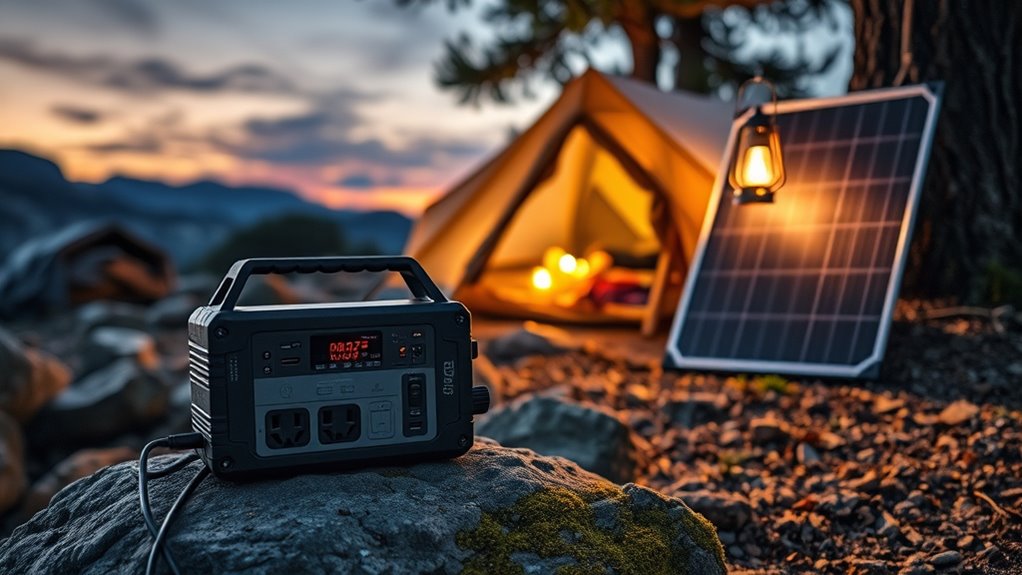
When selecting a portable power station, focusing on key features can help you find the right model for your needs. One important factor is solar panel compatibility; ensure the station can connect to your solar panels if you plan to recharge using sunlight. This feature allows for eco-friendly, off-grid power and saves you from relying solely on traditional outlets. Additionally, consider the lightweight design—lighter units are easier to carry and handle during outdoor adventures. Look for a balance between portability and power capacity to match your specific needs. Other features to evaluate include battery capacity, charging options, and safety features. Understanding power capacity and how it relates to your energy needs can help you make better choices. A battery management system can enhance the longevity and safety of your power station. Being aware of safety features such as overload protection and short-circuit prevention can further ensure secure operation. Incorporating advanced safety technologies can provide extra peace of mind during your outdoor excursions. Recognizing battery lifespan and how it impacts long-term use can also guide your selection process. By paying attention to these aspects, you’ll choose a portable power station that’s efficient, convenient, and well-suited for your camping trips.
Types of Power Outputs and Their Uses
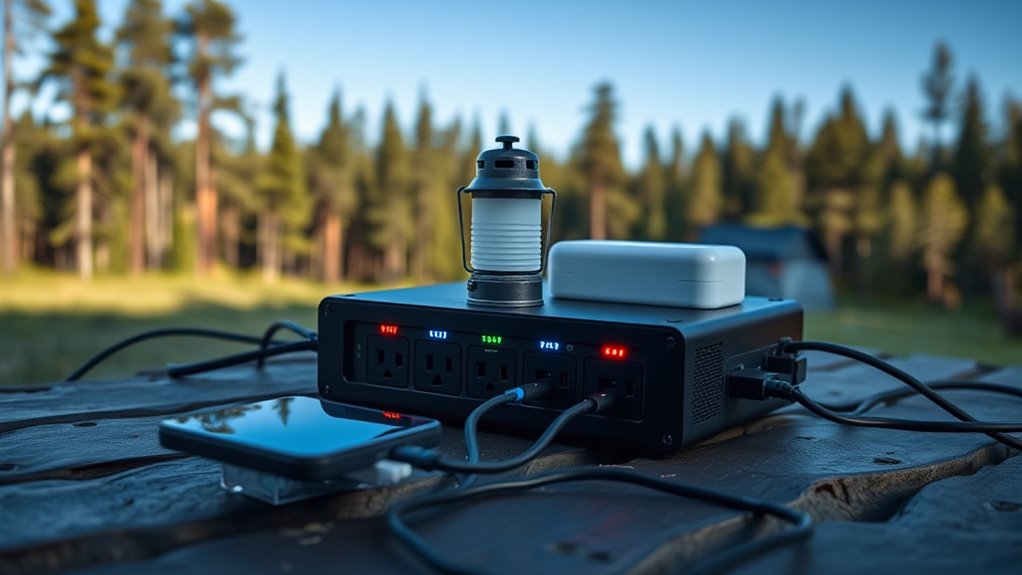
Choosing a portable power station involves understanding the different types of power outputs it offers, as this determines what devices you can run and how efficiently. Most stations provide AC outlets for powering laptops, small appliances, or chargers, while DC outputs are ideal for charging portable devices like phones or running car accessories. Some models feature solar compatibility, allowing you to connect solar panels for renewable energy, which is perfect for extended trips. When selecting a station, consider the difference between AC and DC outputs: AC power mimics household outlets, suitable for larger appliances, while DC is more efficient for smaller electronics. Knowing which outputs you need guarantees your devices operate smoothly and safely during your camping adventures. Understanding power output types helps ensure you select the right station for your energy needs. Additionally, smart energy management features can optimize power usage and extend battery life during your outdoor excursions. It’s also important to be aware of vetted wave and wind options, which can influence the station’s reliability and comfort during outdoor use. Being familiar with power output compatibility can help you make more informed choices and avoid device damage.
Battery Capacity and Runtime: Finding the Right Balance

Finding the right balance between battery capacity and runtime is vital to guarantee your portable power station meets your needs without unnecessary bulk or cost. A larger capacity provides longer runtime, but it can add weight and size, making portability harder. Consider your typical power consumption and how long you’ll need electricity, making sure the battery size aligns with those needs. Pay attention to solar panel compatibility, as it affects how efficiently you can recharge the station during your trip. Keep in mind that a bigger battery may impact battery lifespan, so choosing a capacity that balances daily use with longevity is essential. Additionally, understanding the energy requirements of your devices can help you select the most suitable capacity. To optimize your setup, consider efficient charging practices that can extend your power station’s usability and lifespan. Properly managing power consumption by turning off unused devices can also significantly enhance runtime and battery health. Being aware of ear wax odor and other environmental factors can help you better protect your equipment from potential damage or malfunction. Incorporating appropriate oil and filter maintenance practices can further improve the overall performance and durability of your power station, especially if it involves components like fans or internal filters. Striking this balance ensures you have enough power without sacrificing portability or damaging the station’s overall durability.
Charging Methods and Portability Tips
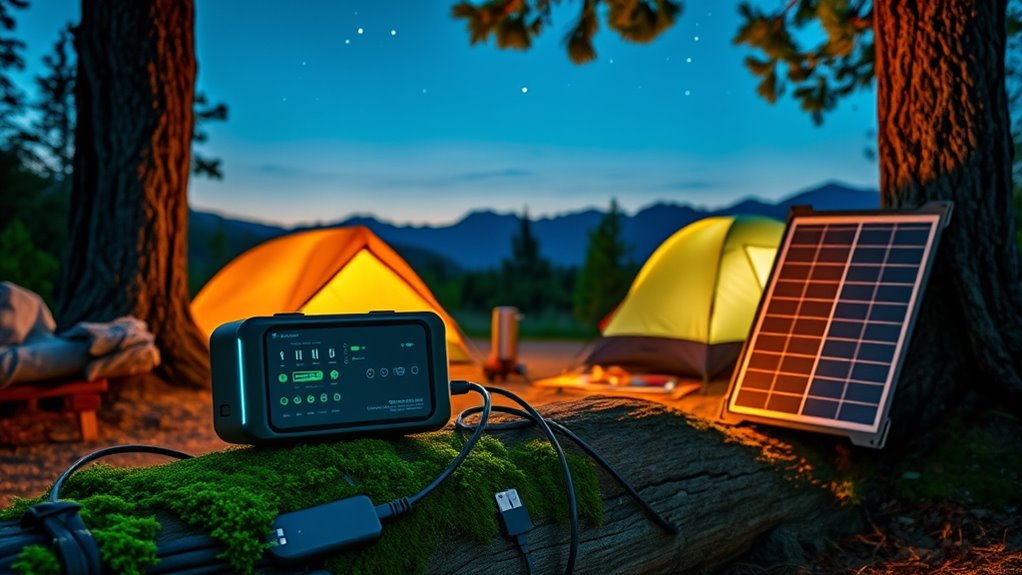
Selecting the right charging methods can considerably enhance the portability and convenience of your power station. Solar panel integration allows you to recharge using sunlight, making it ideal for extended camping trips without access to power outlets. Portable charging accessories, like car chargers or portable wall adapters, give you flexible options for recharging on the go. To maximize ease, choose a power station compatible with multiple charging methods, so you’re not limited to a single source. Keep your solar panels lightweight and easy to set up for quick deployment. Carry compact, durable portable charging accessories that fit easily into your gear. Power source versatility is essential for adapting to various outdoor environments and ensuring continuous power supply. Incorporating solar charge controllers can further optimize energy harvest and protect your batteries during recharging. Understanding energy management can also help you extend your device’s battery life and use power more efficiently. Utilizing portable power management devices can assist in monitoring and controlling energy consumption for optimal performance. Modern kitchen technology can also inspire innovative ways to optimize energy use and manage power sources efficiently. This way, you can stay powered up efficiently, no matter where your adventure takes you.
Safety and Maintenance for Long-Term Use

Maintaining safety and proper care is crucial to guarantee your portable power station remains dependable over time. To maximize battery lifespan, avoid frequent deep discharges and keep the unit charged between 20% and 80%. Storage precautions are equally important; store the power station in a cool, dry place away from direct sunlight and extreme temperatures. Regularly inspect for signs of wear, corrosion, or damage, and clean connections gently to ensure peak performance. Follow manufacturer guidelines for long-term storage, such as periodically charging the battery if unused for extended periods. Proper maintenance not only extends the lifespan of your device but also ensures safety during use and prevents potential hazards. Consistent care helps keep your power station reliable for future camping adventures. Additionally, consulting your device’s safety checklists and evidence-based practices can help identify potential issues before they become serious problems. Incorporating regular maintenance routines based on manufacturer recommendations further enhances device longevity and safety. Being aware of vetted safety protocols can further mitigate risks associated with portable power stations. Implementing smart monitoring features, when available, can also assist in tracking the health and performance of your power station over time.
Practical Tips for Using Your Power Station During a Camping Trip
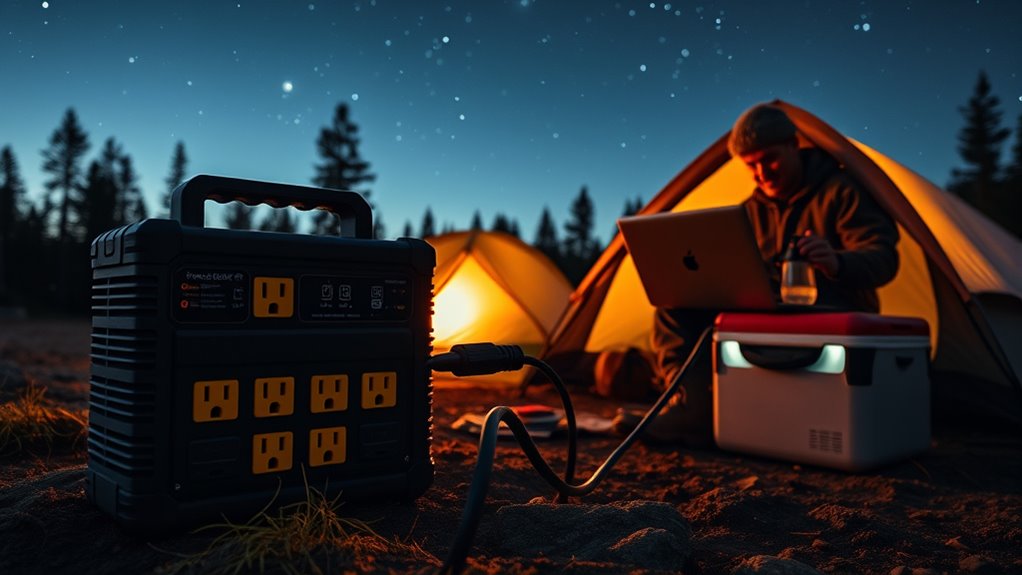
To get the most out of your power station on a camping trip, you need to use proper charging techniques to keep it ready without overloading the battery. Managing your power efficiently helps you run essential devices longer and conserves energy. Always connect your devices safely to avoid short circuits or damage, ensuring a smooth and stress-free outdoor experience.
Proper Charging Techniques
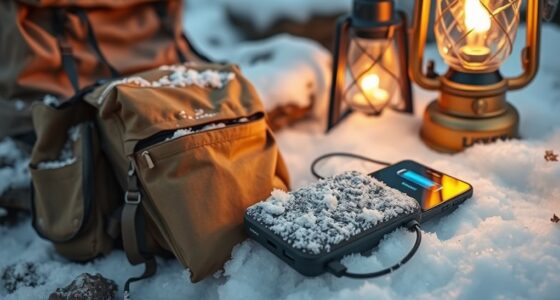
Ensuring your portable power station stays charged and ready during a camping trip requires some practical techniques. First, check the solar panel compatibility to optimize solar charging, especially if you’ll rely on sunlight. Use only compatible panels to prevent damage and ensure efficient energy transfer. Always prioritize charging safety by avoiding overcharging or exposing the station to extreme temperatures, which can reduce battery lifespan. When connecting solar panels, do so in shaded areas during peak sunlight hours for better results. Keep cables and connections secure to prevent short circuits. Monitor the power station’s charging status regularly and disconnect once fully charged to maintain battery health. Following these steps helps you maximize your station’s longevity and ensures a reliable power source throughout your trip.
Efficient Power Management
Managing your power usage effectively is essential to keep your devices running smoothly throughout your camping trip. To maximize energy efficiency, prioritize charging devices during daylight hours using your solar panel, which harnesses free, renewable energy. Turn off devices when not in use and avoid leaving them on standby, as this wastes power. Use your power station’s settings to monitor consumption and adjust accordingly. Conserve energy by unplugging unnecessary gadgets and limiting the use of high-power appliances. Planning ahead guarantees your power station can meet your needs without draining quickly. Efficient power management not only extends your station’s runtime but also reduces the need for frequent recharging, ensuring you stay connected and powered throughout your outdoor adventure.
Safe Device Connections
When connecting your devices to a portable power station during a camping trip, it’s important to follow safe practices to prevent electrical hazards or damage. Always avoid device overload by checking the power requirements of your devices and ensuring they don’t exceed the station’s capacity. Distribute the load evenly and unplug unused devices to prevent overloading circuits. Additionally, prioritize cable safety by inspecting cables for wear or damage before use. Use proper extension cords and avoid daisy-chaining multiple cables, which can cause overheating. Keep cables organized and away from water or high-traffic areas to prevent accidents. By following these tips, you guarantee safe, reliable power for your camping trip while protecting your devices and yourself from electrical risks.
Frequently Asked Questions
How Long Do Portable Power Stations Typically Last Before Needing Replacement?
You can expect your portable power station’s battery lifespan to last around 3 to 5 years, depending on usage and care. Most models have replacement intervals of about 300 to 500 charge cycles, which usually translates to 1 to 2 years of regular use. To maximize lifespan, avoid deep discharges and store it in a cool, dry place. When performance drops considerably, it’s time for a replacement.
Can Portable Power Stations Be Used to Power Sensitive Electronics?
Think of a portable power station as a trusty sidekick in your outdoor adventures. Yes, you can power sensitive electronics with it, but you need to guarantee proper battery safety and compatible charging. Use devices designed for such power sources, and avoid overloading. Always check the station’s specifications to confirm compatibility, so your gadgets stay safe and your trip remains worry-free.
Are Portable Power Stations Environmentally Friendly or Do They Produce Emissions?
Portable power stations are generally environmentally friendly because they produce no direct emissions. They often use renewable energy sources like solar panels, which help reduce your carbon footprint. While some models rely on fossil fuels, many incorporate clean energy options, making them a greener choice for camping. By choosing solar-powered stations, you minimize environmental impact and enjoy sustainable energy during your outdoor adventures.
What Are the Best Practices for Storing a Power Station During Off-Season Periods?
Imagine your power station taking a nap in a cozy cave—well, that’s your storage environment. You should store it in a cool, dry place, avoiding extreme temperatures. Perform battery maintenance by charging it partially and keeping it away from moisture. Regularly check and recharge if stored long-term. Proper storage guarantees your power station wakes up ready, not sluggish or dead, for your next adventure.
How Do Extreme Weather Conditions Affect the Performance of Portable Power Stations?
Extreme weather conditions can profoundly impact your portable power station’s performance. Temperature fluctuations, especially extreme heat or cold, can reduce battery efficiency and lifespan. Humidity effects, like high moisture levels, may cause corrosion or damage internal components. To guarantee ideal operation, store your power station in a dry, temperature-controlled environment and avoid exposing it directly to harsh weather, protecting it from temperature swings and moisture that can compromise its functionality.
Conclusion
A portable power station can be your reliable camping companion, providing electricity wherever you go. While some believe solar chargers alone suffice, combining them with a power station guarantees continuous power for devices. By understanding the key features, types, and safety tips, you’ll be ready for any outdoor adventure. With proper use, your power station can last for years, proving that smart planning truly makes outdoor living more comfortable and connected.