
TL;DR
Australian farmers are advocating for increased support and policy reforms to accelerate electrification of farm equipment, reducing dependence on imported diesel and enhancing energy resilience. A new report outlines pathways for transitioning to cleaner, lower-cost energy systems.
Australian farmers are urging policymakers to support the rapid electrification of farm equipment and processes, citing recent fuel supply disruptions and rising costs as urgent reasons for transition. A new report by Farmers for Climate Action outlines a roadmap for increasing energy sovereignty and reducing reliance on imported fuels, emphasizing the economic and resilience benefits for the agricultural sector.
The report, titled Energy Sovereignty for Regional Australia, highlights that farmers are already electrifying irrigation systems, water pumps, and processing machinery, which reduces diesel consumption. It advocates for policy reforms, including capping the Fuel Tax Credit Scheme at $50 million per claimant, to encourage investment in clean energy technology while protecting farmers from financial risks.
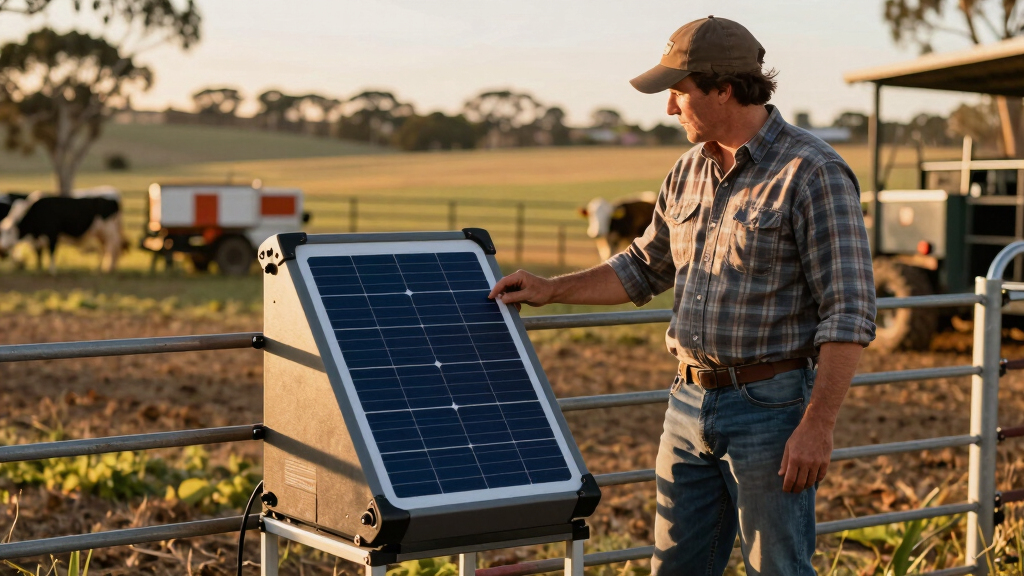
Case studies within the report demonstrate that switching from diesel to electric equipment could significantly lower energy costs. For example, a 6,000-hectare seeding operation currently using about 30,000 liters of diesel could, with electric tractors and solar PV, reduce energy use to approximately 110 MWh, supported by 1–1.5 hectares of solar panels and battery storage. The report emphasizes that electrification is easier for stationary and short-range tasks initially, with mobile machinery following as products become more reliable and affordable.
Impact of Electrification on Farm Cost and Resilience
This shift to electrification could dramatically lower operational costs for farmers by reducing fuel dependence and exposure to price volatility. It also enhances energy resilience, making farms less vulnerable to supply disruptions. The policy support recommended in the report aims to facilitate a broader transition, which could position Australian agriculture as a leader in sustainable, low-cost farming practices, with wider economic and environmental benefits.

Peg Perego John Deere Farm Power 12 Volt Ride-on Tractor and Trailer with Remote Control
- Official John Deere Licensed: Realistic tractor with sounds and lights
- Remote Control Included: Parent-operated with low speed mode
- Manual Operation Mode: Two speeds plus reverse for kids
As an affiliate, we earn on qualifying purchases.
As an affiliate, we earn on qualifying purchases.
Growing Momentum for Renewable Tech in Agriculture
The push for on-farm electrification aligns with broader trends in renewable energy adoption across Australia’s agricultural sector. Farmers have historically been early adopters of solar pumps and remote power supplies, and recent fuel shortages have intensified calls for government action. The report builds on existing examples of renewable integration and emphasizes the need for policy reforms to accelerate this transition, especially as electric and clean tech products become more mature and affordable in the coming years.
“Energy sovereignty is the opportunity. The job of policy now is to turn that opportunity into practical change—reducing exposure, lowering risk, and giving regional Australians more durable control over the energy systems their businesses and communities depend on.”
— an anonymous researcher

ECO-WORTHY Solar Well Pump Kit – 100W Solar Panel with 12V Deep Well Water Pump for Off-grid Living or Irrigation, Farm & Ranch-DELIVERY IN 2 PARCELS One
- High Lift Capacity: 230ft maximum lift, 1.6GPM flow
- Battery-Free Operation: Connect directly or with 12V battery
- Optimal Sunlight Exposure: Keep panels clean and shadow-free
As an affiliate, we earn on qualifying purchases.
As an affiliate, we earn on qualifying purchases.
Uncertainties Around Policy Implementation and Market Readiness
It is not yet clear how quickly government policy reforms will be enacted or how effectively they will support farmers in transitioning to electrification. The availability, affordability, and reliability of electric equipment and renewable energy infrastructure are still evolving, and market development for heavier mobile machinery is expected to take several years.

ECO-WORTHY 3540W Solar Panel Kit, 6 × 590W Panels, 1 × 48V 314Ah Battery
- High Daily Energy Output: Up to 14kWh generated daily
- Large Energy Storage Capacity: Stores up to 16.07kWh of energy
- Premium Bifacial Solar Panels: Up to 23.23% efficiency with rear-side gain
As an affiliate, we earn on qualifying purchases.
As an affiliate, we earn on qualifying purchases.
Next Steps for Policy and Technology Adoption
The report advocates for policy reforms, including tax incentives and caps on fuel subsidies, to accelerate adoption. Stakeholders anticipate further government engagement and funding initiatives aimed at reducing barriers for farmers. Additionally, the development of more reliable and cost-effective electric farm machinery is expected to progress, enabling broader adoption across the sector in the coming years.

AQUASTRONG 1.5 HP Shallow Well Jet/Centrifugal Pump, 4250 GPH, 115/230V, Durable Cast Iron Booster Pump for Lawn Sprinkler, Garden Irrigation
- High Water Flow Rate: 4250 GPH maximum flow
- Strong Head Capacity: 108 ft maximum head
- Standard NPT Connections: 2" suction, 1.5" discharge
As an affiliate, we earn on qualifying purchases.
As an affiliate, we earn on qualifying purchases.
Key Questions
How soon could farmers realistically switch to electric equipment?
The transition timeline varies by equipment type. Stationary systems like pumps and sheds could electrify within the next 1-3 years, while heavier mobile machinery may take until the early 2030s as products mature and infrastructure expands.
What government policies are needed to support this shift?
Policy reforms such as capping fuel tax credits, providing targeted incentives for renewable equipment, and removing barriers to on-farm renewable energy projects are essential to accelerate adoption.
Are electric farm machines already available in Australia?
Electric options for stationary and light mobile equipment are increasingly available, but heavy-duty, long-haul machinery is still in development and expected to become more accessible in the early 2030s.
What are the main barriers farmers face in electrifying their farms?
Barriers include upfront costs, availability of suitable equipment, infrastructure requirements, and policy or market uncertainties. Support and incentives can help overcome these challenges.
Source: PV Magazine