
TL;DR

Get emergency and outdoor gear delivered free — and shop member deals
- Fast, free delivery on millions of items
- Access to Prime Big Deal Days deals on October 6–7
- Prime Video, Amazon Music and more included
Airengy and Hagag Europe are investing €55 million to develop a 5 GWh compressed-air energy storage plant in Romania. The project, using Airengy’s proprietary AirBattery technology, aims for commercial operation in early 2028. This marks a significant step in long-duration energy storage deployment in Europe.
Airengy and Hagag Europe have announced a joint plan to develop a 5 GWh compressed-air energy storage (CAES) plant in Romania, with commercial operation expected in early 2028. This project, involving an investment of approximately €55 million, represents a major step in deploying long-duration storage technology across Europe.
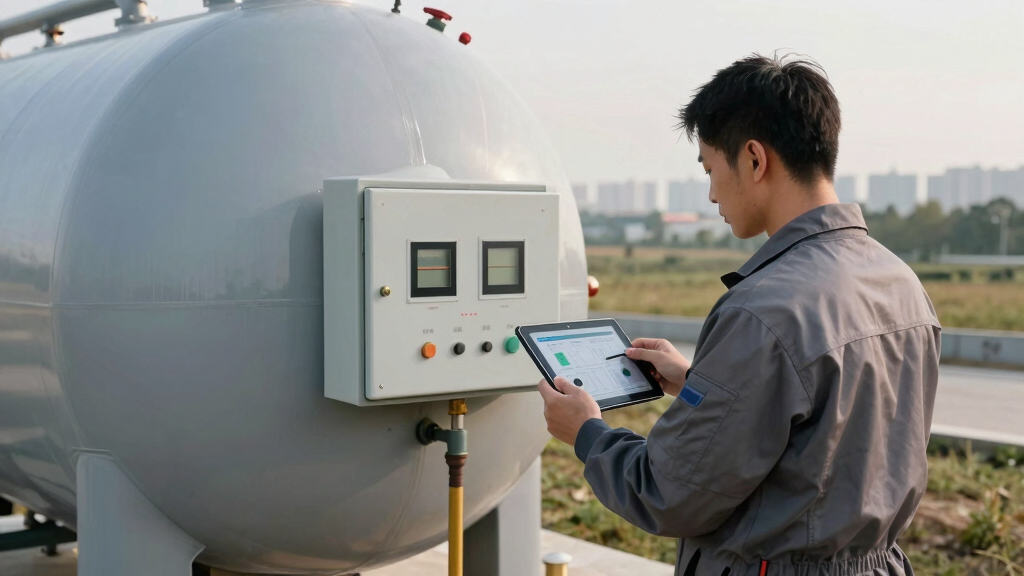
The project will utilize Airengy’s proprietary AirBattery technology, which stores excess electricity as compressed air in underground salt caverns. The plant will be developed in two phases, initially adding around 200 MWh of storage capacity at an estimated cost of €4.5 million, with plans to expand to 5 GWh.
Hagag Europe and Airengy will each own 40% of the project through a special purpose vehicle, with a third unidentified partner holding the remaining 20%. Airengy will oversee planning, design, construction, and operation of the facility. Construction is projected to start in 2027, with commercial operation anticipated in early 2028, according to Airengy’s VP of Business Development Technologies.
Implications of the Romania CAES Project for European Energy Storage
This development demonstrates a significant investment in long-duration energy storage in Europe, which is vital for integrating renewable energy sources and stabilizing power grids. The use of salt caverns for CAES offers a climate-friendly, low-maintenance alternative to lithium-ion batteries, with potential for large-scale deployment across the continent. The project also signals growing confidence in Airengy’s technology, which complements existing battery systems and supports decarbonization efforts.
compressed air energy storage system
As an affiliate, we earn on qualifying purchases.
As an affiliate, we earn on qualifying purchases.
Background and Strategic Importance of CAES in Europe
Compressed-air energy storage (CAES) has gained renewed interest as a long-duration solution capable of providing grid balancing and backup power. Airengy’s AirBattery technology, which stores excess renewable energy as compressed air in underground salt caverns, is designed for decades-long operation with minimal wear. The Romanian project follows earlier smaller-scale deployments in Israel and is part of Airengy’s expansion into European markets such as Germany and the UK, where it collaborates with local energy companies.
Romania’s salt caverns and existing infrastructure make it an attractive location for large-scale CAES projects. The country’s decarbonization policies and the presence of nearby grid connections further support this development, aligning with broader European efforts to increase renewable integration and energy security.
“The Romania project and investment by Hagag Europe represent a major vote of confidence in commercializing Airengy’s technology, which is designed to support the transition to renewable energy.”
— an anonymous researcher
long-duration energy storage batteries
As an affiliate, we earn on qualifying purchases.
As an affiliate, we earn on qualifying purchases.
Uncertainties Surrounding Project Timeline and Scale
While the project’s development plan is clear, details remain uncertain regarding the final operational capacity, exact timeline for construction completion, and potential regulatory or technical challenges that may arise during deployment. The involvement of a third unidentified partner also leaves some aspects of project governance and funding undisclosed.
underground salt cavern energy storage
As an affiliate, we earn on qualifying purchases.
As an affiliate, we earn on qualifying purchases.
Next Steps for Project Development and Deployment
Airengy and Hagag Europe are expected to finalize project planning and secure necessary permits in the coming months. Construction is anticipated to commence in 2027, with the goal of achieving commercial operation by early 2028. The companies may also announce further collaborations or expand capacity as the project progresses.
renewable energy grid stabilizer
As an affiliate, we earn on qualifying purchases.
As an affiliate, we earn on qualifying purchases.
Key Questions
What is AirBattery technology?
AirBattery is a proprietary long-duration energy storage system that stores excess electricity as compressed air in underground salt caverns, which is then converted back into electricity when needed, using water and turbines.
Why is Romania chosen for this project?
Romania offers suitable salt caverns, existing infrastructure, and favorable policies, making it an ideal location for large-scale CAES projects aimed at supporting renewable energy integration.
When is the project expected to be operational?
The project aims for commercial operation in early 2028, with construction starting in 2027.
How does this project compare to other energy storage solutions?
Unlike lithium-ion batteries, CAES systems like AirBattery are designed for long-duration storage, low operating costs, and minimal environmental impact, making them suitable for large-scale grid balancing.
What are the environmental benefits of CAES?
CAES systems use only air and water, with no polluting materials or rare metals, and can operate for decades with low wear, supporting decarbonization and grid stability.
Source: PV Magazine
Fall Picks
fall essentials
As an affiliate, we earn on qualifying purchases.