
To build a better trail-to-camp progression, establish clear routines for packing and setting up your campsite efficiently. Gather gear methodically near the trail’s end and designate spots for essentials like tents, cooking supplies, and clothing. Assess your campsite for safety and stability before pitching your shelter. Practice fire safety and environmental stewardship by clearing debris and extinguishing fires properly. Maintaining organized gear and routines minimizes stress and hazards—continue on to learn how to perfect each step for a smoother experience.
Key Takeaways
- Establish a consistent packing and unpacking process to streamline gear organization and reduce transition time.
- Scout and select a suitable, flat campsite early to facilitate quick setup and minimize stress.
- Incorporate safety checks, including fire safety and environmental care, into your transition routine.
- Prepare necessary tools and supplies in advance for efficient campsite setup and cleanup.
- Develop a checklist to ensure all gear is accounted for and the site is left clean before leaving.
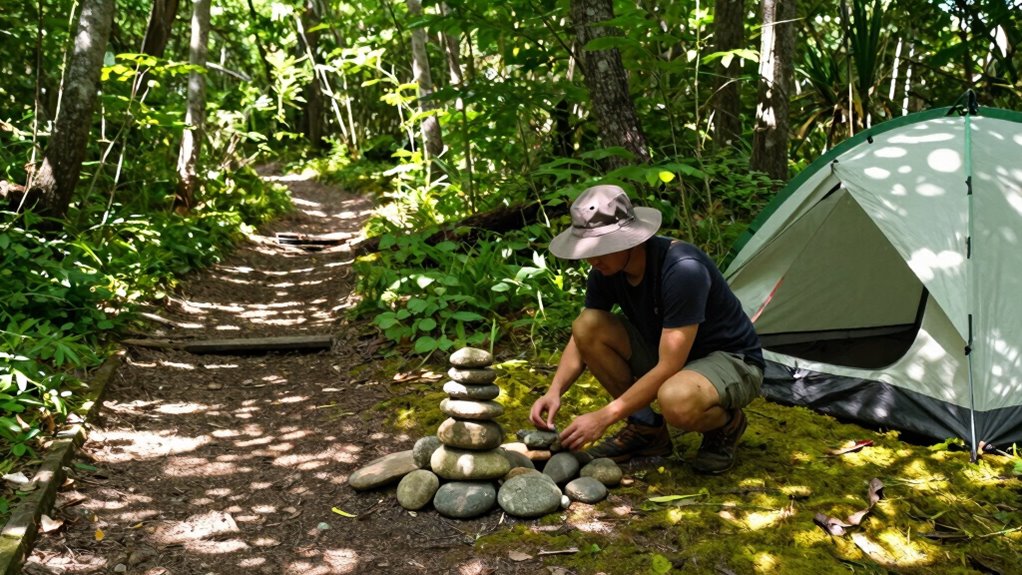
Moving from trail to camp can be seamless if you have a solid routine in place. When you’re well-prepared, the shift becomes smooth, allowing you to settle in quickly and enjoy your surroundings. The first step is to establish a consistent process for packing up. As you near the end of your hike, take a few minutes to gather your gear methodically. Keep gear organization in mind—designate specific spots for essentials like your tent, cooking supplies, and clothing. This helps you pack efficiently, saving time and reducing stress when you’re ready to set up camp. When you arrive at your campsite, first assess the area to find a flat, safe spot. Having a routine for pitching your tent ensures you do it swiftly and correctly, which sets a comfortable tone for your evening.
Establish a routine for packing and pitching your tent to ensure a smooth, efficient setup at camp.
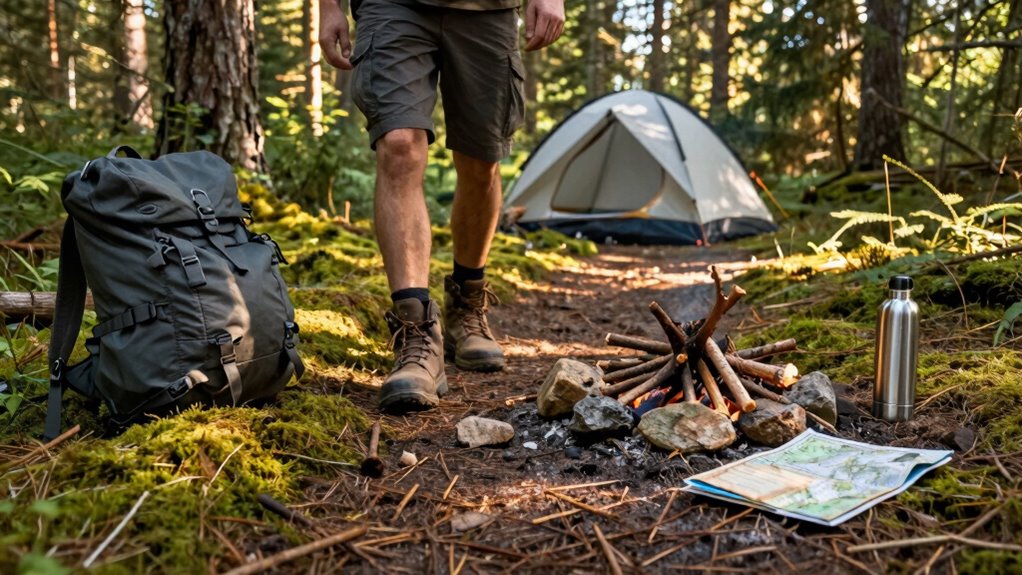
Once your shelter is up, focus on maintaining campfire safety. If you plan to build a fire, guarantee you’re aware of local regulations and fire restrictions. Clear the area of any flammable debris, and keep your fire contained within a designated fire ring or pit. Always have water, a shovel, or fire extinguisher nearby, ready to control the flames if needed. Never leave a fire unattended, and make sure it’s completely extinguished before sleeping or leaving the site. These steps protect not only your safety but also the environment. Incorporating campfire safety into your routine helps prevent wildfires and preserves the natural beauty of your surroundings.
As you settle in, keep gear organization in mind by creating a designated spot for your cooking area, sleeping gear, and personal items. This minimizes clutter and makes it easier to find what you need without rummaging through your pack. A clean and organized camp also promotes safety, as you’re less likely to trip over gear or accidentally leave something behind. When packing up the next morning, reverse your process: gather all your gear, double-check for trash, and assure your campfire is completely out. Having a routine for packing up helps you leave no trace and simplifies the process of hitting the trail again. Incorporating safety checks, such as fire safety practices, into your routine can further enhance your outdoor experience. Additionally, practicing environmental stewardship ensures that your outdoor activities contribute positively to conservation efforts.
Furthermore, developing a habit of checking local regulations can help avoid potential fines or safety hazards related to fire restrictions and campsite rules. Establishing a pre- and post-hike checklist can also streamline your process, ensuring you don’t forget essential safety or environmental steps. In essence, building a better trail-to-camp routine revolves around preparation, safety, and organization. When you stick to a consistent method—checking your gear, maintaining campfire safety, and keeping your area tidy—you make the transition smoother and more enjoyable. Over time, this routine becomes second nature, giving you more time to relax and immerse yourself in the outdoor experience. To enhance your routine, consider establishing a checklist, which can serve as a helpful reminder of all safety and organization steps to follow.
As an affiliate, we earn on qualifying purchases.
Frequently Asked Questions
How Do I Choose the Best Campsite for My Needs?
You choose the best campsite by considering safety and your needs. Look for flat ground, away from wildlife trails, and guarantee it’s a safe distance from water sources. Check for good drainage and avoid low-lying areas prone to flooding. Prioritize spots with some natural cover for shelter. Always practice campfire safety, keeping fires manageable, and stay aware of wildlife to prevent surprises. This guarantees a comfortable, safe camping experience tailored to your needs.
What Gear Should I Pack Specifically for the Transition?
You should pack gear essentials like a quick-drying towel, layered clothing, and a headlamp for the shift. Use a packing checklist to make certain you include items such as a lightweight stove, utensils, and a first aid kit. Keep these items accessible for quick setup, and don’t forget to bring extra socks and a rain jacket in case weather changes. This way, your change from trail to camp stays smooth and efficient.
How Can I Stay Energized During the Camp Setup?
Did you know that staying hydrated and fueled can boost your energy by up to 25%? To stay energized during camp setup, focus on hydration strategies like sipping water regularly and adding electrolyte mixes. Optimize snacks with quick carbs and protein to maintain stamina. Take short breaks, breathe deeply, and keep moving at a steady pace. These tips help you stay alert and energized, making camp setup smoother and less tiring.
What Are Common Mistakes to Avoid When Arriving at Camp?
When arriving at camp, avoid rushing your setup, which can compromise campfire safety and leave no trace principles. Don’t forget to select a safe, designated spot for your fire, keeping it away from tents and dry brush. Always clean up thoroughly, packing out all trash and minimizing impact on the environment. Properly extinguish your fire, and stay mindful of local regulations to make a safe, eco-friendly camp experience.
How Do I Quickly Adapt if Weather Changes Suddenly?
When weather suddenly changes, prioritize weather preparedness by seeking shelter quickly and adjusting your gear. Keep an emergency signaling device accessible, like a whistle or mirror, to alert others if needed. Stay calm, monitor the weather, and adapt your plans accordingly. Wearing layered clothing helps regulate your body temperature, and always have an emergency kit on hand. Staying flexible and ready ensures you handle unexpected weather safely and efficiently.

HGD Fire Starter, Mini Natural Fire Starters for Campfires, BBQ Grill, Charcoal Chimney, Outdoor Pit, Indoor Fireplace, Wood Stove – Water Resistant Firestarter Sticks – Camping Accessories Essentials
- Trusted Brand Legacy: Supports quality and reliability standards
- Fast Ignition: Quickly starts fires for camping and grilling
- Eco-Friendly Materials: Made from natural pine shavings and wax
As an affiliate, we earn on qualifying purchases.
As an affiliate, we earn on qualifying purchases.
Conclusion
By refining your trail-to-camp routine, you set yourself up for a more enjoyable and restful experience. Keep it simple, stay organized, and focus on efficiency—don’t let small setbacks spoil your adventure. Remember, a smooth shift can make all the difference between a good trip and a great one. When you master this routine, you’ll find yourself better prepared to face whatever the trail throws your way. Stay steady, and enjoy every step of your journey.
As an affiliate, we earn on qualifying purchases.
As an affiliate, we earn on qualifying purchases.