To create a more reliable water access routine at camp, regularly collect rainwater using gutters and storage containers, and keep these areas clean to avoid contamination. Purify water by boiling, filtering, or using tablets before consumption. Store water in labeled, sealed containers in cool, shaded spots. Develop a daily schedule for collection and treatment, and have backup sources like extra containers or wells. Keep everything organized and maintained, so your water supply remains safe and consistent. Learn how to optimize your routine further below.

Get emergency and outdoor gear delivered free with Prime
- Fast, free delivery on millions of items
- Prime Video, Amazon Music and more included
- Member-only deals all year
Key Takeaways
- Develop a daily schedule for rainwater collection, purification, and storage to ensure consistent water availability.
- Regularly inspect and clean gutters, filters, and storage containers to prevent contamination and system failures.
- Diversify water sources by storing water from multiple reliable sources like streams, wells, and rainwater.
- Seal and label storage containers, and store water in cool, shaded areas to maintain quality and ease access.
- Establish backup systems and proactive routines to manage water supply during dry spells or emergencies.
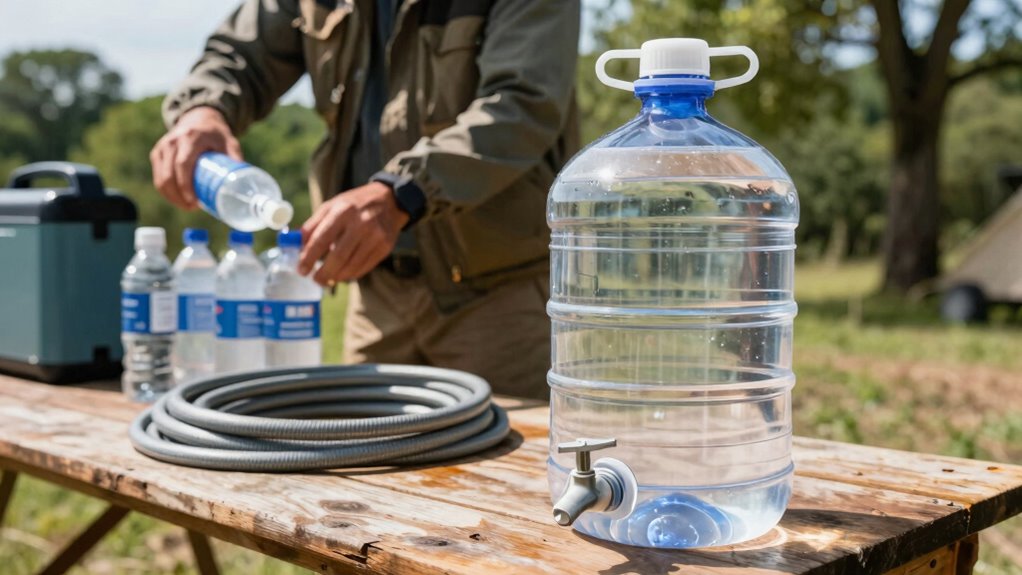
Ensuring a consistent water supply at camp can be challenging, but with a clear routine, you can make access more reliable. The key is to develop a system that taps into multiple sources and emphasizes water purification. One effective method is rainwater harvesting, which allows you to collect rainwater directly from roofs or other surfaces designed for runoff. Installing gutters and downspouts connected to clean storage containers makes it easy to gather water during rain showers. Make sure to position your collection system in a way that minimizes contamination, like away from animal activity or debris. Regularly check and clean your gutters and filters to keep the water flowing smoothly.
Once you’ve collected enough rainwater, water purification becomes critical. No matter how clean the source seems, always treat your water before use. Boiling is the simplest method—bring water to a rolling boil for at least a minute to eliminate bacteria and viruses. If you have access to water purification tablets or filters, incorporate them into your routine. Portable water filters can remove contaminants and improve taste, especially in areas where rainwater collection might not be enough. Make purification a daily habit, especially before drinking or cooking, to ensure safety. Additionally, understanding the importance of water quality standards can help you better assess the safety of your water sources.
To maintain a reliable water access routine, diversify your sources. Besides rainwater harvesting, consider storing water from other sources like nearby streams or wells, if available. Always keep extra containers filled and stored in a cool, shaded place. Establish a schedule—perhaps collecting rainwater after storms and purifying a set amount each day—so you know exactly when and how much water you’ll have. Consistency helps prevent shortages, especially during dry spells when rain isn’t falling. Incorporating water source diversification into your planning can further enhance your water security.
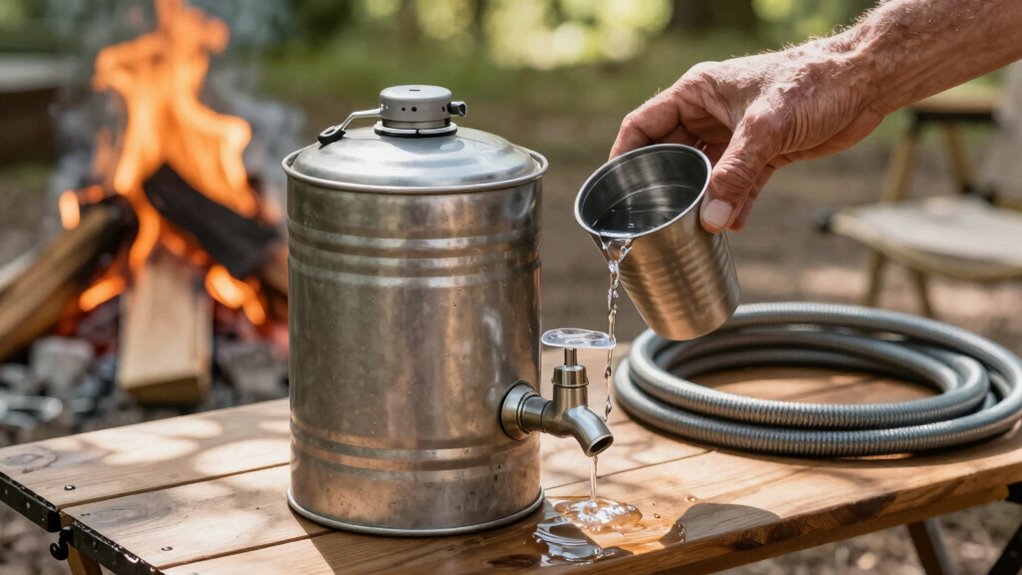
Other steps can boost your routine’s reliability. Keep your storage containers sealed to prevent contamination and periodically inspect for leaks or mold. Label your water containers clearly to avoid confusion. If your camp is long-term, think about setting up a backup system, such as a groundwater well or additional rainwater catchment units, to ensure you’re never left without water. Remember, the more proactive and organized you are with rainwater harvesting and water purification, the less you’ll worry about running out. Your routine should be simple enough to follow daily, yet thorough enough to guarantee safe, clean water whenever you need it. By integrating these practices, you’ll develop a dependable water access routine that keeps your camp well-supplied, no matter the weather.
portable rainwater collection system
As an affiliate, we earn on qualifying purchases.
As an affiliate, we earn on qualifying purchases.
Frequently Asked Questions
What Are the Best Water Filtration Methods for Camping?
You should choose filtration technology like pump filters, gravity filters, or UV purifiers for camping. These methods effectively remove bacteria, protozoa, and viruses, ensuring safe drinking water. To prevent contamination, always filter water from natural sources before drinking and clean your equipment regularly. Using reliable filtration technology helps you avoid waterborne illnesses and guarantees a consistent supply of clean water during your camping trip.
How Much Water Should I Carry per Person Daily?
You should carry about one to two gallons of water per person daily, depending on activity level and climate. Use reliable water storage containers to keep your supply organized and accessible. Remember hydration tips: drink regularly, even if you’re not thirsty, and consider water filtration methods for refilling. By planning ahead and managing your water supply smartly, you’ll stay hydrated and comfortable throughout your camping trip.
What Are Signs of Water Contamination to Watch For?
Watch for signs of water contamination like an unusual smell, taste, or color, which could indicate chemical pollutants. Also, be alert for waterborne pathogens causing stomach cramps, diarrhea, or nausea. Cloudy water, algae blooms, or debris are red flags. Always test water if you suspect contamination and avoid drinking water that’s questionable. Using purification methods like boiling or filtration helps eliminate these risks and keeps you safe.
How Do I Conserve Water During Dry Seasons?
Imagine your water supply as a fragile glass, easily shattered by waste. To conserve water during dry seasons, practice rainwater harvesting whenever possible, collecting every drop. Use water storage tips like sealing containers tightly and filling only what you need. Turn off taps when not in use, and limit unnecessary washing. By treating your water like treasure, you guarantee enough for essentials, even when supplies dwindle.
What Emergency Water Sources Should I Know About?
You should know about emergency water sources like nearby streams, lakes, or rainwater collections. Always keep emergency water storage containers on hand for quick access. Use water purification tablets to treat water from these sources, ensuring it’s safe to drink. Remember, having a reliable plan for accessing and purifying emergency water helps you stay prepared during unexpected situations, especially if your regular water supply becomes compromised.
As an affiliate, we earn on qualifying purchases.
Conclusion
By establishing a dependable water routine, you’ll guarantee your camp remains well-supplied and stress-free. Remember, even if it feels like a hassle at first, sticking to your schedule saves time and prevents shortages later. Don’t let the fear of inconvenience hold you back—your consistent effort creates a smoother, more enjoyable camping experience. With a little planning, reliable water access becomes second nature, making your outdoor adventure safer and more enjoyable.
collapsible water storage containers
As an affiliate, we earn on qualifying purchases.
As an affiliate, we earn on qualifying purchases.
As an affiliate, we earn on qualifying purchases.
Halloween Picks
halloween
As an affiliate, we earn on qualifying purchases.