To test your new outdoor gear effectively, set aside time to inspect everything carefully for any damage or missing parts. Simulate trip conditions by using your gear in similar weather and for extended periods. Load your backpack with expected weight and pitch tents at home to check stability and setup. Experiment with different weather scenarios like rain or wind to spot issues early. Keep detailed notes; if you keep going, you’ll discover even more tips to guarantee you’re fully prepared.

Get emergency and outdoor gear delivered free with Prime
- Fast, free delivery on millions of items
- Prime Video, Amazon Music and more included
- Member-only deals all year
Key Takeaways
- Conduct thorough inspections and setup tests at home to identify and fix issues early.
- Simulate real trip conditions by carrying gear for extended periods and loading with expected weight.
- Pitch tents and use camping gear in various weather scenarios to assess performance and durability.
- Test all equipment components, including clothing, boots, and accessories, under different environmental conditions.
- Record observations and make necessary adjustments to ensure reliability and comfort before the trip.
Are you ready to guarantee your outdoor gear is up to the challenge? Before you head out on your big trip, testing your camping gear and hiking equipment is essential. Rushing into a trip with gear that’s untested can lead to discomfort, inconvenience, or even safety issues. The key is to simulate real conditions as closely as possible, so you know exactly how your gear performs when it counts. Start by inspecting everything carefully—check for tears, loose stitching, or missing parts. Even the sturdiest camping gear can develop weaknesses over time, so give everything a thorough once-over. Once your gear looks good, it’s time to put it to the test.
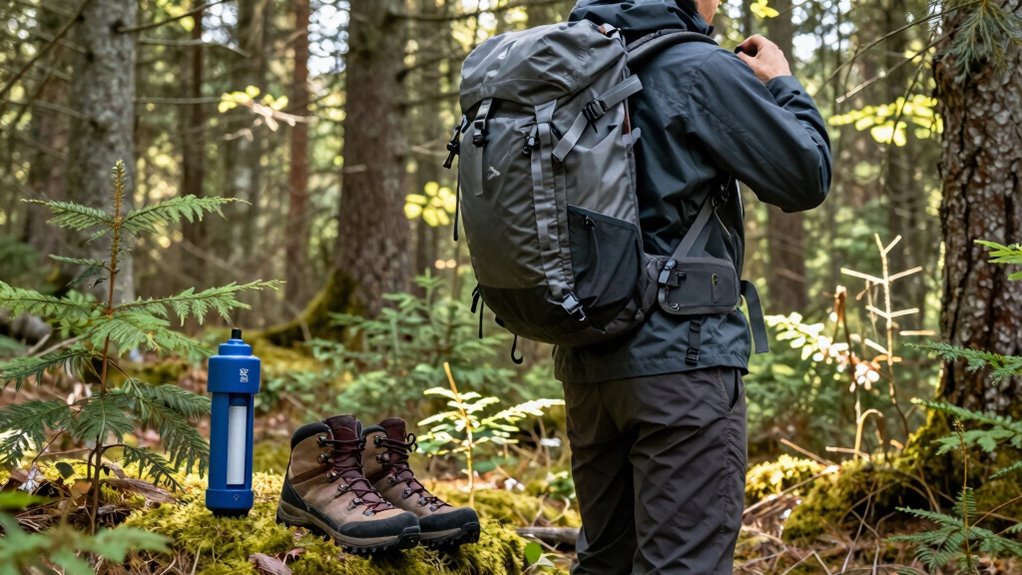
Set up a trial run that mimics your planned trip. If you’re planning a multi-day hike, try carrying your hiking equipment for a few hours or a full day. Load your backpack with the weight you expect to carry, and walk around your neighborhood or local trails. This helps you gauge how comfortable your pack feels, whether your straps need adjustment, or if your load is causing any strain. Don’t just test your hiking gear—test your entire setup, including your boots, clothing, and accessories. If you’re using a tent, pitch it at home and test its stability, setup time, and weather resistance. Use your camping gear as you would on your trip: test your sleeping bag, cooking equipment, and lighting. This way, you’ll identify any issues beforehand and avoid surprises in the wilderness.
Try a full gear test run to identify issues and ensure comfort before your adventure.
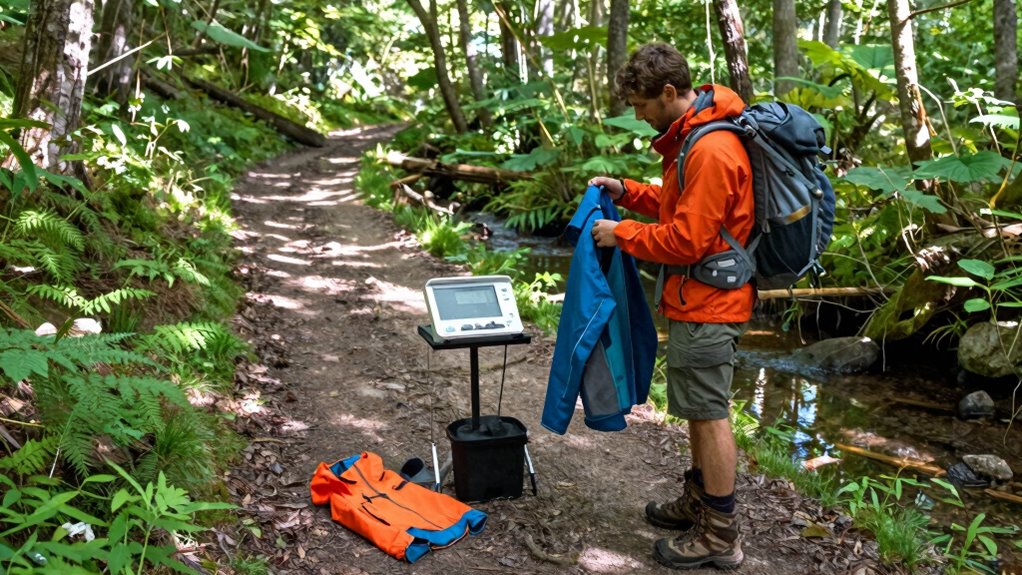
Pay attention to how your gear performs in different conditions. If possible, simulate weather conditions—set up your tent in the rain or practice cooking in wind. Take notes on what works well and what needs improvement. If your gear isn’t comfortable or functional, now’s the time to make adjustments or consider alternatives. You might find that a certain piece of hiking equipment is too heavy, or your camping gear isn’t insulating enough. Making these changes early means you won’t waste your trip struggling with faulty equipment. Remember, testing isn’t just about functionality—it’s about comfort and confidence. When you’re familiar with your gear, you’ll move more efficiently and enjoy your adventure without hesitation.
Additionally, utilizing template compatibility testing can help you ensure your gear setup aligns with your home office organization, making it easier to adapt and prepare efficiently. Understanding how your gear setup aligns with emerging trends in digital publishing can also streamline your preparation process and improve your overall experience. Conducting a thorough inspection of your gear can also prevent unexpected equipment failures that might occur during your trip. Incorporating smart fitness technology into your prep can even help monitor your physical readiness and endurance before hitting the trail. Recognizing the importance of gear durability can guide you in selecting equipment that stands up to the rigors of outdoor adventures. When you’re familiar with your gear, you’ll move more confidently and enjoy your adventure without hesitation.
In the end, testing your outdoor gear thoroughly before your trip ensures you’re prepared for anything. It’s a small investment of time that pays off by giving you peace of mind. When your camping gear and hiking equipment perform flawlessly, you can focus on the experience—exploring, relaxing, and making memories. So, take the time to test, tweak, and perfect your setup. Your future self will thank you when everything works seamlessly in the wild.
As an affiliate, we earn on qualifying purchases.
Frequently Asked Questions
How Often Should I Test My Outdoor Gear Before a Trip?
You should test your outdoor gear at least a few weeks before your trip, giving yourself time to identify any issues. Store your gear properly in a dry, accessible space to maintain it in top shape. Use packing techniques that allow you to simulate your trip, so you can check comfort and functionality. Regular testing ensures your gear performs well when you need it most, reducing last-minute surprises.
Can I Simulate Real Outdoor Conditions During Testing?
Of course, you can simulate real outdoor conditions—who needs actual mountains or rain, right? Use weather simulation tools and terrain replication techniques to mimic rain, wind, and rugged paths. Just set up a backyard storm, or a treadmill with uneven surfaces, and pretend you’re conquering Everest. This way, your gear gets a taste of real outdoor challenges without leaving your backyard, making sure you’re ready for the big trip.
What’s the Best Way to Break in New Outdoor Footwear?
To break in new outdoor footwear, wear them around your home first, gradually increasing walking time. Focus on proper gear maintenance, like keeping your shoes dry and clean, to prevent blisters. During packing strategies, include your new shoes to make certain they fit well with your gear. Avoid rushing the process, and listen to your feet, so you can identify pressure points and prevent discomfort on your trip.
How Do I Assess Gear Durability During Testing?
You assess gear durability by closely inspecting the material for signs of wear, tears, or fraying during testing. Perform regular gear maintenance, like cleaning and drying, to keep materials in top condition. Use a tactile approach—feel for thinning or weakness—and look for any discoloration or deformation. Document any issues to determine if the gear can withstand your trip’s demands, ensuring reliability when it matters most.
Should I Test Gear Alone or With a Group?
You should test gear both alone and with a group, as each offers unique benefits. Solo testing allows you to focus on gear customization and thoroughly evaluate performance, while group testing provides diverse feedback and real-world scenarios. Use testing equipment to track results accurately. Combining both methods helps guarantee your gear is reliable, comfortable, and suited to your needs, giving you confidence before your big trip.
camping tent weather resistance test
As an affiliate, we earn on qualifying purchases.
As an affiliate, we earn on qualifying purchases.
Conclusion
Testing your outdoor gear before a big trip is essential—over 60% of outdoor enthusiasts have experienced gear failure during a trip, leading to uncomfortable or even dangerous situations. By thoroughly testing items like tents, boots, and backpacks beforehand, you guarantee reliability and comfort when it counts most. Remember, taking the time to evaluate your gear now can make all the difference between a successful adventure and a frustrating ordeal. Prepare smart, and enjoy your trip worry-free!
As an affiliate, we earn on qualifying purchases.
camping cookware and lighting set
As an affiliate, we earn on qualifying purchases.
As an affiliate, we earn on qualifying purchases.
Fall Picks
fall essentials
As an affiliate, we earn on qualifying purchases.