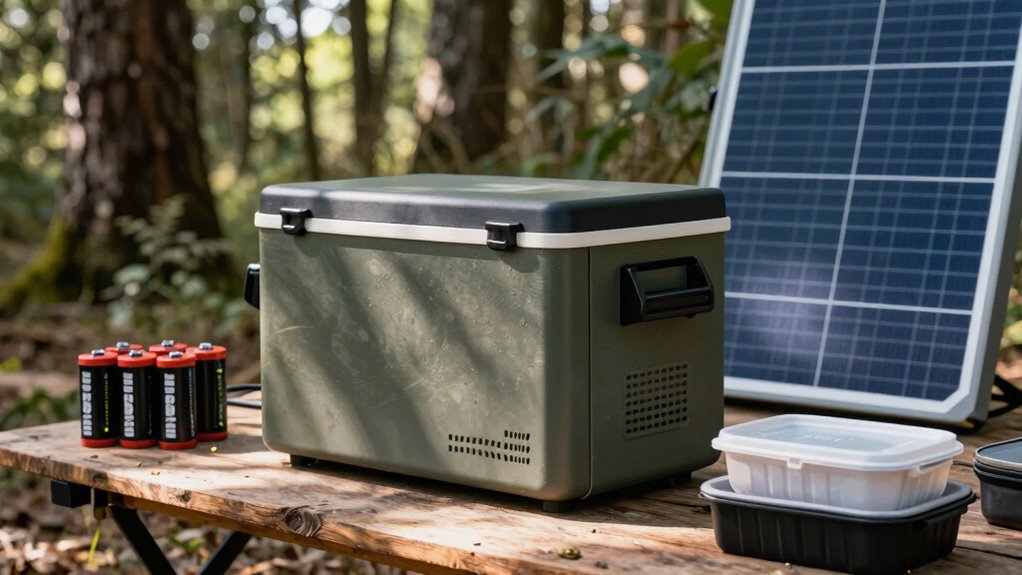
Before building a fridge-based food setup, you need to understand your power options, such as batteries, solar, or generators, and how they impact your trip. Organize your fridge efficiently by keeping essentials accessible and preventing cross-contamination. Use temperature monitors to guarantee food stays safe and plan for insulation or backup power during cold nights. Making these smart choices now will help keep your food fresh and secure; explore more to confirm your setup is reliable and safe.

Get emergency and outdoor gear delivered free — and shop member deals
- Fast, free delivery on millions of items
- Access to Prime Big Deal Days deals on October 6–7
- Prime Video, Amazon Music and more included
Key Takeaways
- Choose reliable power sources like batteries, solar panels, or generators, considering availability and trip duration.
- Properly organize and label food to prevent cross-contamination and maintain internal temperatures.
- Regularly monitor internal fridge temperatures to ensure food safety and prevent spoilage.
- Incorporate insulation and backup cooling methods to maintain consistent temperatures in varying weather conditions.
- Plan for recharging or fueling power sources to ensure continuous operation throughout the trip.
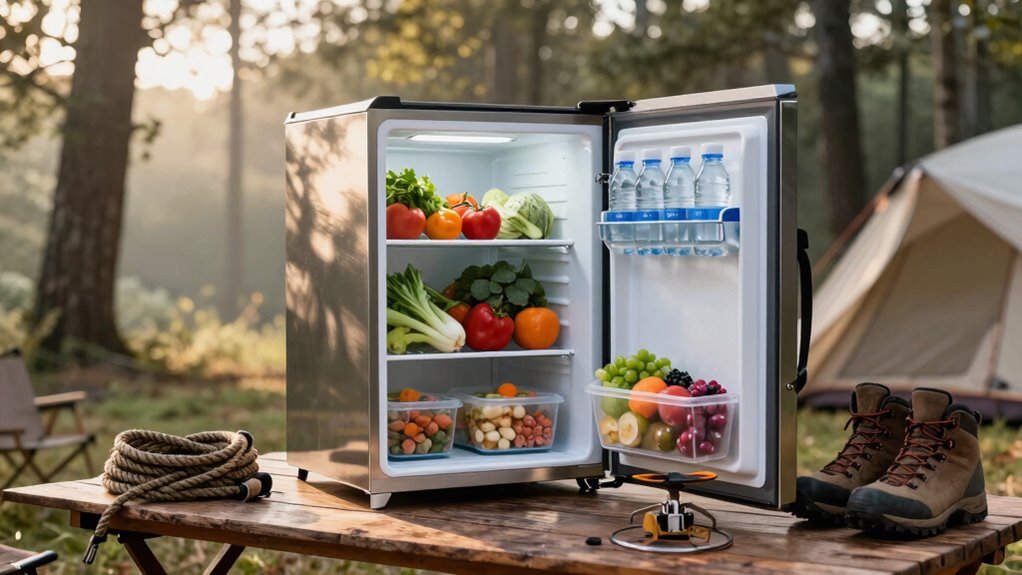
Setting up a fridge food system for your camping trip can make meal prep easier and keep your perishable items fresh longer. Before you start, it’s essential to consider how you’ll power your portable fridge. Portable power is the backbone of a reliable fridge setup in the wild. You’ll want a dependable power source, whether that’s a deep-cycle battery, portable solar panels, or a portable generator. Each option has pros and cons: solar panels are eco-friendly and quiet but depend on sunlight, while batteries and generators offer consistent power but may require extra planning for recharging or fuel. Making sure you have enough portable power to run your fridge throughout your trip prevents spoilage and keeps your food safe.
Ensure reliable power sources like batteries, solar, or generators to keep your food fresh and prevent spoilage during camping trips.
Next, think about how you’ll manage food preservation. Proper food preservation techniques are critical for avoiding spoilage, especially when refrigeration options are limited or inconsistent. Keep perishable items in sealed containers to prevent cross-contamination and odor transfer. Use ice packs or frozen foods to help maintain cold temperatures longer, especially if your fridge isn’t running continuously or if power supply fluctuates. It’s wise to pre-chill your fridge before packing, which helps stabilize internal temperatures quickly once you’re on the trail. Additionally, plan your meals to minimize the amount of perishables you bring, reducing the risk of spoilage and waste. When possible, opt for non-perishable or dehydrated foods to supplement fresh items, ensuring you always have backup options when power or refrigeration isn’t ideal. Being aware of portable power options and their limitations will help you better plan for your trip’s needs. Being familiar with food preservation techniques can further boost your ability to extend the freshness of your supplies.
Organizing your fridge setup is also key. Keep frequently used items at the front for easy access, and store raw meats below ready-to-eat foods to prevent cross-contamination. Label your containers clearly to avoid confusion and unnecessary opening of the fridge, which can lead to temperature fluctuations. Consider adding insulation or thermal blankets around your portable fridge during colder nights to help maintain consistent temperatures without overtaxing your power source. If you’re staying in one spot for several days, you might even set up a secondary cooler with ice for overflow or short-term storage, freeing up space in your main fridge. Being aware of limitations of your power sources and their impact on your setup can help you avoid unexpected spoilage or power failures during your adventure. Staying vigilant with temperature monitoring is essential to ensure your food remains safe and fresh throughout your trip. Regular checks will allow you to make quick adjustments, such as increasing insulation or switching to backup power, to keep your food in safe conditions.
Finally, regular monitoring is essential. Use a thermometer to track internal temperatures and ensure food stays within safe ranges. Adjust your power and insulation strategies as needed based on the weather and your trip’s duration. Being proactive about your portable power management and food preservation techniques guarantees that your fridge setup remains effective throughout your adventure, offering peace of mind and delicious, fresh meals amid the wilderness.
portable camping fridge with battery power
As an affiliate, we earn on qualifying purchases.
As an affiliate, we earn on qualifying purchases.
Frequently Asked Questions
How Do I Prevent My Fridge From Draining My Camper’s Power?
To prevent your fridge from draining your camper’s power, use a highly energy-efficient model and optimize its settings. Incorporate solar power to supplement energy, reducing strain on your main system. Keep the fridge properly insulated, and regularly check door seals to prevent cold air loss. Consider installing a thermostat to regulate temperature precisely, ensuring your fridge runs only when needed. This approach helps conserve energy and keeps your camper powered longer.
What Are the Best Insulation Options for Camper Fridge Setups?
Think of insulation as the cozy blanket wrapping your camper’s fridge. You should choose high-quality insulation materials like foam board or spray foam, which provide excellent thermal resistance. Use effective insulation techniques, such as sealing gaps and adding extra layers around the fridge. This keeps the cold in and the heat out, reducing energy drain and making your setup more efficient. Proper insulation transforms your fridge into a fortress against temperature fluctuations.
How Often Should I Defrost My Camper Fridge?
You should defrost your camper fridge when you notice a buildup of ice that’s about a quarter-inch thick, typically every 3 to 4 months. If your fridge has an automatic defrost feature, it handles most of the work, so manual defrosting isn’t needed as often. However, if you don’t have automatic defrost, make sure to defrost regularly to maintain efficiency and prevent excessive ice buildup, which can impair cooling.
Can I Use a Regular Home Fridge in My Camper?
Using a regular home fridge in your camper isn’t ideal. While it might seem convenient, home fridges lack the energy efficiency needed for camping, draining your power quickly. Plus, proper ventilation requirements are often overlooked, risking overheating and damage. You’ll find that RV or camper-specific models are designed for mobile use, conserving energy and ensuring adequate airflow, making your camping experience safer and more efficient.
What Safety Precautions Are Needed When Installing a Camper Fridge?
When installing a camper fridge, prioritize electrical safety by ensuring all wiring is properly insulated and grounded. Follow ventilation requirements closely to prevent overheating and maintain efficiency. Avoid blocking vents, and install the fridge in a well-ventilated area. Always disconnect power before working on electrical components, and consider consulting a professional if you’re unsure about wiring or ventilation setup. These precautions keep you safe and your fridge functioning at its best.
solar panel for camping refrigerator
As an affiliate, we earn on qualifying purchases.
As an affiliate, we earn on qualifying purchases.
Conclusion
With your fridge-based food setup in place, you’re now the captain steering your culinary ship through the wilds. Think of it as a trusty lighthouse, guiding your supplies safely through the stormy seas of adventure. Keep it organized, stay vigilant about maintenance, and your meals will be as fresh as a morning dawn. Embrace this setup, and let your camping journey be a flavorful voyage, filled with delicious discoveries every step of the way.
portable generator for camping fridge
As an affiliate, we earn on qualifying purchases.
As an affiliate, we earn on qualifying purchases.
fridge temperature monitor for camping
As an affiliate, we earn on qualifying purchases.
As an affiliate, we earn on qualifying purchases.
Fall Picks
fall essentials
As an affiliate, we earn on qualifying purchases.