
To keep your food system simple on longer outdoor trips, focus on lightweight, non-perishable, and easy-to-prepare foods like dehydrated meals, energy bars, and instant soups. Use resealable bags or containers to keep ingredients fresh and organize meals in advance. Opt for minimal cooking steps and quick options like oats or couscous. Proper packaging, portioning, and pre-measuring save space and time. Stay efficient and stress-free by mastering these tips, and you’ll discover more ways to streamline your trips.
Get ready for Prime Big Deal Days — try Prime free
Exclusive member deals on October 6–7, plus fast free delivery. Cancel anytime.
As an affiliate, we earn on qualifying purchases.
Key Takeaways
- Use lightweight, non-perishable, and pre-portioned foods like dehydrated meals and energy bars.
- Pack with resealable bags or durable containers, labeling contents and dates for easy organization.
- Opt for quick-prep options such as instant soups, oats, or couscous to minimize cooking steps.
- Pre-measure ingredients and create meal kits to streamline preparation and cooking in the field.
- Focus on simple menus with versatile foods to reduce packing, preparation time, and potential issues.
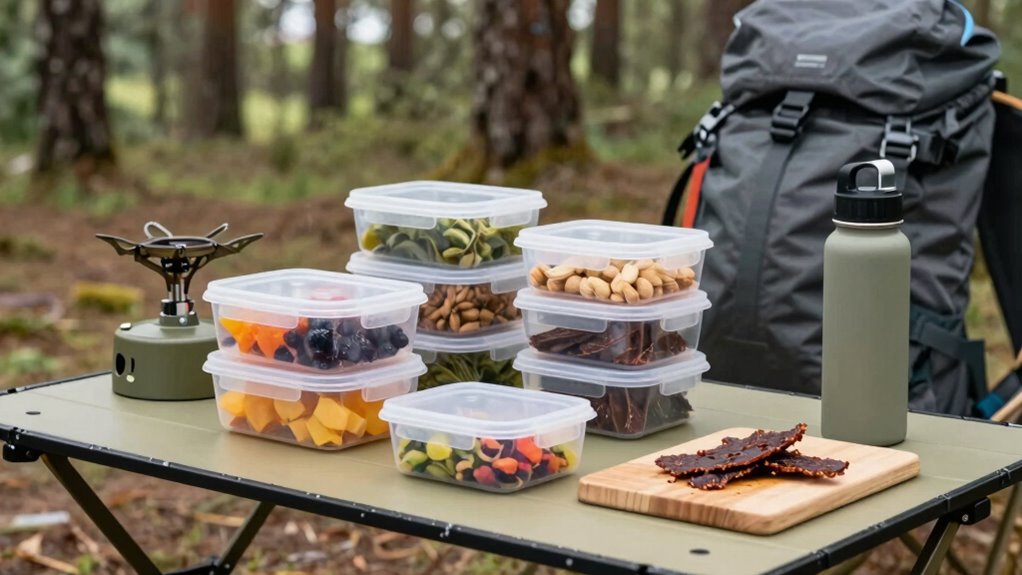
Are you prepared to sustain yourself during outdoor adventures? When venturing into the wilderness for extended periods, keeping your food system simple is vital. It helps you stay energized without the hassle of complicated cooking or hauling heavy supplies. The key lies in effective meal planning and smart packaging techniques that streamline your food management. Before heading out, spend time organizing your meals around lightweight, non-perishable items. Focus on foods that are easy to prepare, nutritious, and versatile enough to mix and match. Think dehydrated meals, trail mix, energy bars, and instant soups. By planning your meals in advance, you reduce the risk of overpacking or forgetting essentials, and you can guarantee each meal provides balanced nutrition to keep you active and alert.
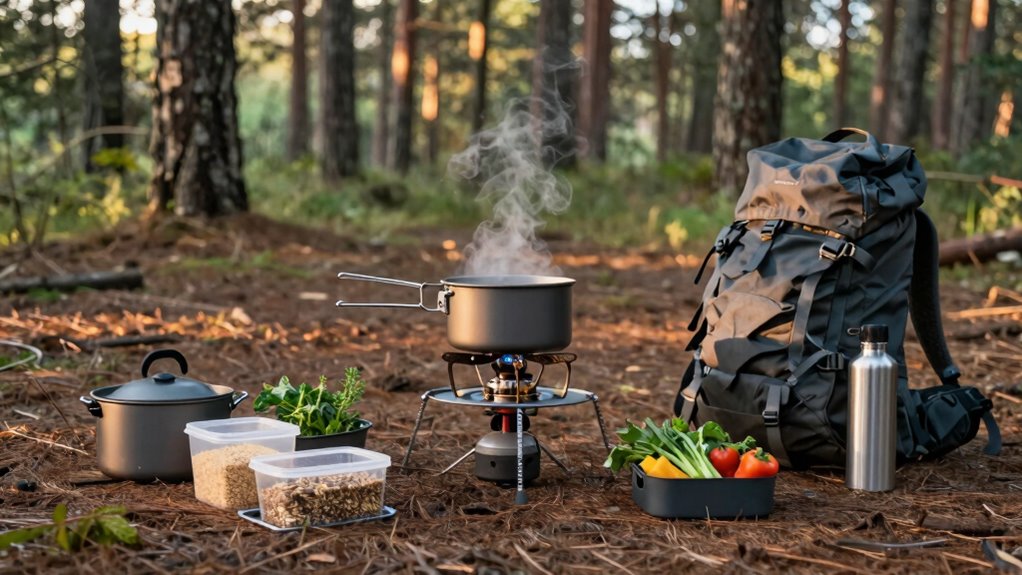
When it comes to packaging techniques, simplicity is your best friend. Use resealable plastic bags or durable containers to keep ingredients fresh and prevent spills. Portion out your meals and snacks into individual servings, which makes eating on the trail more convenient and helps you control your intake. Vacuum-sealing is an excellent option for preserving bulk foods and saving space, but if that’s not feasible, airtight packaging works just as well. Labeling each package with the contents and date can save you time and confusion in the field. Additionally, consider using multi-use utensils and lightweight cookware to minimize pack weight and avoid unnecessary clutter. Pre-measured ingredients or meal kits can greatly cut down cooking time and reduce the number of items you need to carry. Incorporating efficient storage methods can further enhance your food system’s simplicity and effectiveness.
Another way to keep your food system simple is to stick with a straightforward menu. Avoid complicated recipes that require multiple ingredients or long preparation times. Instead, focus on meals that can be cooked or prepared with minimal effort, like instant oatmeal, couscous, or freeze-dried dishes. These options are not only quick but also reliable in terms of storage and preparation. Remember, the fewer steps involved, the less chance for problems to arise—no one wants to fumble with multiple pots or scramble to find ingredients when you’re excited to eat after a long day. By combining thoughtful meal planning with effective packaging techniques, you can keep your food system manageable, guaranteeing you stay nourished without added stress. This approach allows you to focus on the adventure itself, rather than worrying about complicated logistics or unnecessary weight.
As an affiliate, we earn on qualifying purchases.
Frequently Asked Questions
How Do I Prevent Food From Spoiling Without Refrigeration?
To prevent food from spoiling without refrigeration, focus on food preservation techniques like drying, smoking, or curing perishable items. Use airtight containers to prevent spoilage caused by moisture and pests. Pack non-perishable foods like canned goods, dried fruits, and nuts that naturally resist spoilage. Keep foods in a cool, shaded spot, and consume perishable items early. Proper spoilage prevention keeps your food safe and fresh during your outdoor adventure.
What Are Lightweight Food Options for Long Hikes?
For long hikes, opt for lightweight food options like dehydrated snacks and nutritious bars. These are easy to carry, don’t take up much space, and provide quick energy. Dehydrated snacks, such as dried fruits or jerky, stay fresh without refrigeration. Nutritious bars offer a balanced mix of carbs, protein, and fats, keeping you fueled throughout your hike. They’re convenient, lightweight, and perfect for staying energized on the trail.
How Can I Cook Food Efficiently Outdoors?
Think of your outdoor kitchen as a well-oiled machine. To cook efficiently, master campfire techniques like stacking firewood or using a grill grate. Use portable cooking gear like lightweight stoves or compact pots to save space and fuel. Prepping ingredients beforehand speeds up cooking, and keeping everything organized makes the process smooth. With practice, you’ll turn outdoor cooking into a symphony rather than a chaotic storm.
What Are the Best Ways to Store Leftovers?
To store leftovers effectively, always use reusable containers with tight-sealing lids to prevent spills and spoilage. Vacuum sealing is another excellent method, removing air to keep food fresh longer and save space. Store leftovers in a cool, shaded spot if refrigeration isn’t available, and label containers with dates. This way, you’ll reduce waste, stay organized, and guarantee your food stays safe and tasty for later consumption.
How Do I Manage Food Waste Responsibly?
To manage food waste responsibly, you should use eco-friendly packaging for leftovers and avoid unnecessary plastic. When possible, compost food scraps using suitable composting methods like portable compost bins or designated compost stations. Always plan portions carefully to minimize waste, and pack out all trash if composting isn’t an option. This approach helps reduce your environmental impact and keeps your outdoor trip sustainable and enjoyable.
reusable food storage containers for camping
As an affiliate, we earn on qualifying purchases.
As an affiliate, we earn on qualifying purchases.
Conclusion
As you pack up your gear and head into the wilderness, remember that simplicity keeps your food system smooth and enjoyable. Picture yourself reaching into a well-organized bag, grabbing a familiar snack or a hearty meal without fuss. With streamlined choices, you can focus on the breathtaking views and the peaceful silence around you. Keep it simple, stay prepared, and let the natural beauty of your outdoor adventure fuel your spirit and satisfy your hunger.
instant oatmeal packets for camping
As an affiliate, we earn on qualifying purchases.
As an affiliate, we earn on qualifying purchases.
lightweight camping cookware set
As an affiliate, we earn on qualifying purchases.
As an affiliate, we earn on qualifying purchases.
Fall yard work Picks
leaf blowers
As an affiliate, we earn on qualifying purchases.