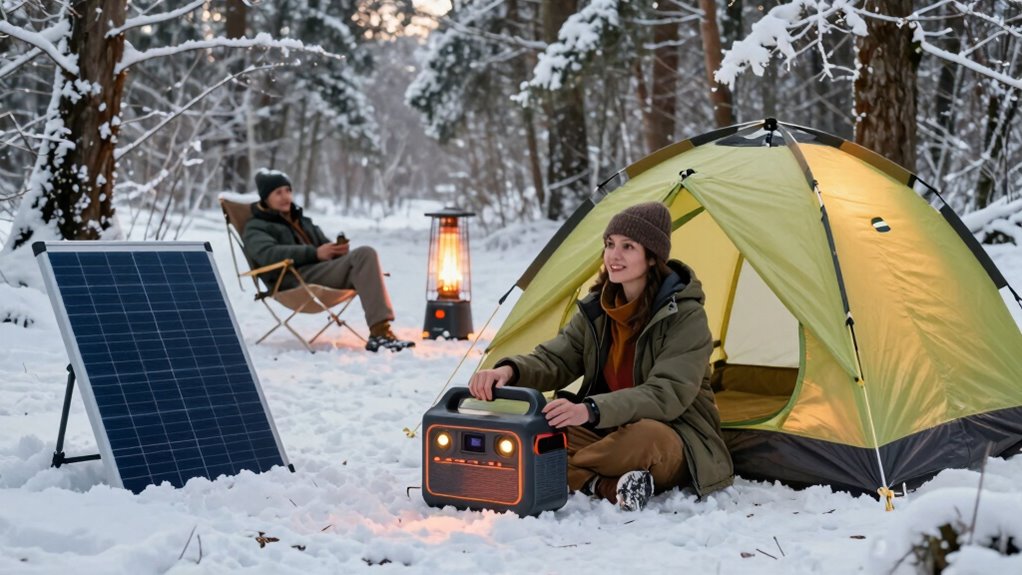
Portable energy solutions greatly influence your camping choices in both cold and hot weather. In cold conditions, reliable batteries and insulated storage help keep devices powered and your environment warm, while solar panels may be less effective due to snow and shorter days. In hot weather, you’ll rely on portable fans or cooling devices powered efficiently, often through solar or larger batteries. Your decisions about gear, energy sources, and placement become essential for comfort and safety in any climate—discover how to optimize your setup.

Get emergency and outdoor gear delivered free — and shop member deals
- Fast, free delivery on millions of items
- Access to Prime Big Deal Days deals on October 6–7
- Prime Video, Amazon Music and more included
Key Takeaways
- In cold weather, reliable portable energy supports heating and maintains battery performance despite temperature drops.
- Hot weather enhances solar panel efficiency, influencing the choice of solar-powered camping gear.
- Cold temperatures can reduce battery capacity, prompting decisions to carry larger or temperature-controlled batteries.
- Limited daylight hours in winter require strategic energy planning for continuous device operation.
- Weather variations dictate energy source preferences, balancing solar, battery, and alternative power options for safety and comfort.
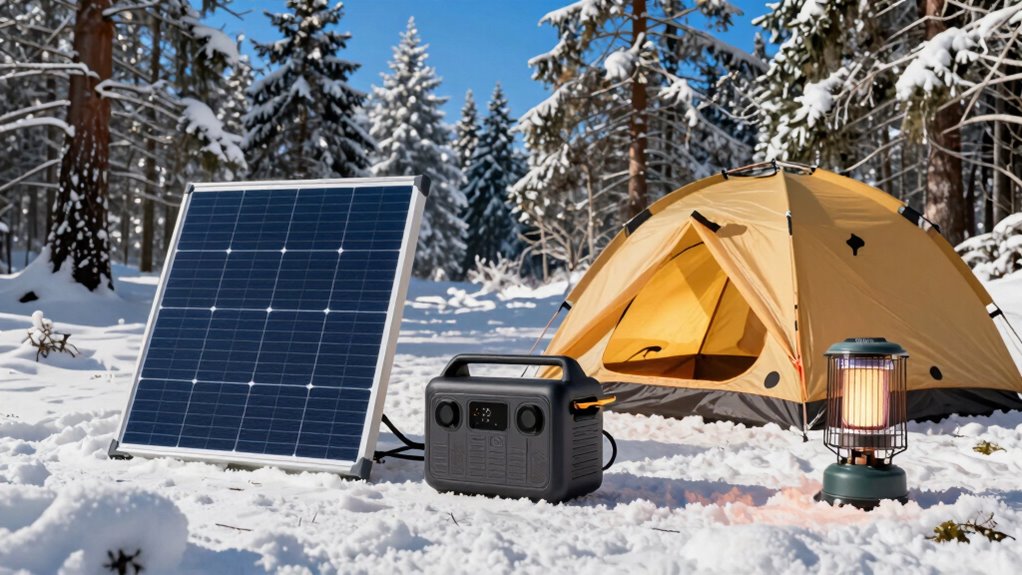
Have you ever wondered how your energy choices can impact your camping experience? When you’re out in the wilderness, relying on portable energy sources isn’t just about convenience — it’s about ensuring you stay comfortable, safe, and connected. In cold weather, reliable energy can mean the difference between a warm night’s sleep and freezing conditions that make camping miserable. Conversely, in hot weather, it helps you keep your gear powered, stay cool, and manage your hydration. The key lies in understanding how portable energy solutions, like solar power and battery capacity, influence your decisions and overall experience.
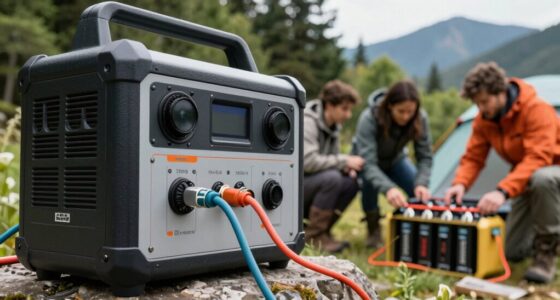
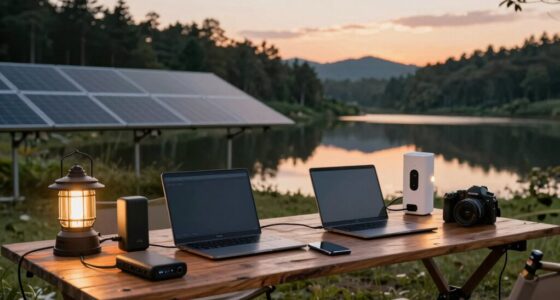
Solar power has become a game-changer for campers, especially in unpredictable weather. During sunny days, solar panels can harvest enough energy to keep your devices charged, your lights glowing, and even power small appliances. The beauty of solar power is its renewable nature — as long as the sun’s shining, you’re generating power without needing to carry heavy batteries or fuel. However, in cold weather, solar panels might underperform due to shorter daylight hours and snow cover, so you’ll want to plan ahead. For hot weather camping, solar power can be more reliable, especially if you’re staying in sunnier regions. It reduces the need to carry extra fuel or batteries, making your setup lighter and more sustainable. Additionally, solar energy can be harnessed in various ways to adapt to different weather conditions and maximize efficiency. Proper solar panel placement is also crucial to optimize energy collection in varying conditions. Understanding the impact of weather on solar efficiency can help you better prepare your energy setup.
Solar power is a renewable, eco-friendly way to keep devices charged, especially in sunny weather.
Battery capacity plays a crucial role in both cold and hot weather camping. A larger capacity means you can store more energy, which is invaluable during extended trips or cloudy days when solar energy isn’t enough. For cold weather camping, a high-capacity battery can keep your portable heater, LED lights, and communication devices running through frigid nights. In hot climates, it helps power fans, cooling devices, and recharge your electronics without worry. When choosing batteries, consider how temperature affects their performance. Cold temperatures can reduce a battery’s efficiency, so investing in batteries designed for low-temperature performance ensures you don’t run out of power when you need it most. Proper battery maintenance can also extend their lifespan and performance in varying conditions. To maximize their lifespan, storing batteries in insulated or temperature-controlled conditions when not in use can help preserve their efficiency over time. Additionally, understanding the impact of temperature on battery performance can help you select the best power storage options for different weather scenarios. The right combination of energy sources can significantly enhance your overall camping experience regardless of weather conditions.
portable battery pack for camping
As an affiliate, we earn on qualifying purchases.
As an affiliate, we earn on qualifying purchases.
Frequently Asked Questions
How Does Portable Energy Affect Campsite Safety?
Portable energy enhances your campsite safety by reducing reliance on open flames, which helps prevent campfire accidents and promotes better campfire safety. It also boosts weather adaptability, allowing you to stay warm and cook safely regardless of temperature changes. With portable energy, you can maintain a safe environment, avoid risky behaviors, and respond effectively to weather shifts, ensuring a safer and more enjoyable camping experience.
Can Portable Energy Sources Power High-Energy Camping Devices?
Think of portable energy sources as the heartbeat of your camping adventure. Yes, renewable batteries and solar chargers can power high-energy devices, but their capacity varies. For essential gadgets like lights or small appliances, they work well. However, for high-demand devices like heaters or large fans, you may need larger, dedicated power solutions. Always match your device’s energy needs with the capacity of your renewable batteries or solar chargers to keep your adventure alive.
Are Portable Energy Options Eco-Friendly for Outdoor Use?
Yes, portable energy options can be eco-friendly for outdoor use, especially when they utilize renewable sources like solar or wind power. These options reduce your environmental impact by minimizing emissions and reliance on fossil fuels. You can confidently choose eco-friendly portable energy devices, knowing they help conserve natural environments while providing reliable power for your camping needs. Opting for sustainable energy sources ensures you enjoy outdoor adventures responsibly.
How Long Does Portable Energy Typically Last During Camping Trips?
Think of portable energy as a trusty river that flows during your camping adventure. Your battery capacity determines how much water (energy) you have, and power lifespan is how long that water keeps flowing. Typically, a fully charged portable battery lasts anywhere from 6 to 24 hours, depending on what you’re powering. To extend your trip, bring extra batteries or choose high-capacity ones that last longer through your outdoor journey.
What Are the Cost Differences Between Various Portable Energy Types?
You’ll find that the cost differences between portable energy types vary based on battery efficiency and fuel cost comparison. Lithium-ion batteries tend to be more expensive upfront but offer higher efficiency and longer lifespan, saving you money over time. Gasoline or propane generators are cheaper initially but have higher fuel costs. Consider your usage needs; investing in efficient batteries might save you money in the long run, especially for frequent campers.
As an affiliate, we earn on qualifying purchases.
Conclusion
Think of portable energy as your trusty compass, guiding your camping adventure through seasons of cold and heat. When you have enough power, it’s like having a warm campfire in winter or a cool breeze in summer—comfort that shapes your decisions. Without it, you’re steering a stormy sea with no lighthouse. So, equip yourself wisely, and let portable energy be the steady beacon that guarantees your camping journey remains safe, cozy, and unforgettable, no matter the weather.
As an affiliate, we earn on qualifying purchases.
camping fan with rechargeable battery
As an affiliate, we earn on qualifying purchases.
As an affiliate, we earn on qualifying purchases.
Evergreen bestsellers Picks
bestsellers
As an affiliate, we earn on qualifying purchases.