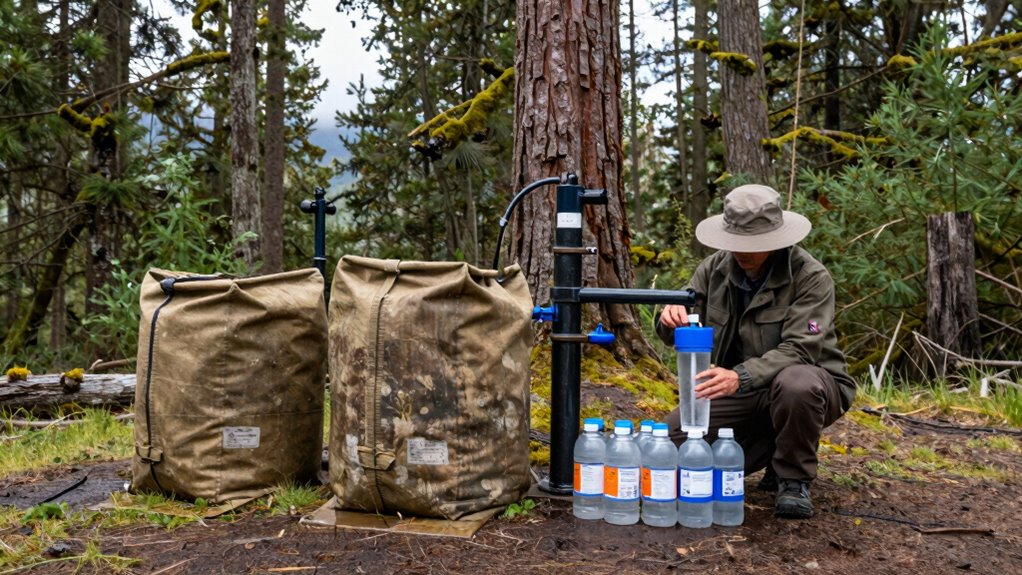

To prepare for camps with unreliable water sources, carry trustworthy purification tools like portable filters or chemical purifiers, and practice using them beforehand. Always have extra bottled water for initial needs and backup supplies in case sources run dry or are contaminated. Monitor environmental updates and follow local guidance to stay informed. Conserve water by limiting usage and collecting rainwater when possible. Staying well-prepared guarantees your safety and comfort throughout your trip, so keep these tips in mind.

Get emergency and outdoor gear delivered free — and shop member deals
- Fast, free delivery on millions of items
- Access to Prime Big Deal Days deals on October 6–7
- Prime Video, Amazon Music and more included
Key Takeaways
- Carry sufficient bottled water and backup supplies to ensure hydration during shortages.
- Bring reliable water purification tools and practice using them beforehand.
- Research recent water safety reports and environmental conditions in the area.
- Collect rainwater and implement conservation techniques to extend water availability.
- Regularly check and maintain purification equipment for reliability and proper operation.
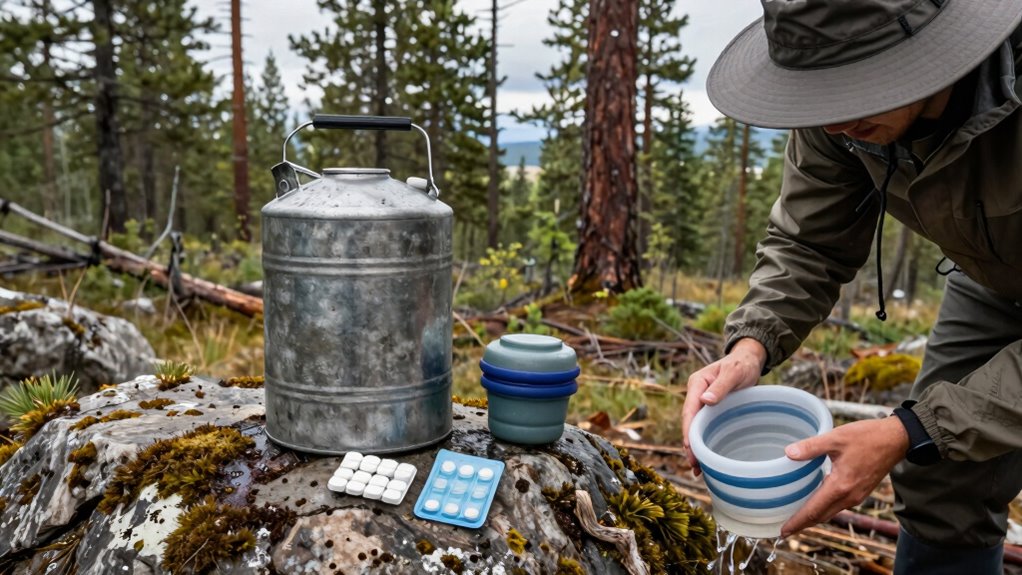
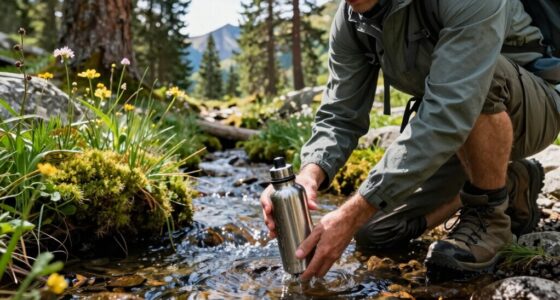
When camping in areas with unreliable water sources, thorough preparation becomes essential to guarantee your safety and comfort. The last thing you want is to run out of safe drinking water in the middle of your trip. To prevent this, you need to plan ahead by bringing the right equipment and knowledge about water purification. Ensuring access to clean water isn’t just about convenience; it’s about your health. You should always carry a reliable water purification system, such as portable filters or chemical purifiers, so you can treat water from natural sources. These tools remove harmful bacteria, viruses, and parasites, making questionable water safe to drink. Remember, untreated water from lakes, streams, or springs can carry pathogens that cause serious illness, so never assume it’s safe without proper purification.
Always carry reliable water purification tools to ensure safe drinking water in natural sources.
In addition to purification tools, you must prioritize emergency hydration strategies. Always carry an ample supply of bottled water for the initial days, especially if you’re unsure about the water sources along your route. Keep in mind that water sources can become scarce or contaminated unexpectedly, so having backup supplies is essential. When you do rely on natural sources, test the water before drinking by observing its clarity and smell, but never depend solely on sight or scent. Instead, treat it with your purification method. This guarantees you’re protected even if the water looks clean.
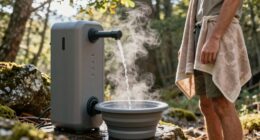
To make your water last longer, consider implementing conservation techniques. Use water sparingly and only for essential needs. Collect rainwater if possible, and be mindful of your consumption during the trip. Staying hydrated is critical, especially in challenging conditions, so plan your water intake carefully. For emergency hydration, know how to use your purification devices correctly. Practice with your equipment before your trip so you’re familiar with their operation, which can save precious time in a pinch.
Also, stay informed about the environment you’re camping in. Check with local authorities or park rangers for recent reports on water safety. Being aware of recent contamination or drought conditions can influence your water management plan. Remember, preparation isn’t just about packing the right gear; it’s also about understanding how to use it effectively. By combining proper water purification techniques with strategic hydration planning, you’ll be ready to face even the most uncertain water situations confidently. Your safety depends on your readiness, so take these steps seriously and enjoy your adventure with peace of mind.
portable water filter for camping
As an affiliate, we earn on qualifying purchases.
As an affiliate, we earn on qualifying purchases.
Frequently Asked Questions
How Long Can I Safely Store Potable Water?
You can safely store potable water for about six months if you use proper water storage containers and follow water preservation techniques. To guarantee its safety, keep containers in a cool, dark place and regularly check for signs of contamination or spoilage. Using airtight containers minimizes bacteria growth, and adding water preservatives can extend shelf life. Remember, rotating your stored water every few months keeps it fresh and safe for drinking.
What Are the Best Water Purification Methods?
You should use chemical treatment options like iodine or chlorine tablets to disinfect water effectively. Filtration techniques, such as portable pumps or ceramic filters, are also essential to remove particles and bacteria. Combining both methods offers the best purification, especially in areas with unreliable water sources. Always follow the instructions carefully, and consider pre-filtering large debris before chemical treatment for safer, cleaner water during your camping trip.
How Much Water Should I Bring per Day?
You should plan to bring at least one gallon of water per person daily for drinking, cooking, and basic hygiene. To conserve water, practice water conservation techniques, like reusing greywater and limiting washing. Pack enough emergency supplies, including extra water, in case sources become unreliable. Always monitor your water usage, and have backup purification methods ready, so you stay safe and hydrated even if water sources run low.
Can I Rely on Rainwater Collection?
You can’t fully rely on rainwater harvesting, especially in unpredictable weather, but it can supplement your water supply. To improve water source reliability, collect rainwater during storms and store it properly. Use clean containers and filter the water before use. Remember, rainwater harvesting works best as a backup, not your primary source. Always have contingency plans, like carrying extra water, to guarantee you stay hydrated in case rainwater isn’t sufficient.
What Are Signs of Water Contamination?
Water contamination signs are like warning signals in a silent forest. You’ll notice strange odors, unusual colors, or a murky appearance during water testing. Foam, floating debris, or a slimy film also hint at contamination indicators. If water tastes off or causes stomach upset, trust your instincts and avoid drinking. Recognizing these signs helps you stay safe, ensuring you don’t drink water that’s hiding unseen dangers beneath its surface.
chemical water purifier for backpacking
As an affiliate, we earn on qualifying purchases.
As an affiliate, we earn on qualifying purchases.
Conclusion
In the end, being prepared turns you into a water-wielding superhero at camp, ready to conquer even the most unpredictable sources. Stock up on essentials, learn simple purification methods, and plan ahead—these steps transform a potential disaster into just another adventure. Remember, your preparedness is the magic that keeps you going when water’s scarce, making you unstoppable in the wild. With the right mindset, you’ll handle any water crisis like a legend!
As an affiliate, we earn on qualifying purchases.
rainwater collection system for camping
As an affiliate, we earn on qualifying purchases.
As an affiliate, we earn on qualifying purchases.
Fall Picks
fall essentials
As an affiliate, we earn on qualifying purchases.