
To build a better wet-gear management routine, start by designating a specific spot for dry gear and investing in a ventilated wet gear bag. After each water activity, rinse your gear thoroughly, then hang it in a well-ventilated area to dry completely. Use moisture absorbers like silica gel and incorporate odor control practices such as baking soda. Consistently maintaining these habits will prolong gear life and keep odors at bay—if you’re curious about more tips, keep exploring this guide.
Key Takeaways
- Establish a consistent routine of rinsing, drying, and ventilating gear immediately after water activities.
- Designate specific storage areas for dry and wet gear to prevent cross-contamination.
- Use mesh compartments and proper hangers to enhance air circulation and speed up drying.
- Incorporate odor control methods like baking soda or silica gel to maintain freshness.
- Regularly inspect and address mold, mildew, or persistent odors to prolong gear lifespan.
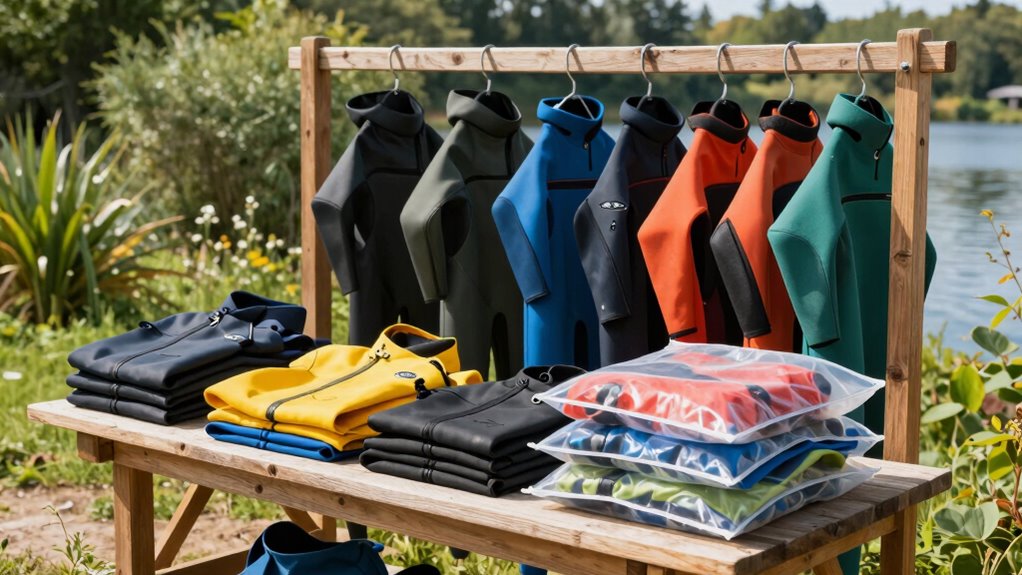
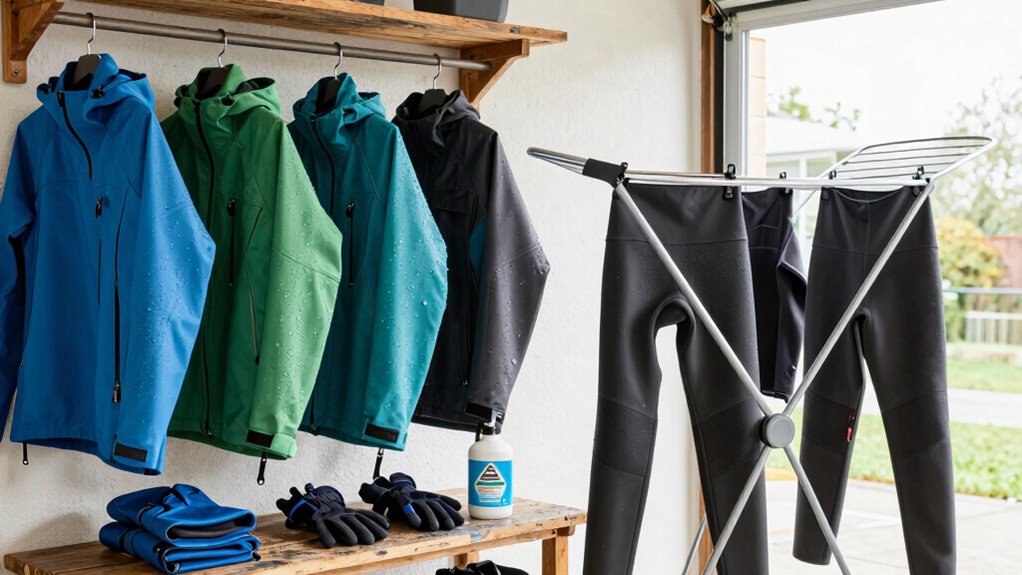
Have you ever struggled to keep your wet gear organized and dry after a day of water activities? It’s a common problem, but with a solid routine, you can make it much easier. The key is to focus on effective dry storage and odor control, which work hand in hand to keep your gear fresh and ready for your next adventure. First, choose the right storage solutions. Instead of tossing everything into a single bag or bin, invest in a dedicated wet gear bag with ventilation. Mesh compartments allow air to circulate, helping your gear dry faster and preventing mold or mildew buildup. When it comes to dry storage, guarantee your gear has a designated spot that’s accessible and well-ventilated. Hanging your wetsuit or dry suit on a sturdy hanger keeps it from folding or crumpling, which can trap moisture and lead to odors. Keep your fins, masks, or gloves in separate compartments to avoid clutter and make retrieval easier. Using proper ventilation during storage is essential to speed up drying and prevent unpleasant odors from developing. Odor control is essential in maintaining a fresh-smelling collection of gear. After each water outing, rinse everything thoroughly with fresh water to remove salt, sand, or chlorine that can contribute to unpleasant smells. Dry everything completely before storing—moisture is the enemy of odor-free gear. For added odor control, consider using moisture-absorbing products like silica gel packs or specialized desiccants inside your storage containers. These help absorb excess humidity, preventing mold and bad smells from developing over time. Additionally, incorporating natural remedies like baking soda or essential oils can help keep your gear smelling fresh. Establishing a routine means making these steps habitual. After each water session, rinse your gear well, then hang it in a well-ventilated area to dry. Incorporating humidity control strategies can further enhance your gear’s longevity and freshness. Using proper storage techniques can also prevent the buildup of odors and moisture over time. Once dry, store it in your designated dry storage with odor control measures in place. Regularly inspect your gear for signs of mold, mildew, or persistent odors, and address issues immediately. Proper dry storage and odor control aren’t just about keeping your gear smelling fresh; they extend its lifespan and guarantee it’s always ready for your next adventure. With a little organization and some simple habits, you’ll find managing your wet gear becomes effortless, leaving you more time to enjoy the water instead of stressing over soggy, smelly equipment.
As an affiliate, we earn on qualifying purchases.
Frequently Asked Questions
What Materials Are Best for Wet-Gear Storage?
You should choose storage materials that prioritize ventilation techniques and material durability. Mesh bags and wire racks are excellent because they promote airflow, helping wet gear dry faster and prevent mildew. Durable materials like heavy-duty plastic or rust-resistant metal withstand moisture and frequent use. Avoid sealed containers, as they trap humidity. By combining proper ventilation with sturdy materials, you guarantee your wet gear stays fresh, dry, and ready for your next adventure.
How Often Should I Replace Wet-Gear Storage Bags?
You should replace your wet-gear storage bags every 1 to 2 years, depending on their material durability. Regularly inspect them for signs of wear, mold, or damage. Use ventilation techniques like leaving zippers open after use to prevent mold buildup. Proper ventilation extends the lifespan of your bags, but if they show persistent issues or deterioration despite care, it’s time for a replacement to keep your gear fresh and dry.
Can I Dry Gear Outdoors Without Damage?
Drying your gear outdoors is like releasing a hurricane of freshness, but you need proper techniques to avoid damage. Use gentle drying techniques, such as hanging gear in a shaded, well-ventilated area, to prevent UV damage and material degradation. Make certain your gear is thoroughly dry before storing to prevent mold. Consistent gear maintenance, including outdoor drying, extends gear life and keeps it in top condition.
What’s the Best Way to Prevent Gear Odors?
To prevent gear odors, you should focus on proper odor prevention and deodorizing techniques. After each use, rinse your gear thoroughly and dry it in a well-ventilated area, preferably outdoors, to reduce moisture buildup. Use odor-neutralizing sprays or natural deodorants like baking soda or vinegar to eliminate lingering smells. Regularly cleaning your gear and storing it in a dry, cool place also helps prevent odors from developing over time.
How Do I Organize Gear for Quick Access?
You should organize your gear for quick access by using clear storage containers like mesh bags or waterproof bins, which keep everything visible and dry. Incorporate gear drying techniques such as hanging items in well-ventilated areas to prevent odors. Keep frequently used gear near the front or on accessible shelves, and consider labeling containers for easy identification. This setup guarantees you find what you need swiftly and keeps your gear in top shape.
As an affiliate, we earn on qualifying purchases.
Conclusion
By implementing a structured wet-gear management routine, you’ll keep your gear dry, organized, and ready for your next adventure. Imagine a kayaker who used to spend hours drying and sorting gear after each trip—now, with a simple system, they save time and extend the life of their equipment. Start small, stay consistent, and soon you’ll enjoy hassle-free outings with gear that’s always prepared. Your next adventure is just a well-managed wet-gear routine away!
silica gel packs for gear drying
As an affiliate, we earn on qualifying purchases.
As an affiliate, we earn on qualifying purchases.
odor absorbing baking soda for gear
As an affiliate, we earn on qualifying purchases.
As an affiliate, we earn on qualifying purchases.