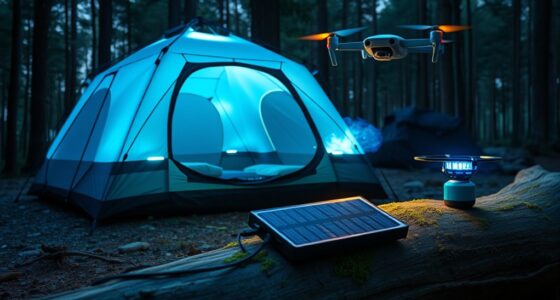
Drones delivering camp supplies are revolutionizing expedition resupply by providing quick, obstacle-free delivery in rugged and remote terrains. They guarantee your essential items arrive safely and on time, even where ground transport struggles. Autonomous drones follow predefined routes, reducing risks and increasing efficiency, while complying with evolving regulations. As this technology advances, it offers a safer, faster way to keep your camps stocked. Keep exploring to discover how drone logistics can transform your expeditions.
Key Takeaways
- Drones enable rapid, obstacle-free delivery of supplies to remote camps, improving expedition efficiency.
- Autonomous drone systems can navigate complex terrains and coordinate with air traffic control for safe operations.
- Integrating drones reduces logistical delays and minimizes risks associated with ground-based resupply methods.
- Proper understanding of evolving drone regulations is essential for legal and safe deployment in expedition areas.
- Strategic planning considering terrain, payload, and regulatory environment maximizes the benefits of drone delivery systems.

As technology advances, drones are increasingly used to deliver camp supplies quickly and efficiently. This shift is transforming aerial logistics, allowing expeditions to receive essential items without the delays and risks associated with traditional transport methods. In remote or rugged terrains, where ground transportation is difficult or impossible, drones can navigate obstacles and reach destinations directly, saving time and reducing logistical complications. By leveraging aerial logistics, you can guarantee that your camp remains well-stocked with food, medical supplies, or equipment, even in the most challenging environments.
Drones enable quick, obstacle-free delivery of camp supplies in remote, rugged terrains, ensuring essential items arrive efficiently and safely.
However, integrating drone technology into camp supply chains isn’t without its hurdles. Drone regulations play a significant role in shaping how and when you can deploy these devices. Different countries and regions have strict rules governing drone flight paths, altitude limits, and operational permissions. Before planning a supply mission, you need to familiarize yourself with local drone regulations to avoid legal issues or safety hazards. These regulations are continually evolving as authorities work to balance innovation with safety concerns. Staying updated on drone regulations ensures your operations stay compliant and reduces the risk of interruptions or penalties.
The importance of understanding aerial logistics and drone regulations becomes even more evident when considering the potential for autonomous drone delivery systems. These systems can be programmed to follow predefined routes, avoiding obstacles and coordinating with air traffic control where necessary. Proper planning and adherence to regulations allow for seamless integration into existing logistical frameworks, minimizing disruptions and maximizing efficiency. When you use drones within regulatory boundaries, you benefit from faster resupply times, decreased costs, and safer operations—especially when delivering sensitive or critical supplies.
Furthermore, embracing drone technology requires a strategic approach. You need to assess the terrain, determine payload capacities, and evaluate environmental conditions that might affect flight safety. Partnering with experienced drone operators or service providers can help you navigate complex regulations and optimize aerial logistics planning. Implementing drone delivery systems isn’t just about adopting new tech; it’s about understanding the legal landscape and logistical intricacies to make the most of this innovative approach. Recognizing the regulatory environment is essential to ensure safe and compliant drone operations.
Frequently Asked Questions
How Do Drones Handle Unpredictable Weather Conditions During Delivery?
Drones handle unpredictable weather by utilizing advanced weather adaptation systems that monitor conditions constantly. They adjust their flight paths to maintain drone stability, avoiding turbulence and strong winds. When weather becomes too severe, drones can either delay delivery or return to base, guaranteeing safety. This real-time adaptation helps guarantee that supplies arrive intact, even in challenging weather, making drone deliveries more reliable in various outdoor environments.
What Are the Security Measures to Prevent Drone Hijacking or Theft?
To prevent drone hijacking or theft, you should rely on encryption protocols that secure communication channels and tamper-proof hardware to make physical interference difficult. You also need robust authentication processes and real-time tracking to quickly identify unauthorized access or hijacking attempts. Implementing these security measures guarantees your drones stay protected during delivery, reducing risks and maintaining the integrity of your expedition re-supply operations.
How Is Drone Noise Managed to Avoid Disturbing Wildlife and Campers?
To manage drone noise and minimize wildlife disturbance and guarantee camper safety, you focus on using quieter drone models and adjusting flight paths. Operating during less sensitive times helps reduce wildlife disturbance, while maintaining safe distances from campers prevents accidents. Regularly updating noise regulations and training operators further ensures that drone operations remain discreet and safe, allowing you to enjoy the environment without causing unnecessary disruption or jeopardizing safety.
Can Drones Deliver Supplies to Remote or High-Altitude Locations?
Yes, drones can deliver supplies to remote or high-altitude locations, but altitude challenges and battery endurance are key factors. You’ll need drones equipped with advanced stabilization to handle thin air and steep terrain. Battery life may limit range, so you should opt for models with high-capacity batteries or quick-swap options. With proper planning and technology, you can effectively reach even the most inaccessible areas.
What Is the Cost Comparison Between Drone Delivery and Traditional Resupply Methods?
Sure, drone delivery might seem pricey at first, but it’s actually more cost-efficient long-term. You save on fuel, personnel, and logistics, dramatically reducing the budget impact. Traditional methods shuffle bulky gear with hefty expenses, while drones zip supplies right to your doorstep, or tent flap. So, if you’re after smarter spending, drones could be your wallet’s best friend, turning expensive resupplies into a lean, mean, logistics machine.
Conclusion
As you watch drones glide across the sky, carrying hope and essentials, they become symbols of progress and resilience. Their swift flight over rugged terrains mirrors our determination to overcome obstacles and reach new heights. With each delivery, you see a future where technology and nature work hand in hand, ensuring explorers and adventurers are never truly alone in the wilderness. Drones aren’t just tools—they’re beacons guiding us into a brighter, more connected tomorrow.